Looking forward: 2026

uncategorized

Looking forward, I see hope.

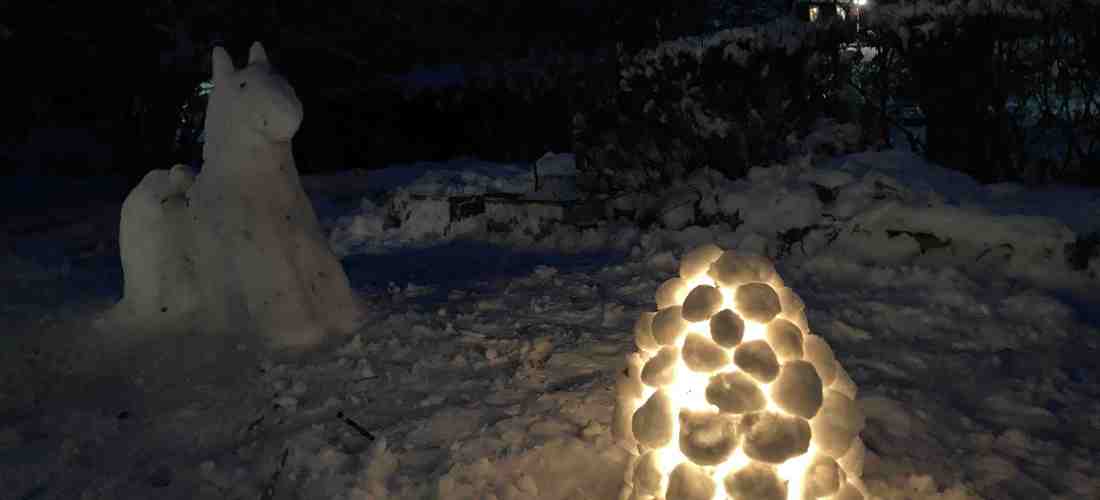
No matter how chaotic, violent and confusing the present, the Earth still travels with the Universe. Snow still falls in the North – sometimes. Birds come to the feeder.

I am connected to people living under conditions of war, of oppression and of poverty; they resist. As long as they do, I cannot give up.

I see acts of care and kindness. I have the freedom to support others; to contribute to my neighbours, to the human and the more-than-human.

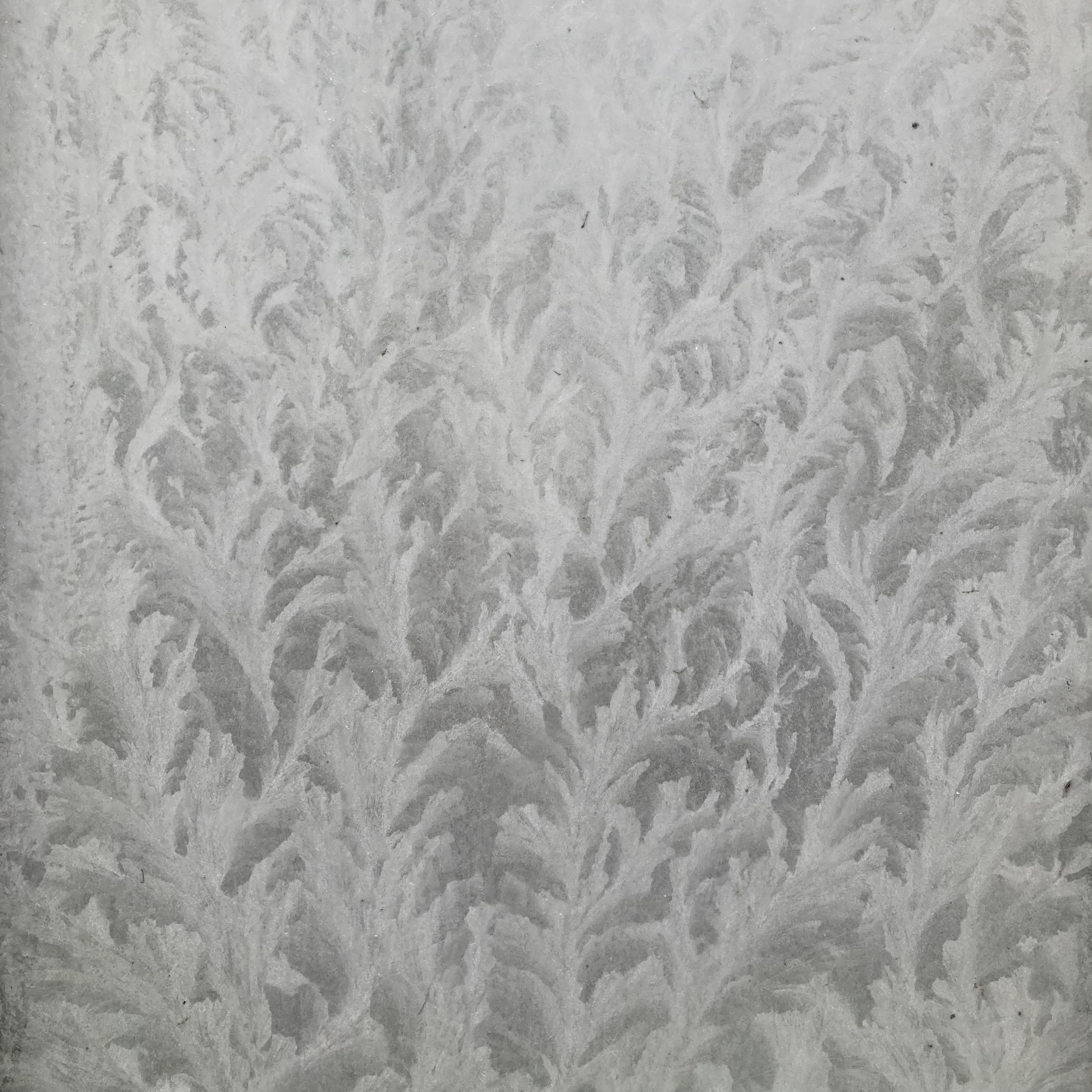
I see hope, like the full moon shining in the winter night; like snow lightening the darkness; crystallizing swiftly like ice fractals.

2025: Looking back

art, painting

Looking back, I see the flow of time. I light a candle in the stillness of the winter night. Countless starry points shine back at it from inside my heart, connecting me with somebody just across the road, as well as with other, more faraway places… with Stockholm, Fulltofta and Toulouse; with Kyiv, Järna, and Ermetzhof; with Bengaluru, Berlin, and New York; with Tyresö, Tokyo and Turku…

A constellation of love, friendship, creativity and care.


January: the past year began with the maps of Robertho and Frank finally completed. I was invited to write an article on the Mapping Praxis project, for a “special issue” of an art journal, and took it as an incitement to collect my thoughts on maps and mapping.

*
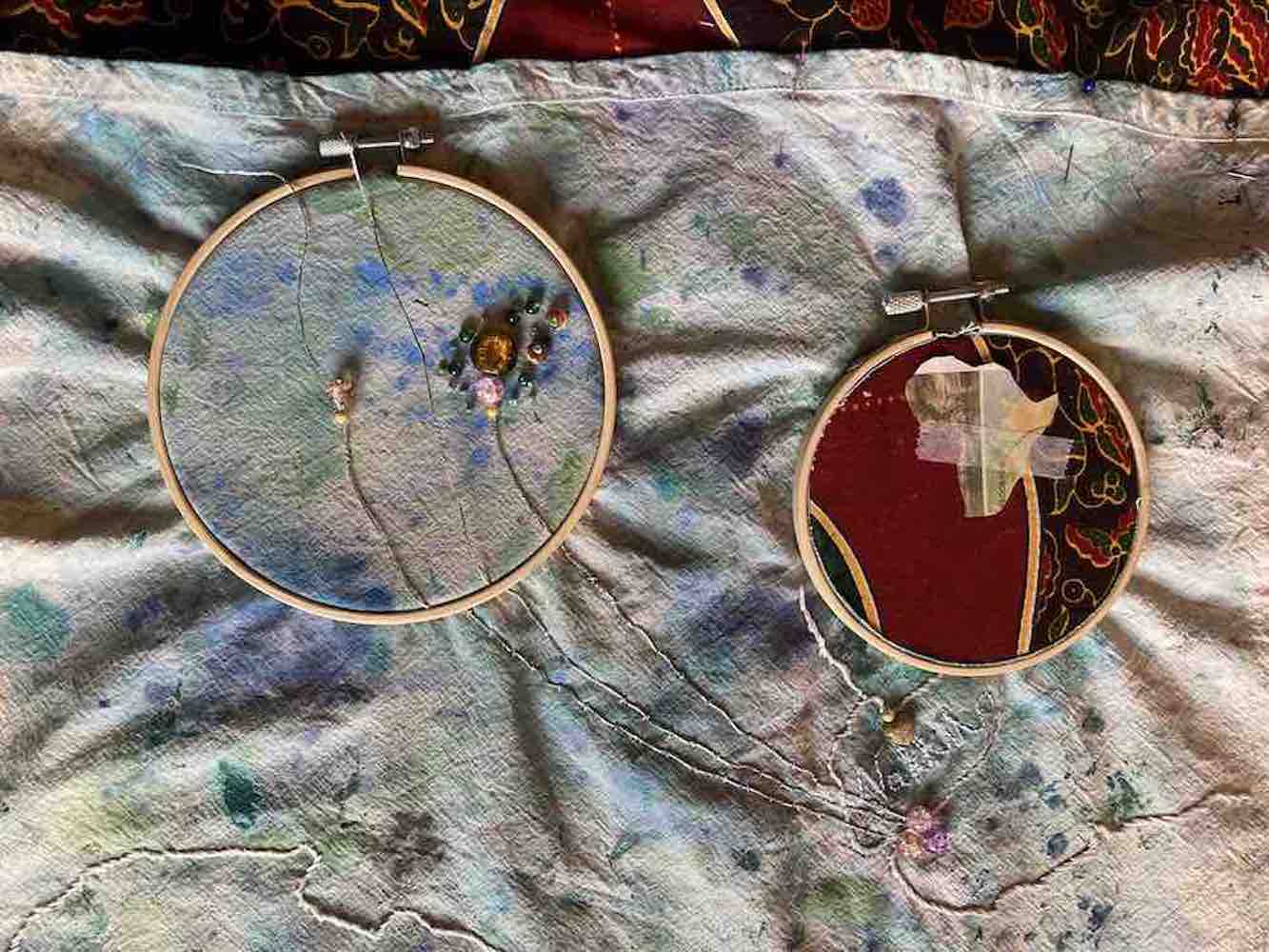
February: with the mapping text more or less finished, I realized that the journal that issued the invitation might not be quite the high-standard scientific publication that it claimed to be. In the end, I decided to withdraw the article, to instead take up the more rewarding work of making another map… This one, again, presented me with new challenges. The story of “I” – my partner in dialogue – was layered in ways that the preceding ones weren’t; I chose to add an underlying lining, visible only in certain places; and to insert “zoom-in” spots, using the sketchwork that “I” had provided me with during our first conversation. It took quite a few tries, and some emailing, to make the map resonate with the emotions and conceptualizations of my conversation partner.
And on February 22nd, I had the honour to meet street artist Gamlet Zinkivskyi from Charkiv on one of his sparse visits outside Ukraine – giving an artist talk at the “Ukraine Culture Now” event.

*

March: in the first days of the month, the Praxis of Social Imaginaries study circle held its last gathering at the Sigtuna Foundation. Parallel with reading and discussing Olaus Magnus’ A Description of the Northern Peoples, ideas of how to launch a continued study circle emerged from informal conversations…
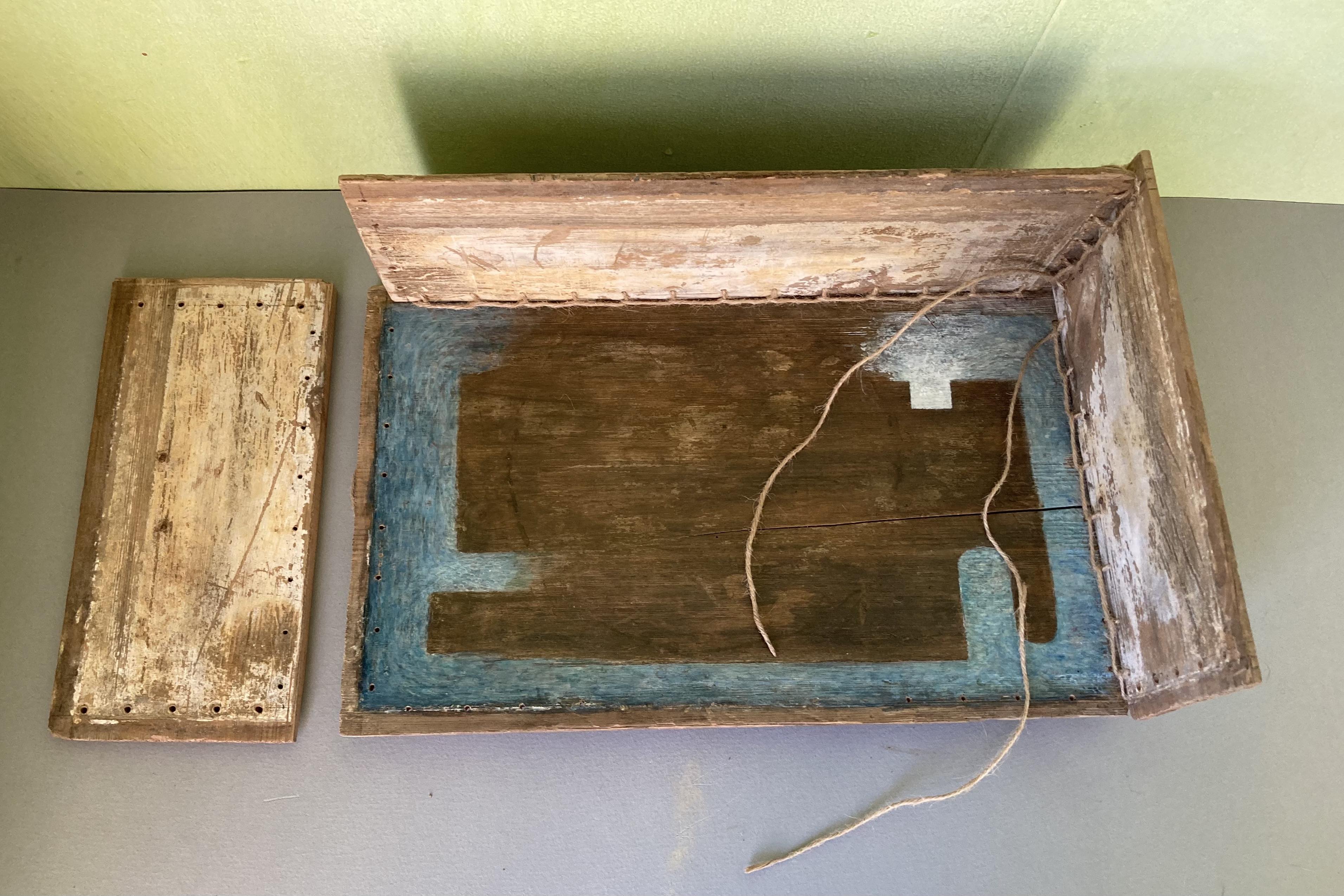
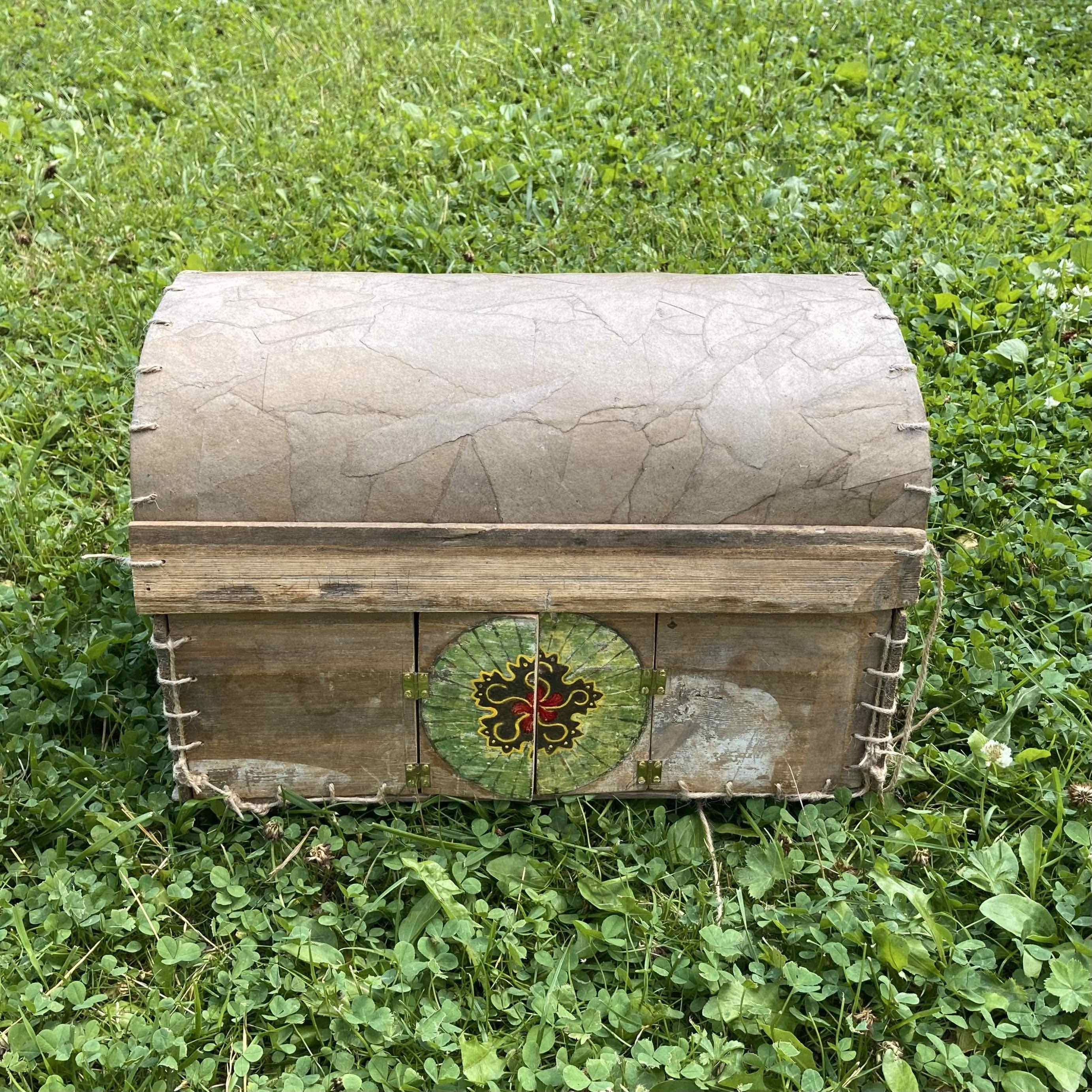
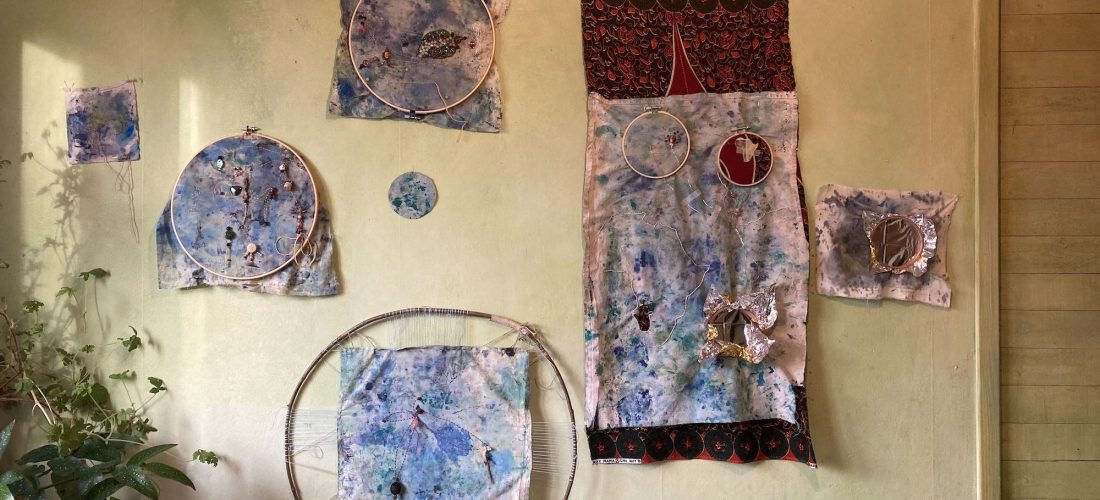
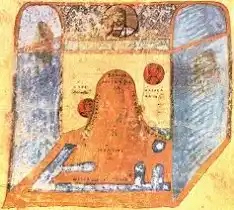
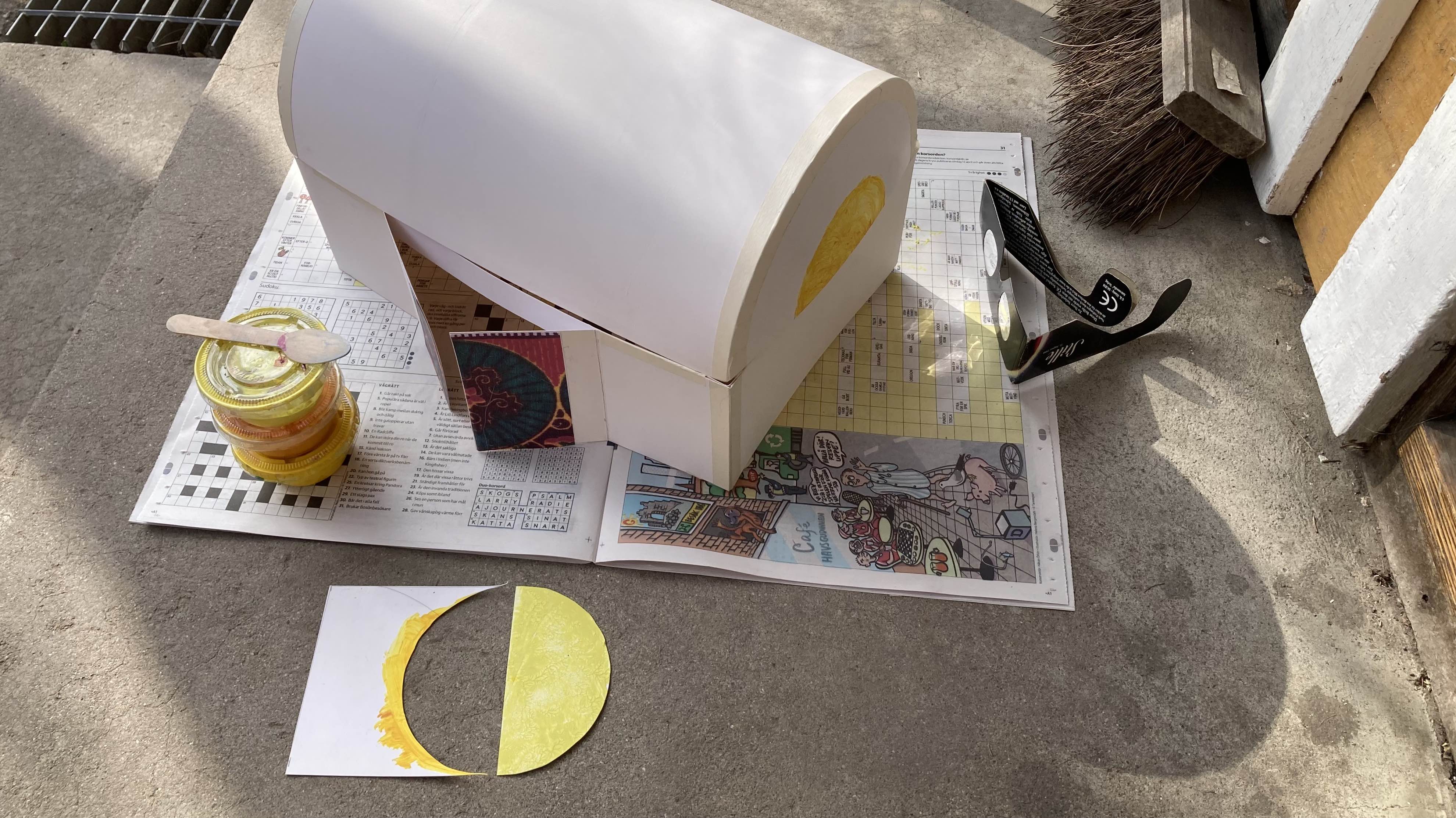
On the last day of the gathering, I was approached by fellow participant Titi, wanting to share her story for another embroidered map – a task that I happily welcomed. I also had the opportunity to reconnect with Obinna, and ask him some complementary questions about his itinerary (which was now next in turn for a visualization). This time, the challenge came explicitly from my partner in dialogue: Obinna’s map had to be a three-dimensional one, since his native place is in the mountainous parts of Southeast Nigeria. Recalling the chest-like world model of the 6th century traveler and Christian monk Cosmas Indicopleustes, I immediately began working with it on returning home. A partial sun eclipse happened on March 29th, and I could watch it while making a cardboard maquette… which sparked the idea of “half a yellow sun” on the gable of the chest (I then hadn’t read the book with the same title by Chimamanda Ngozi Adichie).
This slideshow requires JavaScript.
*
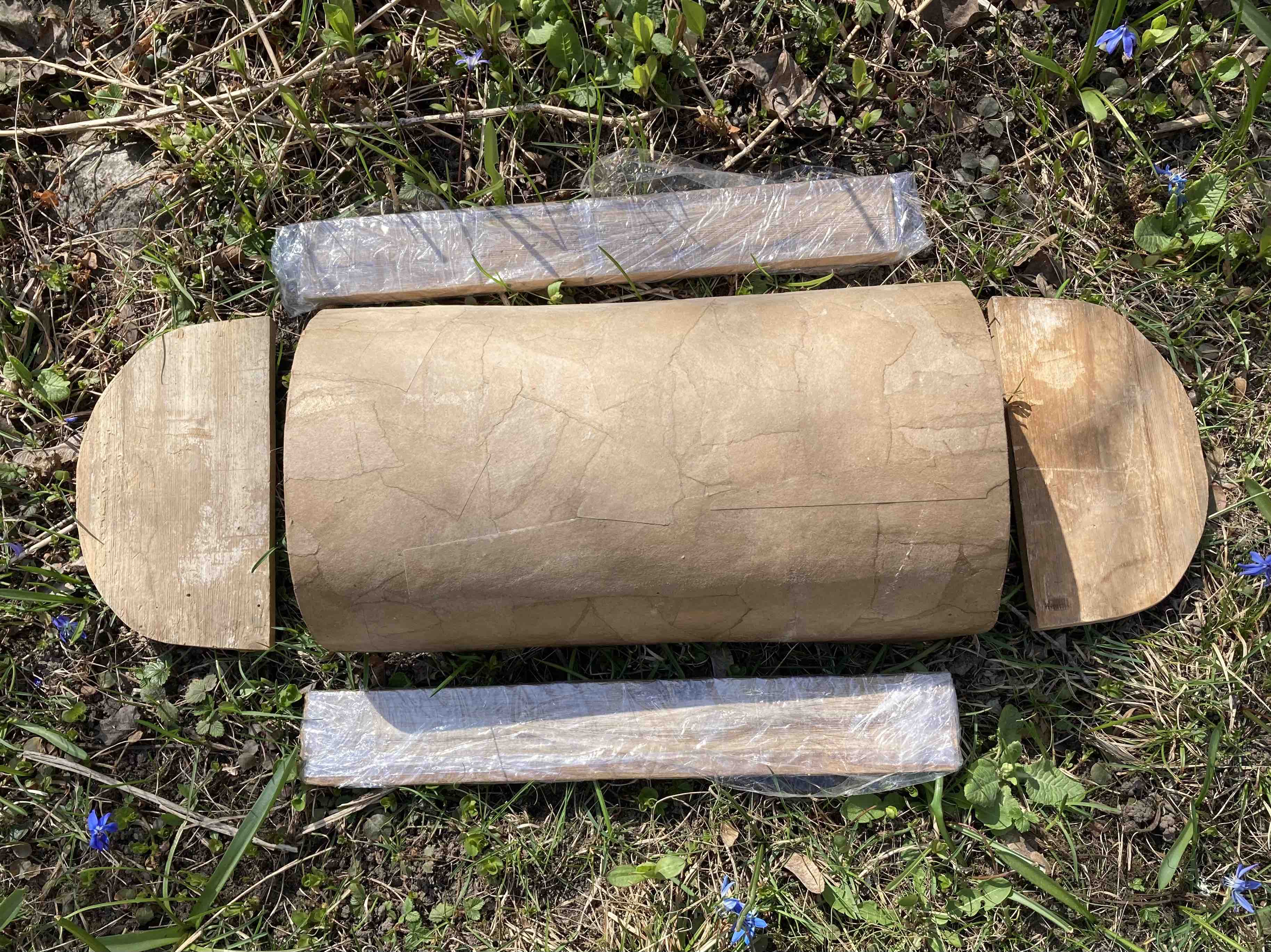

April: a six weeks’ teaching commission began, leaving little time for the Mapping Praxis project. As spring flowers came to bloom, I managed to make the vaulted papier-mâché lid of the chest, though.

And to learn to know the folk high school class was – as always – a joy; this type of education very much promotes care, curiosity and collaborative approaches… My presentation on the institutional theory of art (aka the art world theory) was met with immediate and creative response.

*

In mid-May, the teaching commission was finished, and I could go back to the mappings. Now Obinna’s chest was assembled, and a 3D mountain was made to fit inside. I decided to use egg tempera for the painting, and tried out a floral design, borrowed from an African textile and reminding of a hibiscus flower. It turned out that Obinna highly approved of Chimamande Ngozi Adichie’s novel – and so, the sun was there to stay on his map.  
As the planning for a continuation of the Praxis circle proceeded, I also attended Researching Imaginaries;  an online lecture programme launched by the Centre for Art and the Political Imaginary at HDK-Valand (Gothenburg University) and the Royal Institute of Art (Stockholm). The programme stretched over five days, presenting interfaces between politics and contemporary art ,explored by artistic researchers from Eastern and Southern Europe as well as the Nordics.

*

June is a very busy time in the garden. Nevertheless, the lid of Obinna’s chest got painted, too – in lapis lazuli blue.


*

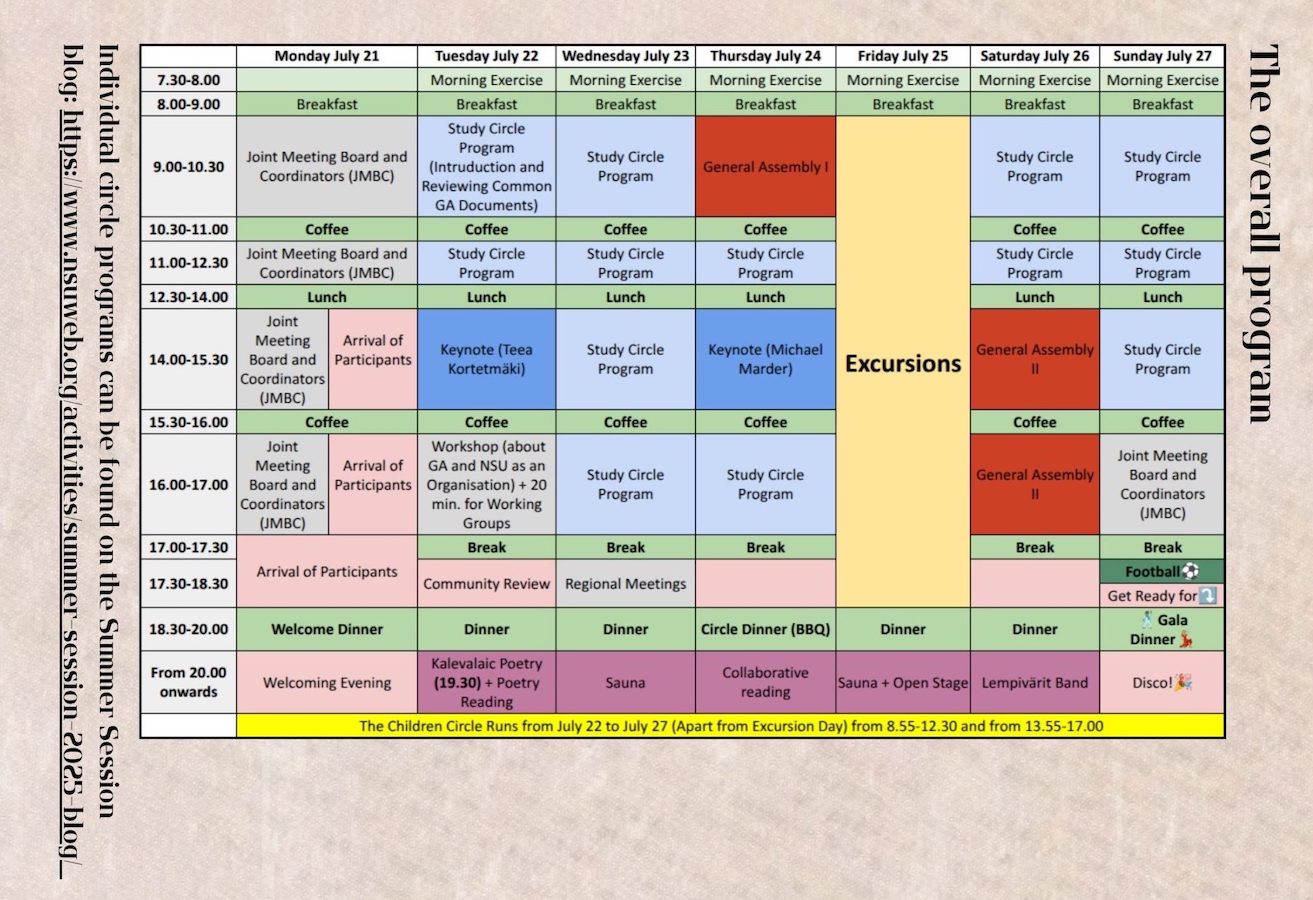
July: traveling to Jyväskylä for the Nordic Summer University Summer session 2025, where our proposal for a new study circle, under the title of Studies in Remoteness, was finally presented. Initiated by Dr. Lindsey Drury and the working team in early March, the proposal now got approved by the NSU Board, and by the General Assembly of NSU members on July 26th. Along with Lindsey, I found myself study coordinator for the three coming years.

*

In August, I took a day in Åbo / Turku, to meet again with Obinna, Titi and Dorcus of the Praxis circle. Returning home, I had gathered more information to be visualized in the Mapping Praxis itineraries. I could also improve “I’s” itinerary with some tiny animals made out of wood… and finish my reading of Half a Yellow Sun.

*


September: the lapis lazuli lid of Obinna’s itinerary somehow called me back to studio painting; I took a couple of weeks off from the
Mapping Praxis project, and spent time with a blue / orange Human Being Image.

*

October: the Remoteness team was gaining momentum, with bi-weekly online meetings. It remains the working group, where study planning and connected tasks are constantly processed; meanwhile, the executive bits are mainly the work of coordinators. In October, we published our very first Call for Participation for the 2026 Winter Session – a three days’ symposium set to happen in Berlin in late January.
The last days of October – during the autumn break – I spent in Igelsta primary school, doing maintenance work on Star Roads, the commission I had for the city of Södertälje in 2018. Seven years later, there’s still no deliberate damage done to it, but quite some wear and tear. (After all, these kids are teenagers!)

The autumn break stretched into the first days in November, and I worked through the weekend to finish my work before school started again. Unexpectedly, I found myself sharing the space with several dozens of young basket players – as it turned out that the city of Södertälje proudly hosted an annual basket cup finale for schoolkids, and Igelsta was one of the venues. We went along well, though, and I accomplished my task in time (more or less).

Sadly,  one of these days a young person was killed nearby the school . No basket player, certainly, but a former student at Igelsta school – one of the kids that may have been sitting in the space that I now was renovating. On the short walk from the school to the train station, I passed a place where candles were lit for him. I stayed a while, sharing the moment with some of his friends.

May peace be upon his memory. May no other kid have to suffer his fate.

*

December: I had three short-term commissions for the folk high school this autumn – the last one being to give an introduction to lino cutting. I took this as an occasion to refresh my experience in lino print, and realized that this technique could be useful for the making of Titi’s itinerary. As for Obinna’s map, I now had to look into the ancient Nigerian Nsibidi scripture, which I knew nothing about before.

*

A year passed. Encounters, conversations, experiences and emotions finding their way into images and objects – while Earth still travels silently and swiftly with the Universe.
Studies in Remoteness I

art, upcoming

The first call is out – come join us in Berlin!

CALL FOR PARTICIPATION:

DUPLICITY / DUPLICITÄT: Betwixt Intimates and Strangers

NSU Circle 1 Winter Session 2026
Institut für Theaterwissenschaft, Freie Universität Berlin
January 29-31, 2026

Due date for session proposals: 1st December, 2025
Due date for non-presenting participant registration: 9th January, 2026

This opening symposium of the collaborative research project Studies in Remoteness explores remoteness as connected with duality, in-between spaces, self-conflicted states, and epistemic ambiguity. We will examine remoteness as a way of being situated (perhaps conflictedly) between apparently different identities, geographies, and epistemologies. Even as the word ‘duplicity’ suggests masked deceitfulness, its implication of the two-sided and two-faced provides a means to query the dichotomies (distant and near, intimate and stranger) experienced by those labelled “remote”.
We particularly invite proposals that engage with voices and worldviews often marginalized or erased in dominant knowledge systems.

Photo © Salad Hilowle, from the exhibition Homeplace;
courtesy Cecilia Hillström gallery (Stockholm)

Event Structure
The symposium begins with a welcome evening on the 29th, and is then divided into two themes over two full days (30th-31st). Sessions will include presentations, readings, discussions, and creative workshops that draw from cultural studies, performance histories, and artistic research practices. Participants are invited to lead thematic sessions, but do not have to do so to participate. Within the context of Berlin, the symposium will further inquire the ways that duplicity informs observation by investigating the cityscape as an intricate weave of depths and surfaces, concealments and revealments.

Thursday, Jan. 29th: Welcome evening
Introduction, presentation round and get-together dinner.

Friday, Jan. 30th: Inquiring Art, Politics, and Performance in Berlin
How does duplicity inform, arise from, or interact with the politicization of art in Berlin? What is concealed (made remote) and revealed (made available) in the process?

Saturday, Jan. 31st: Intangible Goods/Invisible Architectures: Performing Deindustrialisation
How does duplicity inform people’s everyday lives? How does it affect the city’s inhabitants – architecturally, aesthetically, as well as in work and everyday practices? What is made remote, and what is made available in economic transactions, public infrastructures, and the wider built environment? How can we research peoples’ experiences of this, and the impacts upon their lives?

Participation fee
Participants need to pay a €30.00 membership fee to the Nordic Summer University; for participants with institutional support, the amount is €55.00. In certain cases, this fee may be waived or reduced. Housing and food are self-organized, and the organizers have reasonably priced recommendations for registrants.

How to Apply
if you wish to lead a thematic session (research and/or artistic presentation, reading session, hands-on or discussion session) – please submit an application (up to two pages) with a session abstract and facilitator bio by December 1st, 2025.
if you wish to simply participate – please send us a letter of intent, and a bit of information about yourself, by January 9th, 2026. Earlier applications are encouraged, as the symposium is first-come-first-served. Students may receive ECTS credit (further information available by request).

Applications can be sent to to one of (or both) the following email addresses:
lindsey.drury[at]fu-berlin.de
helenahildur[at]gmail.com

Studies in Remoteness is coordinated as a study circle within the Nordic Summer University by the scholar Lindsey Drury and artistic researcher Helena Hildur W, in cooperation with – among others project members Tinka Harvard, Shiluinla Jamir, and Essi Nuutinen.

Read more:

Duplicity/Duplicität 
Almost any place on this planet labelled “remote” by one person is to another an intimate home. Almost any stranger met on the street is, to someone, a most intimate friend. No place or person, then, is ontologically remote. Instead, remoteness emerges as a condition paired with its opposite. Remoteness is duplicit.

Duplicity often carries connotations of trickery – as a disguise that renders the reality of a person or situation inaccessible; remote. The term duplicity thus gestures toward performance. Yet, acts of pretend, staging, or performance aren’t merely façades behind which reality lurks; they also offer ways of conjuring real contexts for social engagement. Antonin Artaud’s Le Théâtre et son Double, Friedrich Nietzsche’s Die Geburt der Tragödie, and Hannah Arendt’s The Origins of Totalitarianism all tie art and performance to politics by addressing duplicity as a political and creative force that divides and connects, hides and reveals, undermines and sustains – to transform. Artaud, particularly, makes the radical proposal that perceivable reality is a respondent Doppelgänger of the theater (rather than the other way around).

As anthropologist David Graeber described, politics is a fundamental social imaginary – “that dimension of social life in which things really do become true if enough people believe them” – but to participate effectively, one must never acknowledge this fact (2011: 94). Graeber used this assertion to connect politics to artistic practice, further arguing that, “for the art world to recognize itself as a form of politics is also to recognize itself as something both magical, and a confidence game – a kind of scam” (ibid). While the term “scam” typically implies deceit or fraud, this symposium considers the “scam” as a kind of strategic duplicity that enables both art and politics to function – not in spite of, but through their resistance to absolute transparency. The imagined, the artificial, and the staged become crucial mechanisms by which social and political truths take shape. While “scams” are negatively connotated (perhaps most easily attributed to quacks, charlatans, imposters, grifters, and snake oil salesmen), in this symposium, we look at the so-called “scam” as a duplicity that, precisely by undermining any chance for so-called ‘transparency’, allows art and politics alike (and in connected ways) to function.

In Berlin, this dynamic can be exemplified in Adrian Piper’s 2017 participatory performance The Probable Trust Registry at Hamburger Bahnhof, which invited viewers to sign contracts with themselves, committing to ethical principles such as aligning their actions with their assertions. Though the contracts were non-binding, the work adopted the aesthetics of bureaucratic authority – golden desks, formal presentation, institutional context – to lend them weight and seriousness. In doing so, the work “pretended” (in German, vorgehabt) in the original etymological sense – to put forward or give forth (especially of) illegitimate claims – demonstrating how acts of imagination and presentation have historically blurred into claims of power, identity, and truth. Piper’s performance reveals how duplicity can create the conditions for sincerity. The work thus operated in the tense space between the real and the unreal, using the artifice of officialdom not to deceive, but to make truth socially legible.

The city of Berlin’s architecture is shaped by a history of small industry and local craftsmen. Many of the city’s spaces have been transformed into a postindustrial landscape of corporate offices, bars and restaurants, arts organisations, storefronts, and living spaces. The city is physically marked, by consequence, with visible duplicity of the original intent and current use of its architecture. A realm of urban aesthetics has emerged that explores the way this duplicity can be exposed and concealed. This architectural duplicity is expanded into political space via buildings like the Reichstag and much problematised Humboldt Forum, both of which play with the partial presence and absence of historical materials in the ways they have been reconstructed.
A similar ethics of in/visibility permeates the performance and presentation approaches within urban service industries, where the labour of vast numbers of workers is labelled as “intangible goods”. The service industry is informed by a complex history of labour deeply engaged with performances of concealment and revealment. Like theatres, for example, restaurants are organized into a “back of house” site of preparation and production which facilitates a “front of house” space of presentation and consumption. The relationship between these two sites is often central to the restaurant’s approach to the dining experience: a working kitchen exposed to the meandering eyes of restaurant patrons is representationally different than a restaurant that conceals cooks and their labour behind a wall and a swinging door, only to be visible as inferred craft within completed dishes. Duplicity, then, is not simply deceptiveness – but it renders parts of life and work remote in order to curate economic interactions.

This symposium invites reflections on duplicity as an aesthetic, ethical, constructive, and political practice: how it structures relations of trust and suspicion, performance and belief, transparency and opacity. We welcome participants who wish to explore the multiple registers of duplicity, and interrogate its role in shaping both everyday life and collective futures!

***

About Study Circle 1:

Studies in Remoteness does foundational theoretical, artistic, and historical work toward initiating a new field of interdisciplinary research in critical remoteness studies. To unpack the geopolitical, environmental, and cultural dimensions of ‘remoteness’ – particularly, in the circumpolar North – we will center Indigenous scholarship and critiques of extractive colonialism, as well as artistic and embodied approaches, in a series of six symposia across the Baltic rim between 2026-2028.

The project turns its attention to the notion of “a place far away”– be it the regional peripheries or cartographic borderlands between nation states; the residential areas of Indigenous/minoritized communities; historical testimonies and lacunae; sub-cultural meeting spots or your neighbour’s kitchen. Theorizing modernity by turning to its so-called outskirts, the project inquires sensoria of absence, distance, and neglect that have blossomed along the frontiers of colonial empires and sedimented among the margins of modern infrastructures of “global connectivity”. With lingering attention, Studies in Remoteness intends to unsettle conditions of obscuring or exoticising – resolutely acknowledging histories, topographies and epistemologies with an eye to how these might come into “intense proximity”, as coined by Okwui Enwezor.

As a three-year collaborative research project, Studies in Remoteness brings together a network of scholars, artists, and activists to engage in community-based research practices. By establishing a co-creative space for community building and artistic practices – open for the sharing of facts, questions, concerns and practices – we believe that our work will prove enduringly relevant.

***

Studies in Remoteness Nordic Summer University webpage
Studies in Remoteness Freie Uni Berlin webpage

Featured image (above):  Feierabend. Nordufer Ecke Fennbrücke, Berlin-Wedding, November 2022
(People walking home from work. Nordufer corner of Fennbrücke, Berlin-Wedding)
Attribution: Babewyn via Wikimedia Commons – thank you, Josh, for your generosity and your beautiful photos!

Introducing the Studies in Remoteness

recent work, upcoming

The Studies in Remoteness is a study circle framed within the Nordic Summer University, set to begin in January 2026 and ending in 2028. We’ll meet twice yearly, for a Winter and a Summer Session (the latter being integrated in the annual gathering of all circles in the Nordic Summer University).

Studies in Remoteness deals with the ingrained notion of “far away places” – be it the regional peripheries or cartographic borderlands between nation states; the residential areas of indigenous/minority communities; historical testimonies and lacunae; the sub-cultural meeting spots or your neighbour’s kitchen… With lingering attention, our studies intend to reset conditions of neglect and exoticism – unfolding the histories, topographies and epistemologies of such places “far away”.

Based in the Nordics, the Studies in Remoteness study circle will keep the circumpolar Arctic as a recurring theme – while actively inviting the perspectives of de-colonial thought and indigenous research from all continents, as well as practices grounded in feminist, queer and artistic approaches.

The Studies in Remoteness will be co-coordinated by Dr. Lindsey Drury of the Freie Universität in Berlin, and myself, Helena Hildur W. – in collaboration with (among others) Dr. Shiluinla Jamir poet/writer/theologian Tinka Harvard, and PhD student Essi Nuutinen, as well as current and former board members of the Nordic Summer University.

We warmly welcome scholars, students, artists and activists to engage with us in exploring the potentials of Remoteness!

Contacts
lindsey.drury[at]fu-berlin.de
helenahildur[at]gmail.com

Studies in Remoteness study plan

Winter Session 2026
Topic: Duplicity / Duplicität: Betwixt Intimates and Strangers

January 29–31, 2026 – Institut für Theaterwissenschaft, Freie Universität Berlin
This opening session explores the two-sided, the between spaces, the self-conflicted, and the epistemic ambiguity and multiplicity that emerge from these. Engaging with voices and worldviews often marginalized or erased in dominant knowledge systems, we will examine what it means to be situated (perhaps conflictedly) between radically different identities, geographies, and epistemologies.

Summer Session 2026
Topic: Intimate engagement with historical remoteness
July 2026 – Latvia, venue TBA (NSU Summer Session)
Set within the Baltic context, this session considers the emotional and material legacies of remoteness as lived through history. We will explore how historical displacements, erasures, and distances are felt and remembered in intimate ways, drawing on personal and collective memory. This gathering invites an affective turn in the study of remoteness, focusing on its textures, rhythms, and deep temporal resonances. 

Winter Session 2027
Topic: Circumpolar Remoteness
March 2027 – Stockholm, Sweden
This event focuses on Arctic and subarctic contexts. We will draw on Indigenous scholarship and critiques of extractive colonialism to unpack the geopolitical, environmental, and cultural dimensions of northern remoteness. The session aims to build translocal solidarities by linking Arctic struggles with broader conversations on colonial geography.

Summer Session 2027
Topic: Infrastructures of Remoteness
July 2027 – Nordics, venue TBA (NSU Summer Session)
This session investigates the built and bureaucratic structures that create, sustain, or “overcome” remoteness. From roads and cables to administrative systems and zoning laws, infrastructures mediate experiences of distance, disconnection, and neglect. Participants will analyze how these material forms shape spatial hierarchies and consider what decolonial or alternative infrastructures might look like.

Winter Session 2028
Topic: Sacredness and protection
(early) April 2028 – venue TBA
This session examines the entanglements betweenremoteness, sacredness, and practices of protection,asking what is being protected, by whom, and to whatends. While sacredness can offer a vital language ofresistance and refuge – protecting landscapes,cultural sites, and spiritual traditions fromcommodification and harm – it also risks beingmobilized in the service of exclusionary andsecuritized nationalisms. In the Nordic/Baltic context, where histories ofoccupation, resistance, and identity are deeply tied to​ land and place, we will critically assess how appealsto the sacred may be co-opted into ethnonationalistnarratives that frame cultural heritage as a borderedasset under threat. Participants will explore howprotection can drift into securitization, whereremoteness becomes less a zone of care and more afrontier to be policed. The session encouragesnuanced discussion on how to differentiate betweenemancipatory and repressive forms of protection​ – andhow the sacred might be reclaimed without beingenclosed by nationalism.

Summer Session 2028
Topic: Being Lost
July 2028 – Baltics, venue TBA (NSU Summer Session)
This gathering embraces theaffective and existentialdimensions of being lost –physically, conceptually, or temporally. We will consider howdisorientation can unsettle fixedunderstandings of place and self,opening up space for new orientations. “Being lost” will betreated not as failure, but as amethod for inquiry, reflection, andresistance.

Read more and follow the project:
Studies in Remoteness

Featured image (above): Senator Lisa Murkowski visiting the Faroe islands, 2019
Attribution: United States Senate – Office of Lisa Murkowski, Public domain, via Wikimedia Commons

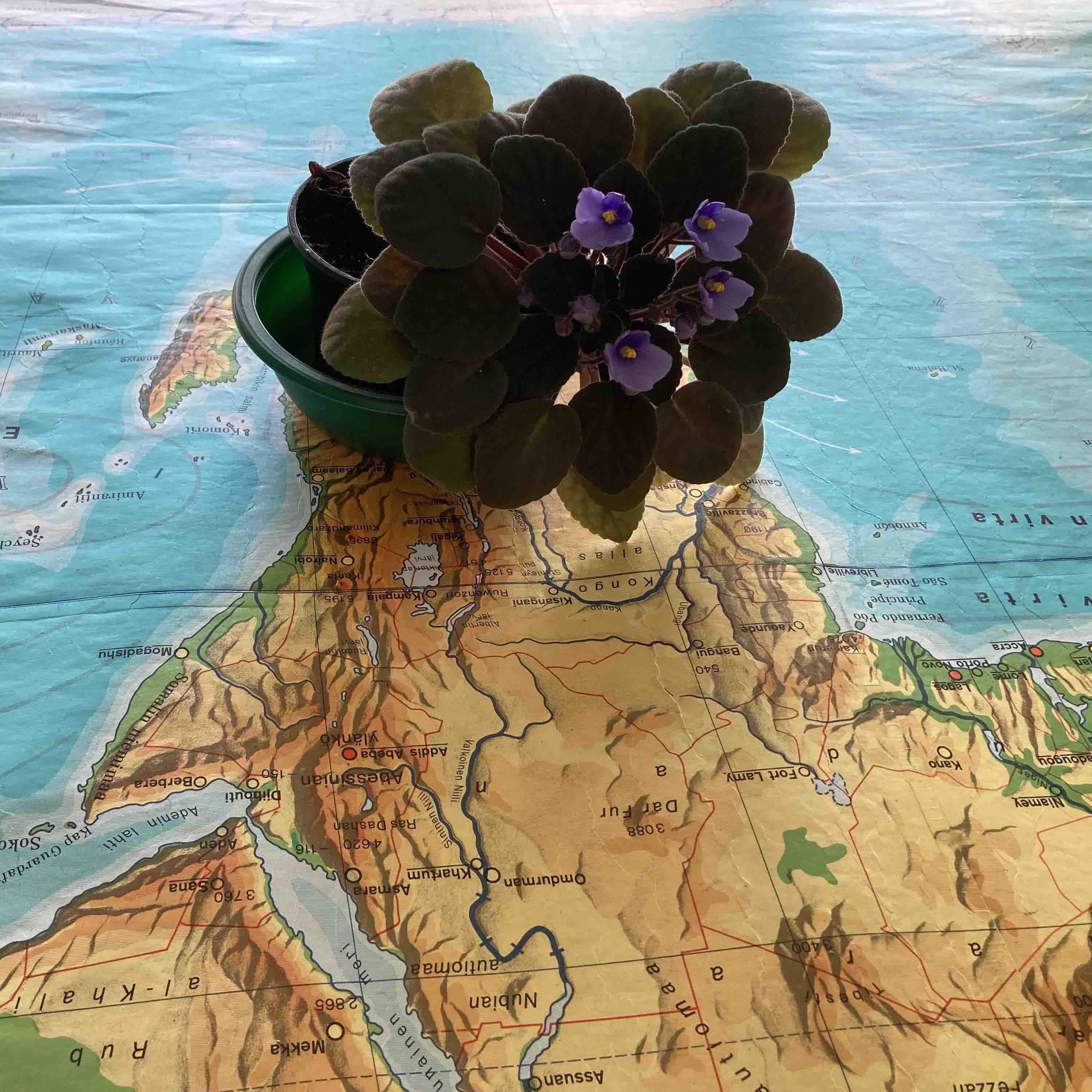
Below: an Usambara violet (Streptocarpus ionanthus), a species classified as “near-threatened” in its native habitat – the Tanzanian Usambara (Dughulushi) mountain range, where cloud forests are today increasingly being cut down in order to give way to extended agriculture. Collected in the 19th century by British and German colonizers, further examined and propagated in Europe, the Usambara violets now survive largely as pot plants on narrow window sills around the world.

Mapping Praxis Working Remotenesses II

art, recent work

What, then, will I bring from the Nordic Summer University’s gathering in Jyväskylä? I remember calm sauna evenings in the soft darkness of late July, as well as the vivid democratic process that maintains the Nordic Summer University and defines its upcoming activities… From visiting ongoing study circles I recall the mapping of conflicting interests in Belarusian and Lithuanian places of heritage; the re-imagining of time from a queer perspective; the enactment of a Parliament of Things, on the hot topic of in vitro fertilisation in Poland… to mention just a few highlights.

And, above all, I bring the experience of a teamwork that fulfilled its purpose of co-planning the concept for a new three-year circle. During the week-long gathering, our proposal for Studies in Remoteness was presented, discussed and approved by the NSU board, and confirmed by the General Assembly of NSU members. Planning is now underway – but this, I feel, deserves a separate post. I left Jyväskylä feeling deeply grateful for this new opening.

Mapping Praxis Working Remotenesses I

art, recent work

While the Praxis of Social Imaginaries study circle was coming to an end in 2025, its continuation took form during the recent NSU Summer Session – this year gathering not far from the city of Jyväskylä in the Lake District of central  Finland. Leaving Stockholm on Sunday evening, July 20th…

Stockholm – Åbo/Turku – Jyväskylä – Korpilahti

…I reached the Alkio-Opisto folk high school in Korpilahti after 20 hours of travel. The staff people were welcoming and helpful, it was good to meet friends and colleagues old and new, and delightful to have a swim in the nearby lake – immersing oneself in its summer-warm, velvety body of water. 

Tuesday morning began with scheduled work in the nine established study circles of the Nordic Summer University; the tenth group being our working team. On Tuesday afternoon, we presented our draft for a coming three-year cycle of Studies in Remoteness for community review. The proposal got substantial feedback, which we continued working on during the following days. A few of us were attending on-site in Korpilahti, others could join in digitally when needed. Those of us present also had time to visit some of the other study circles – among them Circle 1, Places of Heritage and Circle 7, Meta-Perspectives on Climate Change Knowledge; later also the circles on Critical Theory, Queer Materialism and Feminist Theory. In each circle, urgent topics were presented and processed in various productive ways; these visits were thought-provoking, not least in trying to understand how our future study circle could add constructive perspectives and relevant methodologies to the Nordic Summer University as a whole.

The Remoteness team was assigned a workplace located at a corridor’s end, beyond the pool table and the soda machine. Having passed a row of portraits of stern-looking men, we opened the door to a neat classroom, containing pot-flowers as well as an exercise bike, a row of large windows, an interesting document hanging in a frame on the back wall…

Entering the ‘Studies in Remoteness’ workplace.
A translation of the text above the tiny photos in the framed picture would be
“First Parliament of the Finnish people, 1907 Disbanded on April 6th 1908”;
an impressive number of women were present (I can spot at least five in the close-up).

… and lo! a world map. After spending the past two-and-a-half years with mappings of various kinds, I cannot un-see the colonial implications of a North-above, Europe-centered map. Having improvised a large table in the middle of the room, I could lay down the map horizontally – still Europe-centered, but at least accessible from all sides. This position invited a more playful approach… A handful of tiny pebbles did the rest.

This slideshow requires JavaScript.

Playing with pebbles on a world map – shifting perspectives, from Nagaland (India) via Berlin, Oslo and Stockholm (Europe) to New York (USA); these are places where the ‘Remoteness’ team members are currently based.

Mapping Praxis IX: In Process

art, recent work

Since March, I’m working in parallel with two or three different mappings. Here some sketchwork pictures:


March 29th; sitting outdoors during a partial solar eclipse, manufacturing a cardboard maquette for a three-dimensional map. Half a yellow sun then found its way to one of the sidepieces.

This slideshow requires JavaScript.

April: following the maquette study, the real construction began. Parts of an old door with flaking paint provided the material. A mountain with a house on top was fitted into the chest, and a vaulted papier maché lid added.

Then, painting. There should be a flower pattern on the doors – a hibiscus would make sense. I tried copying a design from a printed textile by Wax Mama.


Also, the ocean surrounding all continents had to be visualized inside the chest.
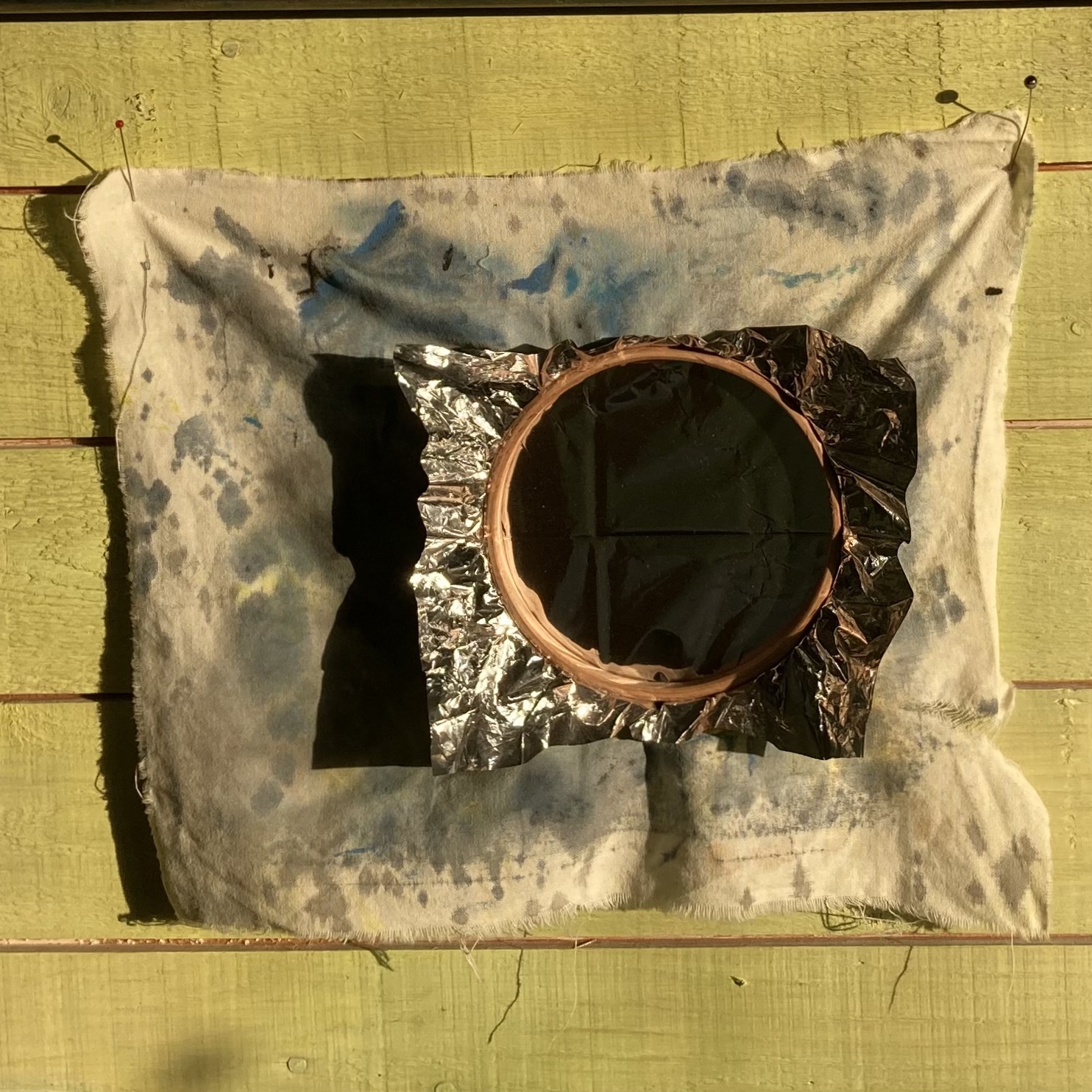
May came and went. Inbetween the construction steps of the chest, I tried to figure out how to best turn an emergency blanket into a mirror – for the making of another, embroidered map…

…before returning to the world inside the chest. Now  summer is in full bloom, and this one is nearing completion… More to come.

Obinna’s Itinerary

Praxis of Social Imaginaries, Winter Session 2025

art, recent work, time-out

On March 5th to 9th, the Praxis circle gathered for another Winter Session – the last one within this three year cycle. Once more, we were hosted by the Sigtuna Foundation; a center for culture, research and education, with roots in the Christian ecumenical movement of the early 20th century. The Foundation resides in a cluster of monastery-like buildings, situated among pine trees on a hillside in the mediaeval city of Sigtuna (Sweden)… a venue quite congruent with the texts we were reading. And the book was A Description of the Northern Peoples, written by Olaus Magnus – the last Catholic archbishop of Sweden – during his exile in Rome, and published in 1555. 

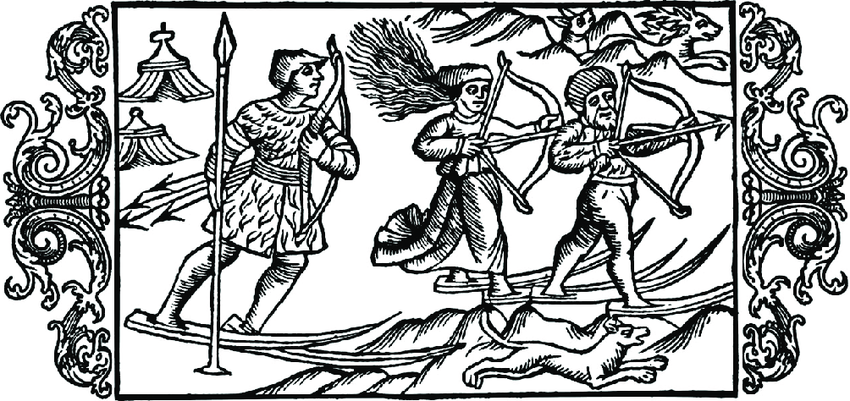
Woodcut from Olaus Magnus’ ‘A Description…’ showing a party of Scricfinnias hunting on ski;
artist unknown, image source Wikimedia Commons

The book consists of a very large number of short chapters, covering topics such as The Five Languages of the Northern Kingdoms, On Preventing Filthy Ditties and Of the Sea-Magicians.  The text was approached from various perspectives (as usual within the Praxis study circle) and further processed through workshops in writing, drawing and listening.  A chapter on sword and fire dances generated an improvised solo dance by Dr. Laura Hellsten; and the mediaeval Festivals of Greenery were discussed and enacted while enjoying the first sunny day of spring. In present time, Ramadan had begun and a handful of the participants were observing the lent during daylight. Luckily, dinners were served after sunset, and we could all share plentiful, tasty meals in the dining hall… as the new moon was quietly waxing.


Woodcut from Olaus Magnus’ ‘A Description…’ showing a ship running aground after being misled by a fire on the shore, 
and men of the Finnmark attacking the supposed pirates onboard with stones in their hands.;
artist unknown, image source Wikimedia Commons

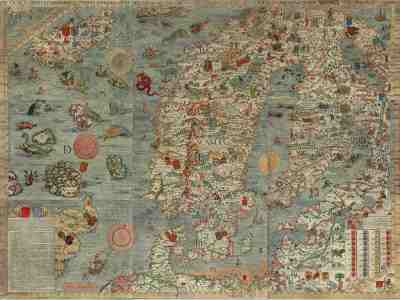
Olaus Magnus’ original text was accompanied by woodcuts, made under supervision of the author himself especially for this first edition; an unusual feature that most probably contributed to make the book a success. As can be seen, the scenes were abundant with vivid detail… About one hundred of these pictures actually originate from an earlier publication of Olaus Magnus: the Carta Marina. Printed in Venice in 1539 – after twelve years of work – it is in itself a rich description of places, creatures and people; an almost overwhelming compilation of material provided from memory by the banished archbishop. This map provided the starting point of a session on Magic, facilitated by Dr. Lindsey Drury, where we connected events described in the book with the actual places on the map – and, again, with our own experiences of traditions and histories handed down over generations…

Olaus Magnus’ Carta Marina, printed in Venice (1539) and later hand-coloured;
artist unknown, image source Wikimedia Commons

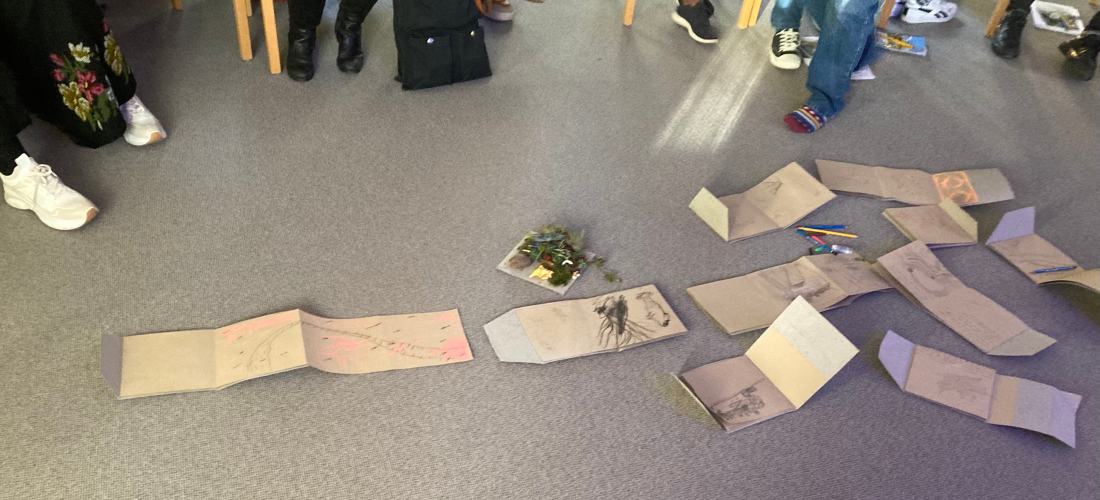
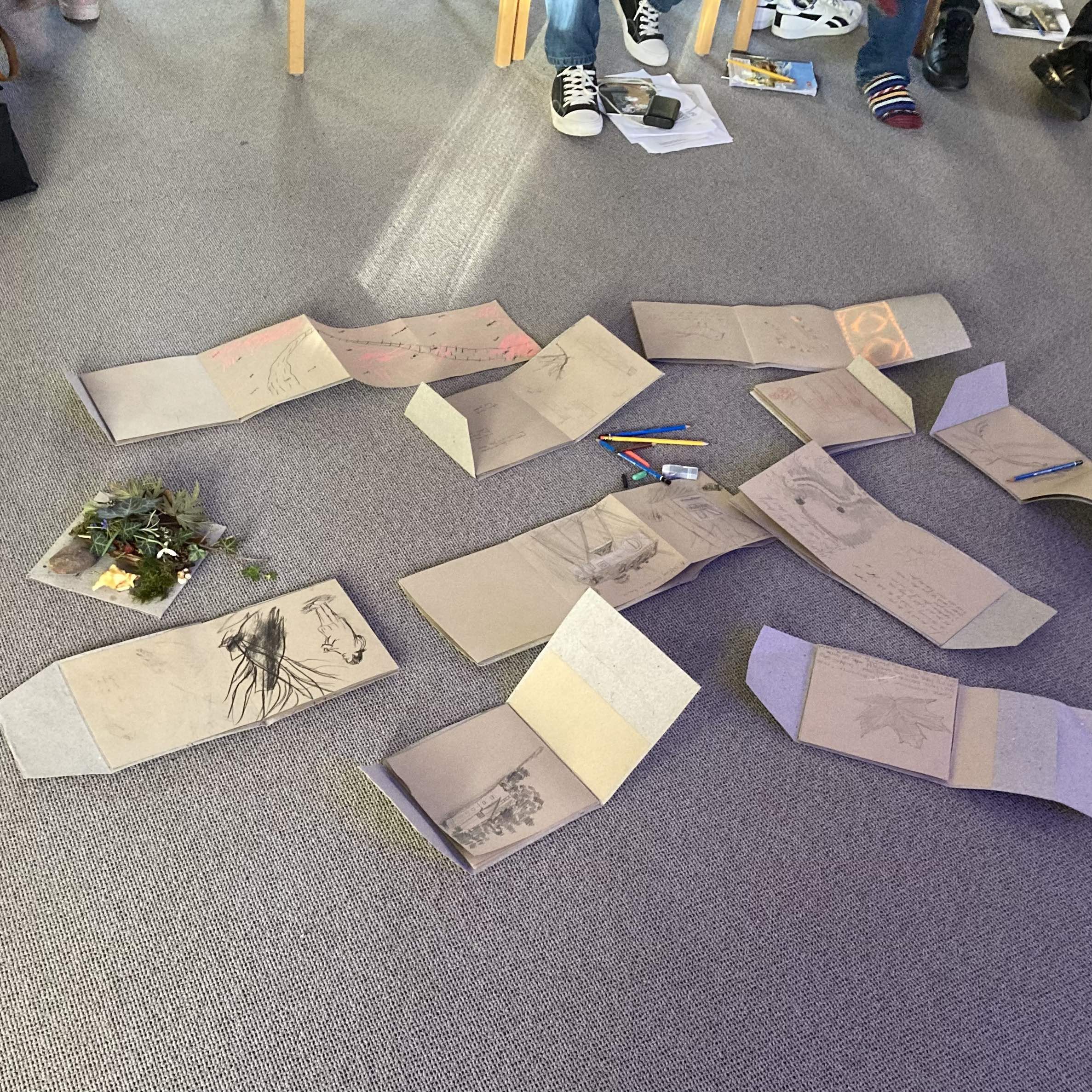
My own contribution followed shortly after this session, and included a listening exercise borrowed from Pauline Oliveros’ Deep Listening scores; a silent walk along the hillside groves; and providing handmade booklets for making personal notes while finding one’s way back to the Foundation. The idea was to turn from an analytical mode, into attention in the present – shifting from the realm of the scholar (Olaus Magnus) in order to approach the mindset of a person closer to weather, shifts of light and temperature, and other-than-human life…

(In fact, I believe that the indigenous “magic” perceived by foreigners may – more often than not? – be the result of close attention paired with traditional knowledge.)

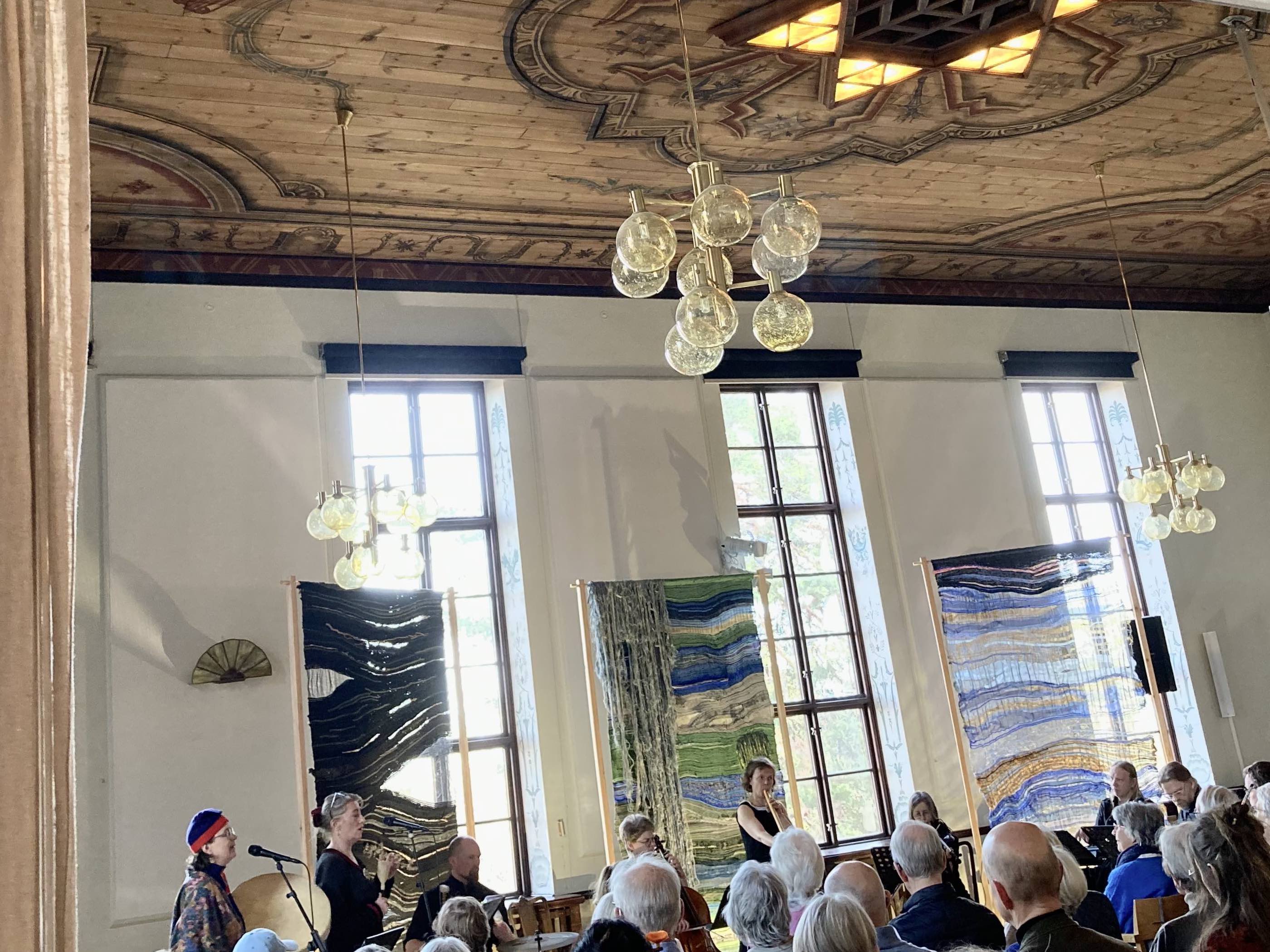
Spirit Land performed by Nina Nordvall Vahlberg, Emma Göransson, Olli Liljeström, Carolina Bjon, Minna Hokka, Marianne Maans, Kari Mäkiranta and Frank Berger

In the next-to-final day of the Winter Session, the Praxis circle was invited to take part of Vuoiŋŋalaš Eanadat / Spirit Land, an artistic collaboration between two of our co-participants: textile artist / artistic researcher Emma Göransson and composer / musician Frank Berger. The performance also included a number of musicians from Finland and Sàpmi, and was open to the public as a part of Sigtuna Foundation’s cultural program.

The auditorium was crowded, and the afternoon sun gently spread its light through the textiles as music and jojk began to fill the air. For two years, Emma and Frank have been working towards this performance – and now was the moment! Colours, textures and sound intertwined, invoking the visible and invisible landscapes of the North. In Emma’s own words: “The three cosmological spheres in traditional Sami mythology – Jabbmeájjmo/Underworld, Eana/Earth, and Albmi/Heaven – are represented by monumental weavings, here set to music. The voices of the landscapes are heard anew, restored and brought to life, but changed.”

Afterwards, Dr. Hellsten moderated a talk between Frank, Emma, and Dr. Shiluinla Jamir – another valued member of the Praxis circle, who graciously added the perspective of a person from the indigenous Naga people of Northeast India. Listening to Frank’s music, and the jojks of Emma and Nina Nordvall Vahlberg; watching the delicate weavings floating in light; and following the exchange of indigenous experiences… were some of the memorable moments of hope and beauty that will stay with me.

Mapping Praxis VIII: Talk, Text and Textiles

art, recent work

The embroidered Mapping Praxis itineraries are products of face-to-face chats, and of handicraft rendering talk into tactile textile maps. In parallel, and thanks to the efforts of Laura Hellsten, participants of the Praxis of Social Imaginaries study circle have been invited to contribute to a special issue of a scientific journal. Since September, the mapping project has therefore extended into academic writing.

Halfway into the first month of 2025, three embroidered maps were completed (sometimes after several revisions) and a first draft for an article was submitted. The work continues, now by realizing the next three mappings… 

Art’s Birthday Rebirth: Soundtower Growing Roots

art, recent work, upcoming

Being part of the Ljudtornet (Soundtower) sound/art platform has been inspiring, joyful and rewarding in so many ways… From the beginning in 2018, we have realized six ANTENN festivals in the old Watertower of Gnesta (engaging almost a hundred Swedish and international sound artists, musicians, filmmakers, and other exhibitors/performers); we have made web radio broadcasts reaching listeners globally; and since 2020, we have celebrated Art’s Birthday on the 17th of January by making original sound/art installations.

From the Watertower into the forest; photo HHW.

When the local municipality decided to lock the watertower permanently in 2023, the Soundtower staged a mourning march and farewell ceremony. We lost a homeplace, but the spirit stayed with us; we kept on collaborating, in various constellations, and kept in touch. In November 2024, some of us took part in a manifestation for Ulvaskogen/Wolves’ Wood – a local forest, threatened by brutal logging. From this event, a seminal thought began to grow… and on Art’s Birthday 2025, the seedling reached the light.

The Soundtower is growing new roots… 

This slideshow requires JavaScript.

“The Light in Wolves’ Wood” event, Nov. 17th, 2024;
contributions by Soundtower artists Julia Adzuki, Patrick Dallard, Tomas Björkdal, Rolf Schuurmans, Helena Hildur W, the Ministry for Environmental Grief;
photos by Eliot Freed