
The Studies in Remoteness is a study circle framed within the Nordic Summer University, set to begin in January 2026 and ending in 2028. We’ll meet twice yearly, for a Winter and a Summer Session (the latter being integrated in the annual gathering of all circles in the Nordic Summer University).
Studies in Remoteness deals with the ingrained notion of “far away places” – be it the regional peripheries or cartographic borderlands between nation states; the residential areas of indigenous/minority communities; historical testimonies and lacunae; the sub-cultural meeting spots or your neighbour’s kitchen… With lingering attention, our studies intend to reset conditions of neglect and exoticism – unfolding the histories, topographies and epistemologies of such places “far away”.
Based in the Nordics, the Studies in Remoteness study circle will keep the circumpolar Arctic as a recurring theme – while actively inviting the perspectives of de-colonial thought and indigenous research from all continents, as well as practices grounded in feminist, queer and artistic approaches.
The Studies in Remoteness will be co-coordinated by Dr. Lindsey Drury of the Freie Universität in Berlin, and myself, Helena Hildur W. – in collaboration with (among others) Dr. Shiluinla Jamir, poet/writer/theologian Tinka Harvard, and PhD student Essi Nuutinen, as well as current and former board members of the Nordic Summer University.
We warmly welcome scholars, students, artists and activists to engage with us in exploring the potentials of Remoteness!
Contacts
lindsey.drury[at]fu-berlin.de
helenahildur[at]gmail.com
Studies in Remoteness study plan
Winter Session 2026
Topic: Duplicity / Duplicität: Betwixt Intimates and Strangers
January 29–31, 2026 – Institut für Theaterwissenschaft, Freie Universität Berlin
This opening session explores the two-sided, the between spaces, the self-conflicted, and the epistemic ambiguity and multiplicity that emerge from these. Engaging with voices and worldviews often marginalized or erased in dominant knowledge systems, we will examine what it means to be situated (perhaps conflictedly) between radically different identities, geographies, and epistemologies.
Summer Session 2026
Topic: Intimate engagement with historical remoteness
July 2026 – Latvia, venue TBA (NSU Summer Session)
Set within the Baltic context, this session considers the emotional and material legacies of remoteness as lived through history. We will explore how historical displacements, erasures, and distances are felt and remembered in intimate ways, drawing on personal and collective memory. This gathering invites an affective turn in the study of remoteness, focusing on its textures, rhythms, and deep temporal resonances.
Winter Session 2027
Topic: Circumpolar Remoteness
March 2027 – Stockholm, Sweden
This event focuses on Arctic and subarctic contexts. We will draw on Indigenous scholarship and critiques of extractive colonialism to unpack the geopolitical, environmental, and cultural dimensions of northern remoteness. The session aims to build translocal solidarities by linking Arctic struggles with broader conversations on colonial geography.
Summer Session 2027
Topic: Infrastructures of Remoteness
July 2027 – Nordics, venue TBA (NSU Summer Session)
This session investigates the built and bureaucratic structures that create, sustain, or “overcome” remoteness. From roads and cables to administrative systems and zoning laws, infrastructures mediate experiences of distance, disconnection, and neglect. Participants will analyze how these material forms shape spatial hierarchies and consider what decolonial or alternative infrastructures might look like.
Winter Session 2028
Topic: Sacredness and protection
(early) April 2028 – venue TBA
This session examines the entanglements between remoteness, sacredness, and practices of protection, asking what is being protected, by whom, and to what ends. While sacredness can offer a vital language of resistance and refuge – protecting landscapes, cultural sites, and spiritual traditions from commodification and harm – it also risks being mobilized in the service of exclusionary and securitized nationalisms. In the Nordic/Baltic context, where histories of occupation, resistance, and identity are deeply tied to land and place, we will critically assess how appeals to the sacred may be co-opted into ethnonationalist narratives that frame cultural heritage as a bordered asset under threat. Participants will explore how protection can drift into securitization, where remoteness becomes less a zone of care and more a frontier to be policed. The session encourages nuanced discussion on how to differentiate between emancipatory and repressive forms of protection – and how the sacred might be reclaimed without being enclosed by nationalism.
Summer Session 2028
Topic: Being Lost
July 2028 – Baltics, venue TBA (NSU Summer Session)
This gathering embraces the affective and existential dimensions of being lost – physically, conceptually, or temporally. We will consider how disorientation can unsettle fixed understandings of place and self, opening up space for new orientations. “Being lost” will be treated not as failure, but as a method for inquiry, reflection, and resistance.
Read more and follow the project:
Studies in Remoteness
Featured image (above): Senator Lisa Murkowski visiting the Faroe islands, 2019
Attribution: United States Senate – Office of Lisa Murkowski, Public domain, via Wikimedia Commons
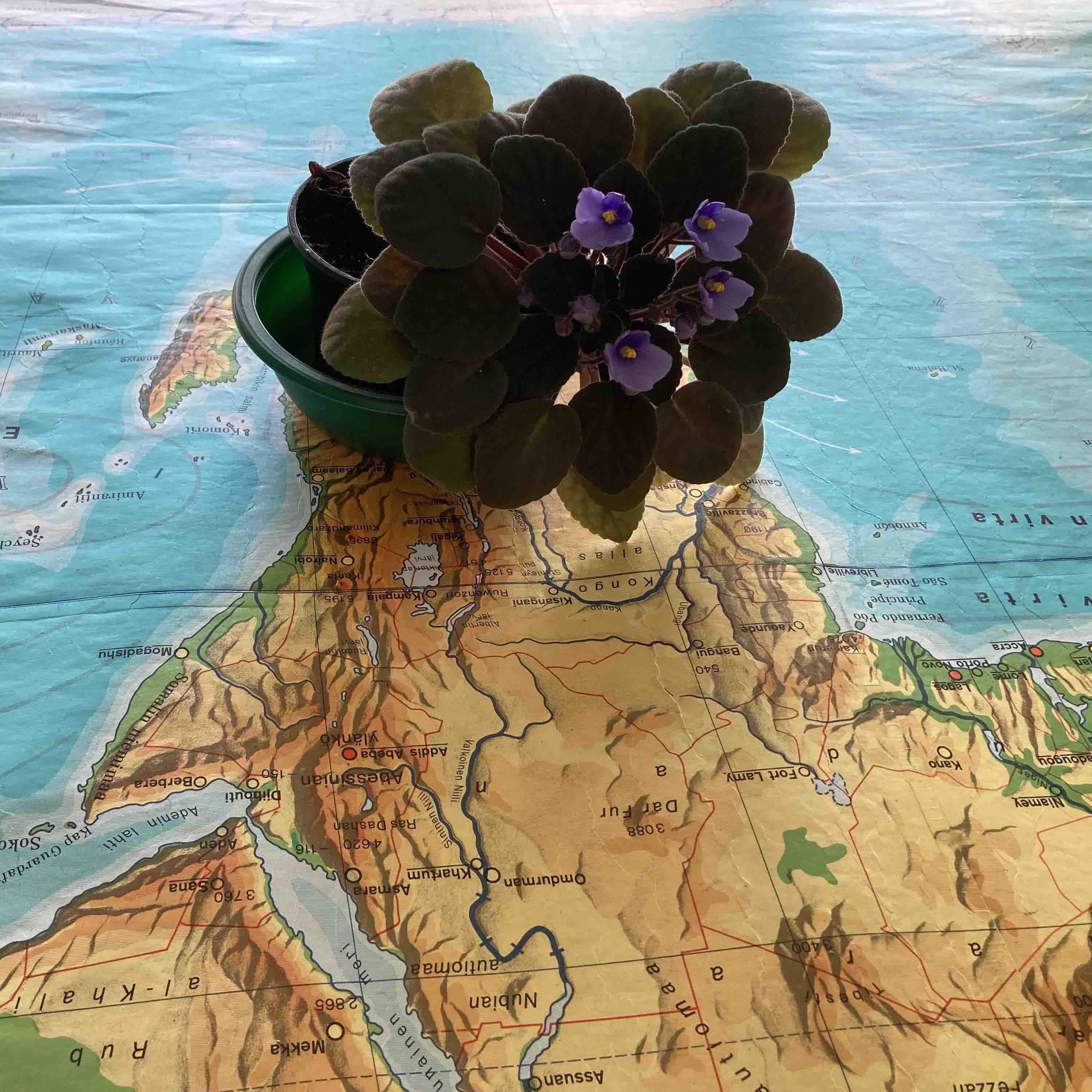
Below: an Usambara violet (Streptocarpus ionanthus), a species classified as “near-threatened” in its native habitat – the Tanzanian Usambara (Dughulushi) mountain range, where cloud forests are today increasingly being cut down in order to give way to extended agriculture. Collected in the 19th century by British and German colonizers, further examined and propagated in Europe, the Usambara violets now survive largely as pot plants on narrow window sills around the world.
 Helena Hildur W.