working Darkness V

art, recent work

last-113

last-134

last-152

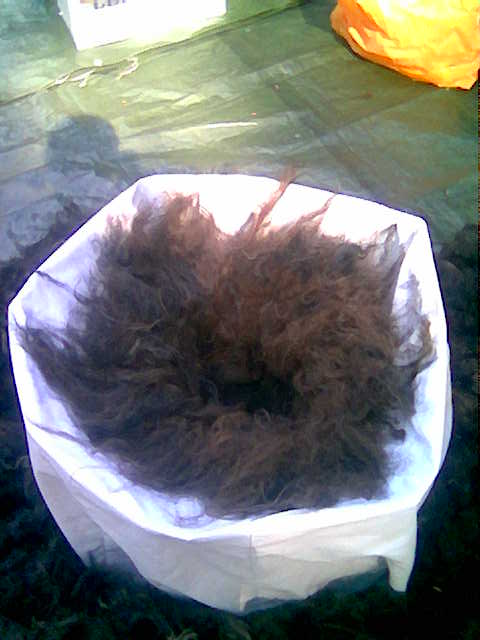
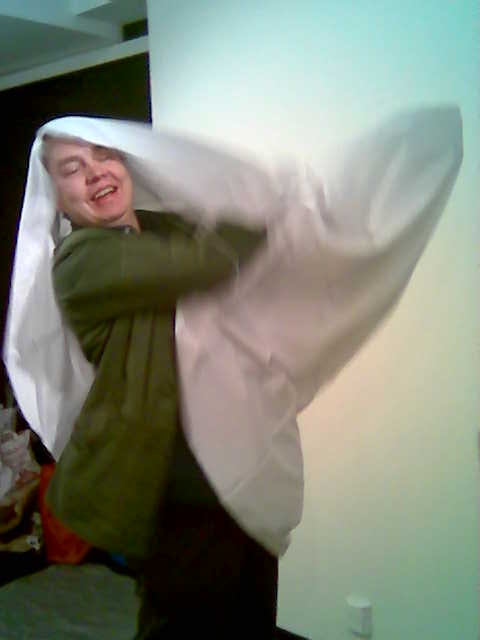
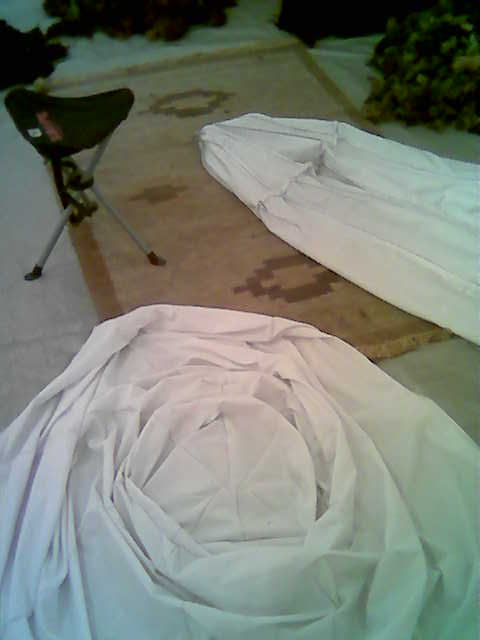
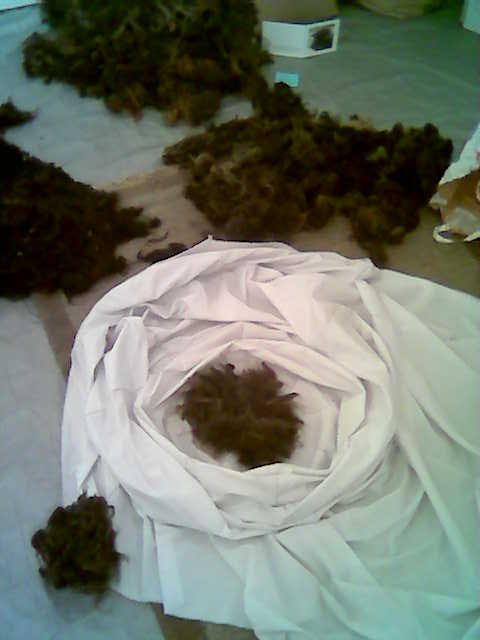
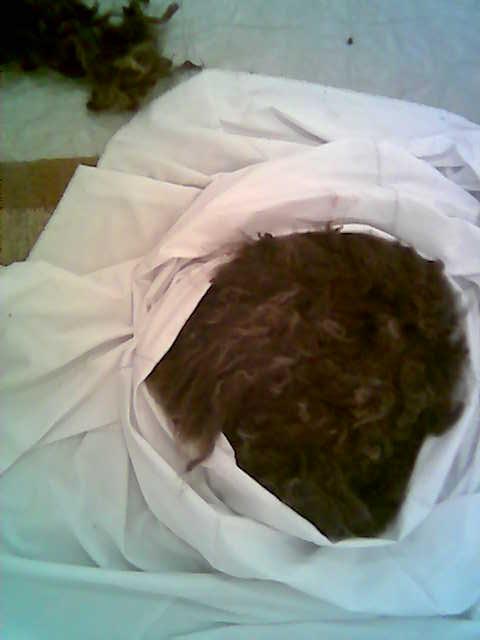
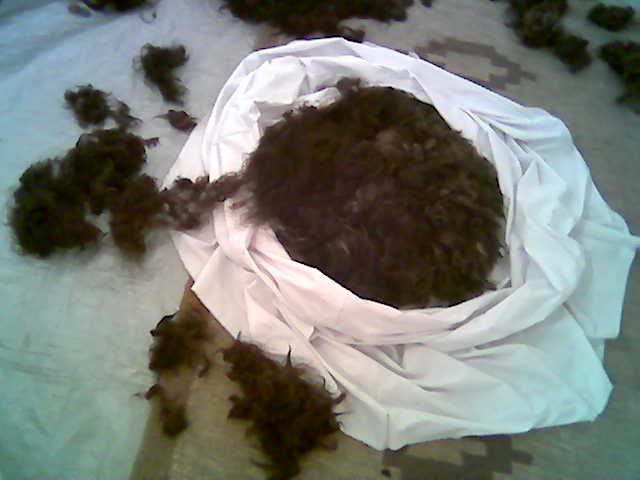
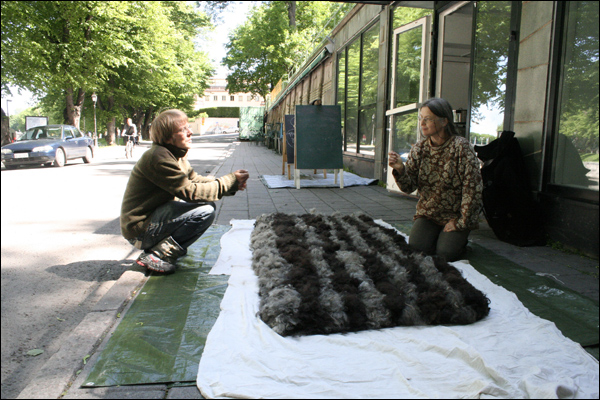
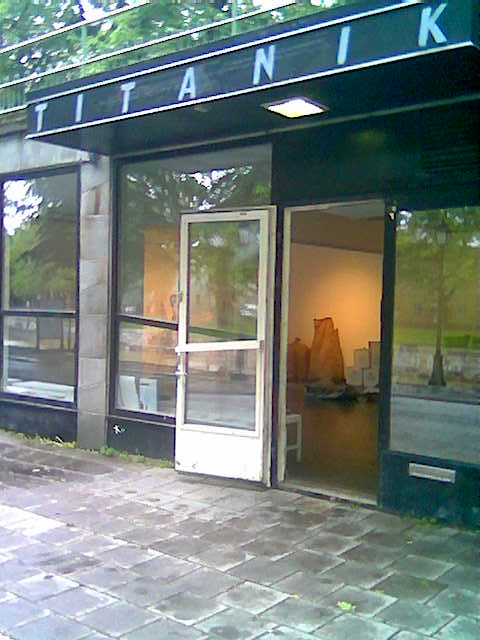
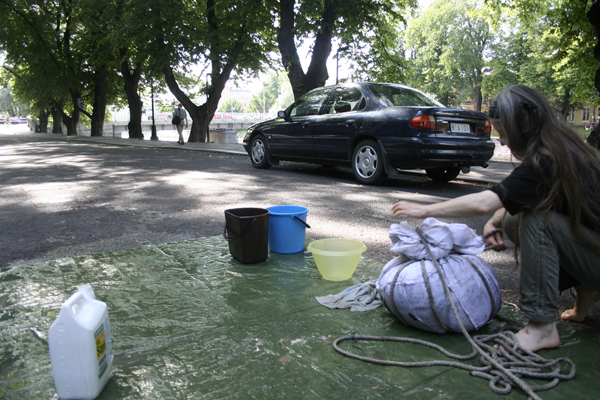
Darkness workshop at Titanik; three photos by Reino Koivula

In Åbo/Turku, the Darkness workshop continues, and, returning from Venice, Reiska and I join in again.
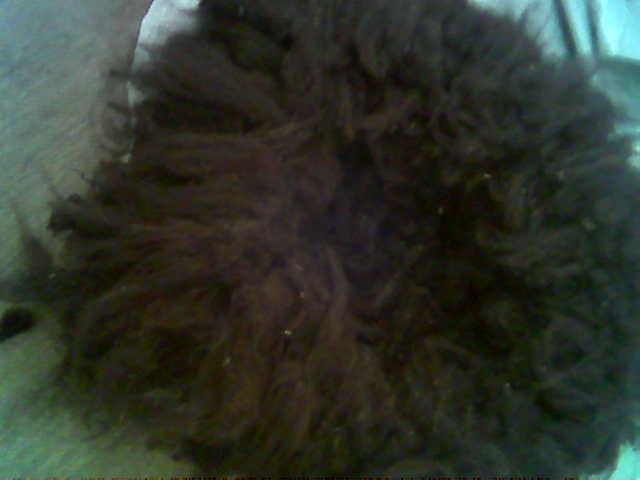
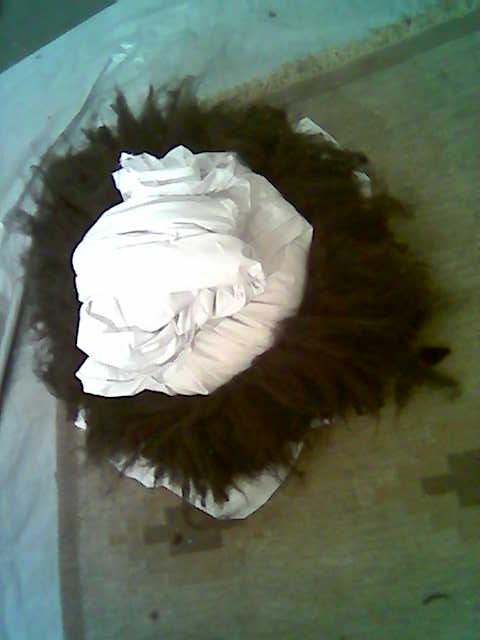
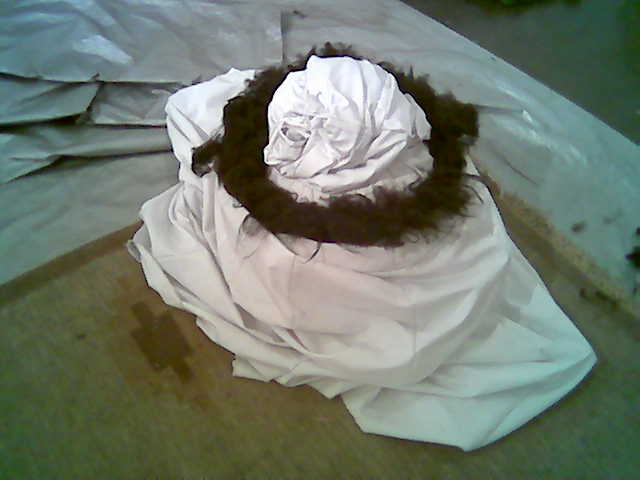
One three-dimensional piece of felt is produced by using a smaller part of the bell-shaped textile form; the technique works out well, but the gutefår wool seems too coarse to make good felt. From now on, I will use only the wool from the värmlandsfår breed.
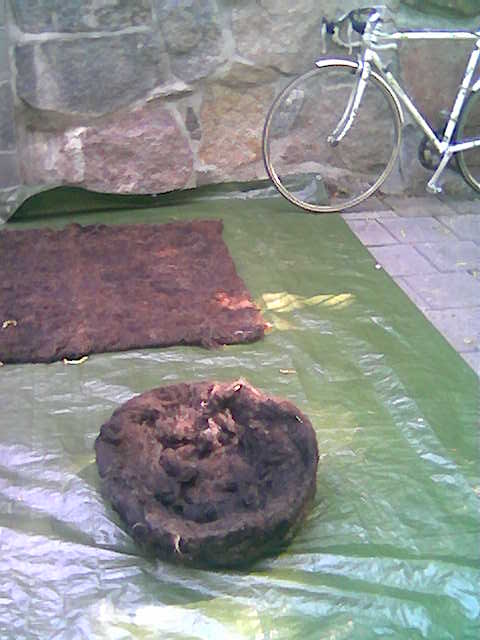
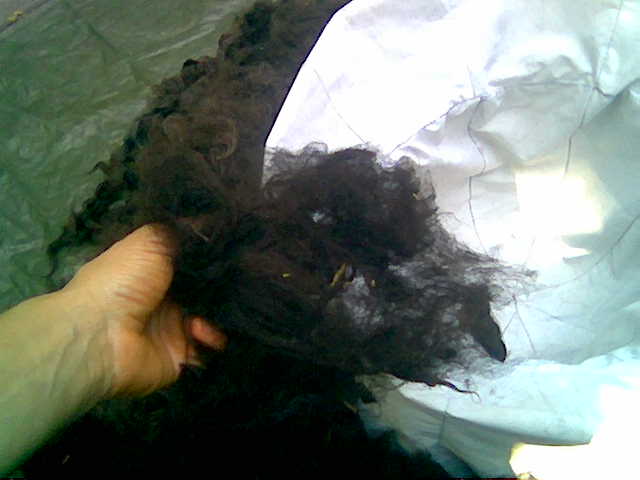
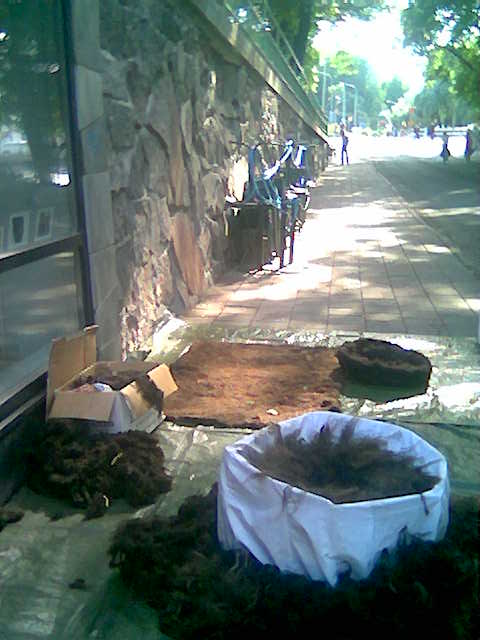
090701 9 Today is warm and sunny, so I move outside to work. People stop to look, and some share their experiences of wool, sheep and feltmaking. I hear stories about felt soles being made out in the Finnish archipelago and sold in the town’s fishmarket; about coalmining in Australia and its fatal consequences for sheep; I hear memories from travelling in Kyrgyzstan as well as arguments for vegan activism. Somebody remembers his childhood, when clothes weren’t bought but made by the mother from hand-spun and handwoven wool – that was northern Finland in the 1940’s.
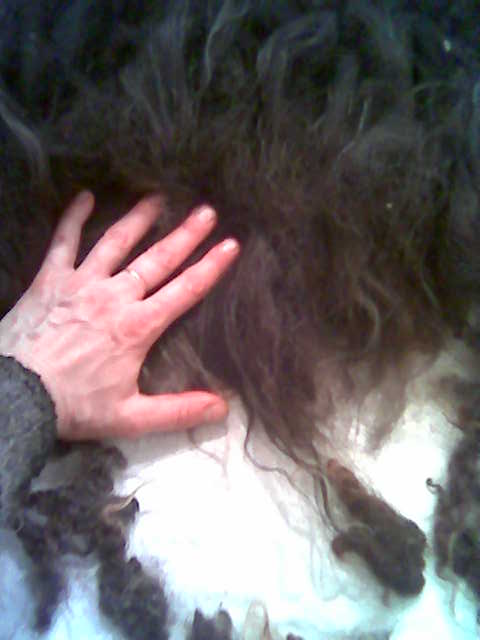
All these stories go through me, down into the whirl of dark hair I’m working.
090701 5

090701 7 090701 6

http://www.arte.fi

Venice reflections

art

090622 08

090622 04 090622 05 090624 02

090624 01

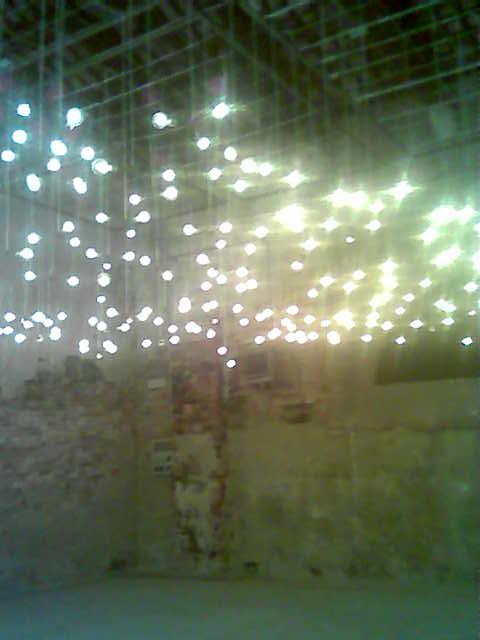
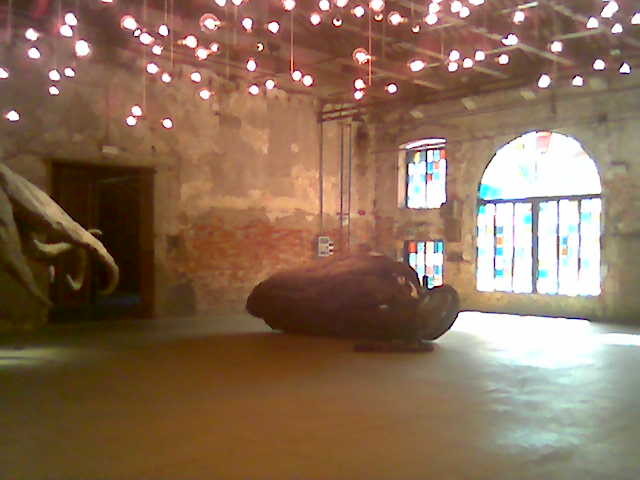
Light installation by Spencer Finch
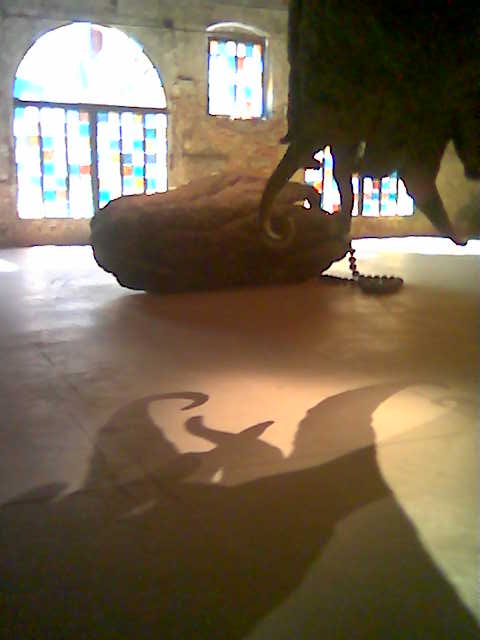
and Buddha’s hand sculptures by Huang Yong Ping
(Fare Mondi/Making Worlds at Arsenale)

090622 13

Latex sheet used for the cleaning of a wall at the Doge’s palace in Venice
by Jorge Otero-Pailos, theorist of architecture and contemporary preservation
(Fare Mondi/Making Worlds at Arsenale)

090622 16 090624 04

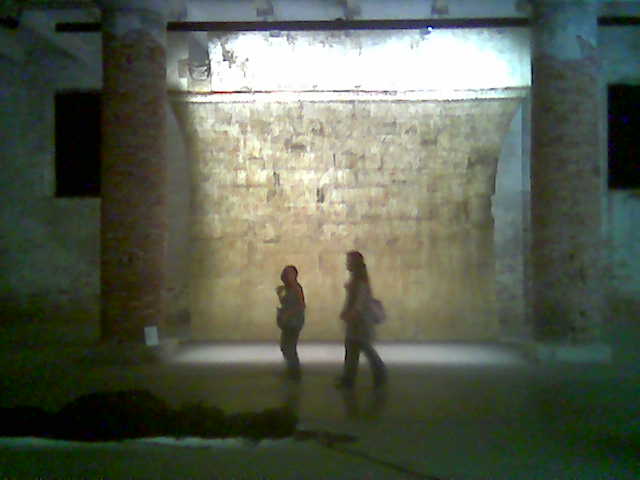
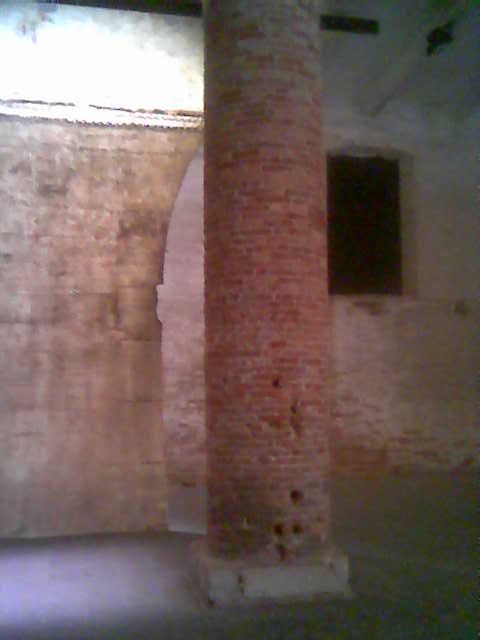
Arsenale spaces

To perceive such a mass of artworks as in the Venice Biennale, one will have to do some coding – consciously or not. The simplest way is perceiving by like or dislike, and it’s not a bad one. However, I try adding some more categories, like: does this artwork express critique, or is it an act of celebration? Do I perceive it mainly as communication – horizontally – or does it open to the vertical dimension as well? Is it conceptional, or… what?
Much contemporary art springs from concept. Only a few works succeed in transcending it; like few sperms ever reach an egg.

090623 07 090623 09 090623 05

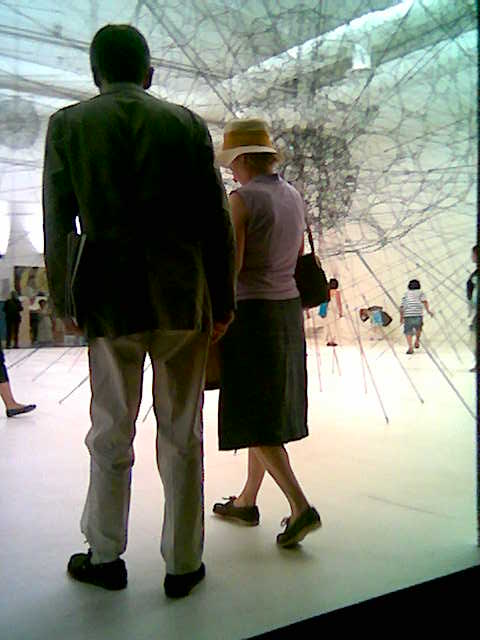
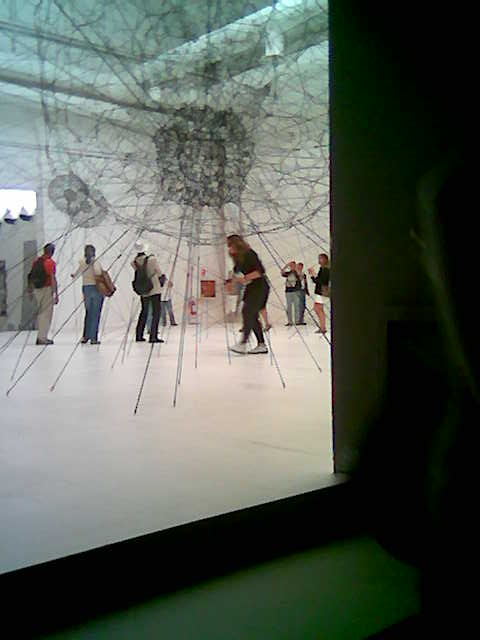
Tomas Saraceno’s Black Widow spider web
in the large, enlightened central space of the international pavillion;
Nathalie Djurberg’s inverted Garden of Eden in the dark room underneath
(Fare Mondi/Making Worlds at Giardini)

Good curating, though, can provide meaning also to what otherwise might appear abortive. At the Biennale’s international exhibition venues – Fare Mondi/Making Worlds – there is rhythm and lightness to the curating, bringing the works in tune.
I add rhythm as another coding category.

090622 02 090622 03

090622 21

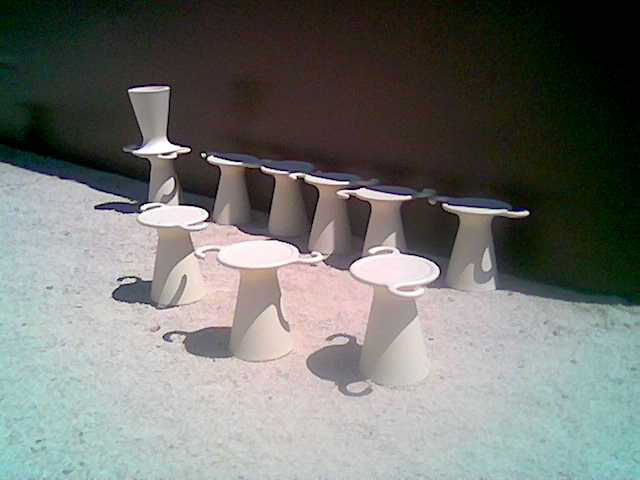
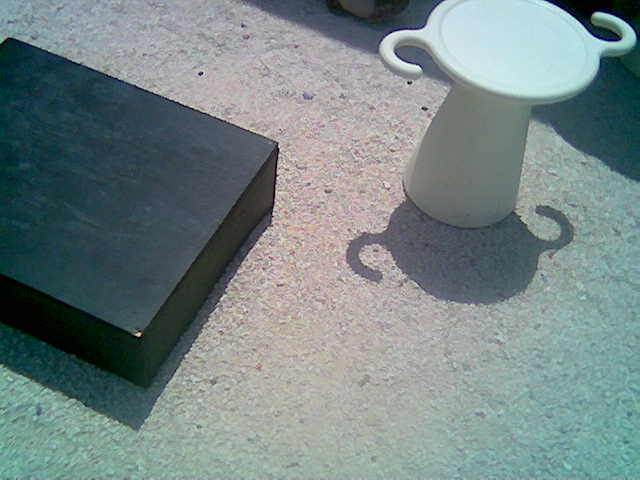
outdoor stools, above;
sculptural installation by Richard Wentworth, below
(both at Arsenale)

How do these categories coincide, overlap or differ?
Do I, for instance, always like those pieces made in celebration of something which I can attach myself to – like humanistic values? No. Can I keep disliking a work when the curating connects it to some other in a meaningful way? No. Now, this is fun…

090622 24

090623 19 090624 00

Styrofoam sculpture by Carsten Höller at Arsenale, above;
two photos from Giardini, below

And then, suddenly, something seizes me and I leave all questions behind.
It’s art.

090624 06

Ttéia I; gold thread in square forms, by Brazilian artist Lygia Pape

working Darkness IV

art, recent work

090619 14

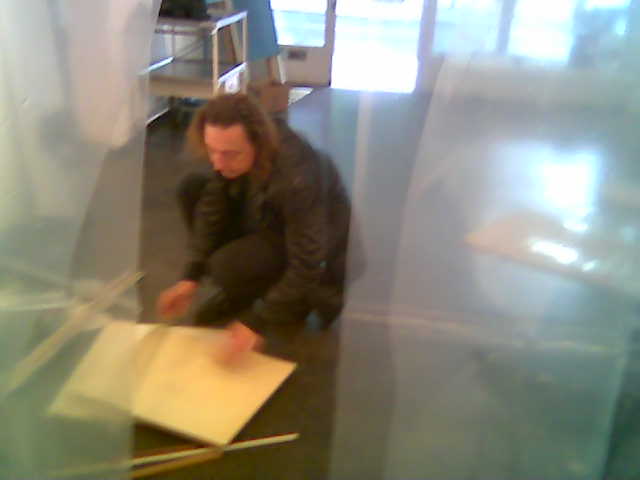
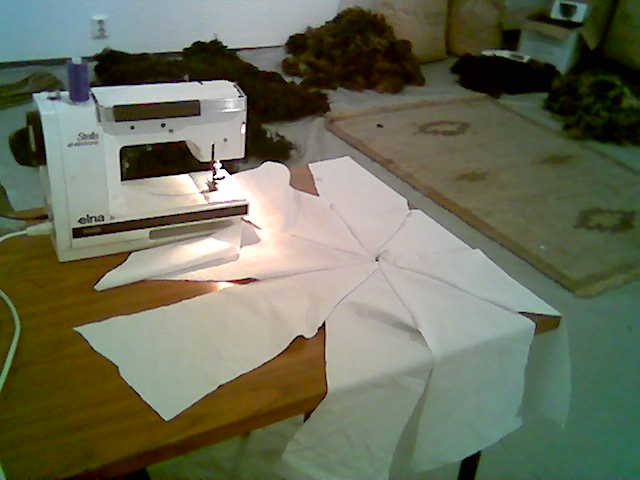
On Friday, June 19th, Midsummer’s Eve – Juhanni – is celebrated in Finland. The day is cold and rain is in the air, city’s almost deserted. I keep working darkness. Because of the low temperature, I decide not to do the actual felting, just prepare for the making of the bell. Wood sculptor Timo Nenonen helps me in trying out the equipment.

090619 3 090619 2

Reino keeps company, while I build the shape by filling wool from the bottom (which will eventually turn out top), spiralling out outwards and upwards and making sure that fibres are criss-crossing so as to keep together well when felted. Finally, I insert the inner bag filled with saw-dust (kindly provided by Timo) which is meant to keep the material fixed in shape while felting. But for the time being, I leave it there.
090618 8 090619 4 090619 6

090619 7 090619 8 090619 11

090619 12 090619 13

working Darkness III

art, recent work

090616 3 090616 4

‘Darkness’ workshop is going on at gallery Titanik, in the heart of a Northern midsummer’s abundance of light; right now it’s almost 10 pm and still daylight outdoors. Reino Koivula, my appreciated colleague, non-organizes the event which develops graciously.

work4-004

Darkness workshop at gallery Titanik; photo by Reino Koivula

I’m the last to leave the gallery, having figured out a possible technique to make three-dimensional bell-shaped pieces of felt and now making the equipment for it. Today’s accomplishment was another carpet, striped in lighter and darker gray and measuring 1,0 x 2,4 metres, later to be cut and shaped by Reino.

090618 2 090618 5 090618 6

090616 2 090618 1

working Darkness II

art, recent work

090615 1 090615 2 090616 1

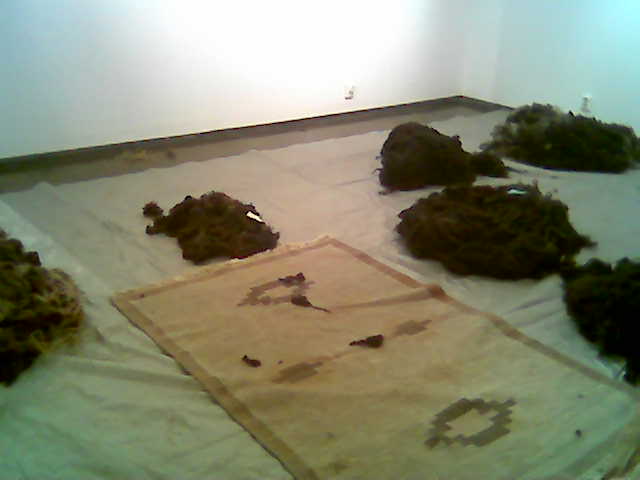
Today, the first felting was done at gallery Titanik by the bank of Aura river in Åbo/Turku. Wool from värmlandsfår and gutefår, two old Swedish sheep-breeds, was used. Two ewes of värmlandsfår, Stina and Brita, had provided us beautiful dark brown/black fells which were successfully turned into one flat, thick piece of felt measuring 1,1 x 1,5 metres. Moreover, we did some experimenting on three-dimensional felting with gray-black gutefår wool.

  • http://www.arte.fi
  • 090615 6 090615 5 090615 8

    working Darkness I

    art, recent work

    Last week, the Nomadic University held its eighth oasis called ‘Crisis? What Crisis?’ – once more in Åbo/Turku. There were lectures by Roger Säljö, Bruce Johnson, Karl-Erik Norrman and others … the opening of Hanna Varis’ exhibition in Åbo Castle… and some good working which will hopefully turn out fruitful.
    For full programme, see the NUrope webpage:

  • http://www.nurope.eu/abo-turku.html)
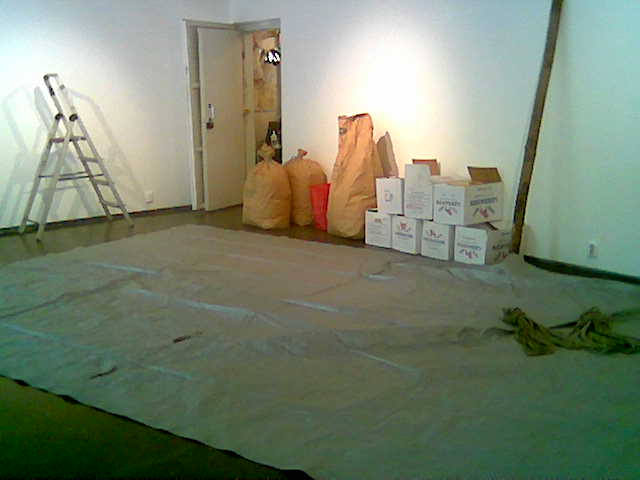
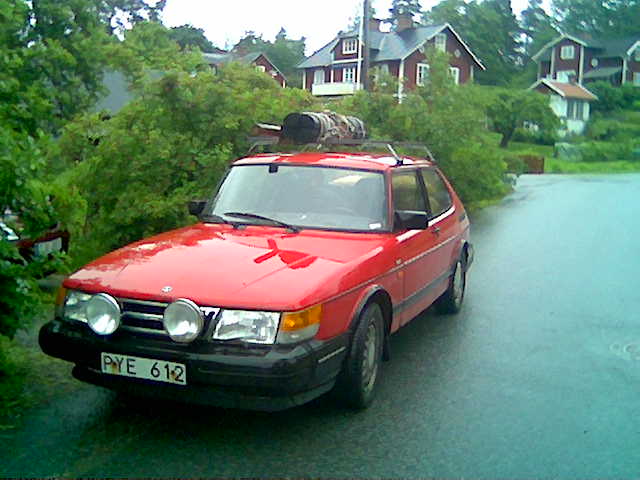
  • Now, after a short visit home, I pack my car for returning: one bag of course literature, a cool bag for milk and honey, some personal things – clothes and toothbrush, mainly; a huge big cauldron, ten litres of liquid soap, a carpet, a tarpaulin, a bed-sheet and a young tree-trunk plus eight sacks of first-class quality wool in different shades of darkness. Let’s see what will happen next.

    Bild015 Bild012 Bild014

    Bild013 Bild020 090614

    Quality and Research VI

    art, recent work, teaching

    “Is there a method to die?”

    How could this question make sense? For all we know, death will happen to everybody alive; it’s the one condition we all share. There’s no method not to die.

    This makes clear that the essential word here isn’t ‘death’ – it’s ‘method’. The common-sense understanding of this word might be something like: ‘a set-up of presumptions and techniques used systematically to arrive at a certain result’. Now, if the result – in this case, physical death – is certain, no matter what, the question may still seem absurd. But stay with it a while…

    The Greek origin of the word ‘method’ means ‘way’. Without doubt, the way one takes could be related primarily to a determined goal – that is, result-oriented – which doesn’t necessarily affect one’s existence very much. When going to the airport, one may choose between the highway or the railway; both offer the prospect of a fast and safe arrival (though we all know that things do not always happen the way we plan).

    On the other hand: when going into something unknown, one will need to enhance awareness when moving along the chosen direction. Finding one’s way then becomes process-oriented; in each moment, the way outside exists only to the extent that it exists in one’s mind. This is how the concept of method is often adressed in contemporary art and research.

    I remember the way I travelled by the side of my mother. I remember the parting of ways.

    And the question makes perfect sense.