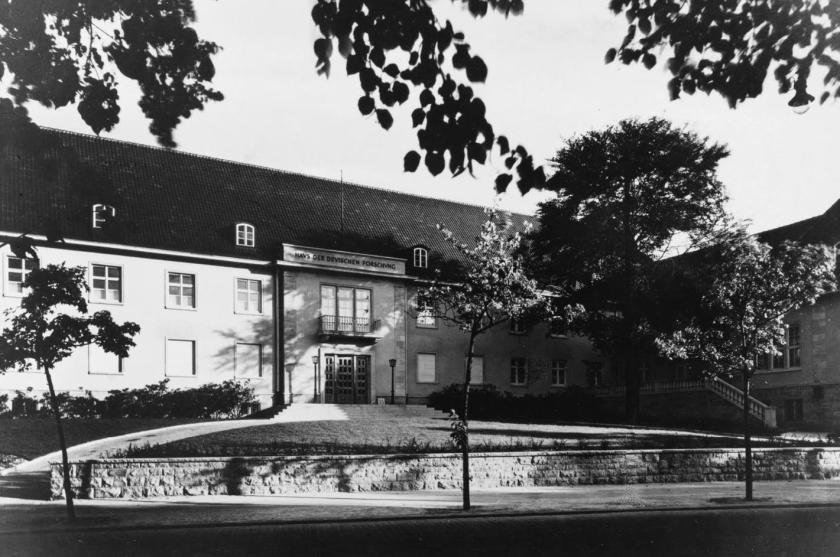
Time is almost 2 pm, and we’re at the Institut für Theaterwissenschaft of the Freie Uni. Berlin: a building once known as the Haus der Deutschen Forschung – in the years of WWII containing a lecture hall and a library, a ballroom, a casino, fifty offices and an air raid shelter; and, according to journalist Ernst Klee, housing a “cover-up community”, where “an enormous ‘degree of agreement between politics and science'” took place.
Zur Geschichte des Instituts für Theaterwissenschaft
Today, on January 29th, 2026, the coffee table is set outside the DanceLab, and name tags are waiting to be written and attached. People arrive, crossing the imposing foyer to find their way, continuing upwards via the symmetrical double staircases, heading for our more modest localities on the top floor. The footsteps and voices, the greetings and questions and answers tell of uncertainties as well as excitement.
Within an hour, we have welcomed most of our participants. It’s time to move; we’re going to the Berlin-Brandenburg Office for Everyday Culture, where the recently installed director Jonas Tinius will host the first session of the Duplicity symposium…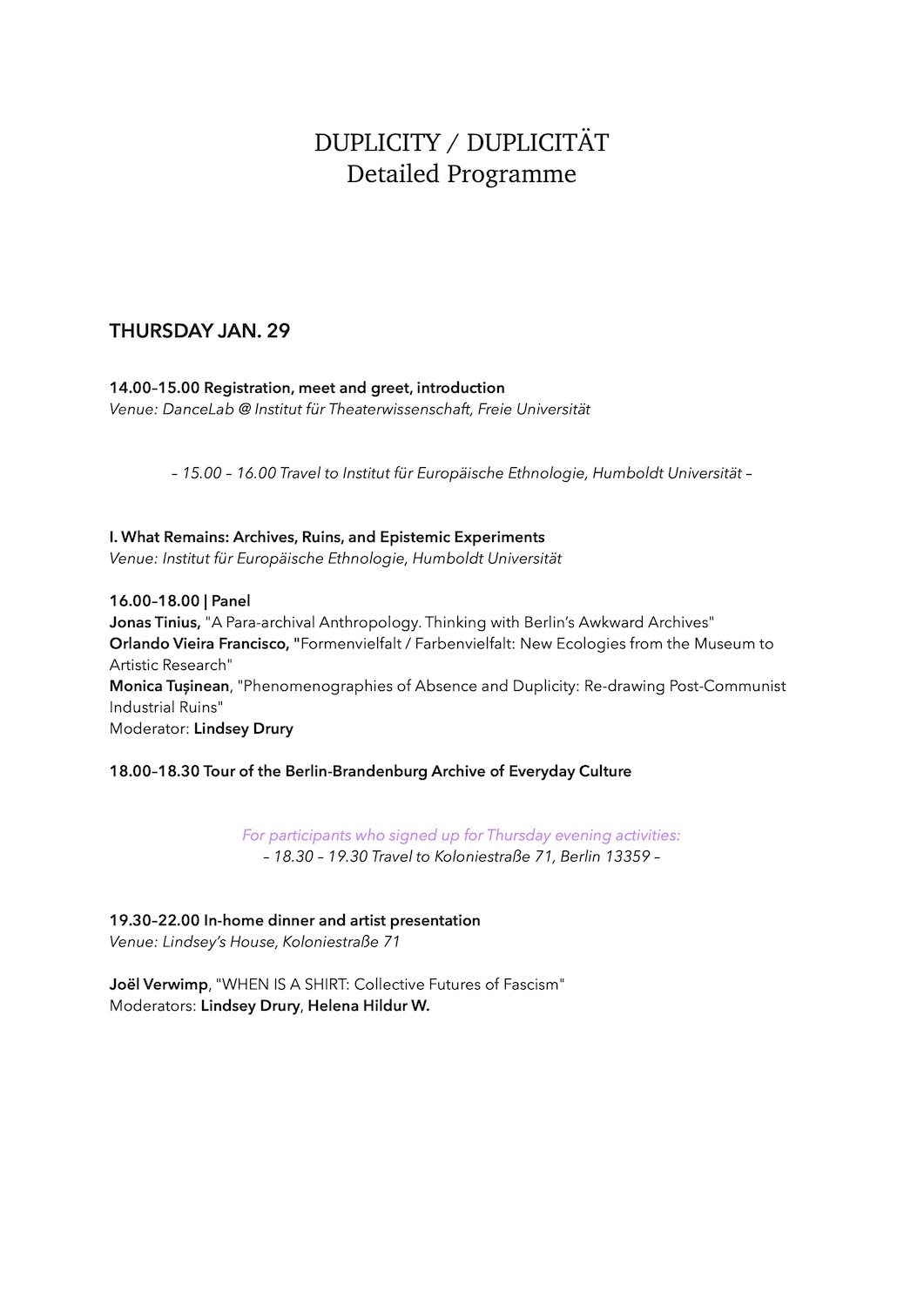
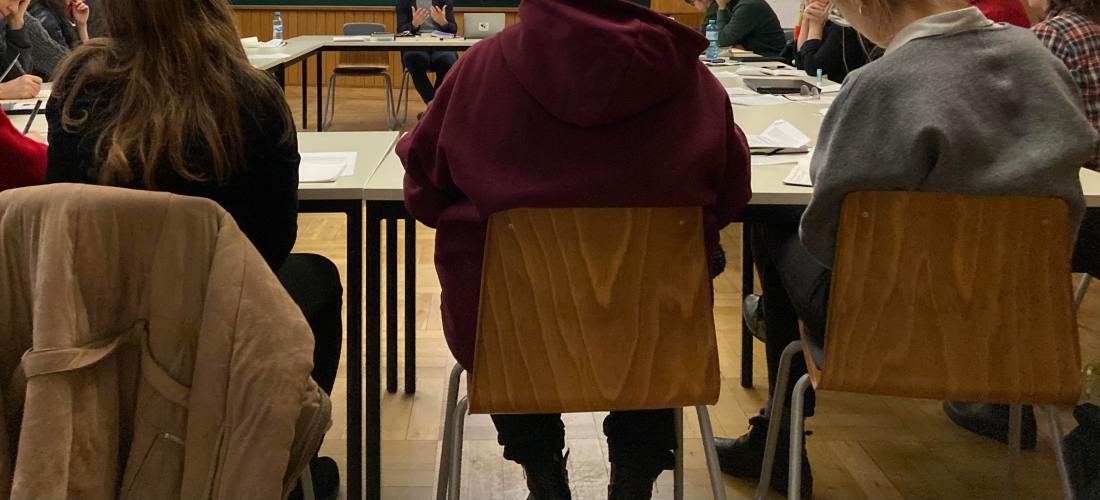
Due to EU General Data Protection Regulations, I’ll share only a few photos from the actual session here; Dr. Orlando Vieira Francisco (i2ADS Research Institute in Art, Design and Society, University of Oporto) presenting on Formenvielfalt-Farbenvielfalt: New Ecologies from the Museum to Artistic Research – an artistic line of thought, which (to my understanding) touched in a very personal way on the polarity between form and colour / drawing and painting / discerning and integrating… followed by Dr. Monica Tușinean (architect and researcher at the University of Stuttgart), sharing her work on post-communist industrial ruins in Romania – from which I borrow a slide (below).


Slide with hare borrowed from Monica Tușinean’s presentation “Phenomenographies of Absence and Duplicity”
Dr. Jonas Tinius both opened and closed the panel, first by presenting the (Para-)Archive as a site for investigations into how archives come into being; and, eventually, by taking the whole audience on a guided tour in the Archive’s enchanting basement.
Click the link, and follow Jonas Tinius along on an earlier tour in the Archive’s basement:
euroethnoberlin Landesstelle Re-Opening! 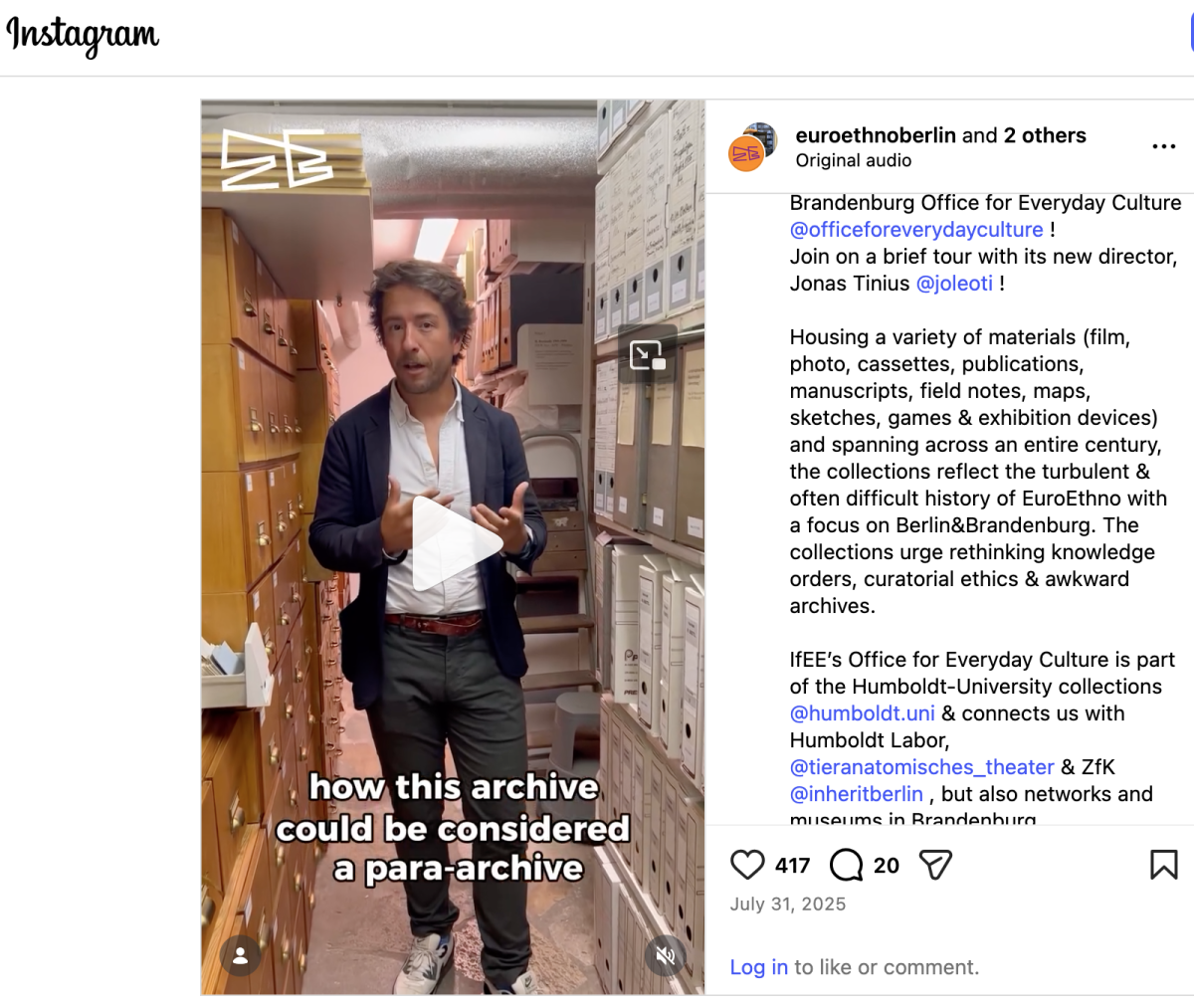
For those of us foreseeing (and lucky) enough to have reserved a space, the evening continued in a Wedding apartment with performance artist and cook Joël Verwimp’s In-home dinner and artist presentation WHEN IS A SHIRT? Collective Futures of Fascism.
Joël Verwimp, “WHEN S A SHIRT? Collective Futures of Fascism” performance
Photo credits: Essi Nuutinen
 Helena Hildur W.