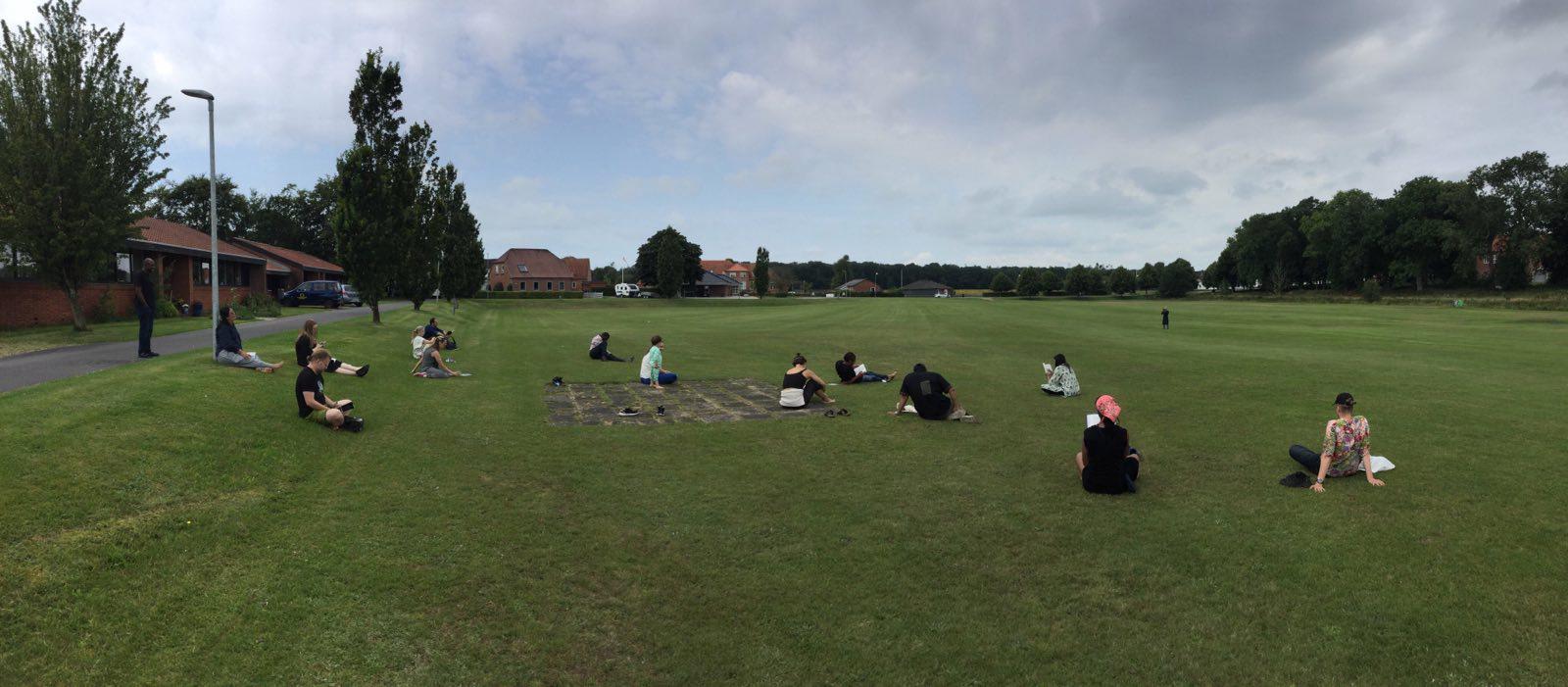
Studies in Remoteness II

art, upcoming

Call for Participation:
TIME WORK. Debt, inheritance and intergenerational practice

Second gathering of Studies in Remoteness, part of the 2026 Summer Session of the Nordic Summer University

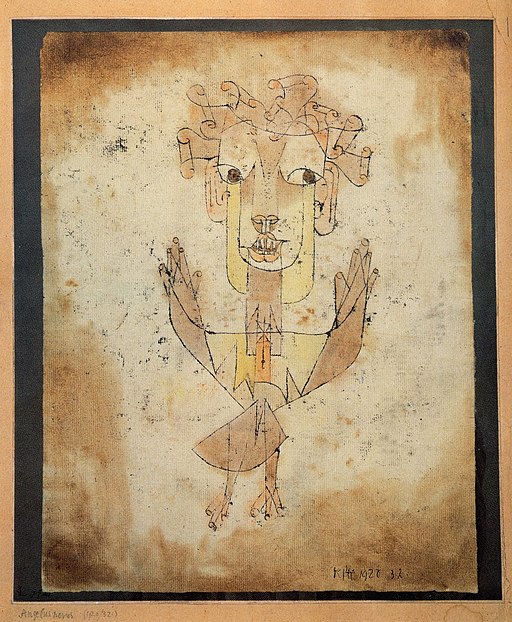
Paul Klee, Angelus Novus (monoprint 1920); photo credit Wikimedia Commons

CfP excerpt:

“Let’s call it ‘time work’: those practices that negotiate the relations between the living and the dead. Time work is not merely conducted by archivists and historians, but by grave diggers and undertakers, documentary filmmakers and memoirists, knowledge bearers, politicians, war journalists, practitioners of living traditions, speakers of dead languages, as well as by any and all who keep something – a story, a trinket, an heirloom, a song – holding onto it to remember. Time work is not easily done without feeling; It is driven by the weight of mattering, it is attention called by the fact that now – this, our, now – is in-part composed by the shadows of what and who came before. Time work is haunting work, it whispers of recurrences (‘this happened before’), and implicitly describes the present as a thing pushed to the surface of existence by the collective force of innumerable spent lives, over centuries, over millennia.

In the summer 2026 Studies in Remoteness symposium, we explore the ways that time work might destabilize the remoteness of history (its absence, distance, and neglect). How might we describe the work that transforms time into a weighted force that accumulates, persists, and can be carried forward, often across generations? Through what actions is one accountable to the past? What does it mean to hold or carry an inheritance? In what ways are people indebted to those who came before, and how might the living “pay the debts” that have accumulated over generations? What kinds of temporalities do different approaches to time work produce, and what social relations are then enabled or foreclosed? Through these questions, the symposium reflects on the entanglement of debt and history, exploring debt as an enduring paradigm that variously informs intergenerational relations, systems of oppression, and historical justice.

We particularly invite proposals that engage with voices and worldviews often marginalized or erased in dominant knowledge systems.

 – READ THE FULL CFP HERE –


Dates: July 24- 31, 2026
Place: Saulkrasti, Latvia

Welcome to apply!

Duplicity / Duplicität Symposium (day four of three)

art, recent work, time-out

…yes, day 4 out of three – because the programme got so rich, that it just didn’t fit within the settled time frame.

On this wintery Sunday morning, some participants decided to rest and digest, while others were homeward bound – to Trondheim, Porto or Los Angeles… The rest of us made a choice between the Weathering exhibition at Haus am Waldsee, or a sound walk / dérive in the former East Berlin district of Lichtenberg.

Screenshot

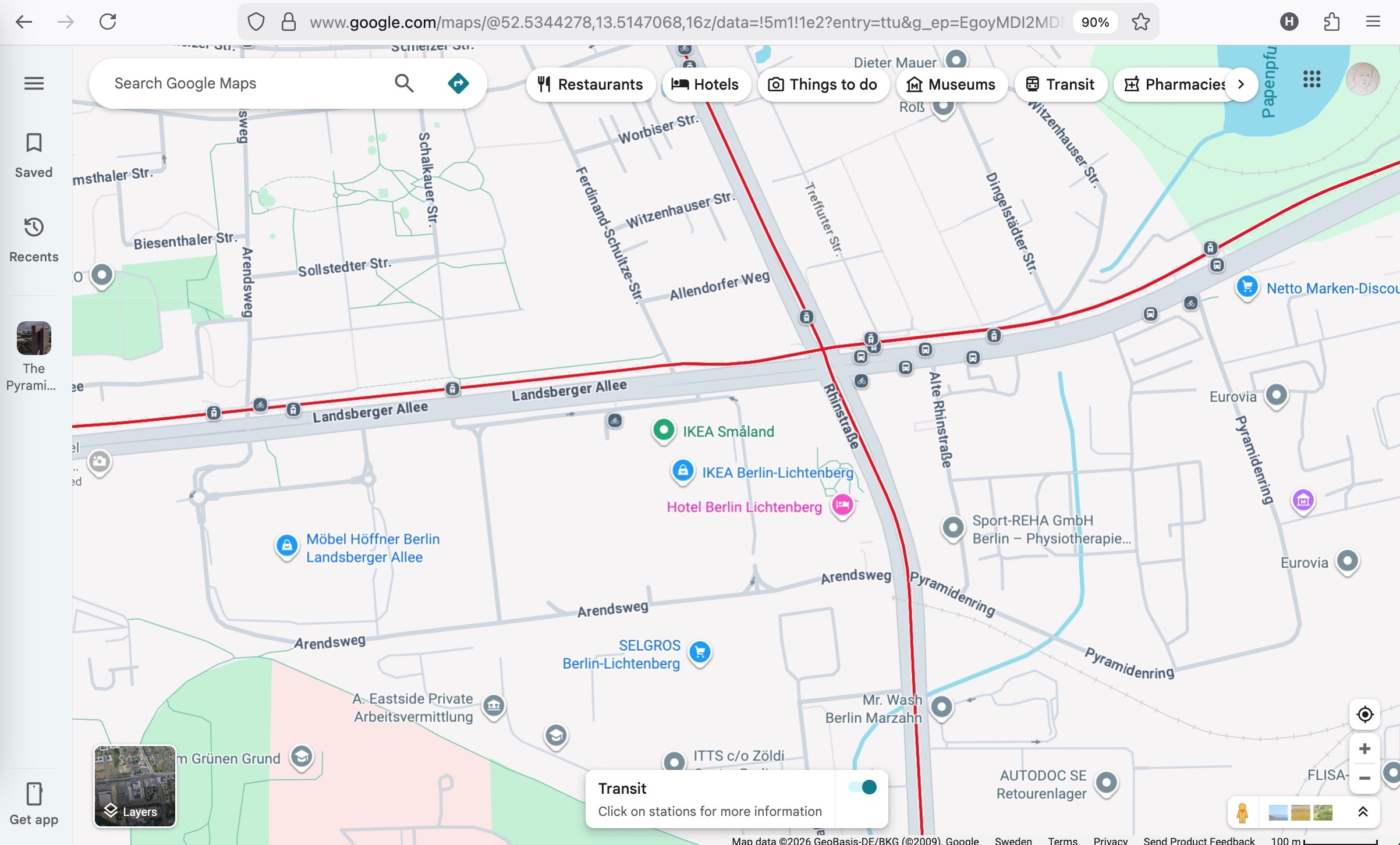
Landsberger Allée – Arendsweg – Pyramidenring – Alte Rhinstrasse
(Google Maps screenshot)

I head for the sound walk, taking the M6 tram to the stop at Schalkauer strasse where Katt is waiting. Soon enough, Eli and Paul join us. Incessant through traffic rumbles along the Landsberger Allée, and a biting wind rattles the flaglines in front of IKEA as we cross the huge parking lot. South of the walkway, the windowless metal façade of a giant wholesale warehouse closes the view. Above Rhinstrasse, a towering high-rise: Die Pyramide – a prestigious 145 million € project completed a few years after the German Wiedervereinigung, soon a cause of financial disputes, later sold to a real estate developer… now a post-modern monument well past its prime.

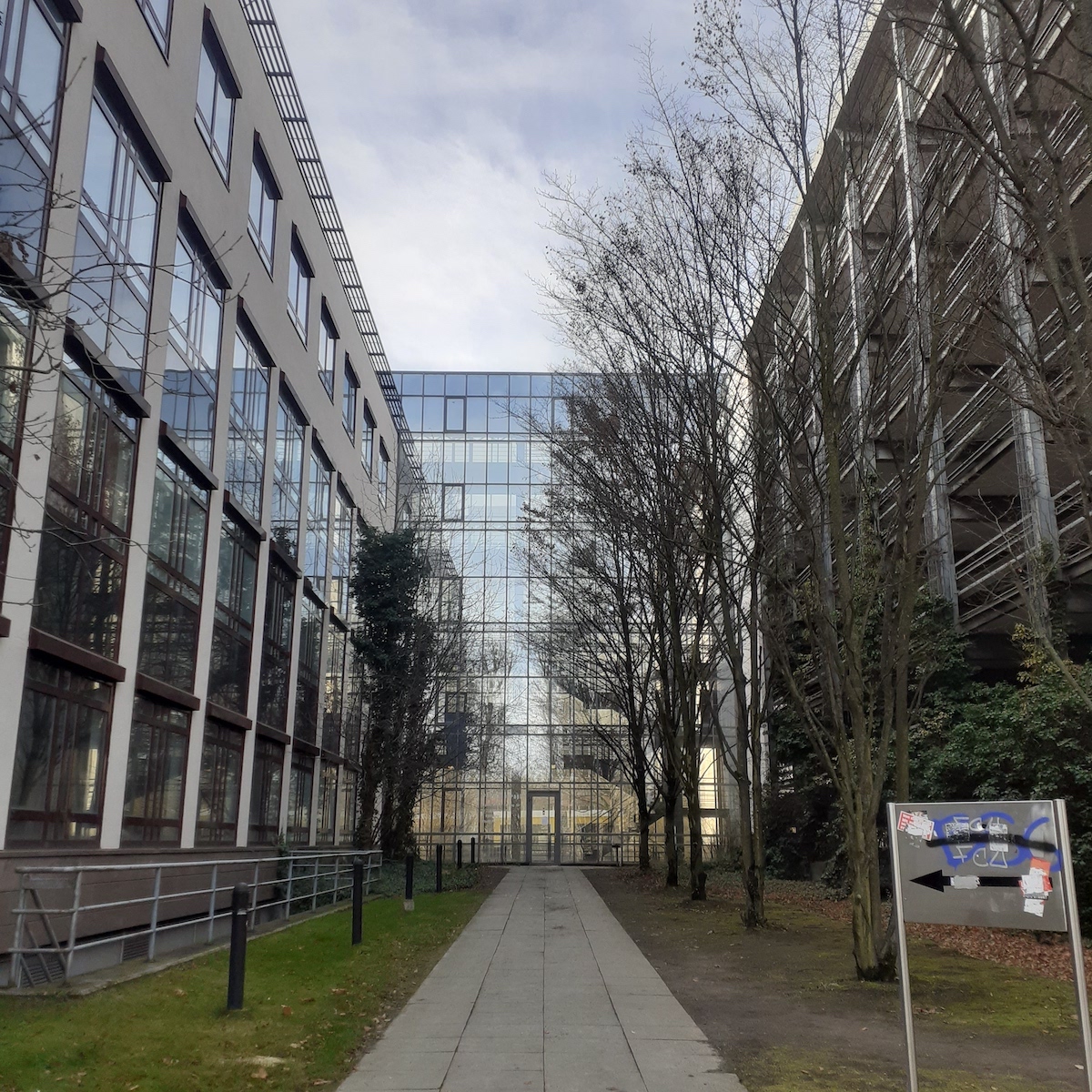
From Pyramidenring, we turn left to proceed along the back side of this glass-and-granite complex, where it turns into a long stretch of lower building blocks alternating with narrow yards where trees stripped of leaves comb the wind. From Eli, we learn that Alte Rhinstrasse marks the border to a no man’s land, of sorts; or rather, a “some men’s land”, since violent right-wing groups claim the space beyond this old road – now a backstreet – making it a no-go place for those in focus of their aggressivity. A little further up the street, a rusty boom barrier and a sentry box with flaking paint still monitor a former industrial area, disused since decades.

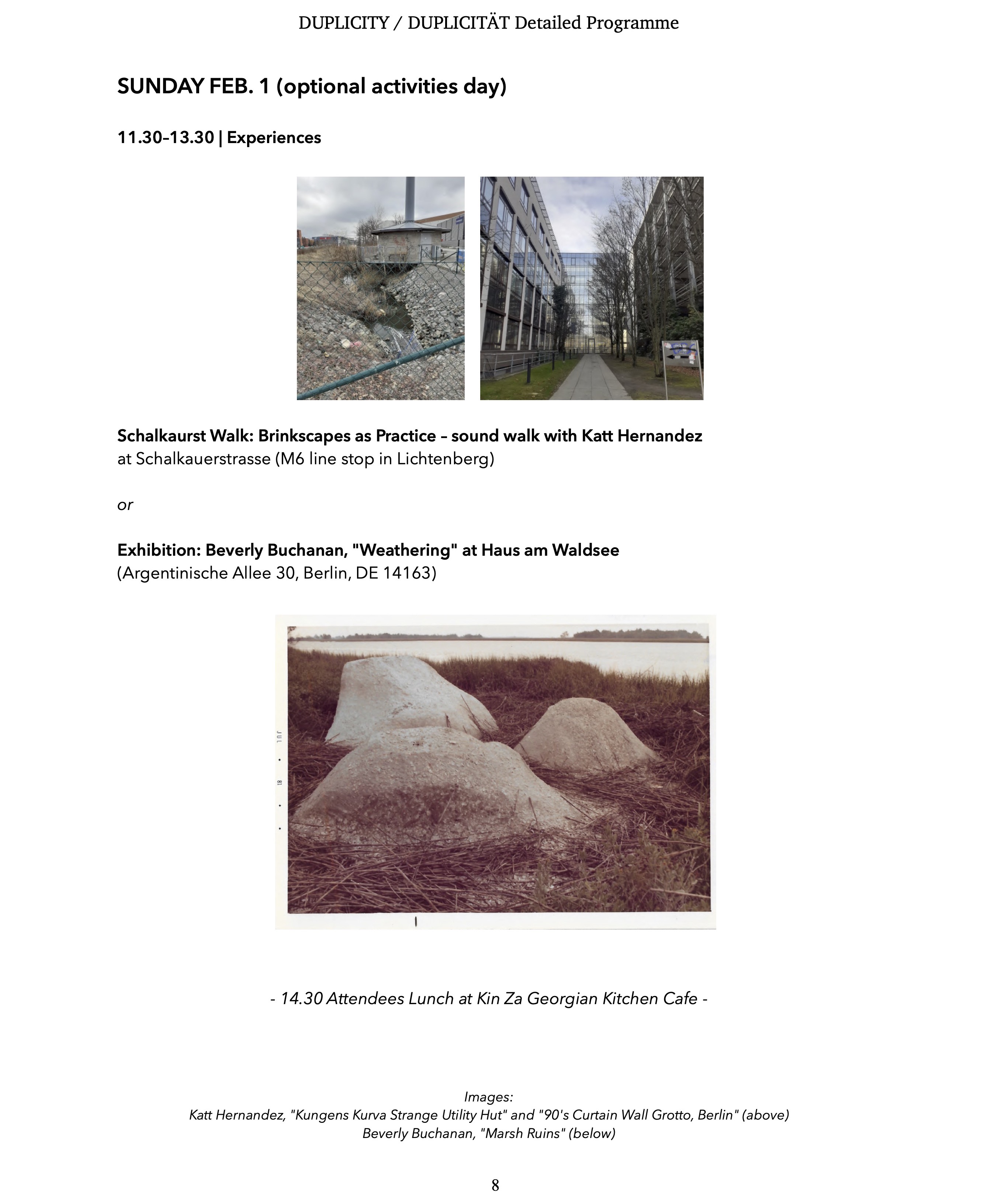
“90’s Curtain Wall Grotto, Berlin”; photo by Katt Hernandez

A man exiting from a gym in the Pyramide’s side block allows us to slip inside to hide from the cold a few minutes. As we gaze at empty windows, empty stairwells, empty name plates on metallic information boards, Katt evokes images of families walking by on their way to the shopping malls on a sunny autumn’s day… A phone signal rings; it’s Lu, looking for us and asking us to send her a live position on Whatsapp. We hurry out to meet her in the street, and suddenly find ourselves back at the Landsberger Allée just outside the main entrance of the Pyramide. To our surprise, the doors are unlocked and we can walk inside.

Screenshot

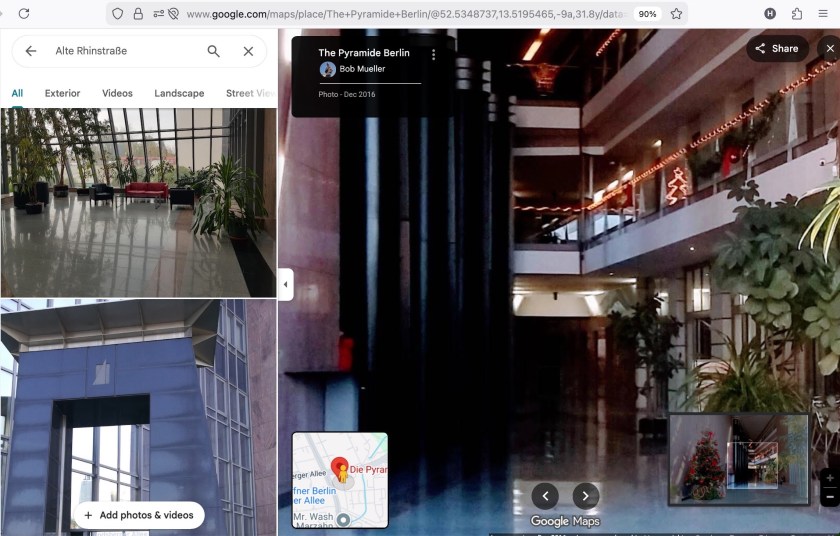
“Die Pyramide” main entrance (Google Maps screenshot)

Vast, blank surfaces. No sounds of human presence, except for our own footsteps; we fall silent, too; unsure about how to behave. Cautiously, we sneak towards the high row of black pillars… behind which a security guard is relaxing by the reception desk. He offers us various folders and prospects from the enterprises housed in this office hotel. We thank him politely and return to the street, where the M6 line takes us back to the city center. We finally join with the remaining group for a warm Georgian lunch at Kin Za restaurant, before breaking up.

However, this sound walk / dérive stays with me. In little more than an hour, a stroll of perhaps 2 kilometers in seemingly dull surroundings caught an incredibly complex image of recent German history, architecture-as-ideology, financial manipulations, flows of communication and commodities, varying conditions for people’s everyday lives, and the continuous cycle of quiet growth and decay within the city’s ecosystem of flora and fauna. I hope to hear Katt’s violin tell more about this brinkscape practice… and I’ll bring the experience into the continued work of Studies in Remoteness.

Duplicity / Duplicität Symposium (day three of three)

art, recent work, time-out

… and how could the spirit of the second day be carried forward now – bursting with intellectual and emotional energy as it was?

The answer turned out to come almost by itself, with a change of pace: from yesterday’s parallel strings of concise case studies swiftly followed by verbal exchanges of Q’s and A’s, to extended presentations creating space for a deeper listening; for resonance, outwardly and inwardly…
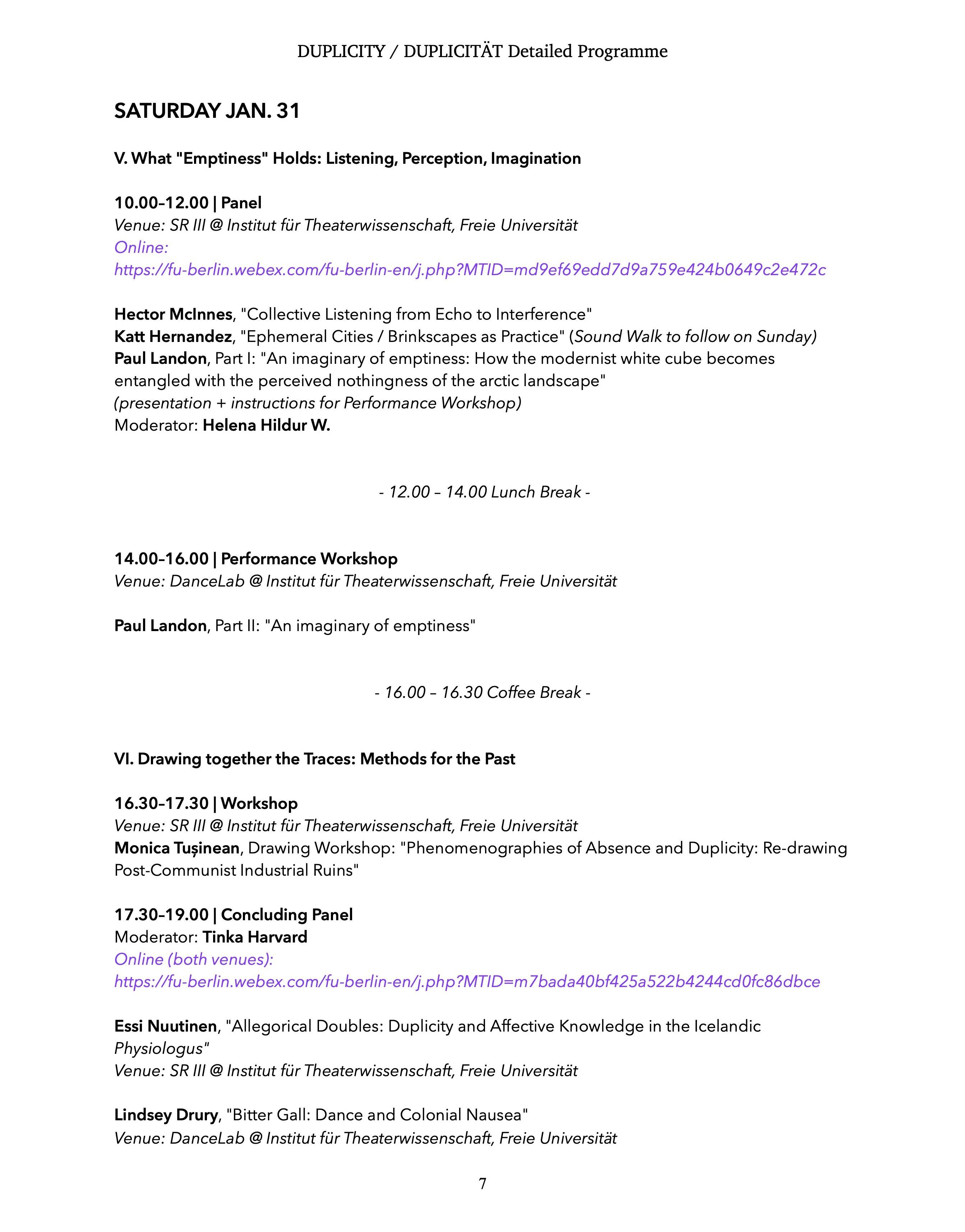
 

The first feature of Saturday’s programme, sound artist Hector MacInnesCollective Listening from Echo to Interference, carried us from Berlin to the the Isle of Skye, inviting us to roam and rest within a delicately composed soundscape of voices: repeated calls for contact, interlaced with distinct impressions and reflections on records, intimacy, and distance – evoking feelings of loss and sadness, imbued with a sense of care. A tentative call for solidarity?

Above: Hector MacInnes in dialogue with the group, after the Collective Listening experience
Below: Katt Hernandez waiting to present Brinkscapes as Practice (left);
“Kungens Kurva strange utility hut”, photo credit Katt Hernandez (right)


Next, musician and composer Katt Hernandez performed a dérive in urban peripheries, cutting through notions about desolate wastelands by addressing the warehouses, shopping malls, and vast parking lots as comforting sites of everyday human presence and protective anonymity, fondly naming them brinkscapes. The rhythmical sequence of pictures, speech, and silences unfolded as if tuned to inaudible music – eventually set free to sound by the fiery and tender voice of Katt’s violin.

The journey continued as media artist, professor Paul Landon took us to Arctic landscapes in the Cold War era, where military demands employed the “perceived nothingness” of supposedly uniform expanses of dazzling snow, as the DEW (Distant Early Warning) system was erected across Alaska and Canada; a massive effort turning self-sustaining ecosystems into a backdrop for the demonstration of power and cutting-edge technology.

For the extended lunch break, Paul sent us on a mission:

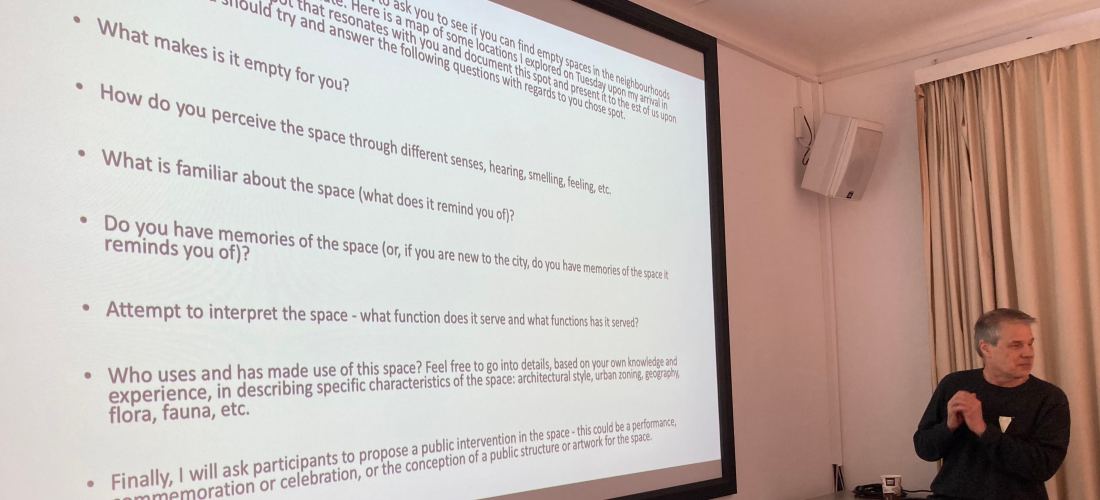
– Go for a walk in the neighbourhood and look for an empty space that resonates with you; document what you find, so that you can present it to the group; stay with your chosen spot for a while, trying to perceive, understand and interpret it; from this experience, think of a public intervention to amplify, alter, celebrate or comment on its particular emptiness.

And so we did.

Two hours later, the group reassembled to share the documented emptinesses: an inaccessible yard; a snow-covered balcony; a construction pit; a beanie hat lying in the street, lost from the head it used to protect; a gap in the flow of consumer goods in a vendor machine…

Above: Prof. Paul Landon sharing pictures from his personal collection of emptinesses
Below: an emptiness captured by Caitlin McHugh
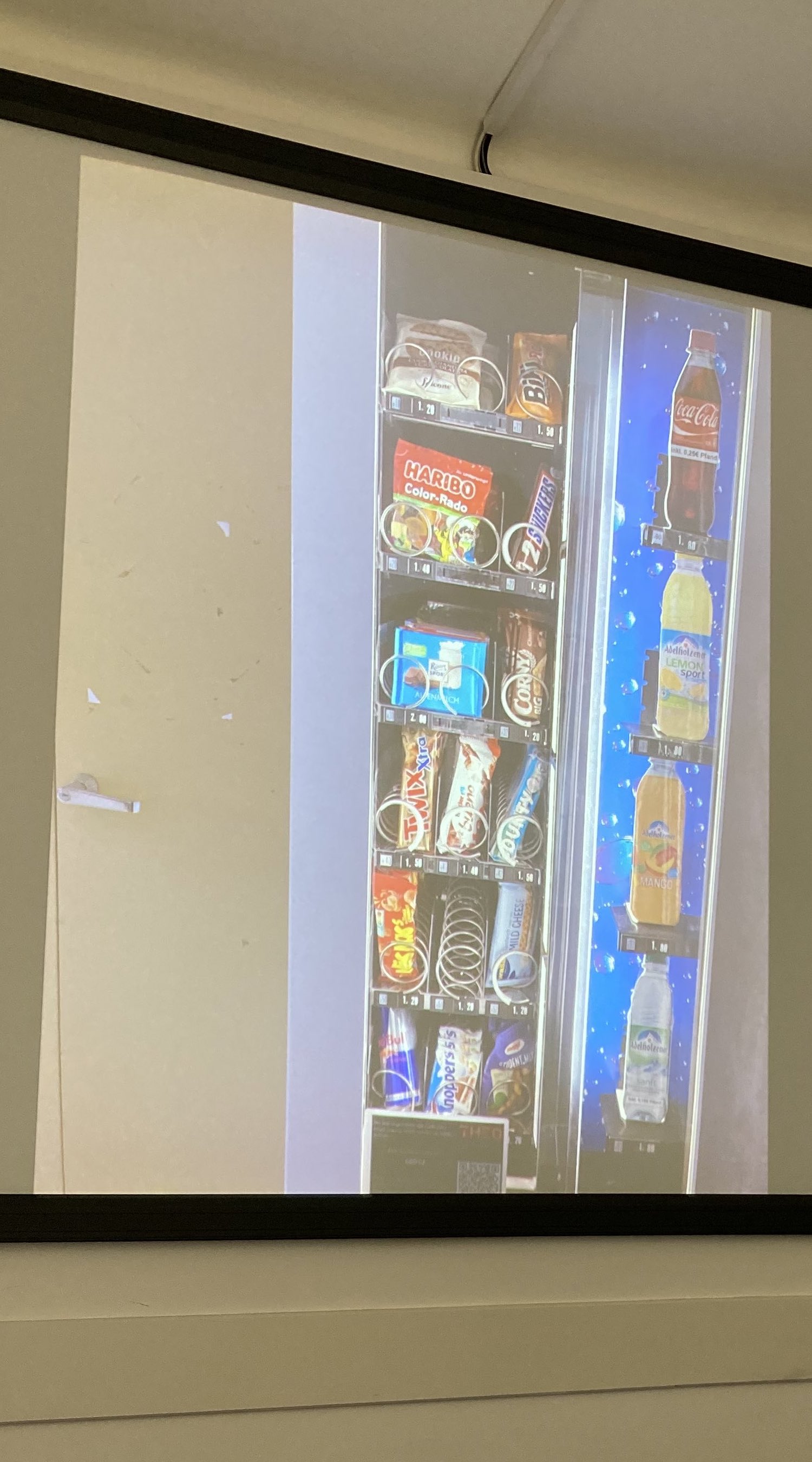
We shared photos, and more: we shared, unguardedly, our sustained attention, our awareness towards qualities and emotions, our personal renderings – stirring interest, reflections, compassion, and friendly laughter – in a flow already present yesterday, now broadening and deepening like a river.

For my own part, this workshop remains a highlight; first, spending time on my own in the midst of these intense days, and then returning, respirited, to co-create with to peers, now become friends.

Duplicity “emptiness” excursion along Grünewaldstrasse – Paulsenstrasse – Rückertstrasse – Brentanostrasse
(photos by HHW.)

A coffee break, then another workshop: Phenomenographies of Absence and Duplicity. Re-drawing Post-Communist Industrial Ruins by architect Monica Tușinean. Drawing and tracing paper rolled out all along the table, graphite pens and thick black markers distributed, instructions given…

Above: re-imagining Romanian industrial heritage sites by drawing “phenomenographic vignettes”,
workshop by Monica Tușinean
Below: Essi Nuutinen gives us monsters

The playful excitement of the drawing workshop was gently redirected into focused common attention by Tinka Harvard, serving as moderator for the programme’s last section. As eyes turned back to the projection screen and the room fell silent, Essi Nuutinen introduced us to the Icelandic finngálkn, or onocentaur; a hybrid human-animal being, signifier of inherent duplicity and vehicle for imaginative moral thinking; a creature of folklore and Christian allegories appearing in the mediaeval book known as the Physiologus. The Icelandic manuscript in itself carries a story of transformation, as it went from being a valued keeper of knowledge, to having its pages torn apart and perforated by hundreds of tiny holes – surviving the centuries repurposed to separate coarse meal from finer… a sieve. A membrane. 

After moving upstairs to another venue – the DanceLab – the intertwined themes of ethos, body, and mediaeval history were continued by Lindsey Drury, in her performance lecture Bitter Gall: Dance and Colonial Nausea. History inherited as the “past-in-body-present”; the body, a receptacle torn by conflicting forces; ethos, the values and practices that sifts out the self. 

This slideshow requires JavaScript.

From Lindsey Drury’s performance lecture Bitter Gall: Dance and Colonial Nausea

I cannot reduce this performance lecture into words; I will not even make an attempt. But it stays in my sieve, like the coarse and nutritious elements of stone-ground wholemeal – not to be disposed of, not to throw up, but to be digested over time. I will carry it with me, as a part of who I am, for times to come. 

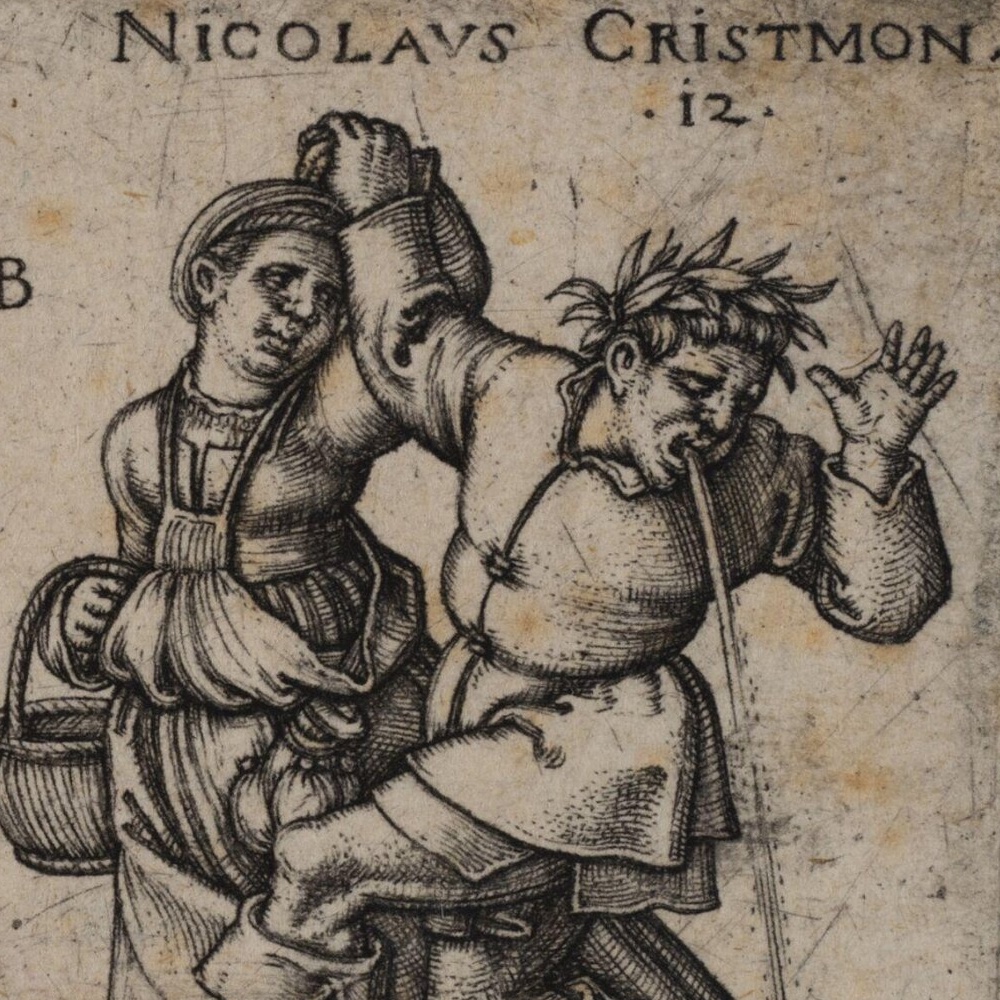
For a final vignette, I return to an engraving visible in one of the photos above: Sebald Beham’s The Peasants’ Feast (month of December). I see the woman. I see her steady gaze beholding her witless, spewing partner, while leading him forward in dance; her expression does not tell of any judgment.
Duplicity / Duplicität Symposium (day two of three)

art, recent work, time-out

Come the second day of this adventure… beginning at 10am sharp with Elsewhere as structure: a panel on coloniality, migration and distance, with two of the speakers present online from Southeast Asia. Urban ethnographer Dr. Elisa Bertuzzo opened the panel with another flip of perspectives, recounting how colonizers of the past proudly filled Europe’s novel, prestigious botanical gardens with “exotic” plants – while today’s immigrants are accused of spreading “invasive” species when growing kitchen vegetables from their home places in South European backyards. PhD student, architect, and designer Lu Lin shared her work on dual belongings and cross-cultural design proposals, carried out between China’s Wenzhou region and Italy, together with immigrants and returnees. Concludingly, Dr. Theol. Shiluinla Jamir reflected on Lifestyle as Resistance (an intriguing essay by Prof. Veena Talwar Oldenburg in 1990), raising questions on how moral life is performed in a socio-spatial sphere of “remoteness”, and what it could be to lead a good life.

From the “Elsewhere as Structure” panel: hybrid meeting preparations;
two slides and a close-up from Elisa Bertuzzo’s presentation;
a mapping exercise shared by Lu Lin (all photos by HHW.)


After lunch, the programme divided into three parallel tracks in the Graduate Students’ Panels. I sadly missed out on the Epistemologies and the Erasures panels, as I followed four presentations on Embodiments – by Sophie Schultze-Allen, Caitlin McHugh, Tinka Harvard and Cadenza Zhao – insightfully moderated by Prof. Paul Landon and artist Jody Wood, with beautiful exchanges also between the panelists.

Sophie Schultze-Allen on “Decolonial Ecologies in Dance”, and feedback snapshots from Cadenza Zhao’s presentation on “Embodiment of Duplicity” (all photos by HHW.)

After a coffee break – offering some time to share reflections more informally – we all gathered to listen to presentations on Distance, Performance and Documentation by PhD student and theatre director Omid Mashhadi (Dokumentartheater Berlin), and visual artist Dr. Kerry Guinan (Centre for Art and the Political Imaginary, Gothenburg-Stockholm); again, generating many thoughts as well as lively exchanges.

This slideshow requires JavaScript.

Slide from Mashhadi’s rehearsal work with Ukrainian refugees at the Dokumentartheater Berlin;
participants taking notes;
a slide with content creators from Nepal, Egypt and Ukraine on live video stream, from Guinan’s work “Portraits”;
snapshots from discussion between Mashhadi and Guinan (all photos by HHW.)

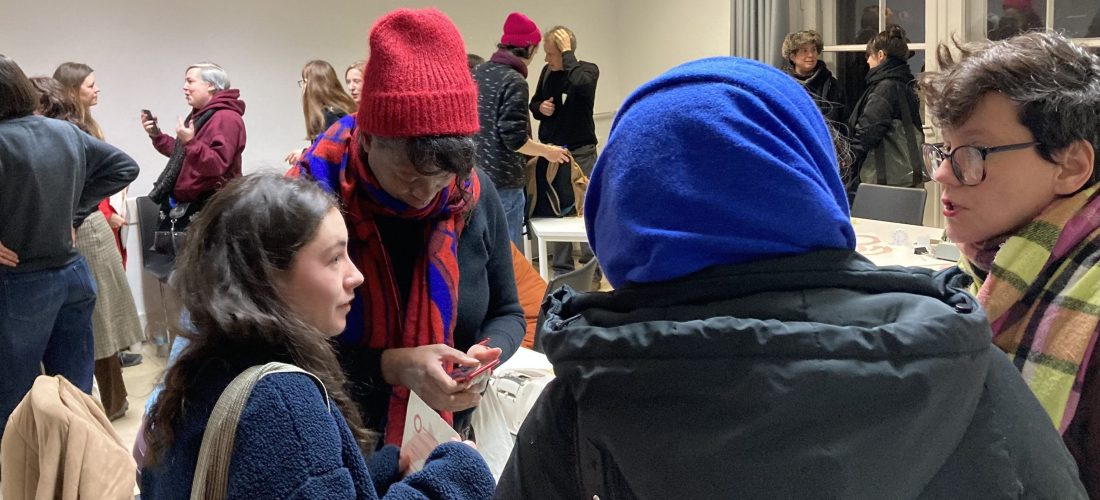
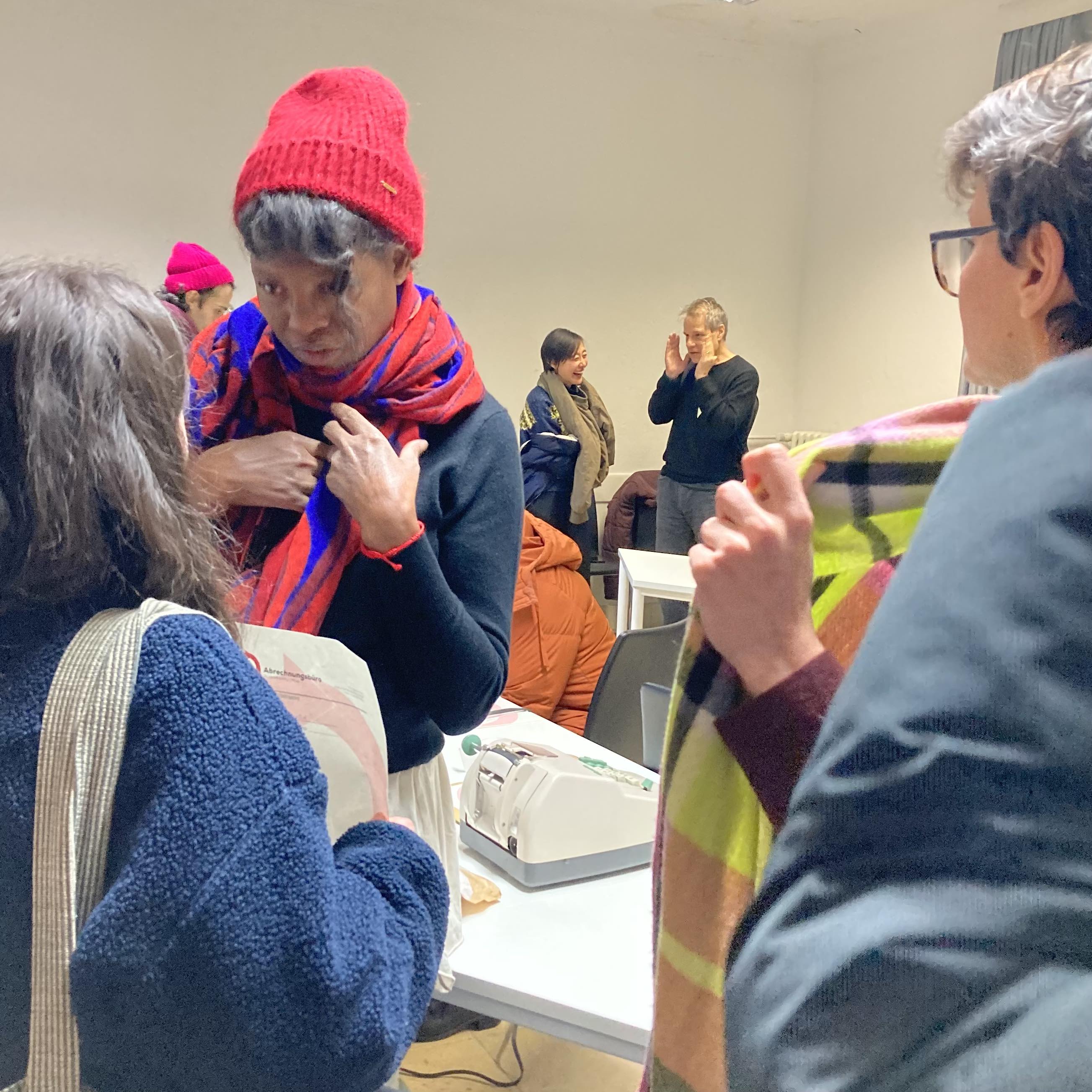
To complete this abundance of experiences and perspectives, we were finally invited by artist Jody Wood to calculate our Virtual Credits and Residual Guilt Reserve in her workshop Abrechnungsbüro – an engaging, thought-provoking and fun exercise, followed up by a conversation between the artist and philosopher-writer Lieke Knijnenburg. Aptly moderated by PhD student Sofia Attolini, it also involved participants, and continued well into the Berlin evening, during dinner at a nearby Chinese family restaurant…

Above: “Abrechnungsbüro” snapshots
Below: social practice artist Jody Wood and composer Olga Krashenko in following discussion
(all photos by HHW.)

…and we still have a full day ahead in this symposium. More to follow…

Duplicity / Duplicität Symposium (day one of three)

art, recent work, time-out

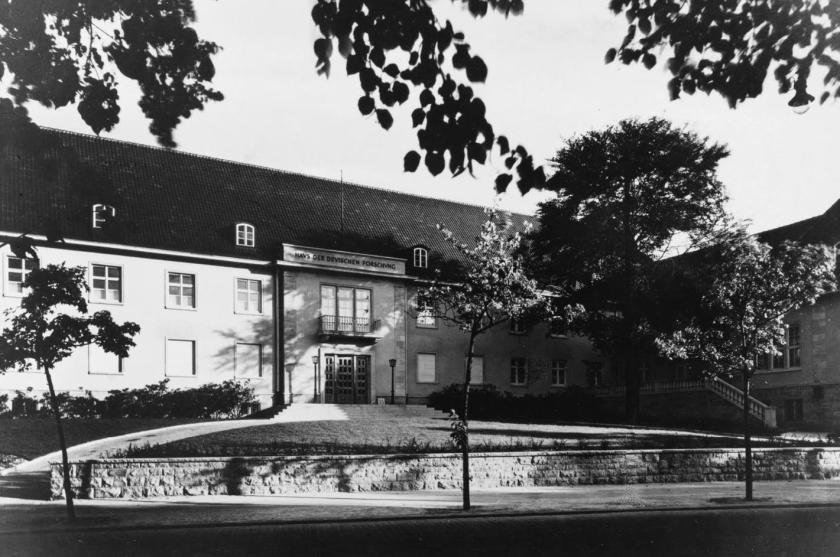
Time is almost 2 pm, and we’re at the Institut für Theaterwissenschaft of the Freie Uni. Berlin: a building once known as the Haus der Deutschen Forschung –  in the years of WWII containing a lecture hall and a library, a ballroom, a casino, fifty offices and an air raid shelter; and, according to journalist Ernst Klee, housing a “cover-up community”, where an enormous ‘degree of agreement between politics and science'” took place. 
Zur Geschichte des Instituts für Theaterwissenschaft

Today, on January 29th, 2026,
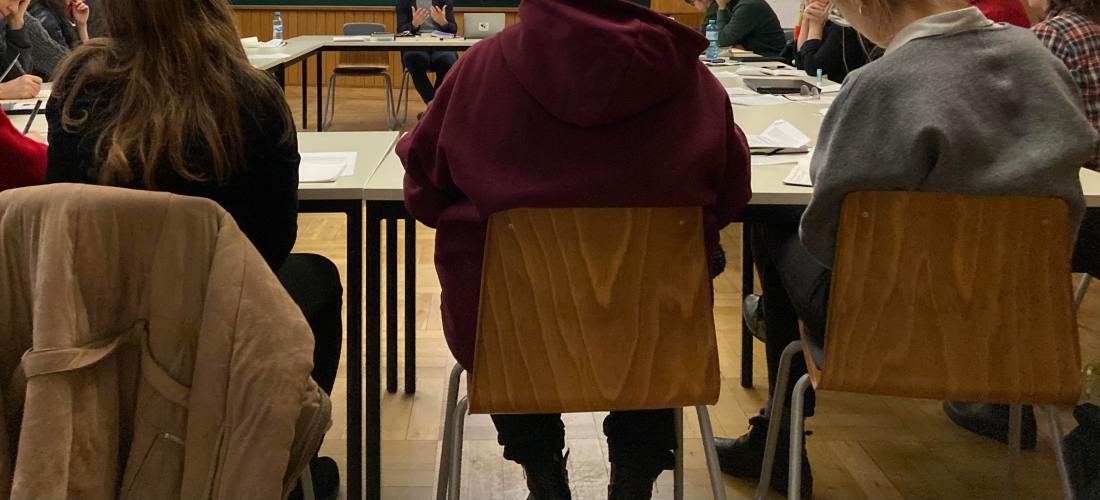
the coffee table is set outside the DanceLab, and name tags are waiting to be written and attached. People arrive, crossing the imposing foyer to find their way, continuing upwards via the symmetrical double staircases, heading for our more modest localities on the top floor. The footsteps and voices, the greetings and questions and answers tell of uncertainties as well as excitement.

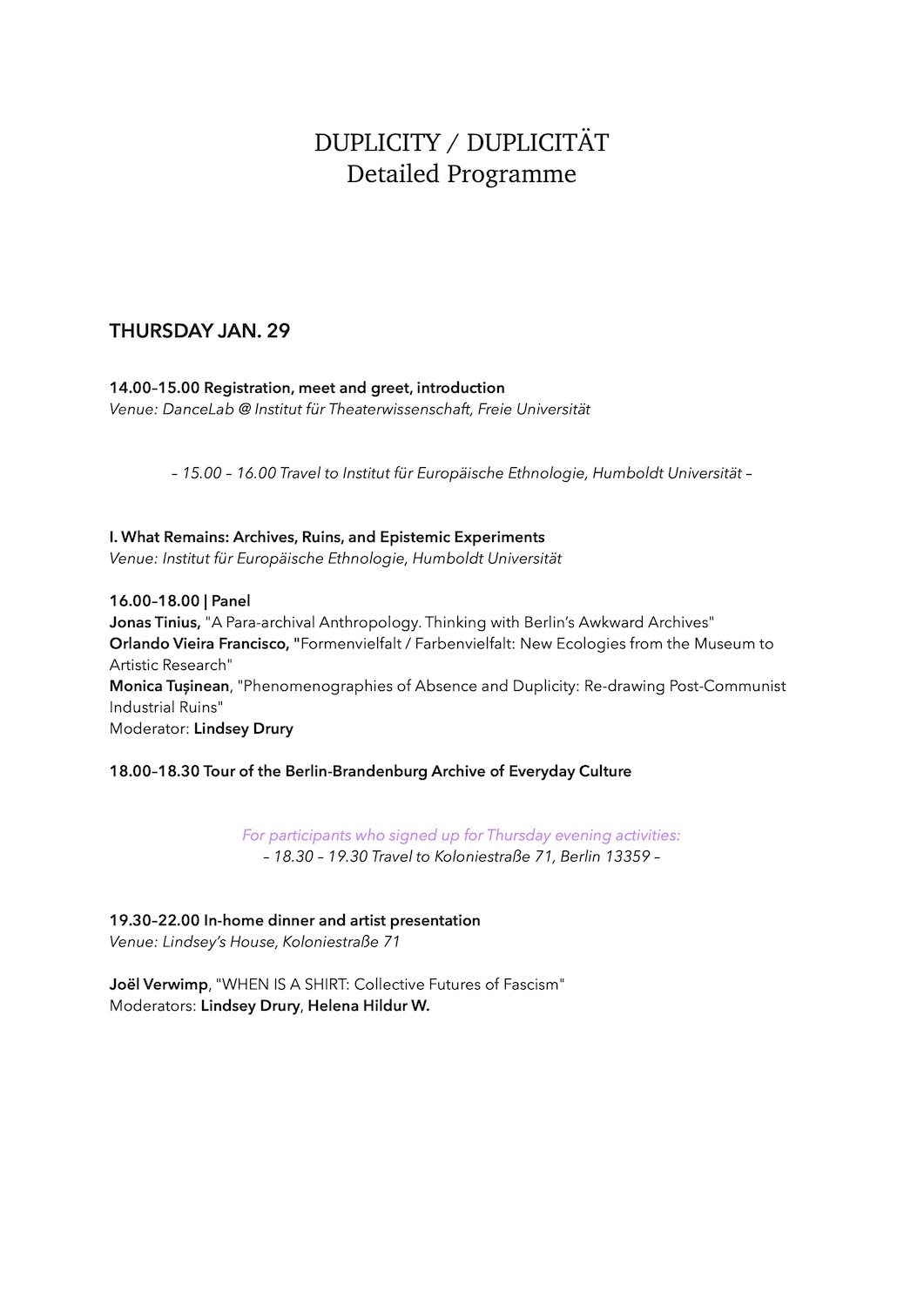
Within an hour, we have welcomed most of our participants. It’s time to move; we’re going to the Berlin-Brandenburg Office for Everyday Culture, where the recently installed director Jonas Tinius will host the first session of the Duplicity symposium…

Due to EU General Data Protection Regulations, I’ll share only a few photos from the actual session here; Dr. Orlando Vieira Francisco (i2ADS Research Institute in Art, Design and Society, University of Oporto) presenting on Formenvielfalt-Farbenvielfalt: New Ecologies from the Museum to Artistic Research – an artistic line of thought, which (to my understanding) touched in a very personal way on the polarity between form and colour / drawing and painting / discerning and integrating… followed by Dr. Monica Tușinean (architect and researcher at the University of Stuttgart), sharing her work on post-communist industrial ruins in Romania – from which I borrow a slide (below). 

Slide with hare borrowed from Monica Tușinean’s presentation “Phenomenographies of Absence and Duplicity”


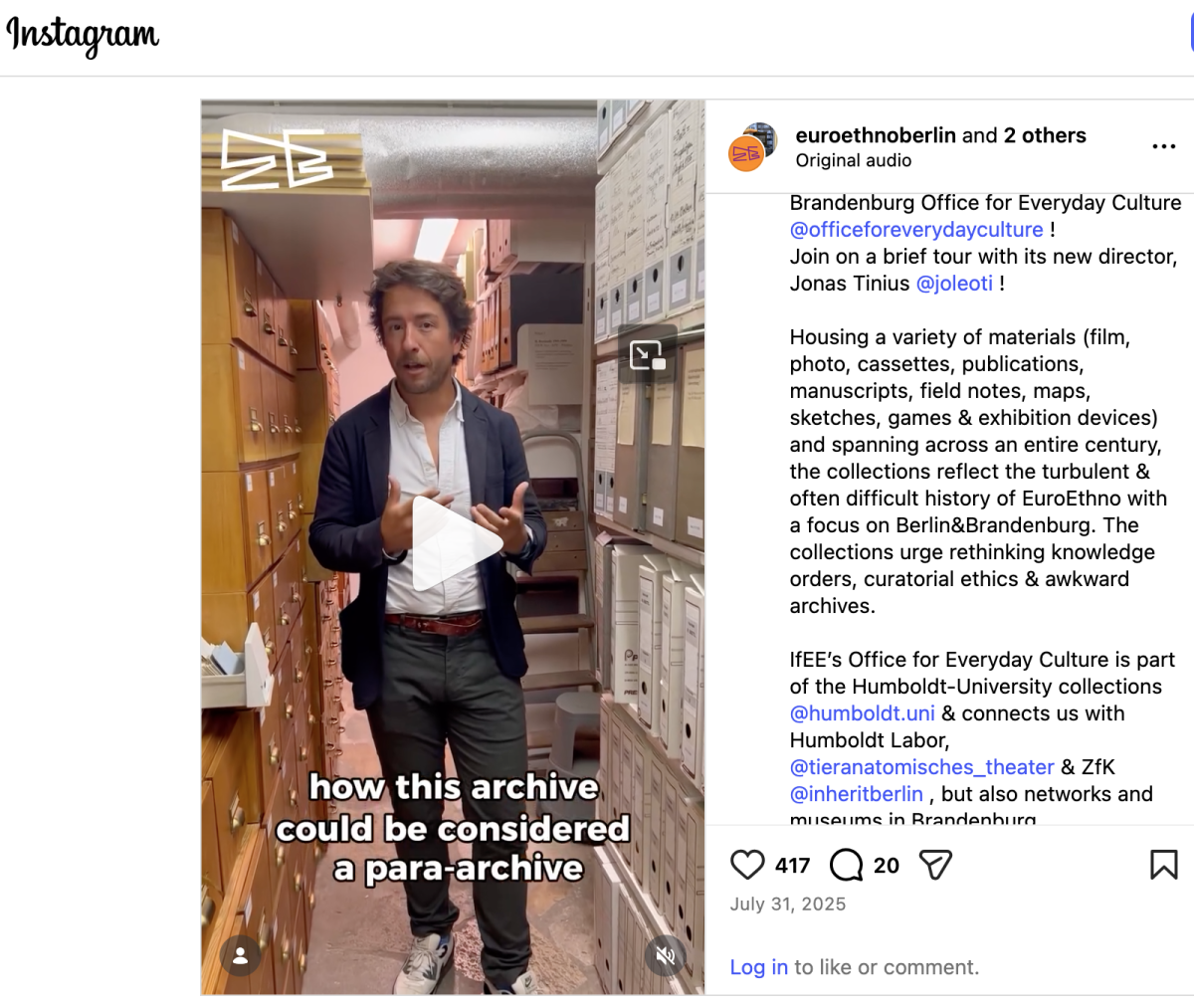
Dr. Jonas Tinius both opened and closed the panel, first by presenting the (Para-)Archive as a site for investigations into how archives come into being; and, eventually, by taking the whole audience on a guided tour in the Archive’s enchanting basement.

Click the link, and follow Jonas Tinius along on an earlier tour in the Archive’s basement:
euroethnoberlin Landesstelle Re-Opening! 

For those of us foreseeing (and lucky) enough to have reserved a space, the evening continued in a Wedding apartment with performance artist and cook Joël Verwimp’s In-home dinner and artist presentation WHEN IS A SHIRT? Collective Futures of Fascism.

This slideshow requires JavaScript.

Joël Verwimp, “WHEN S A SHIRT? Collective Futures of Fascism” performance
Photo credits: Essi Nuutinen

Duplicity / Duplicität Symposium (Day 000)

art, recent work, upcoming

Still a couple of days to go before the opening on Thursday. Preparations…

This slideshow requires JavaScript.

Ice on the tracks delayed train traffic throughout Denmark and Germany yesterday, and offered plenty of time to make name tags from scrap paper and safety pins.

Finally, a warm welcome and a tasty meal in Berlin, followed by the final (?) proofreading of the symposium programme.

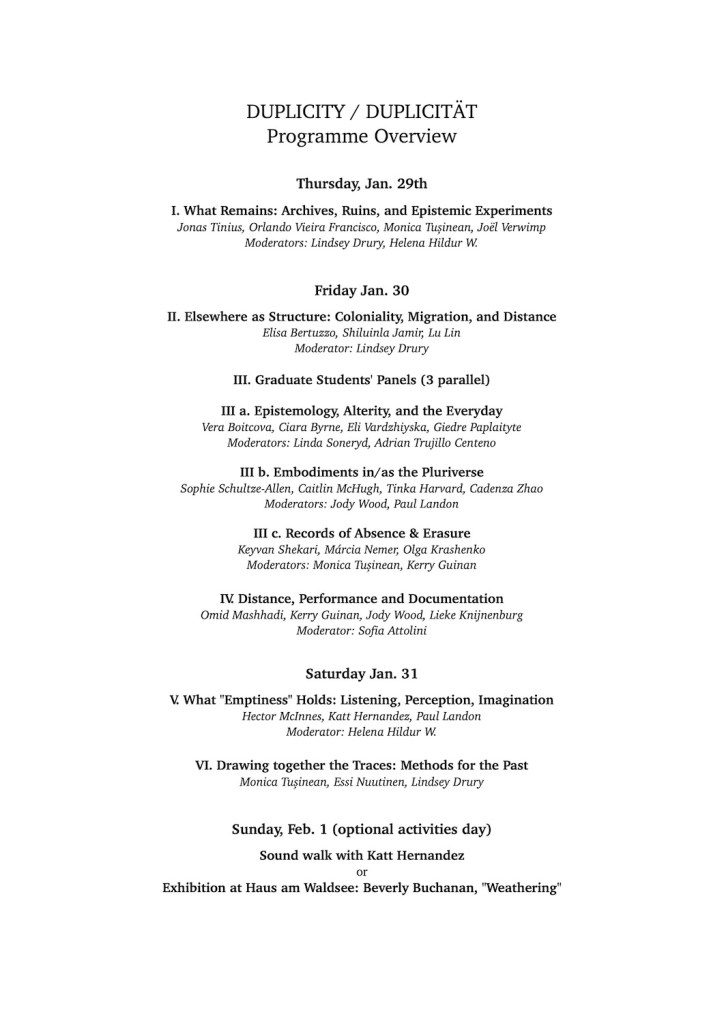
Download the full programme here:
Duplicity/Duplicität Winter Symposium Programme

Mapping Futures @ AboAgora II

art, recent work

Mars, the God of War, is pictured as a potent bringer of violence and destruction. Many among us have also experienced the actual pains and traumas of migration, displacement and escape from unbearable circumstances…

Still, there will always be futures beyond warfare.

How do we understand our true needs – and how can they be fulfilled in times of turmoil?
Which values are worth building a future upon?

How could new paths be found, when old ways are lost?

Mapping Futures invites participants to reflect, to share experiences, and to co-create around this theme. We’ll use map-making as a working format, along with movement and listening. And – since play is a very serious business – the workshop will stay open for playfulness, too.

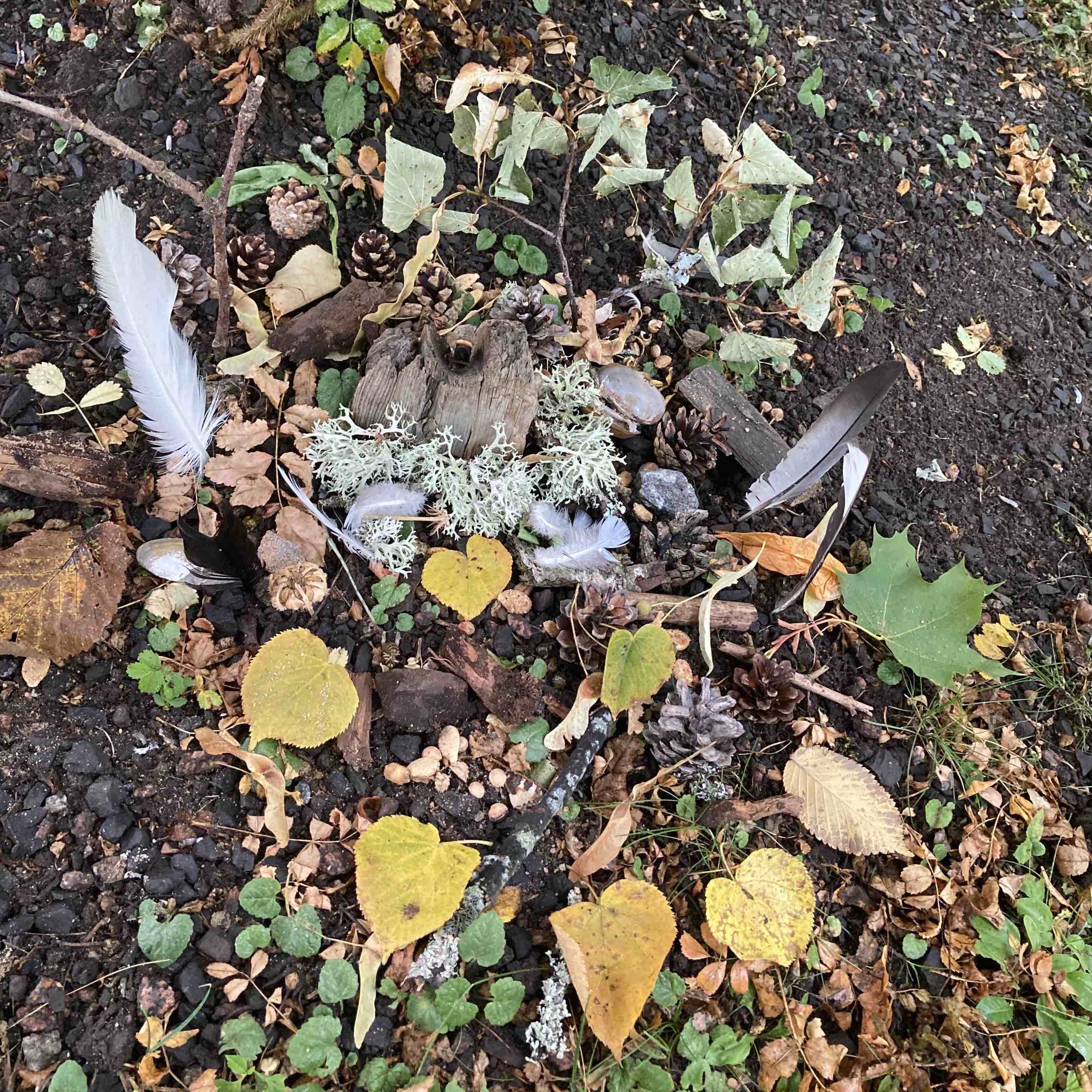
Such was the presentation of Mapping Futures, as it appeared in the programme of AboAgora 2024. I learned that sixteen participants had signed up in advance – a full group. The actual workshop was scheduled on the third and last day – Friday, August 30th – and the plan was to have it outdoors, in the museum’s garden, to connect with nature as well as with the surrounding cityscape… Unfortunately, according to the weather forecast, the floating fluffy morning skies were likely to turn into heavy winds, thunder and rainfall by noon. Project coordinator Petra and I had to take a decision about the locale, and quickly agreed to move all the material inside. An hour later, 40 kilograms of sand was carried indoors along with the hexagon boards, and the “beach” was prepared – complete with pebbles and seashells, bottle caps and plastic rubble, bird feathers and other tiny items (all brought from Sweden in my suitcase).

By 10am, a few light clouds occasionally dimmed the warm sunlight. The group of participants gathered in the shadow of the huge oak tree, once planted by Linnaean adept Pehr Kalm – a tree that has survived fire and ice, war and unrest for more than 250 years… After two full days of artistic and scientific perspectives on martial machineries, this seemed to be a good point of departure for a workshop focusing on resilience.

left and right: Pehr Kalm’s oak;
middle: the group assembling, photo credit: Pekko Vasantola

Before leaving, each one of us took a moment to visualize a Stunde Null, such as it might appear in some place familiar: in our home or workplace, in the streets or paths we use to walk…  A Ground Zero not only for humans, but for all structures and living organisms. Bearing this image in mind, we set out for a silent walk to the cobbled square by the cathedral.

Silent moments, photo credit: Pekko Vasantola

Ten minutes went by there, as we quietly stayed with our personal thoughts and feelings; then we gathered again to return to the museum.

In the Zero Hour, what remains for the ones alive – emotions, trauma, weariness? Hope, despair?
And hard work; hours, days, years of toil and labour.

What, then, would remain to build upon? What structures and materials? Which relations? Which values?

On walking back, the participants were invited to share with each other, and also to keep an outlook for objects that could serve as tokens and symbols in the map-making. The sky was already darkening as we entered the museum. The smaller groups, which began to form during the short walk, now clustered around the boards. This was a crucial moment to me; how would these highly qualified individuals feel about playing together, using pebbles and pinecones like little kids in days long gone? and moreover, around such a challenging theme?

above and below: hands-on work and extended connections;
photo credit: Pekko Vasantola

This slideshow requires JavaScript.

It turned out that there was no need for worries. The groups immediately began projecting their ideas: honouring the dead and caring for the living, constructing shelters and community facilities, preparing the soil for sowing… Plastic waste created problems in some places, while forests, domestic animals, music and insects were generally cherished. In one of the maps, plastic caps were opened up and distributed to represent receptivity, tolerance, and understanding; in another, a grey feather, planted upright, proudly signalled the rejection of black-and-white thinking.

Heart-shaped artwork by Jan Erik Andersson in Pehr Kalm’s garden outside the museum,
and mapped futures by workshop participants inside

One hour and a half passed quickly, but there was still time to share some concluding reflections while the wind slowly dropped and the sky grew clearer. Later in the afternoon, the crafted futures were collected and brought back to where they belonged: non-organic waste to the recycling systems, and the leaves, lichen, feathers, and butterfly wings to the rain wet ground under a rose bush.

I wish to thank all participants, who played along so wholeheartedly, and the staff members of AboAgora 2024 and the Sibelius museum, who welcomed and supported Mapping Futures; and thanks also to all who took part in Mapping on the Beach in 2023, and Alina Kalachova, with whom I developed the original concept.

Praxis of Social Imaginaries, Summer Session 2024 @Løgumkloster II

art, recent work

What stays with me now, from the work of this summer session?

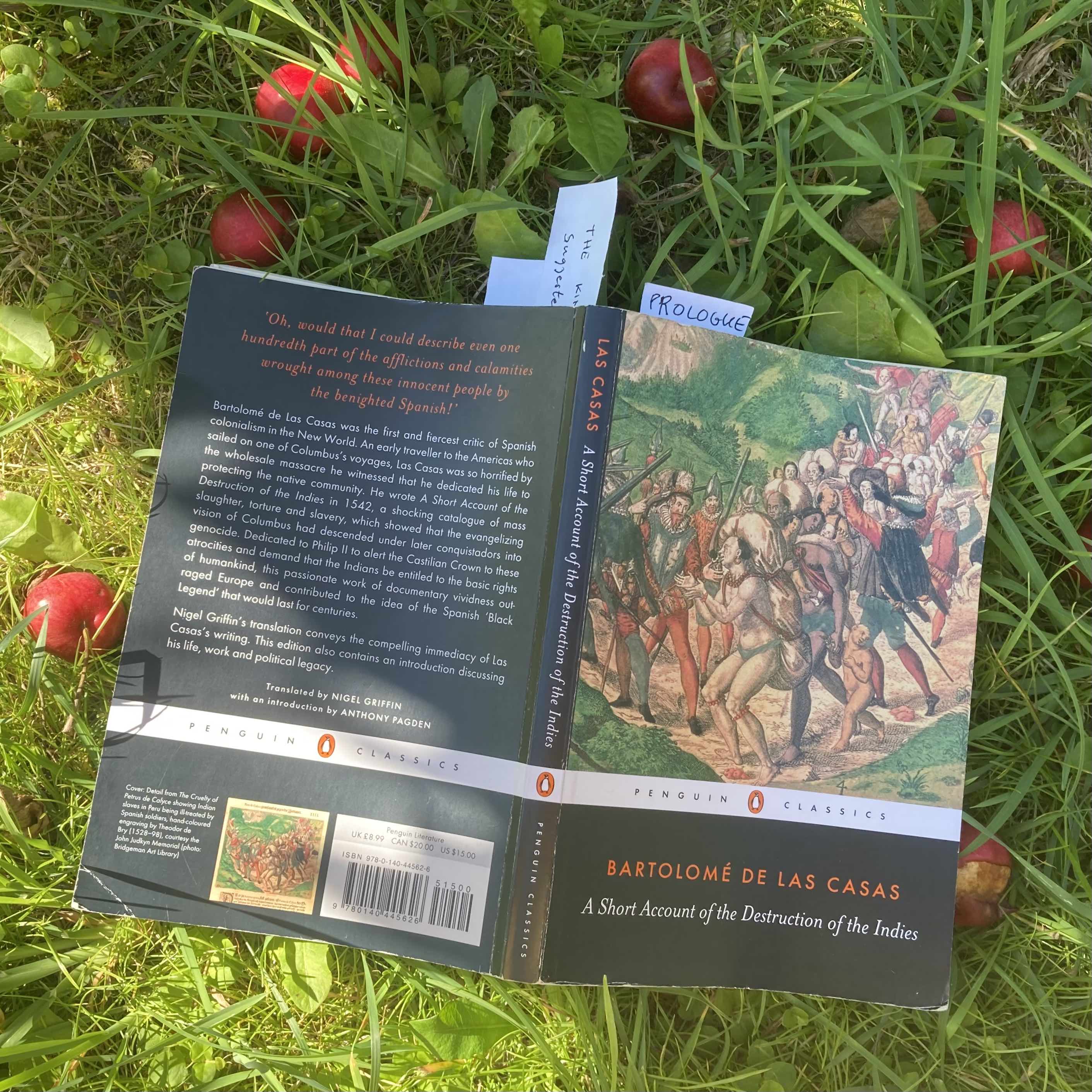
I remember the many scenes of unbearable cruelty, committed by the Spanish conquistadores and described in the book of friar Bartolomé de las Casas; and also the absence, throughout his text, of genuine encounters between the author and men and women of the indigenous. Nevertheless, he advocates their right to human dignity and eternal life through Christ. Maybe las Casas – acting in the name of God – kept his eyes so firmly set on the realms of afterlife that he didn’t really perceive the persons in front of him.

I remember the exercise we carried out in pairs, silently observing each other while recalling our first encounter; the recognition and tenderness of the moment. And then, the following actualization of another first encounter: a recorded reading of a document conceived in 1513, by which the conquistadores proclaimed the authority of the Spanish king over the land they were about to conquer. The very act of reading this Requerimento aloud – in Spanish – on any shore where they set foot was taken as a justification to kill, loot and ravage without restraint.

Excerpt from Guillaume le Testu’s Cosmographie Universelle selon les Navigateurs, tant anciens que modernes
(1555/56); illustrated map of Brazil (left); detail (right)*

I remember the words of my fellow participant from South Africa: colonialism is still here.

I also remember images from contemporary dance performances in Mexico; the mixture and fusing of traditions, spun around mythical events and historical figures from both sides of the Atlantic – an in-between space of creativity, pride, grief and resistance. And I remember the group’s (re)enactment of a Mexican mourning ritual: one of us acting the deceased, resting on the ground; the others bringing flowers, colourful pieces of fabric, and whatever we could think of to symbolize respect and appreciation; laying the objects down to adorn him, and thereafter weaving him an invisible canopy of words of affection.

2024 07 ES 03
…and now, he’s gone; photo credit Essi Nuutinen


* to see more of Guillaume le Testu’s work, go to: Cosmographie Universelle selon les Navigateurs, tant anciens que modernes

Praxis of Social Imaginaries, Summer Session 2024 @Løgumkloster I

art, recent work, time-out

2024 07 LH 01
the Praxis group at work in Løgumkloster Folkehøjskole, Denmark; photo credit Laura Hellsten

Early August, and I’m landing home after attending the 2024 Summer Session of the Nordic Summer University; after yet another week of working together with the Praxis group (or, more formally:  Circle 3, The Praxis of Social Imaginaries. Cosmologies, Othering and Liminality – one out of ten ongoing study circles within the NSU)… Our focal point this time has been A Short Account of the Destruction of the Indies by Dominican friar Bartolomé de las Casas – a fiery document from the 16th century, intended to alert the Spanish king to innumerable atrocities committed by his conquistadores in the Americas.

A Short Account

Seventeen people came together for this occasion, bringing perspectives from Peru, the US, South Africa, Nigeria, Bangladesh, India, Germany, Portugal, Denmark, Finland and Sweden… Over and over, I feel such a great gratitude for being part of this group – diverse, experienced, and creative as it is; acting together as an instrument for processing the text, even when the subject matter touches on possible conflict lines such as religion, race, or the legacies of colonial history; finding out, along the way, how community research could be conducted in a transdisciplinary setting.

Ever since the study circle began in 2023, co-facilitators Lindsey Drury and Laura Hellsten have offered multiple approaches to the text. This time, participants were actively invited to take the lead for a morning or afternoon class – resulting in reading sessions and workshops staged from very diverse fields of professional experience: for instance, highlighting the text sections about legal structures, or experiences of ‘the first encounter’; introducing complementary texts and imagery from early encyclopedic efforts to document indigenous culture* – thus inviting the group to visual and performative interpretations – as well as movement and mindfulness exercises; not to forget the practises of reading aloud, listening, talking, and writing….

It should also be mentioned, that the Nordic Summer University is open to parents bringing their kids – there’s always a Children’s Circle welcoming the young ones. However, our circle of adults had the great joy of hosting little J. (two years and a half) who preferred staying around his parent. His gentle presence, communicative skills and stunning dance moves gracefully gave us a model for human interplay.

above: dance historian Lindsey Drury presenting documents from the early encounters between the Mesoamericans and the Europeans, along with later and contemporary pictures of mestizo dance cultures;
below: local micro-examples of 20th and 21st century Danish culture

…and if photos are lacking from most working sessions, it may be because then we were all immersed in the actual co-creating of knowledge…


*specifically, the Huexotzinco Codex, the Florentine Codex, the Codex Azcatitlan and the Codex Telleriano Remensis


Mapping Praxis III: Butterfly Wings

art, painting, recent work

Our precious planet, a fragile butterfly in space. Countless motley facets, an ever-changing kaleidoscope.

Our personal life stories, itineraries meandering through moments and places. How do we blend our voices together beautifully? How do we translate the sounds of winds and waves, birds and trees, humming insects, the singing fishes in the deep? And the animal screams from the slaughterhouses?

Here, some recent ‘work in progress’; watercolour renderings of the octants that together constitute the Waterman butterfly map projection.

This slideshow requires JavaScript.

Eight watercolour paintings, each 18×26 cms; Helena Hildur W. (2024)

Suddenly, I remember Ukrainian artist Alexander Krolikowski, who taps the signals of passing satellites to portray the Earth’s surface… “When you love someone, you take pictures of them, right?”

Yes – in times of war, we do love’s labour.

Screenshot

Screenshot

Screenshot from short documentary Art in the Land of War, episode 7: Alexander Krolikowski by DocNoteFilms (2022)