With two months hindsight; what did we bring from Studies in Remoteness’ Summer Session with the Nordic Summer University in Latvia?
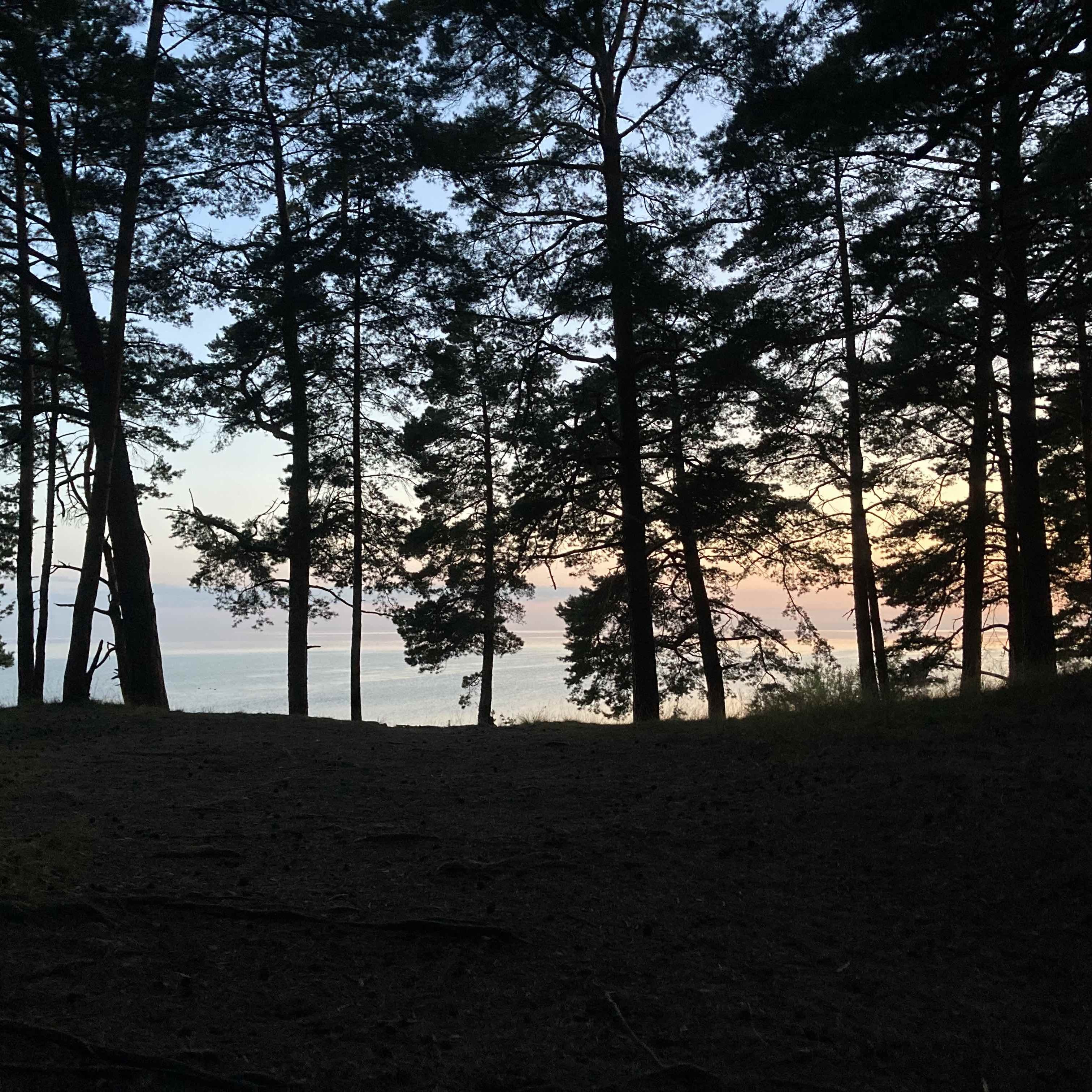
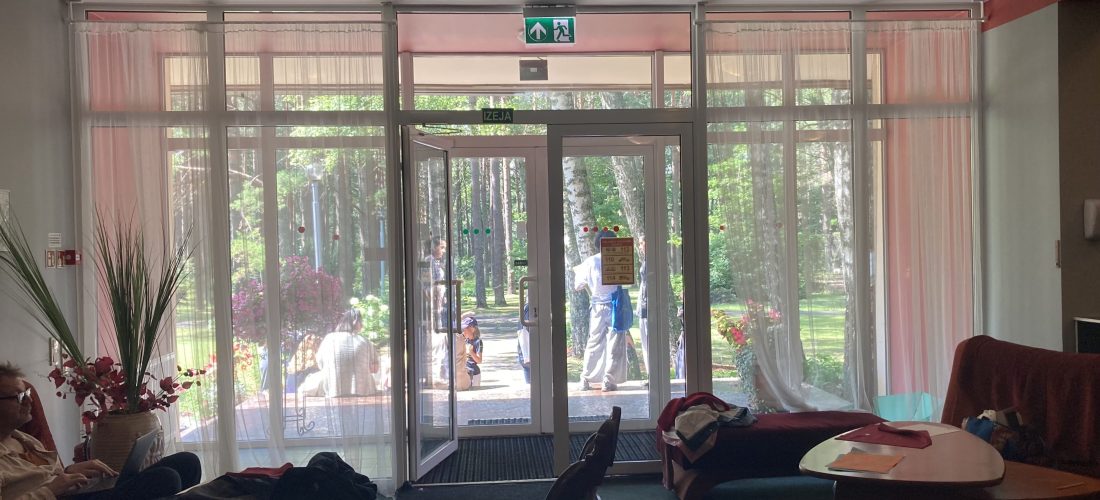
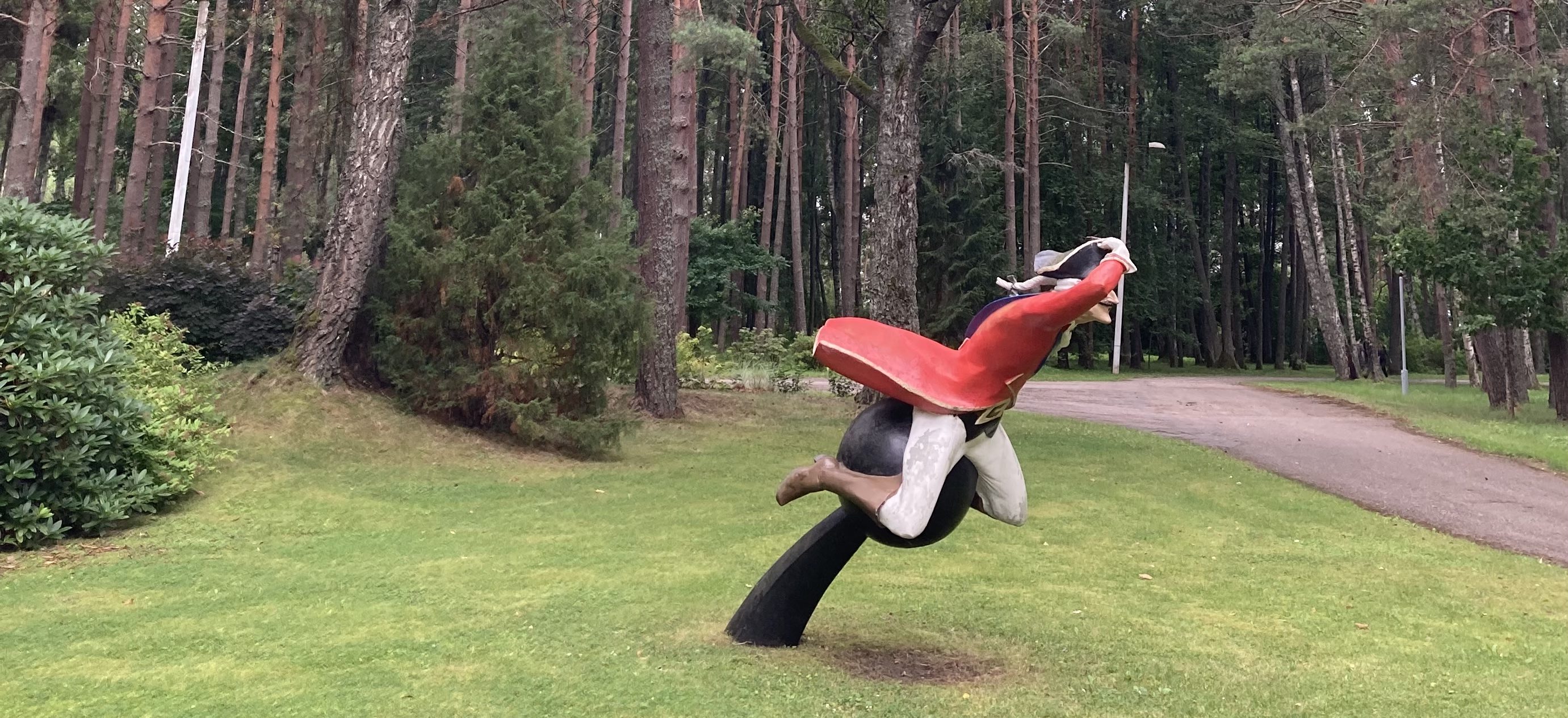
On July 23, I arrived in Saulkrasti and reached hotel Minhauzen Unda; a Soviet-time building complex, close to the Baltic sea shore and surrounded by a deep, airy wall of high pine trees…
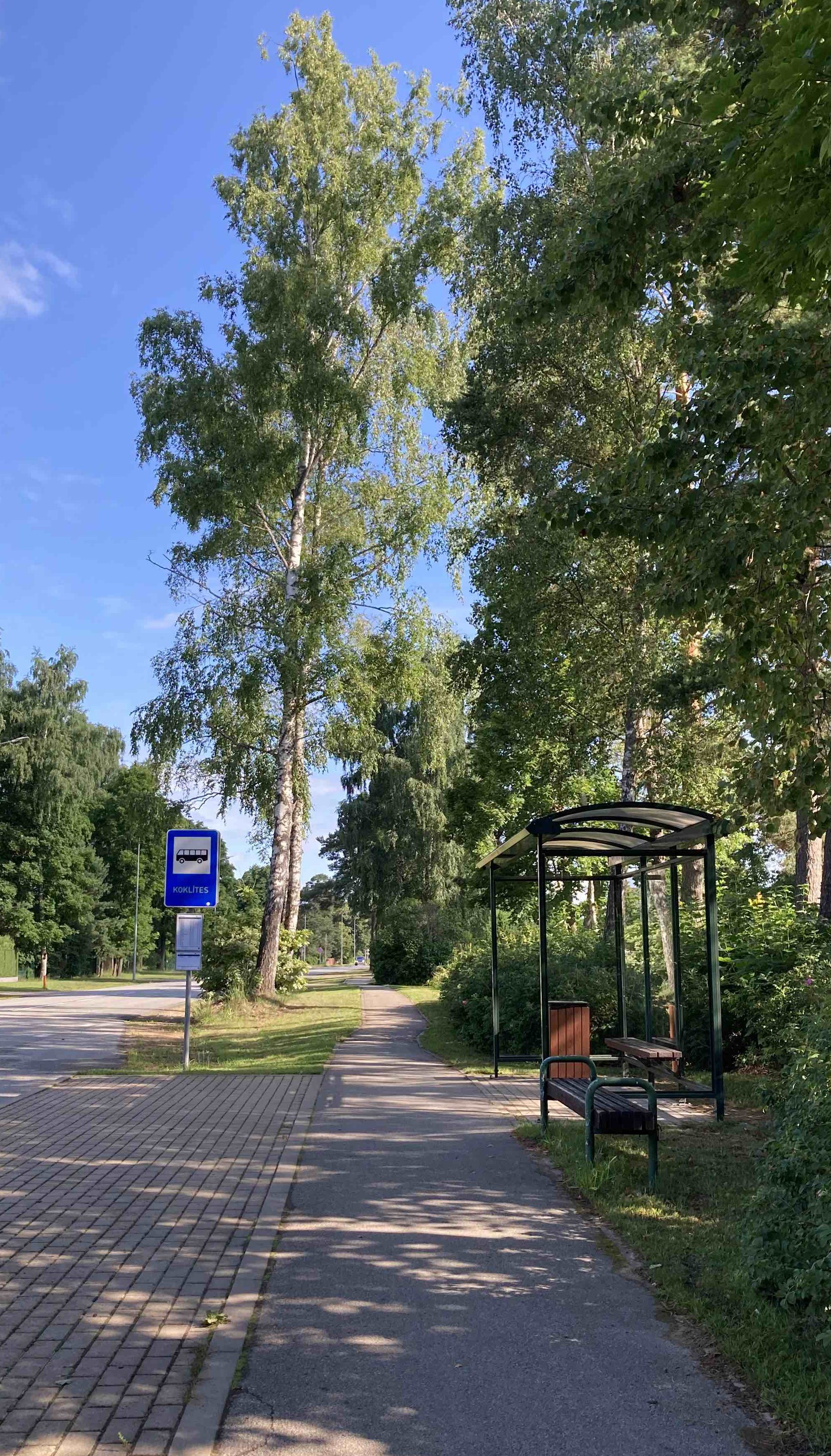
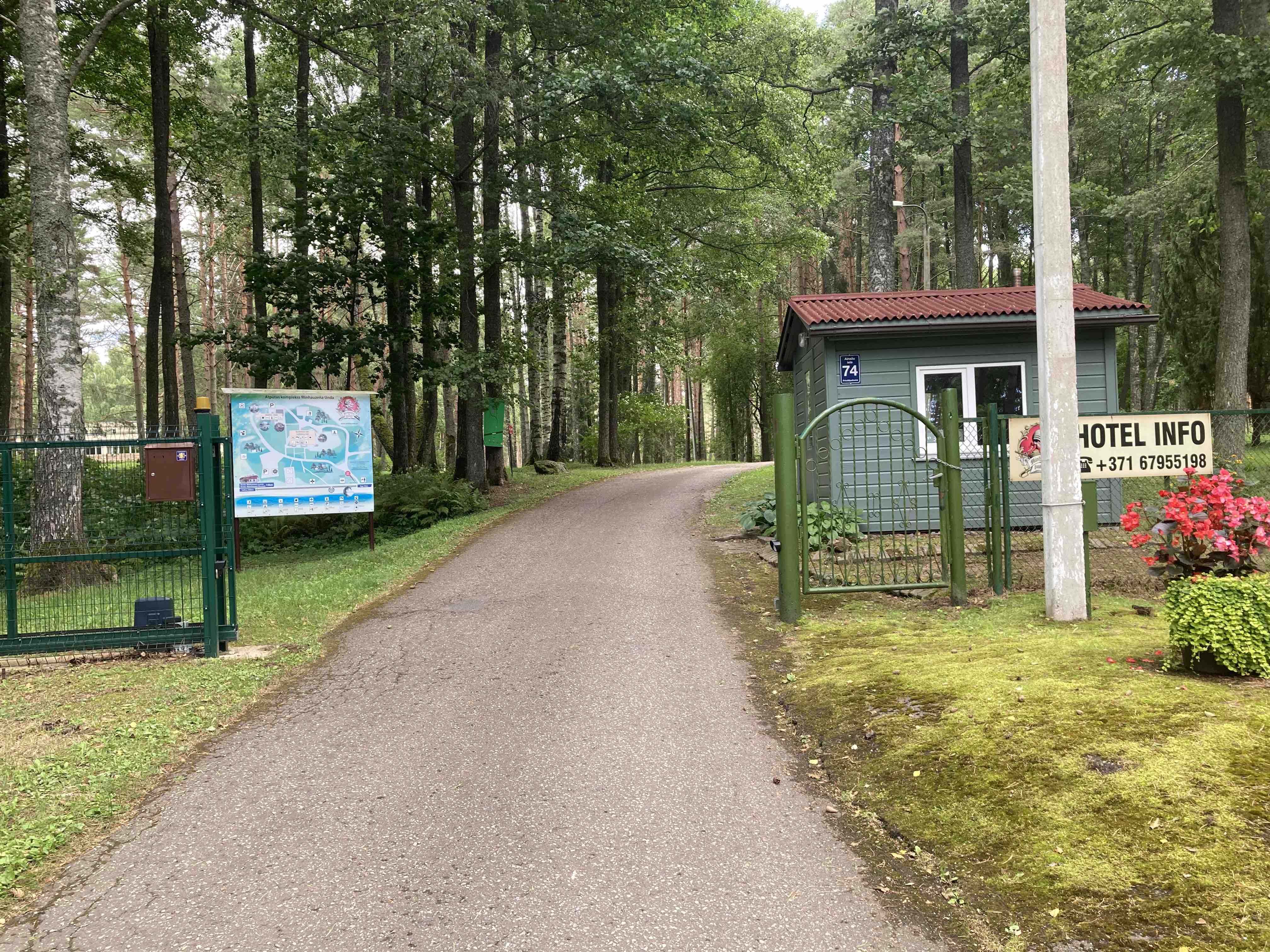
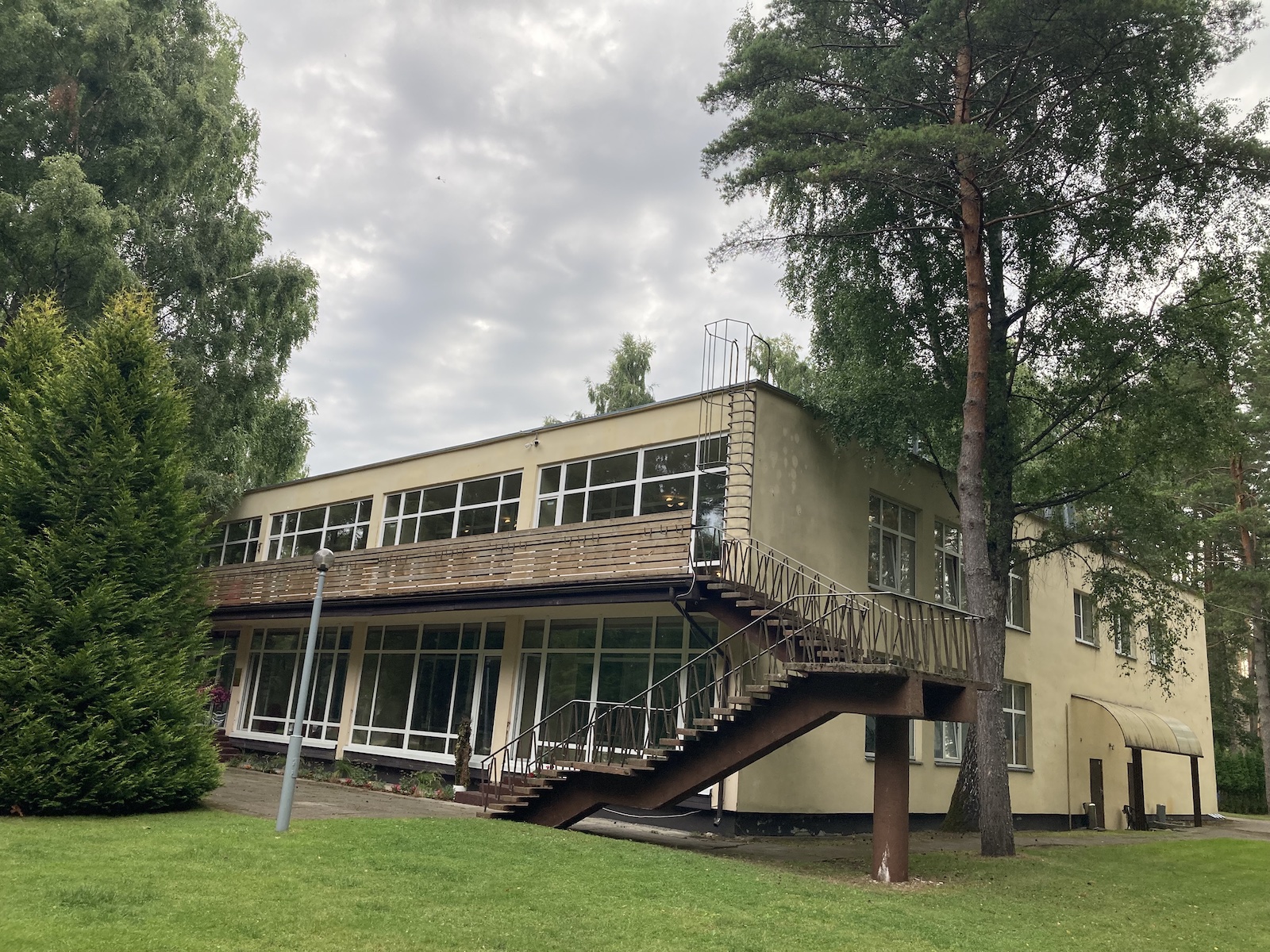
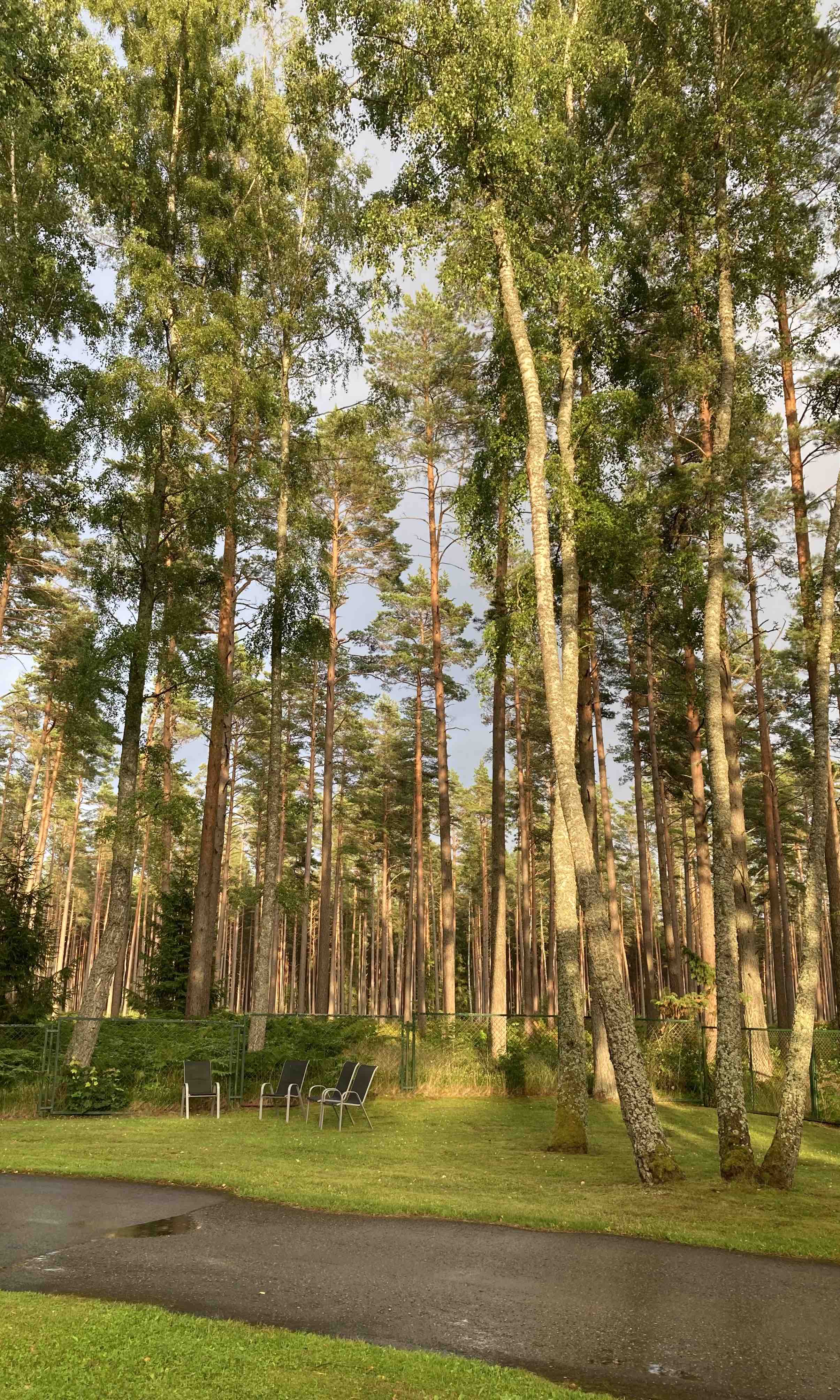
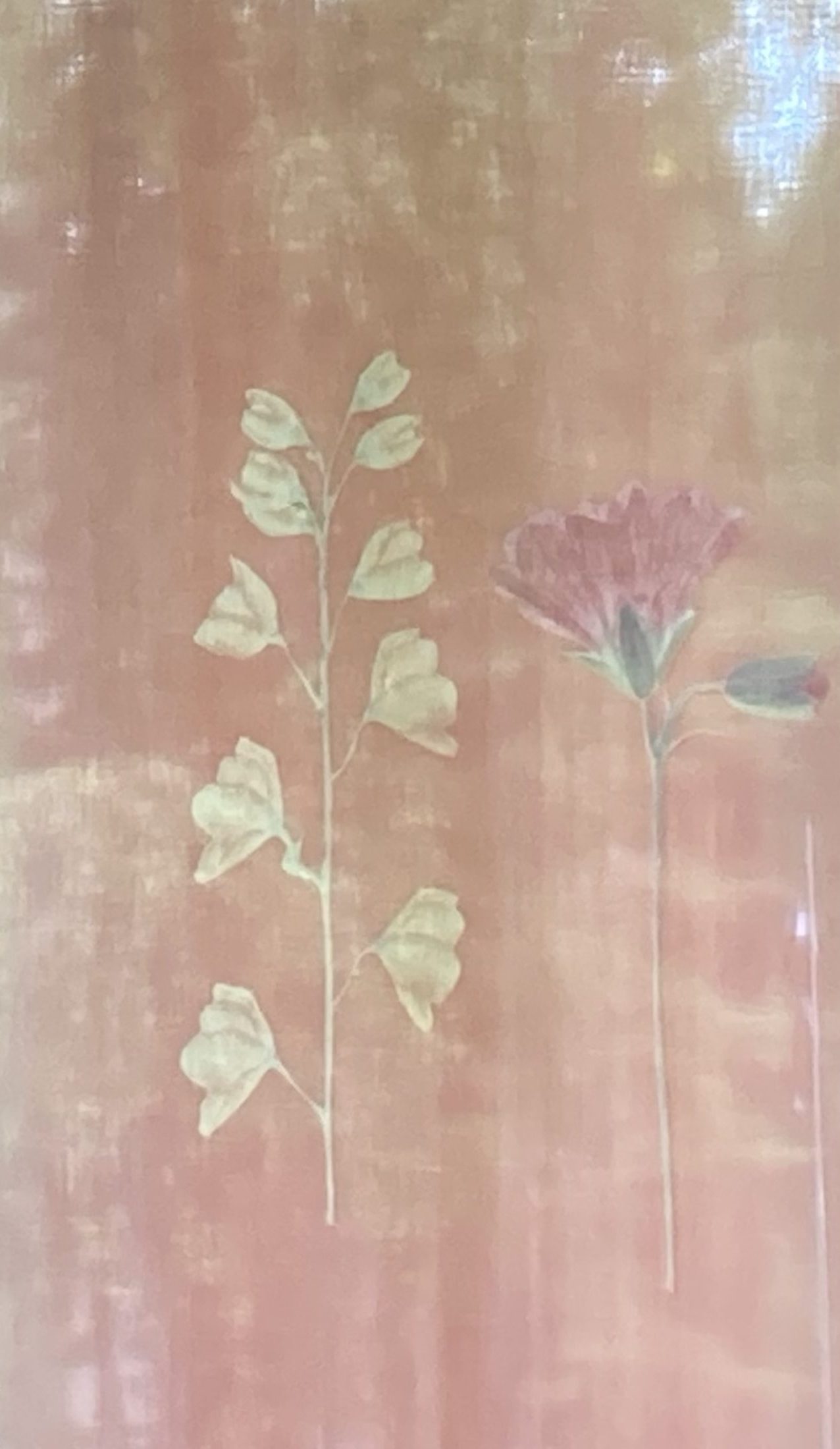
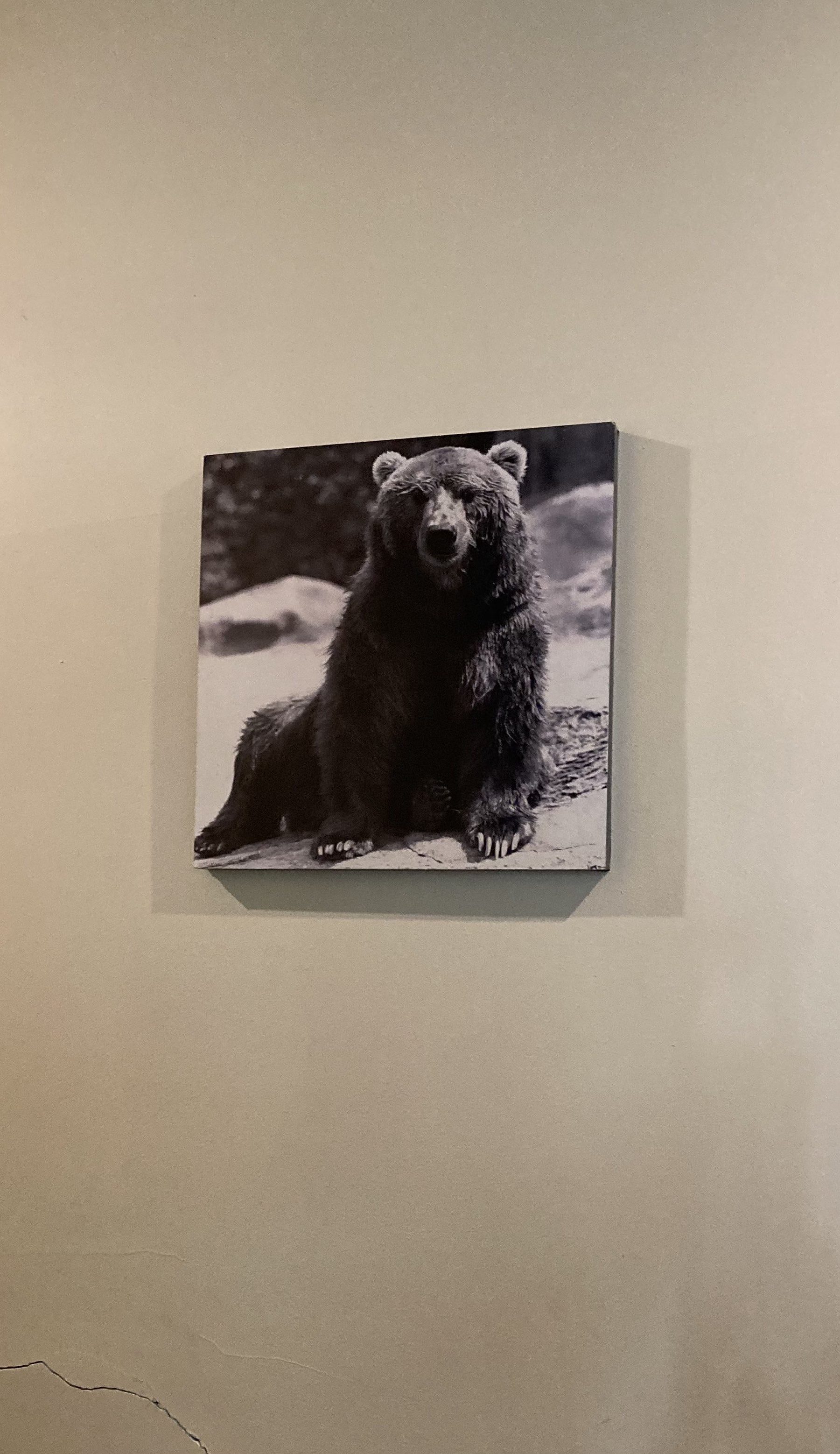
Arriving in Minhauzen Unda, Saulkrasti, Latvia
–
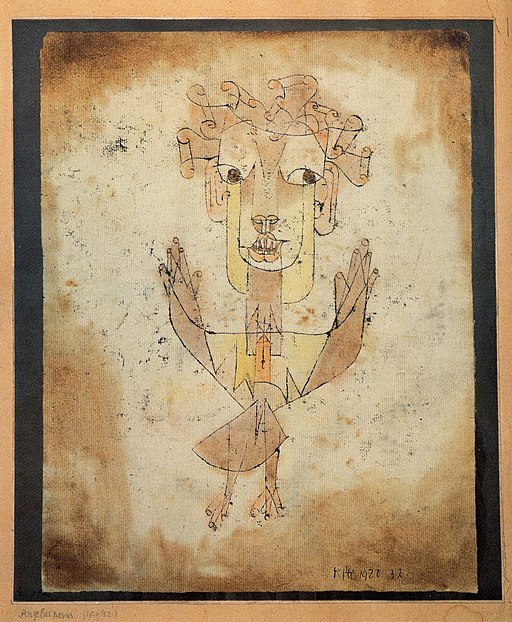
…and with the high-flying fabulist Baron Munchausen installed to be the patron of the establishment.
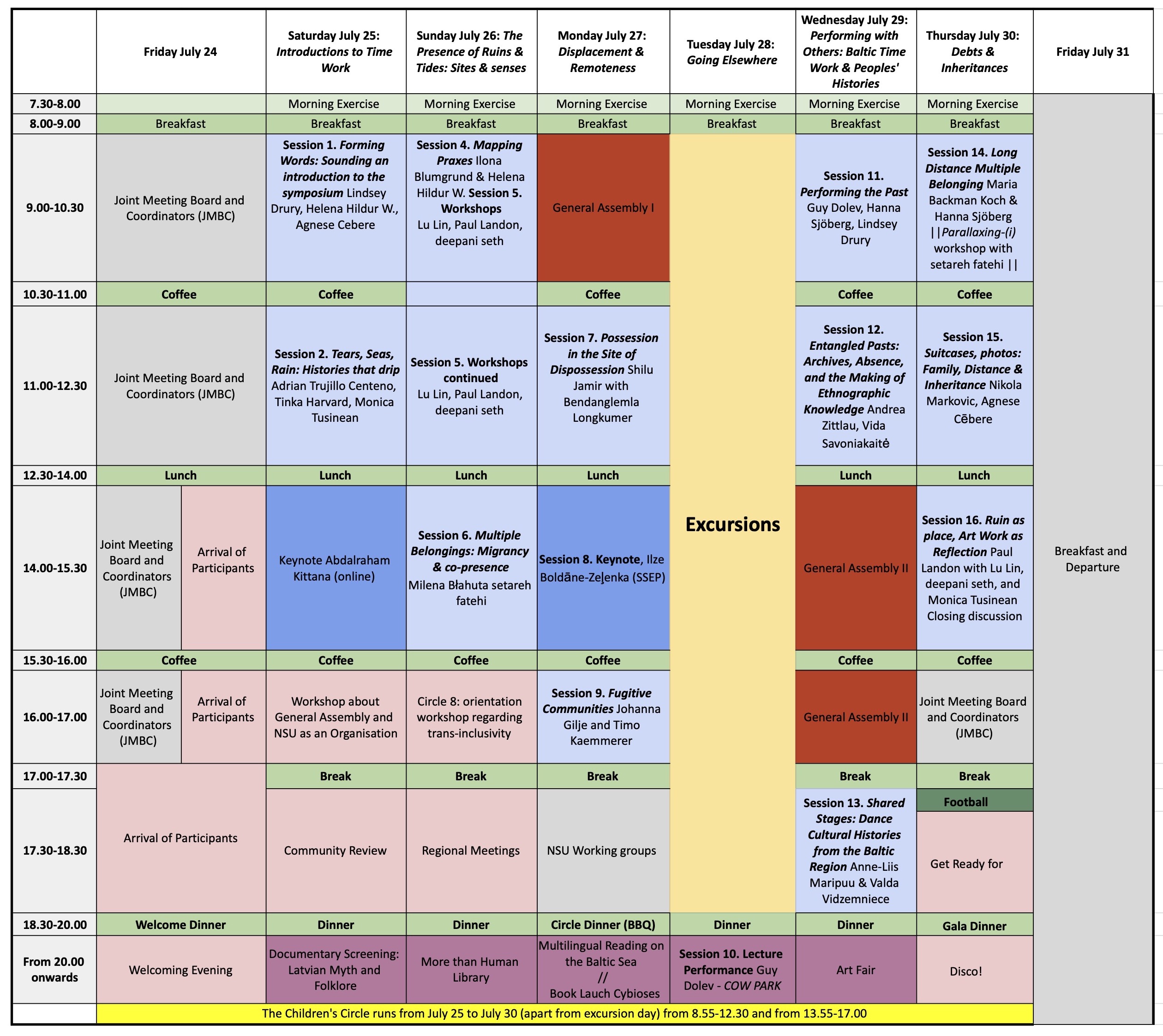
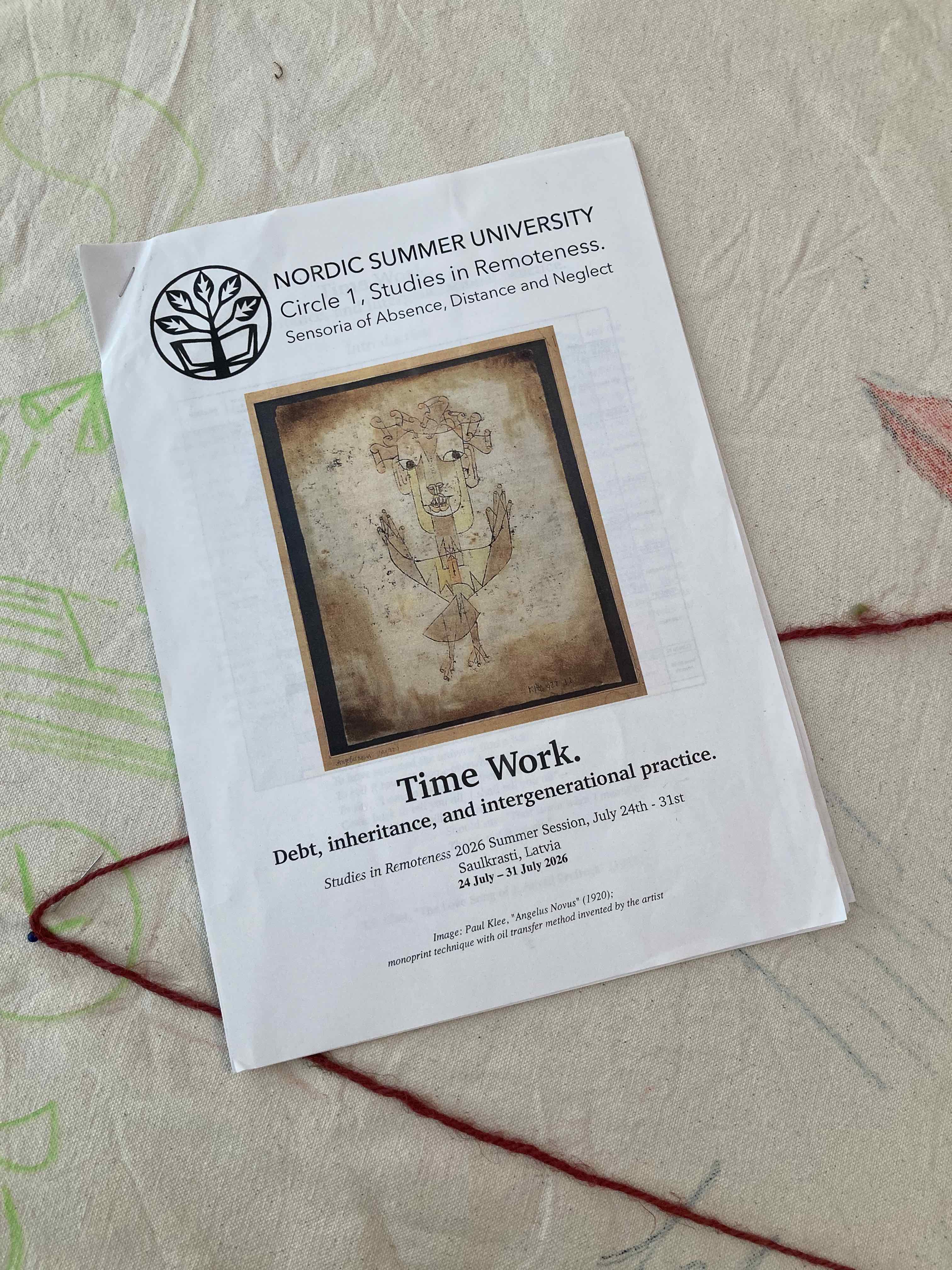
Time table for Time Work. Debt, inheritance, and intergenerational practice
(NSU Circle 1, Studies in Remoteness’ Summer Session 2026)
On July 24, all study circles were gathered, and participants greeted with a welcoming dinner. About half of our circle are returning friends from the Winter Session in Berlin, and the other half are newcomers; a good mix, and again a wonderful bunch of people. With the new morning, our programme begins with a brief introduction, followed by a workshop with Agnese Cēbere: Forming Words in Latvian… an appropriate start to ground us in this place where we are all newcomers. Afterwards, we split up in smaller groups to listen to each others’ thoughts on the concept of “remoteness”.
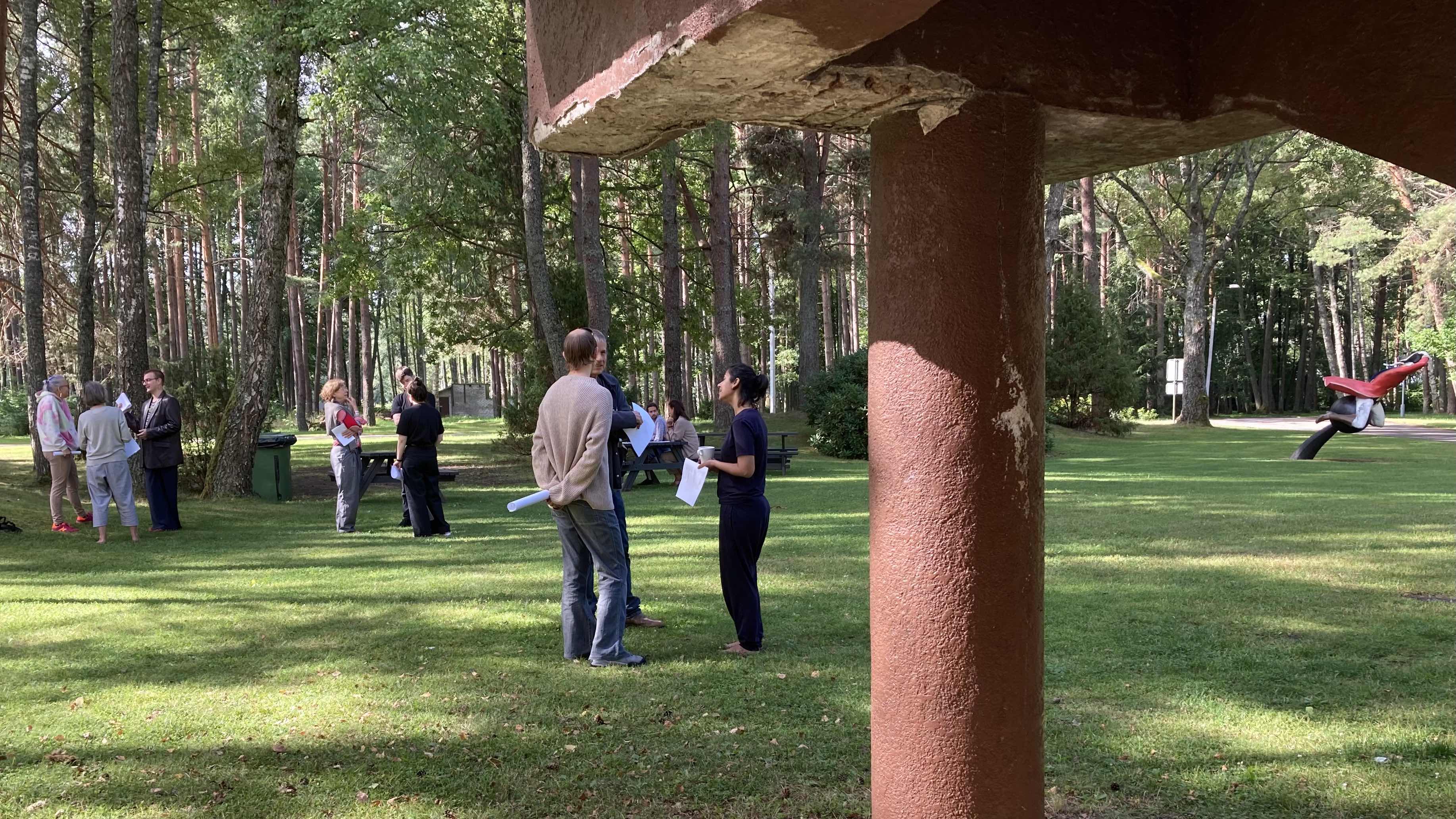
Saturday morning, July 25: “What is ‘remoteness’ to you?”
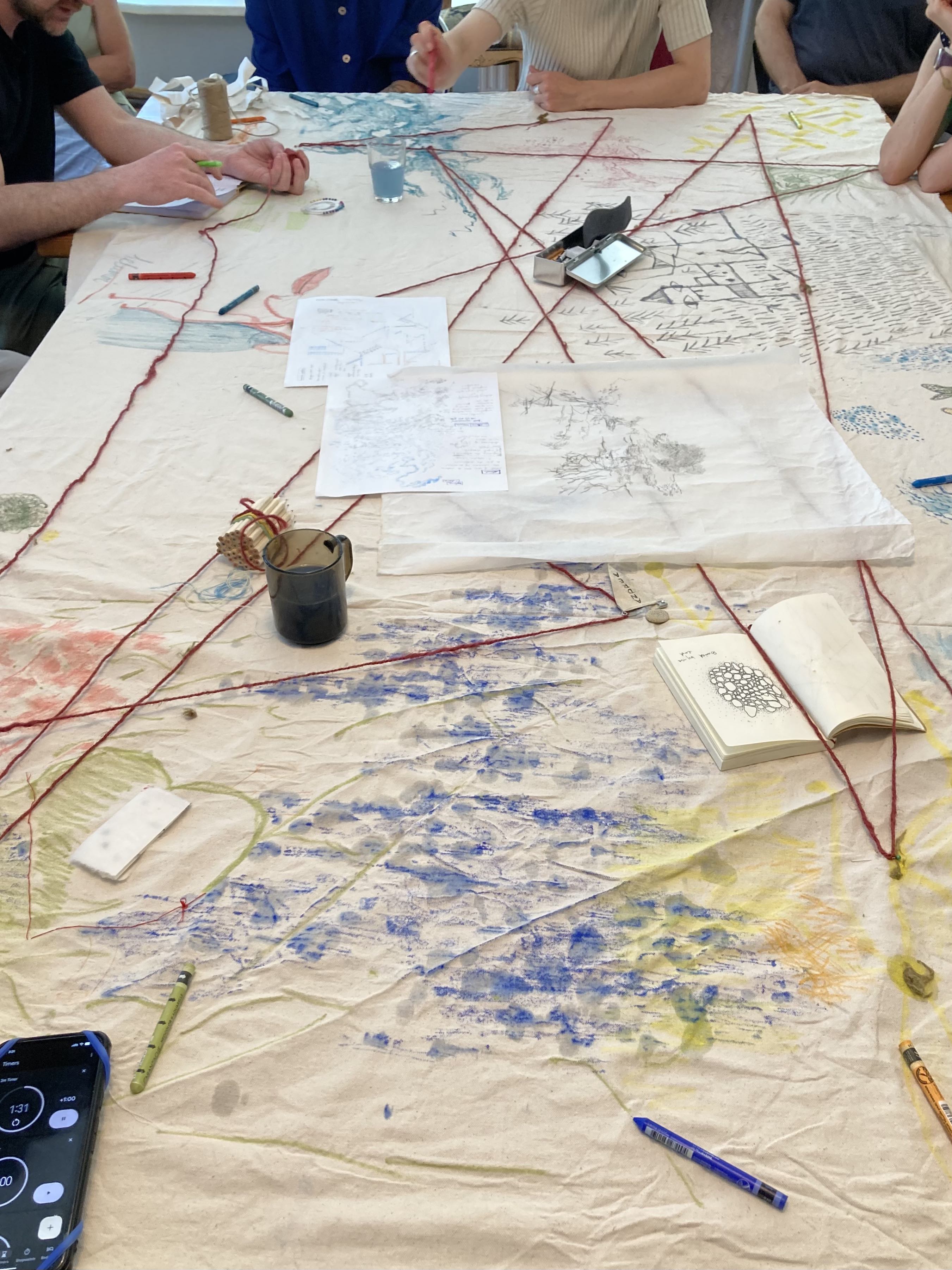
A large piece of canvas – serving as a tablecloth during the Winter Session in Berlin – is now turned into an improvised projector screen for Tinka Harvard’s lecture on The Melt Archive: Water, Memory, and the Work of Attention.
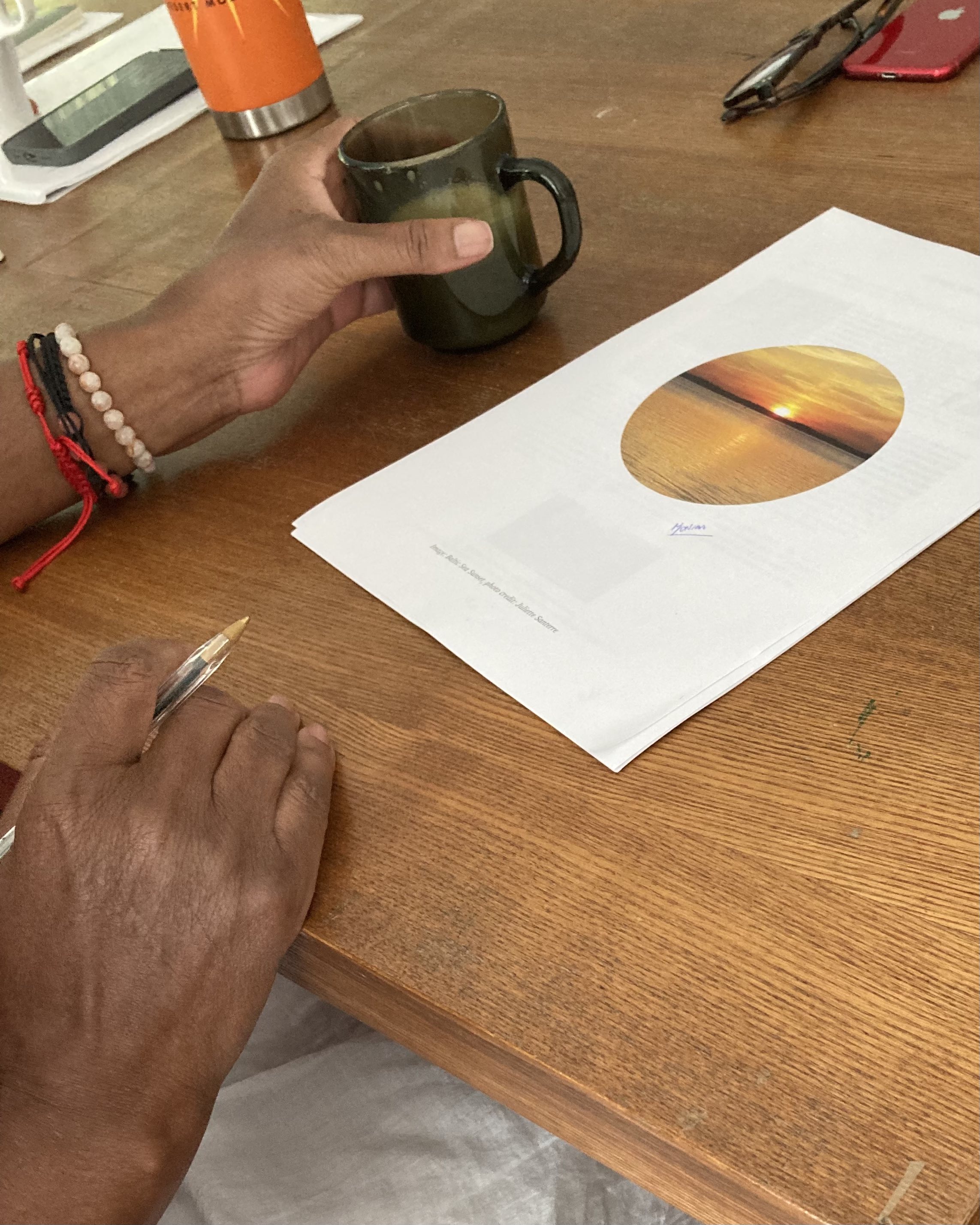
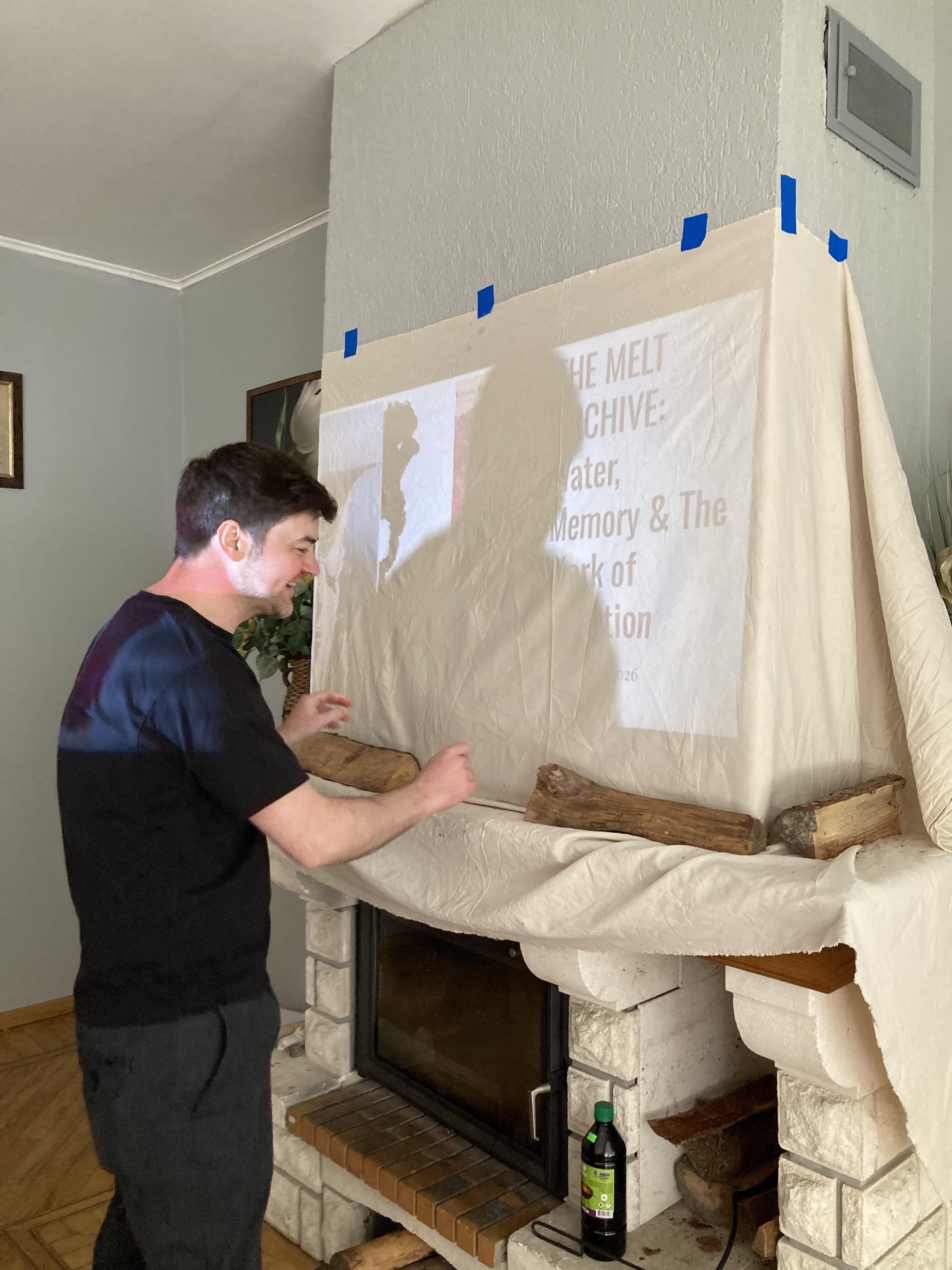
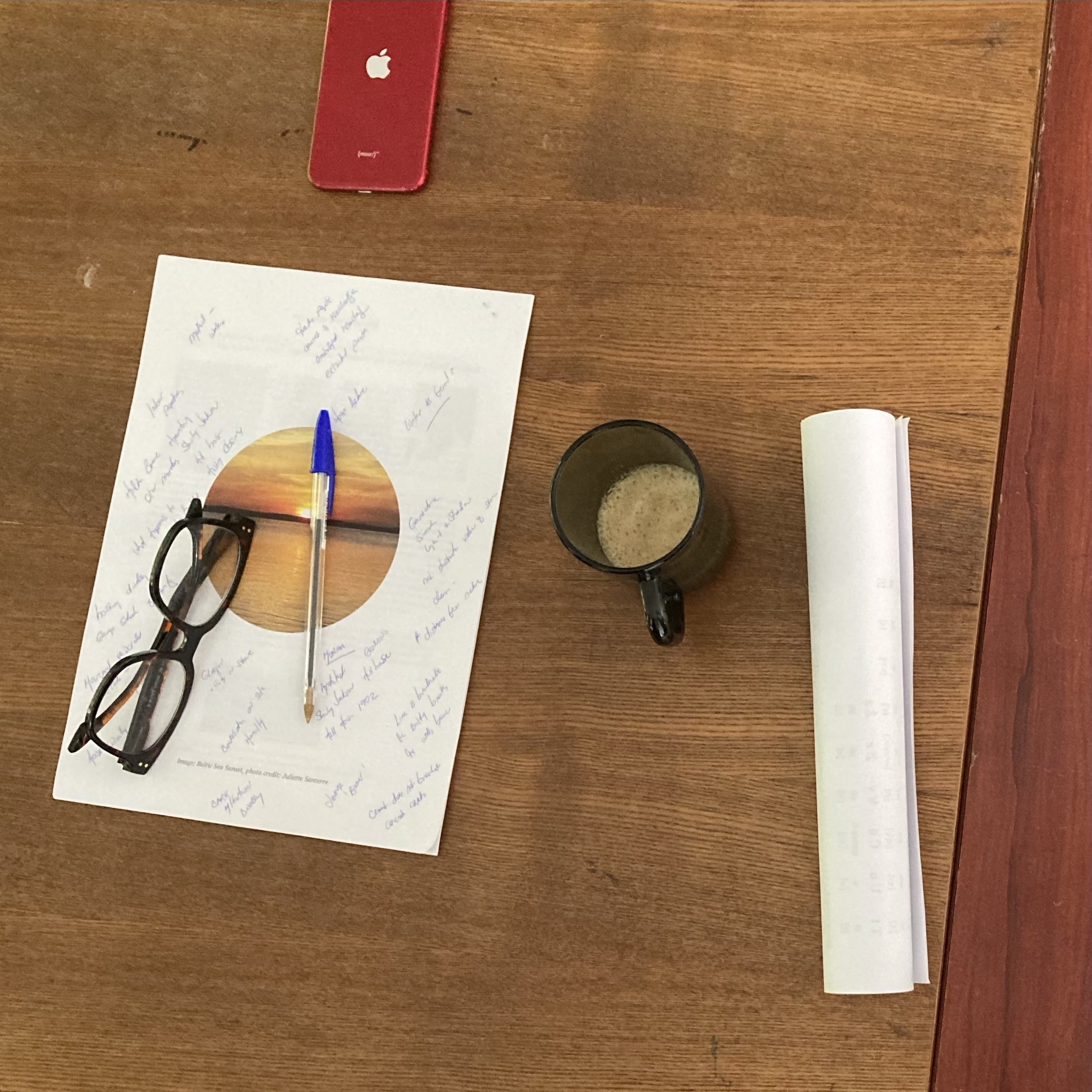
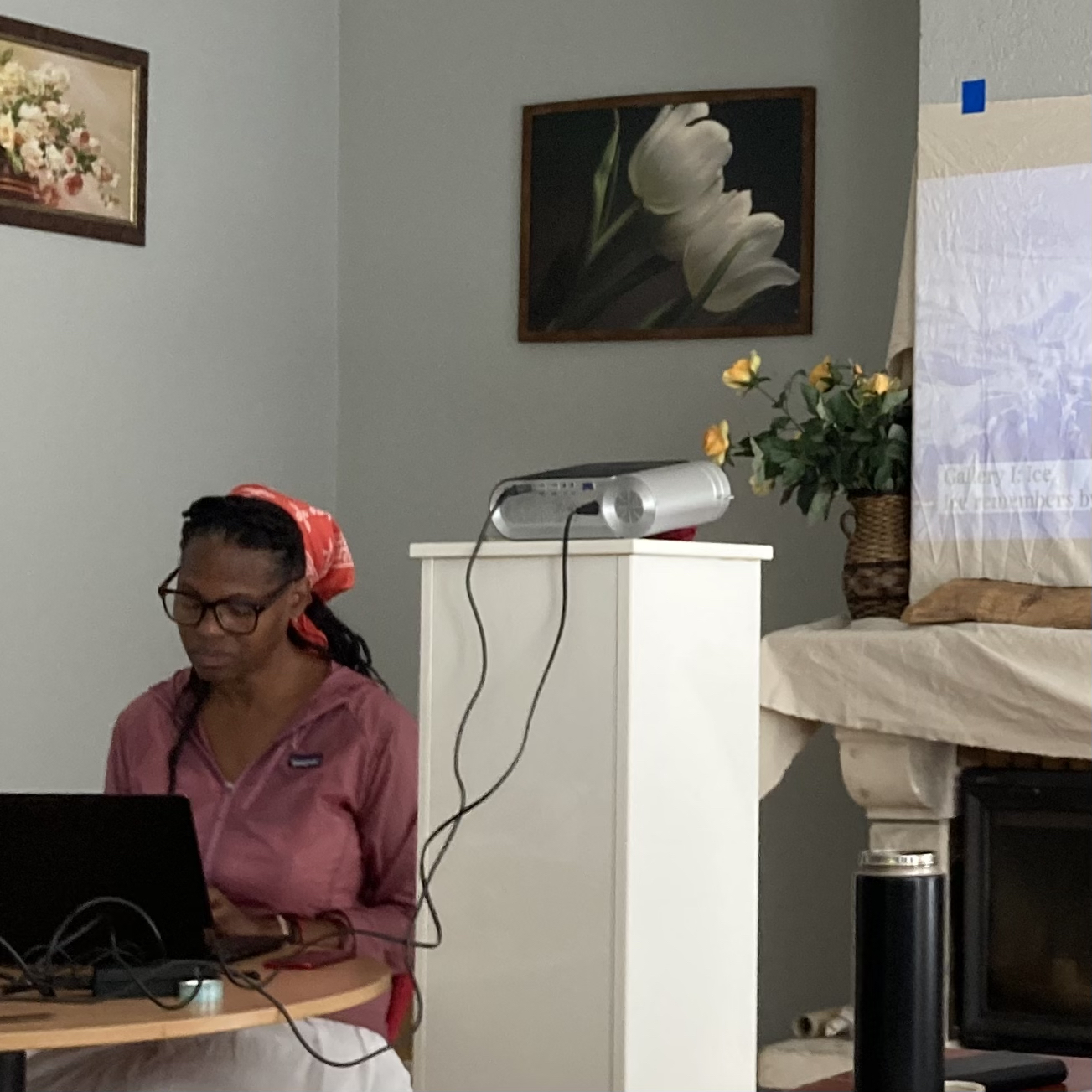
Preparations, arrangements, notations; writer, poet and theologian Tinka Harvard in lecture.
Leaving her notes behind to speak from the heart, Tinka’s words opened up another poetic dimension where oceans and melting ice speak memories of destructive powers as well as awareness, care and love…
Raging wildfires in California kept our next speaker Adrian Centeno hostage; we missed him dearly, but were treated with architect Monica Tușinean’s reflections on tensions between an architects’ prestige and the craftsmanship of builders.
From the next days, only a few highlights remain… because the flow and intensity of exchanges left little space for documenting.
Sunday is a day of outdoor workshops: walking, pausing, observing, drawing and reflecting. Prof. Paul Landon brought us to the scattered ruins of a Soviet era summer camp; left to decompose in the greenery, drawing hard-handed courtship from graffiti tourists…
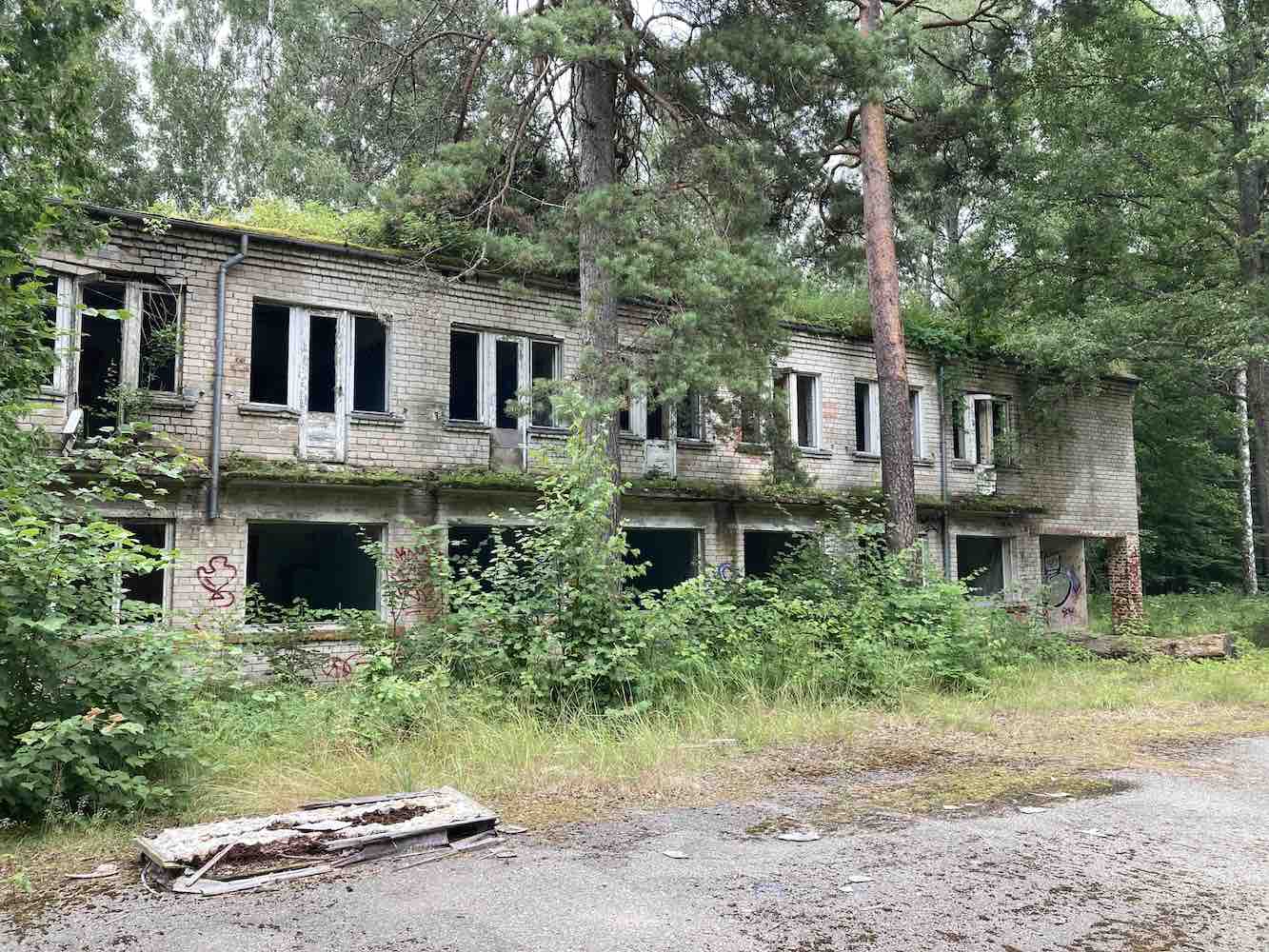
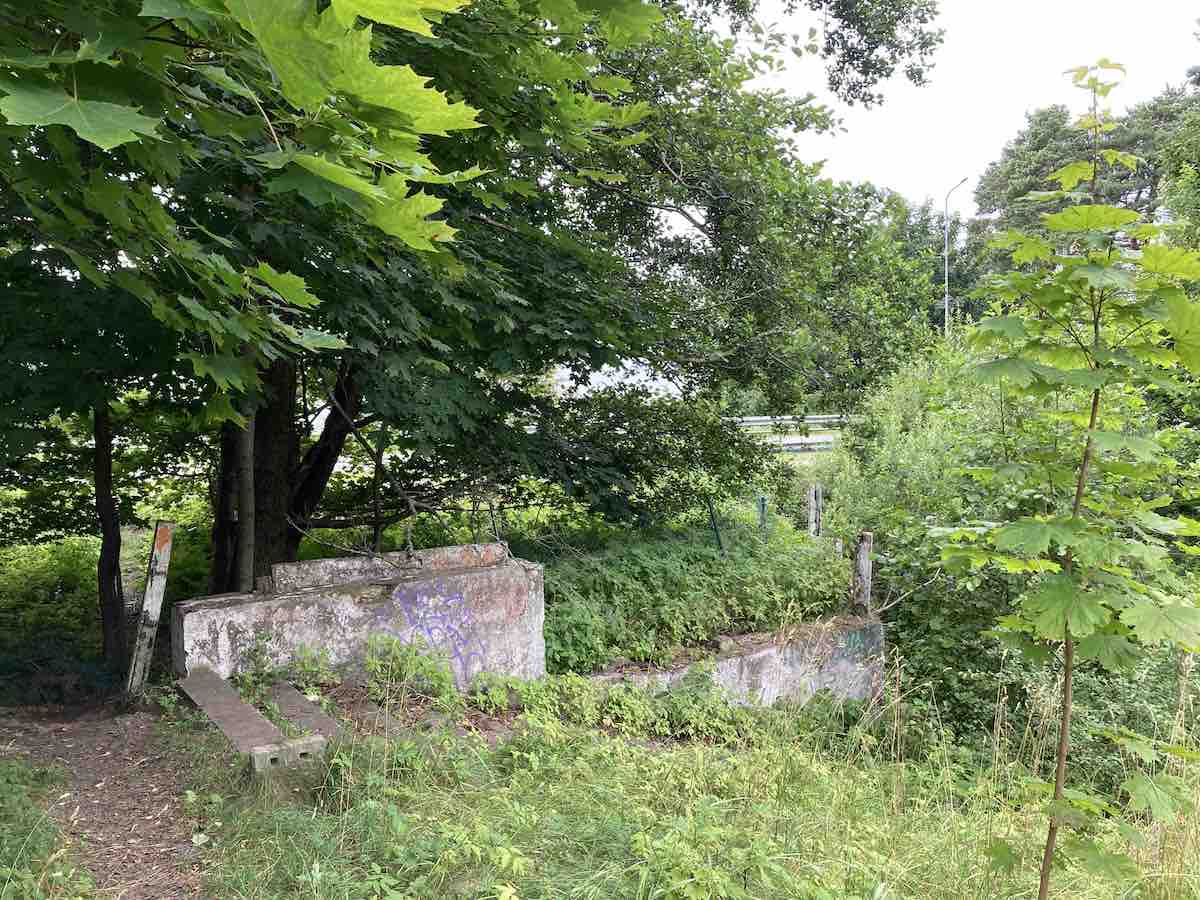
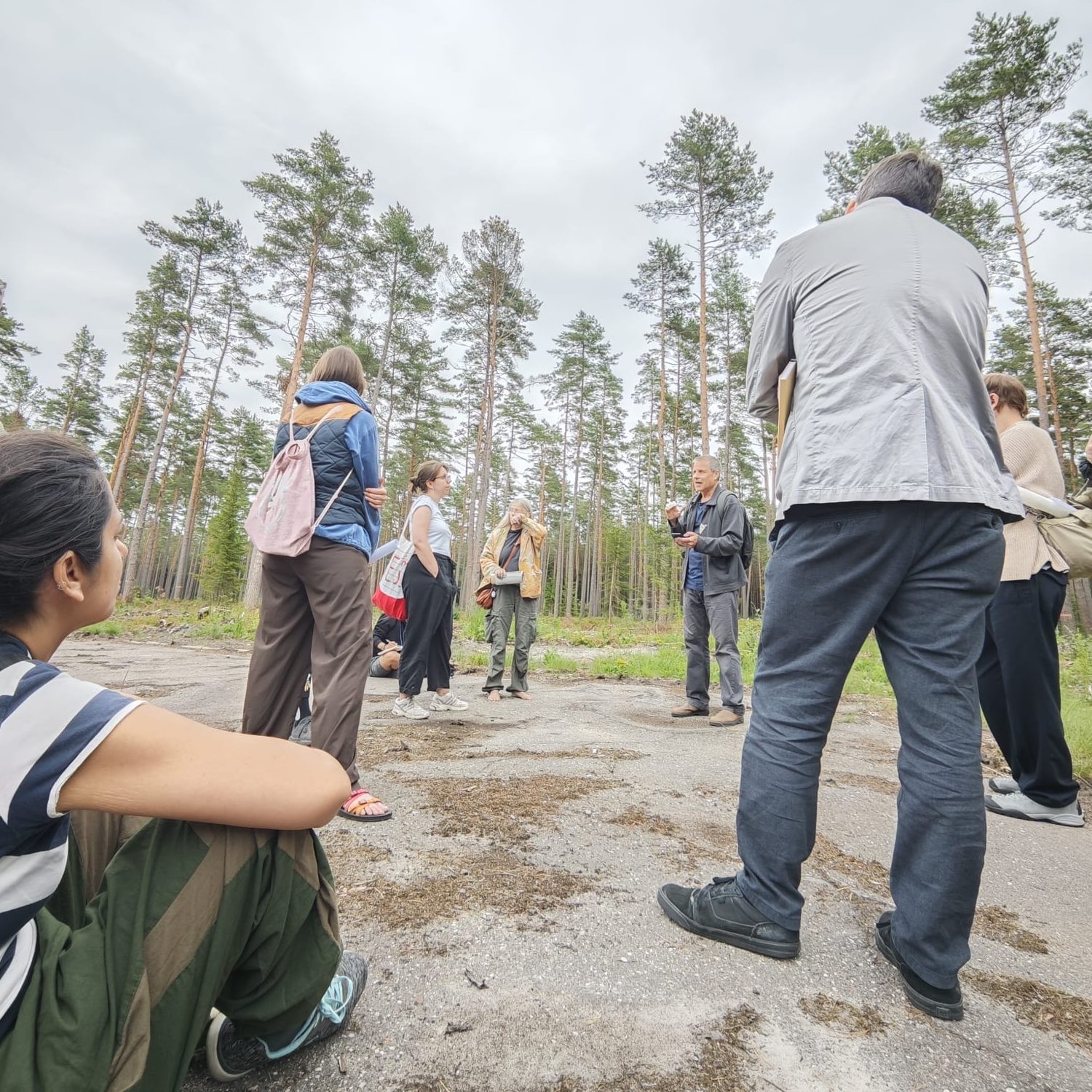
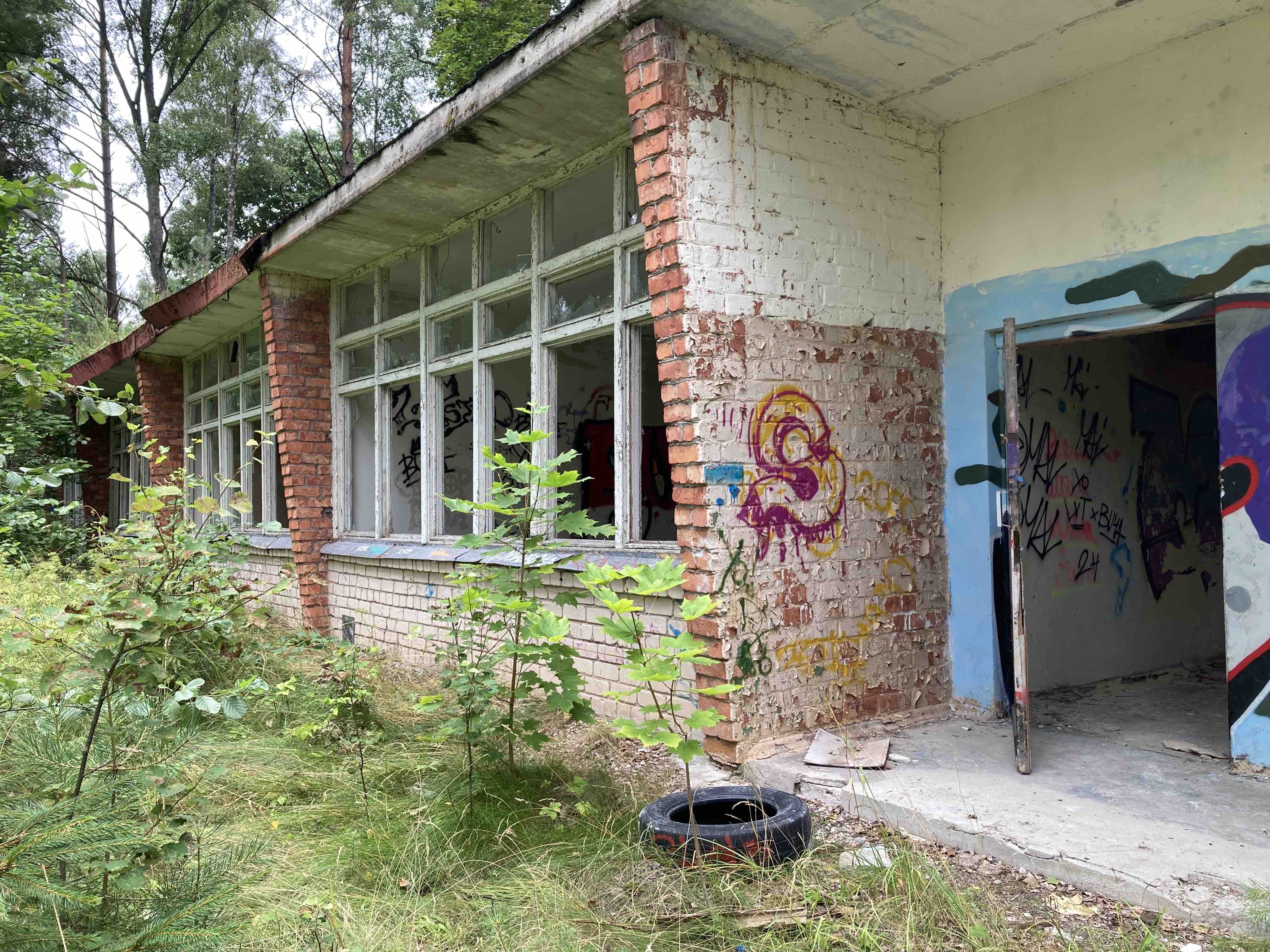
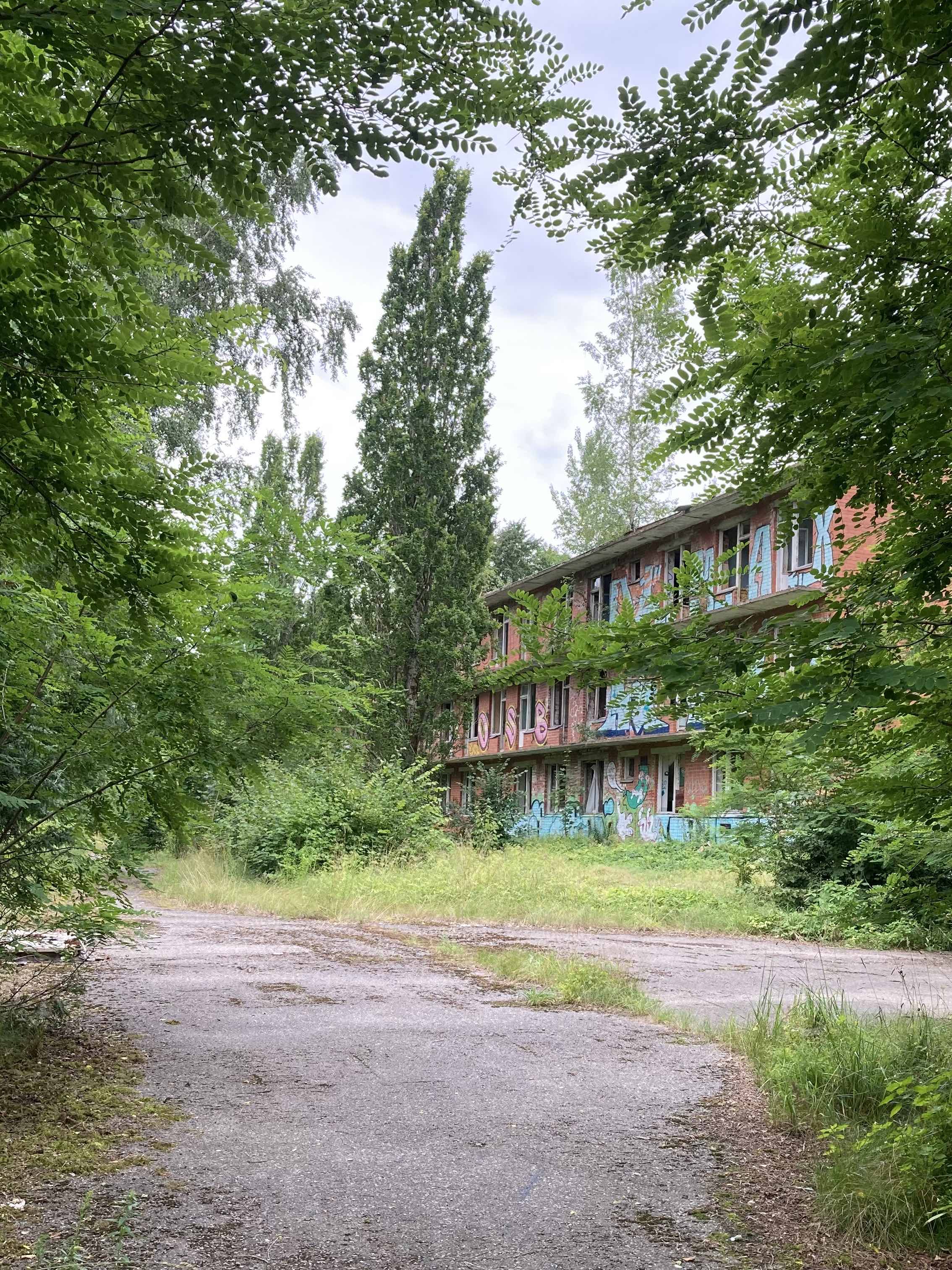
Prof. Paul Landon introducing the group to the uncanny familiarity of modernity’s ruins
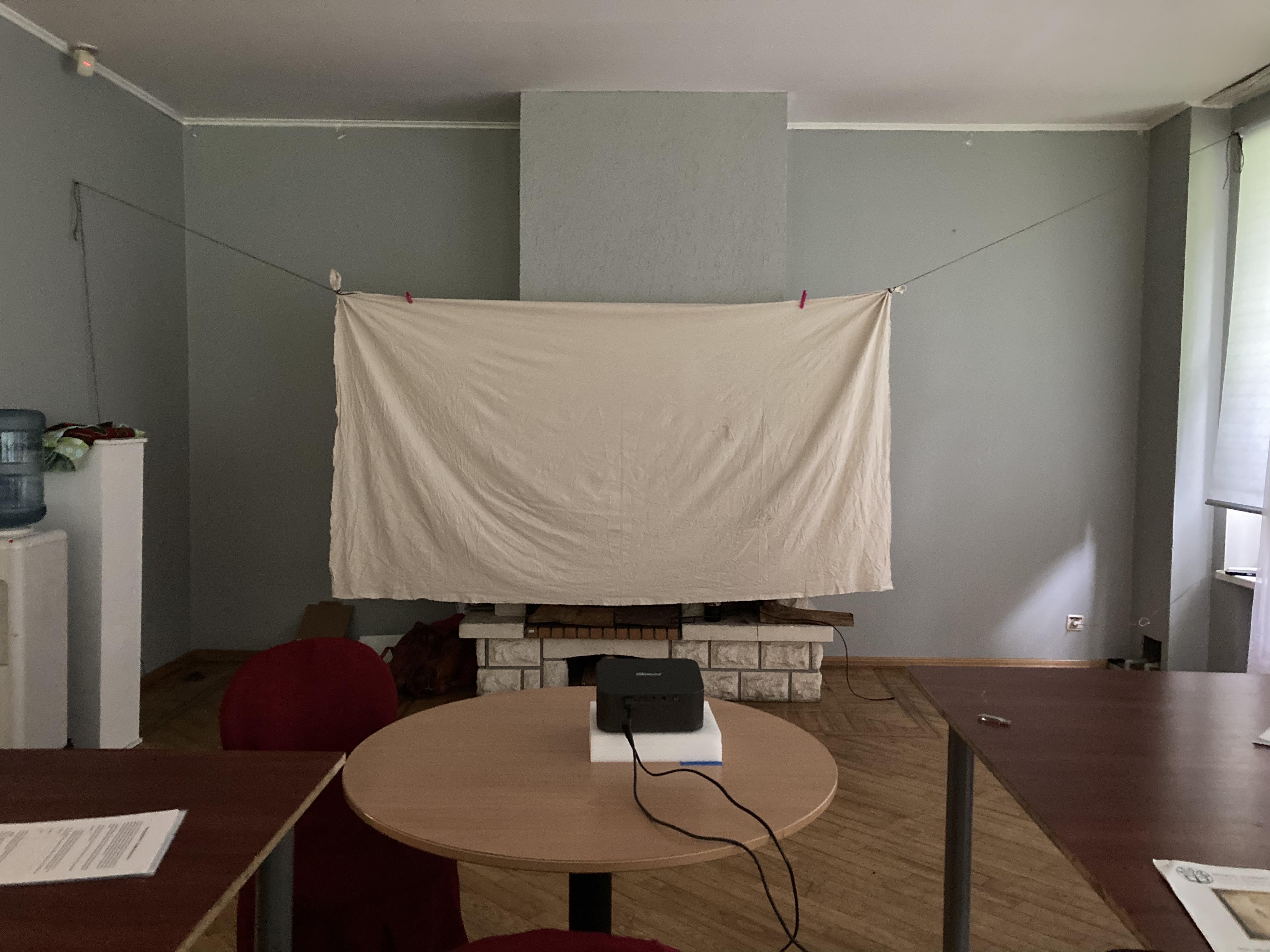
…and on Monday, the canvas screen is improved by Nikola with a string and clothes pegs from the always helpful reception ladies; now ready for Dr. Shiluinla Jamir’s presentation Rethinking Contemporary Animism from the space of Remoteness, with respondent Prof. Bendanglemla Longkumer joining us online from Fiji.
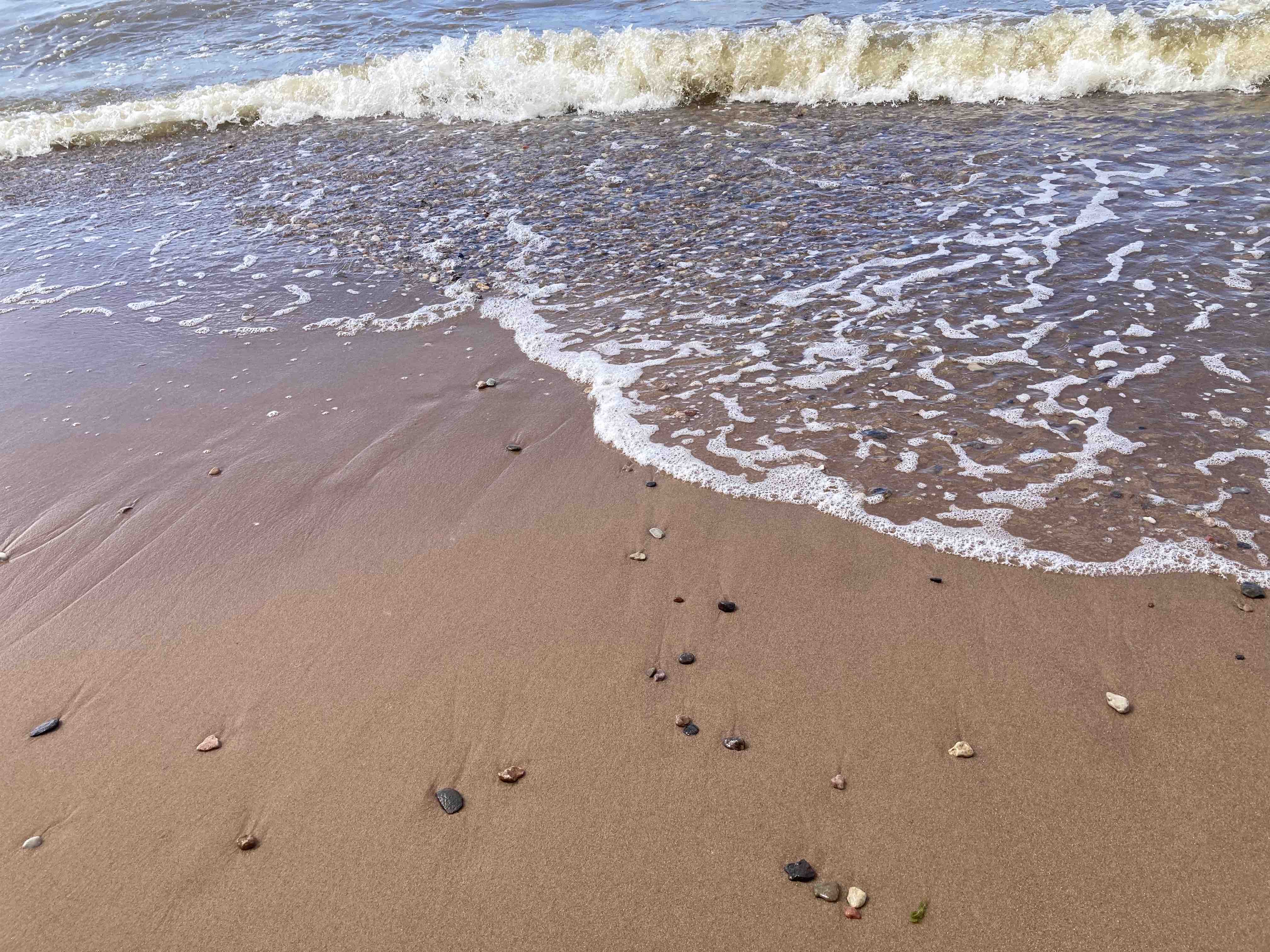
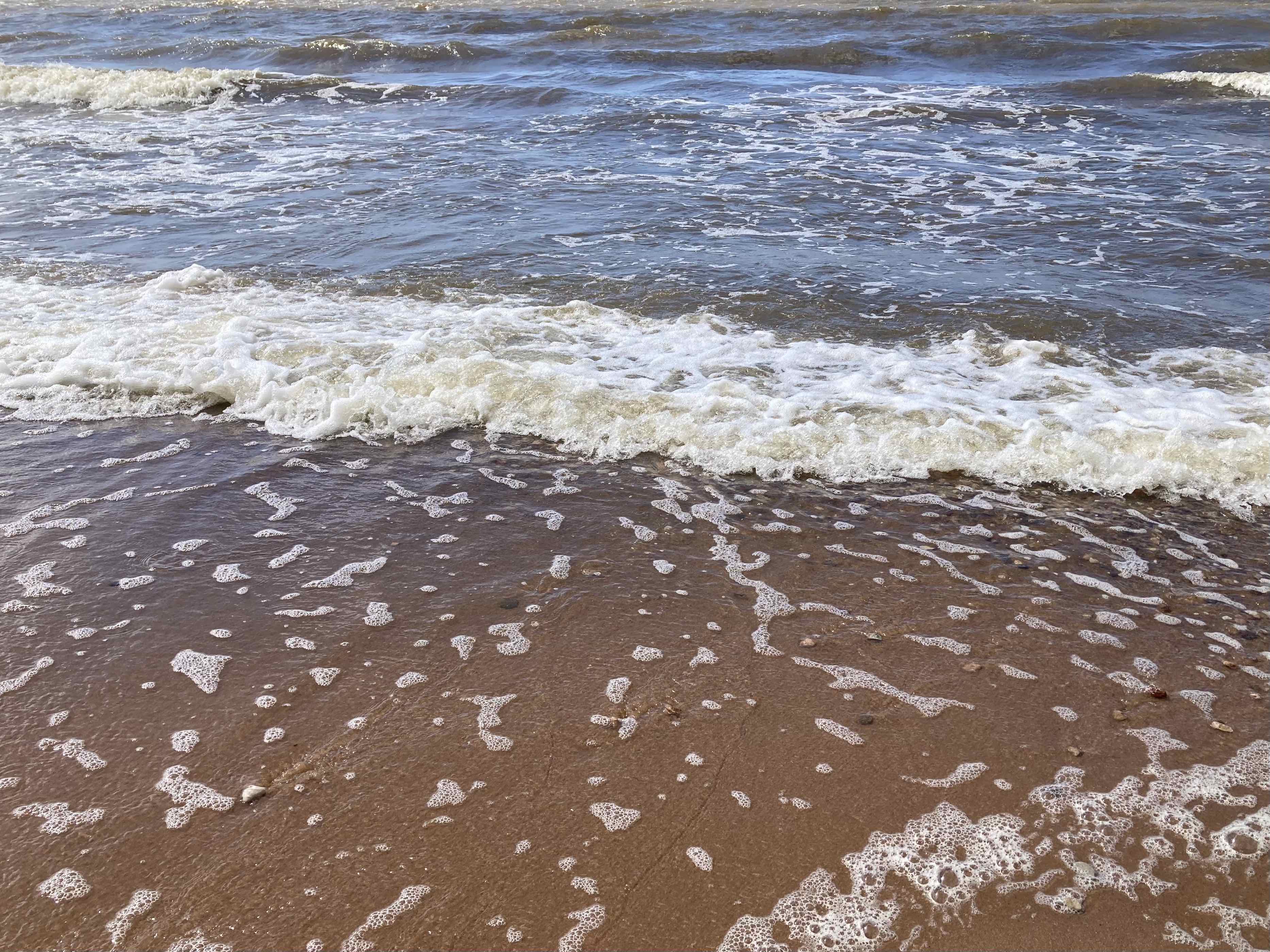
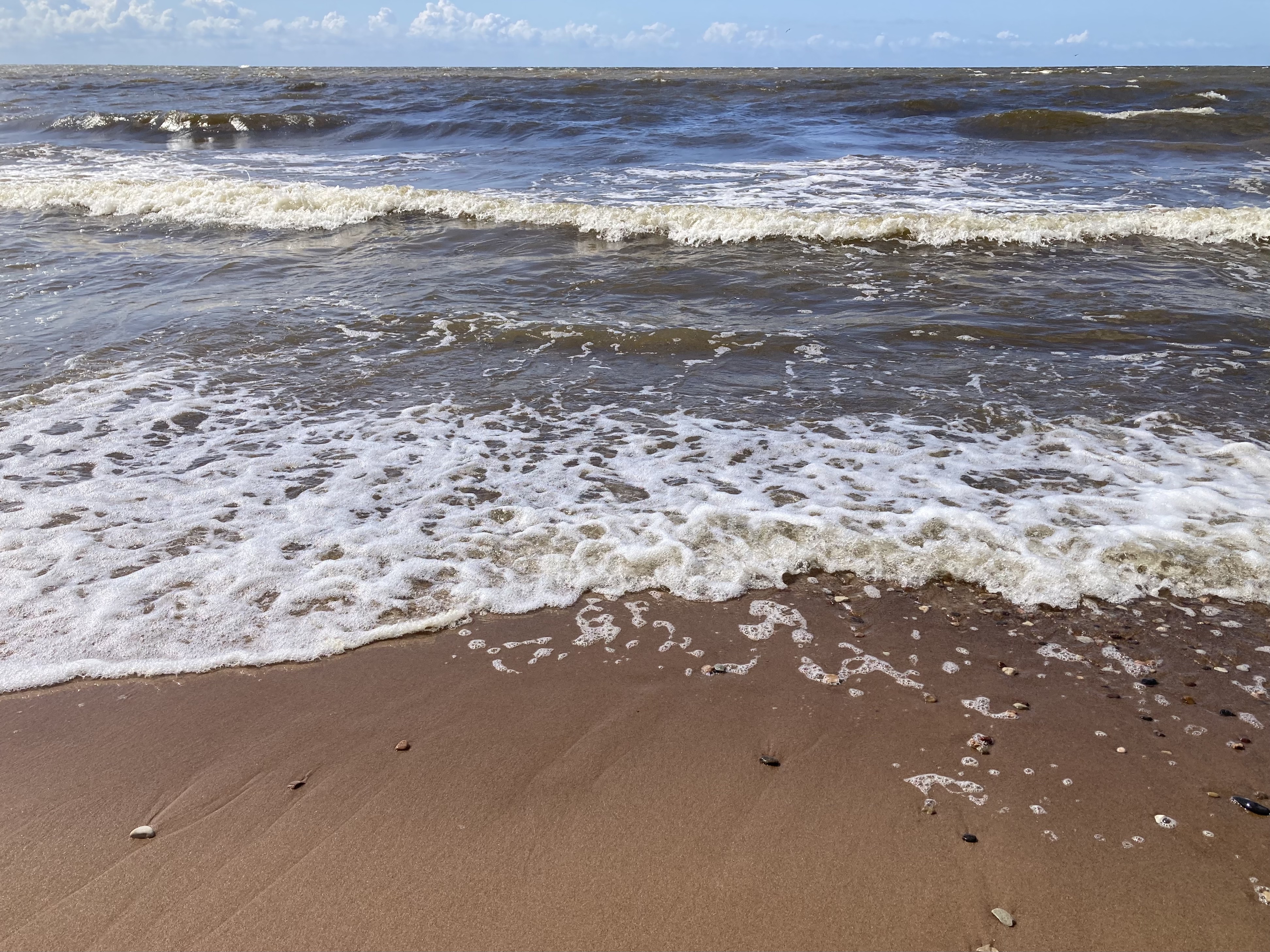
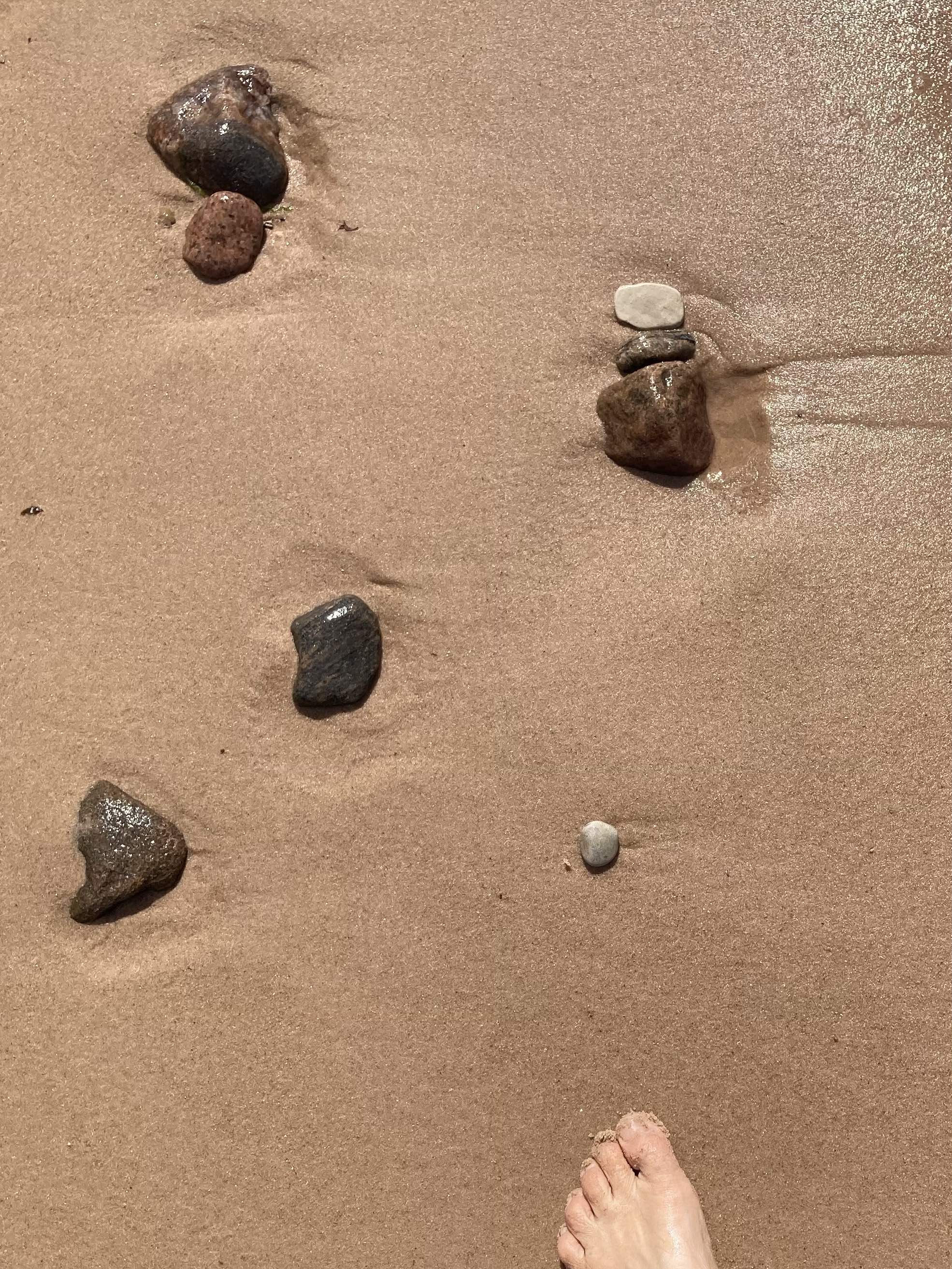
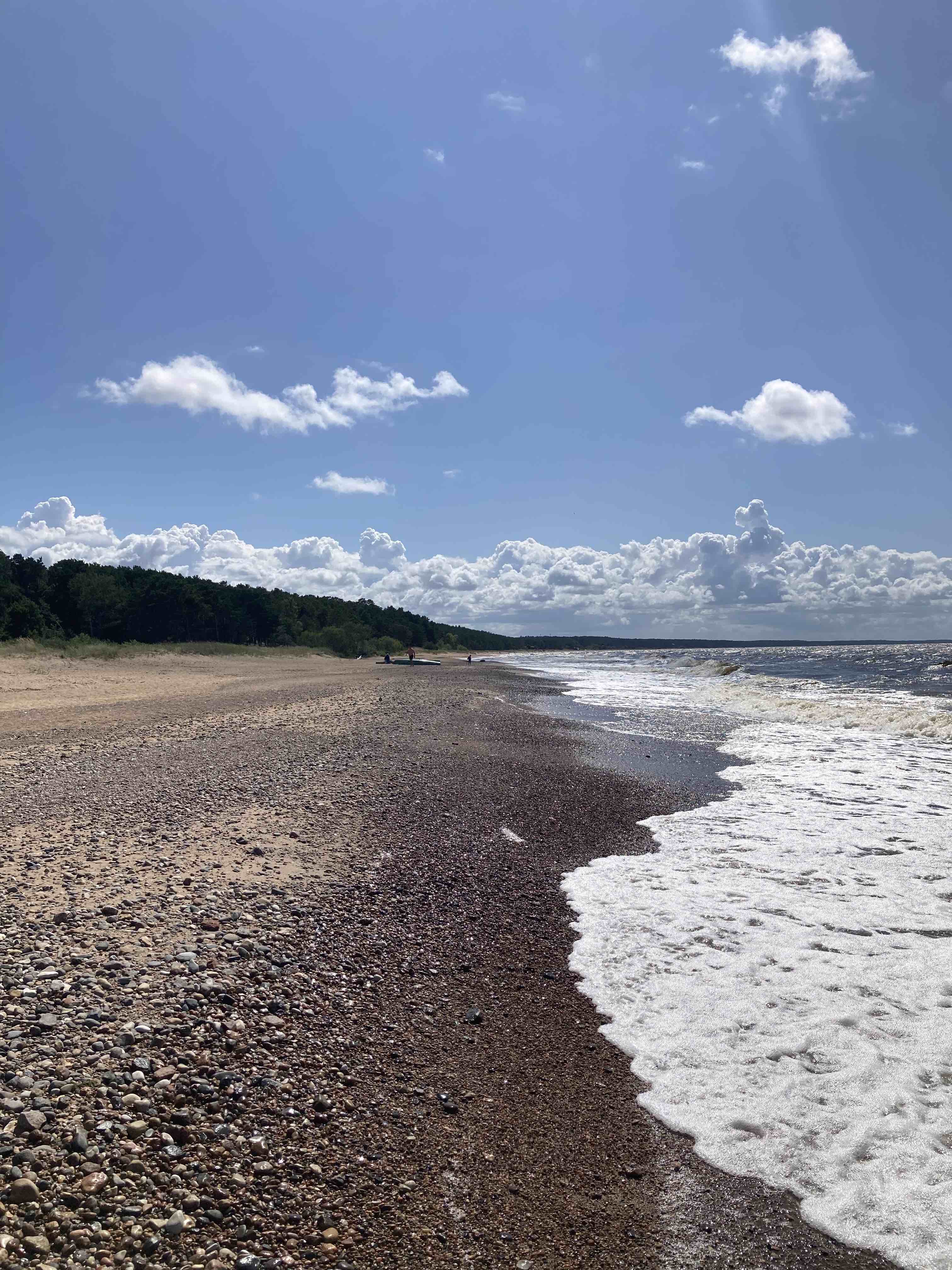
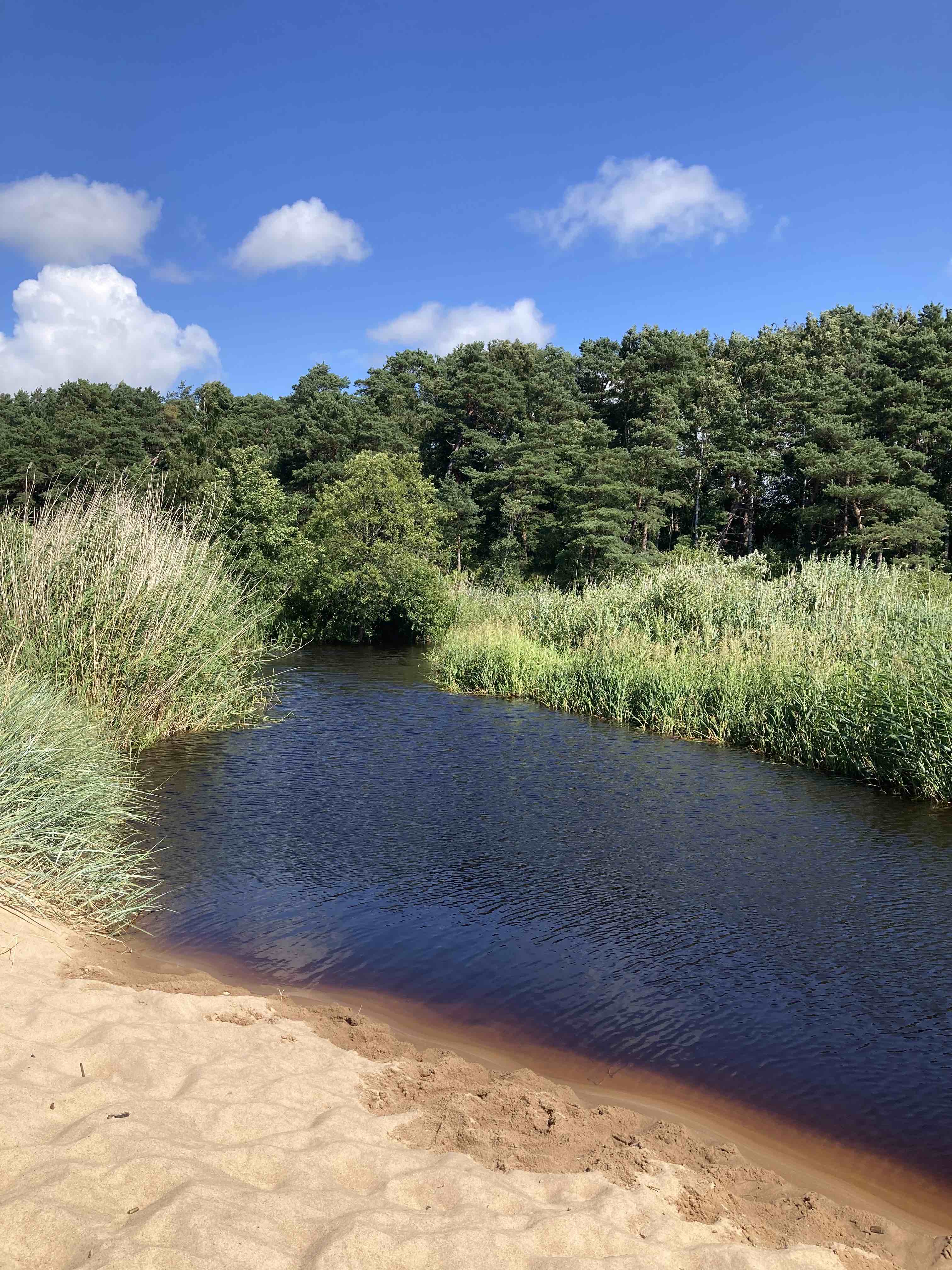
Tuesday, July 28: Excursion Day. A long, lonely walk along the stretch of sandy beach, where the Baltic sea may gift a piece of amber or a “witch stone” to some lucky wanderer. I was happy to just breathe with the winds and waves – approaching, withdrawing…
–
…soothing, powerful and precarious. Pebbles and gentle sunshine; undercurrents, quicksand.
How do we move along with the flow of life, without hurting or getting hurt? How do we act responsible, and where does one’s responsibilities stop? How do we act freely?
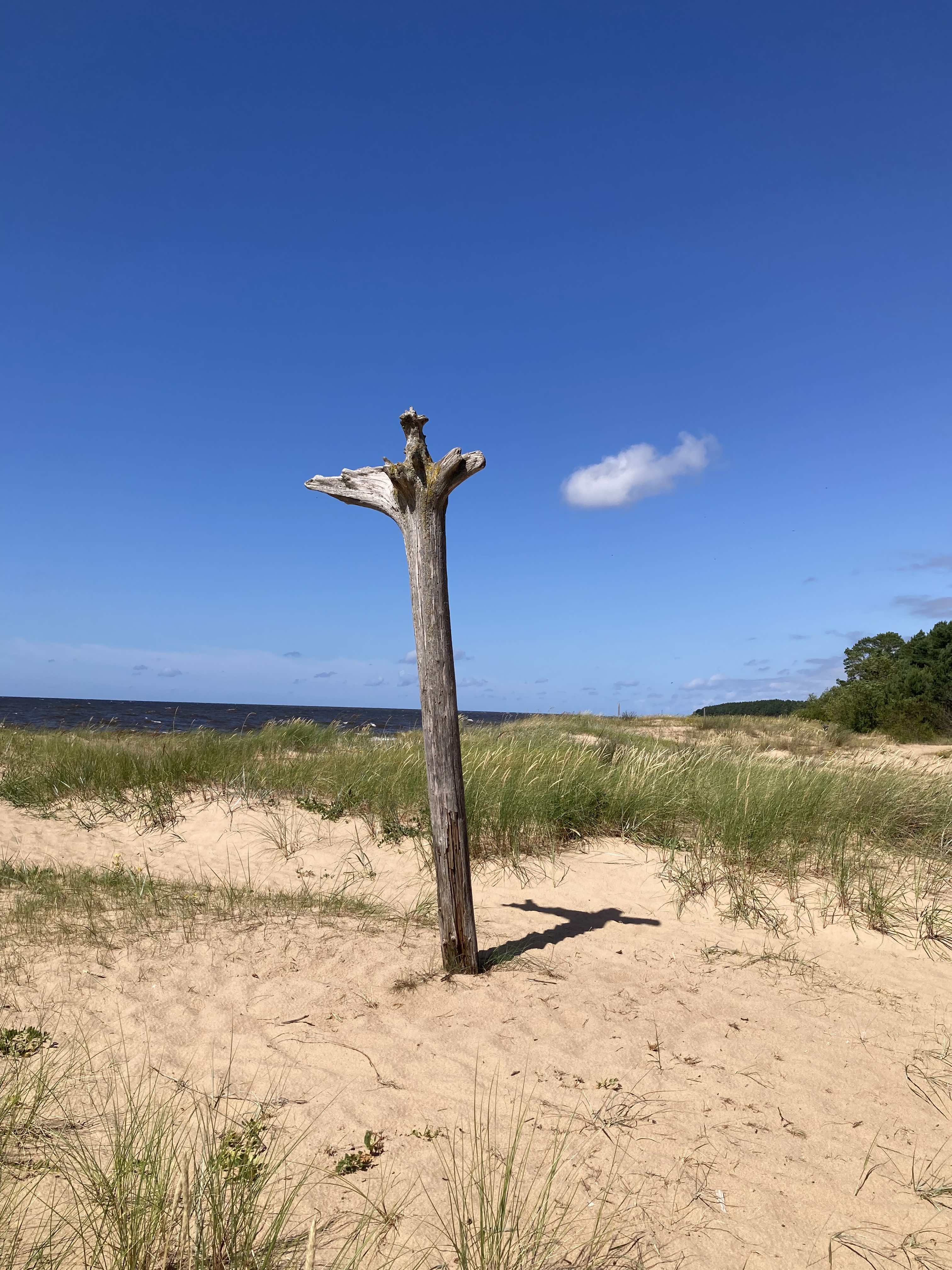
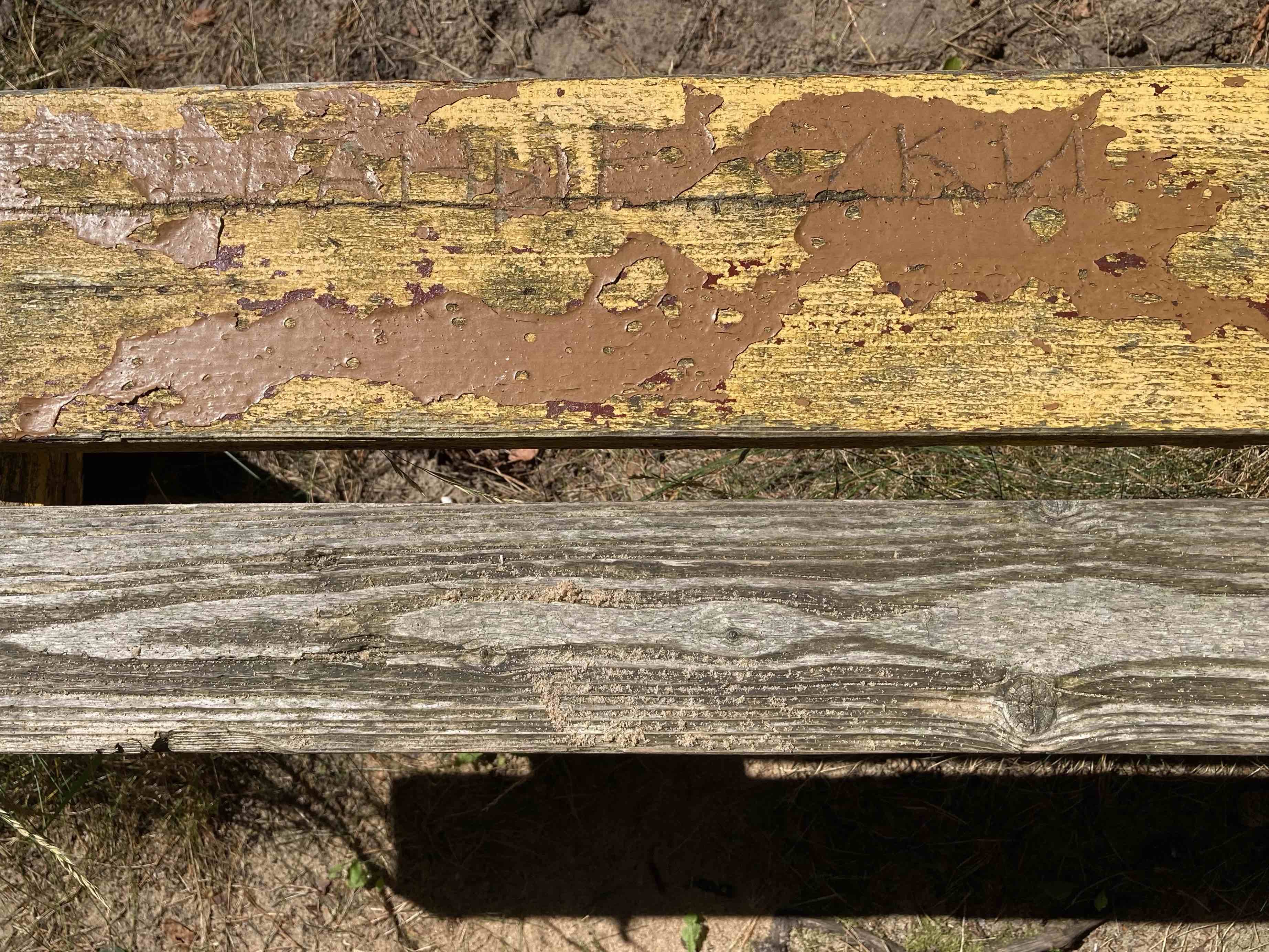
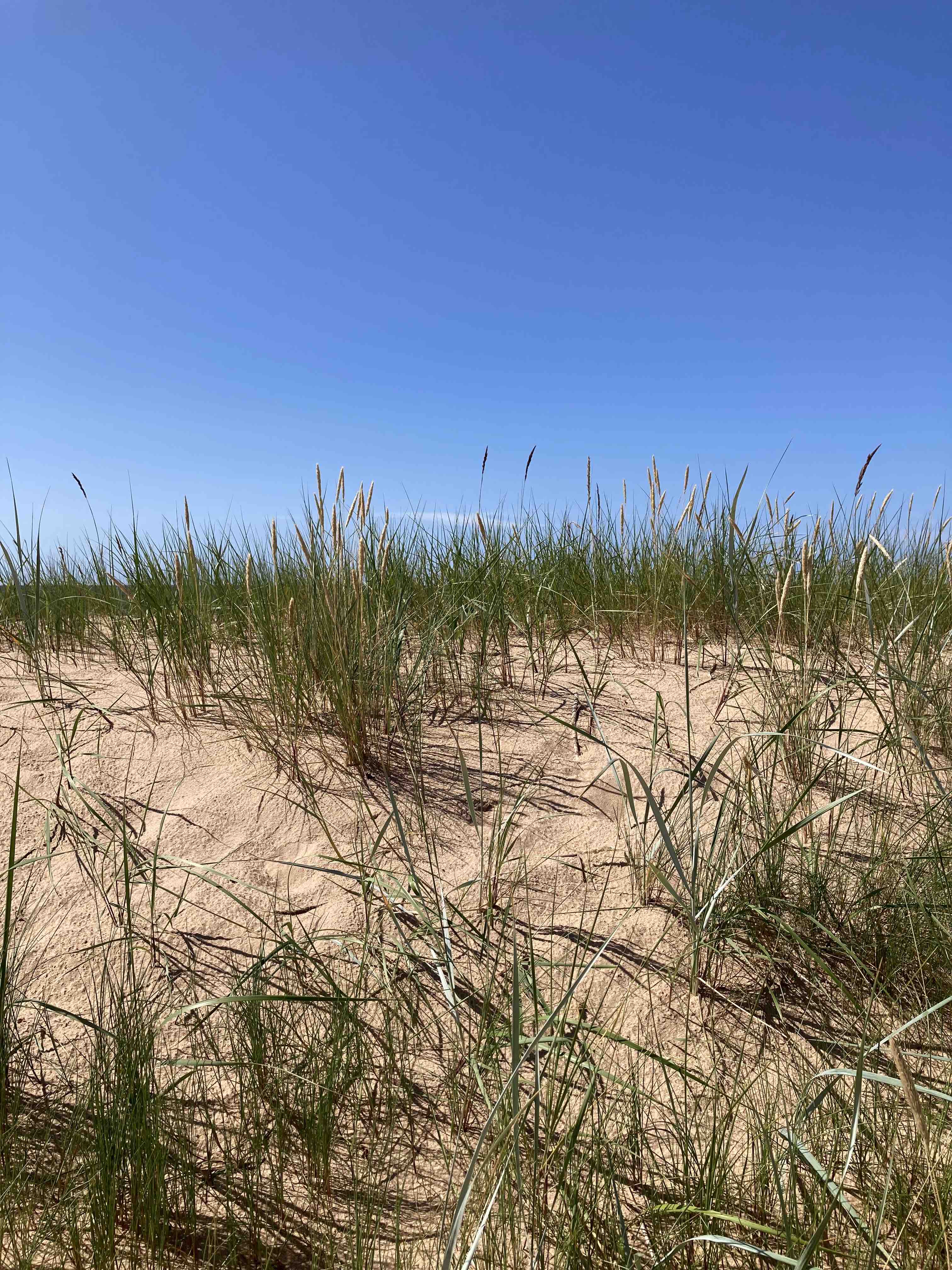
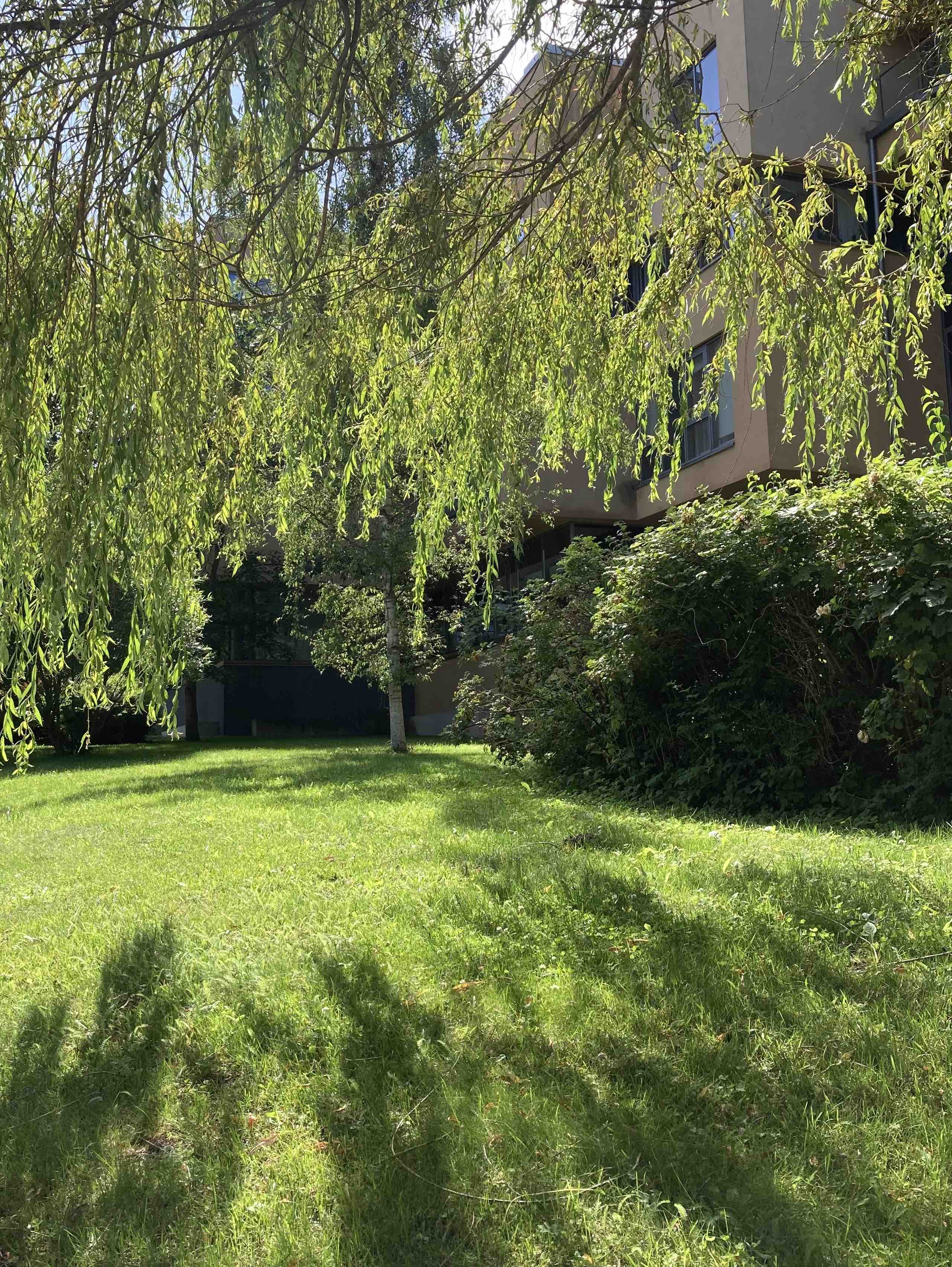
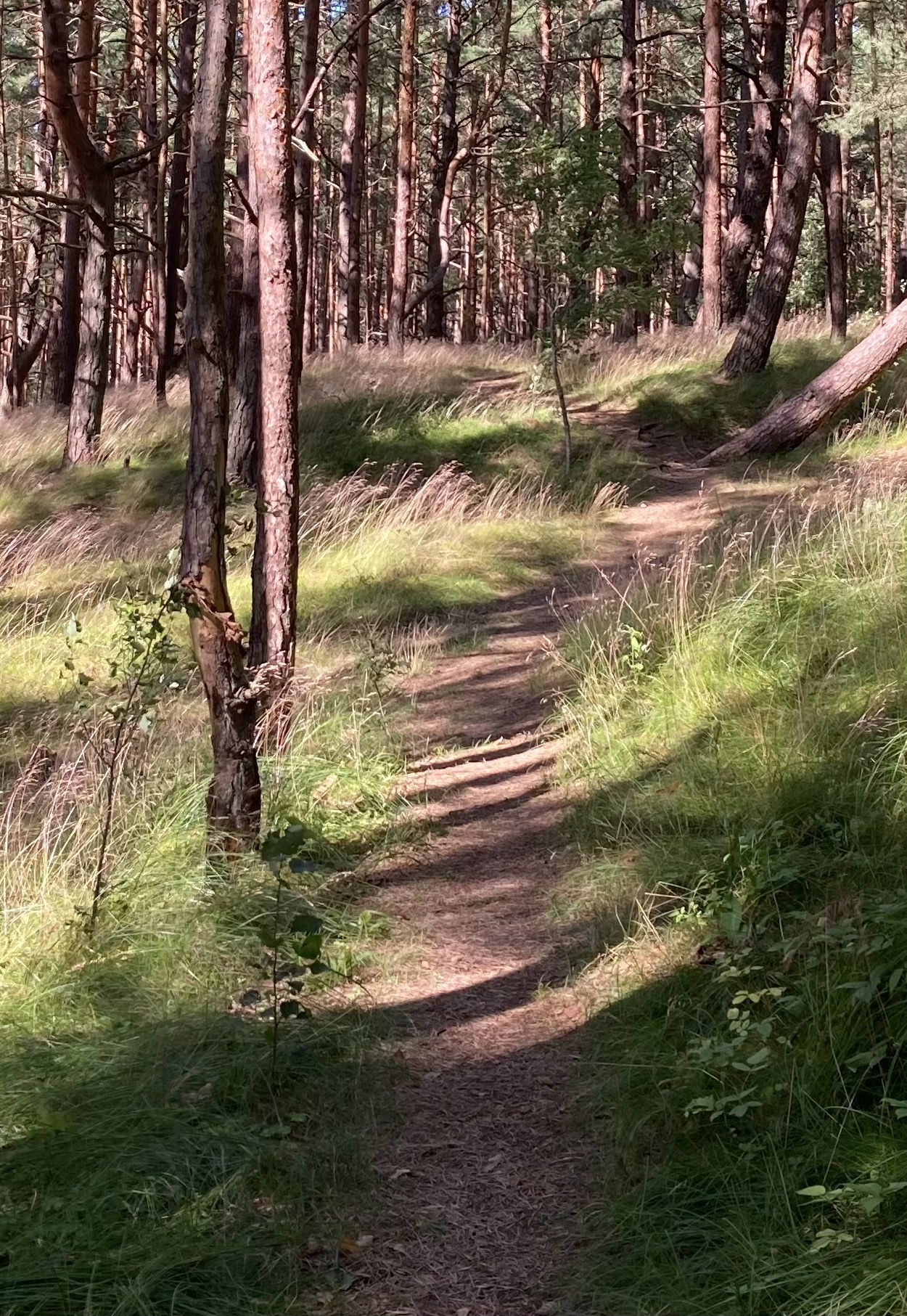
Going, returning. Bare feet touching ground. Landscape turned real estate; layers of history.
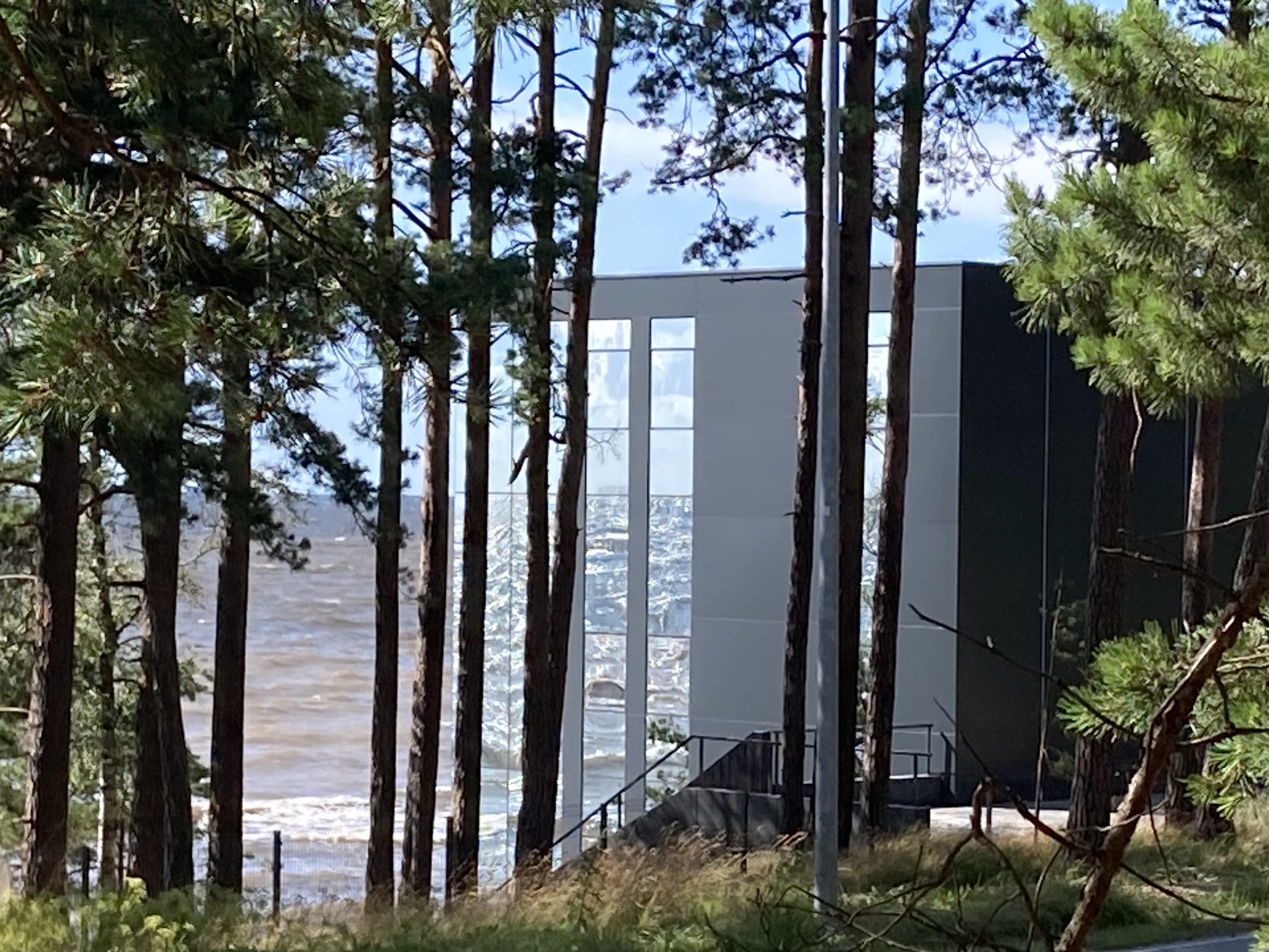
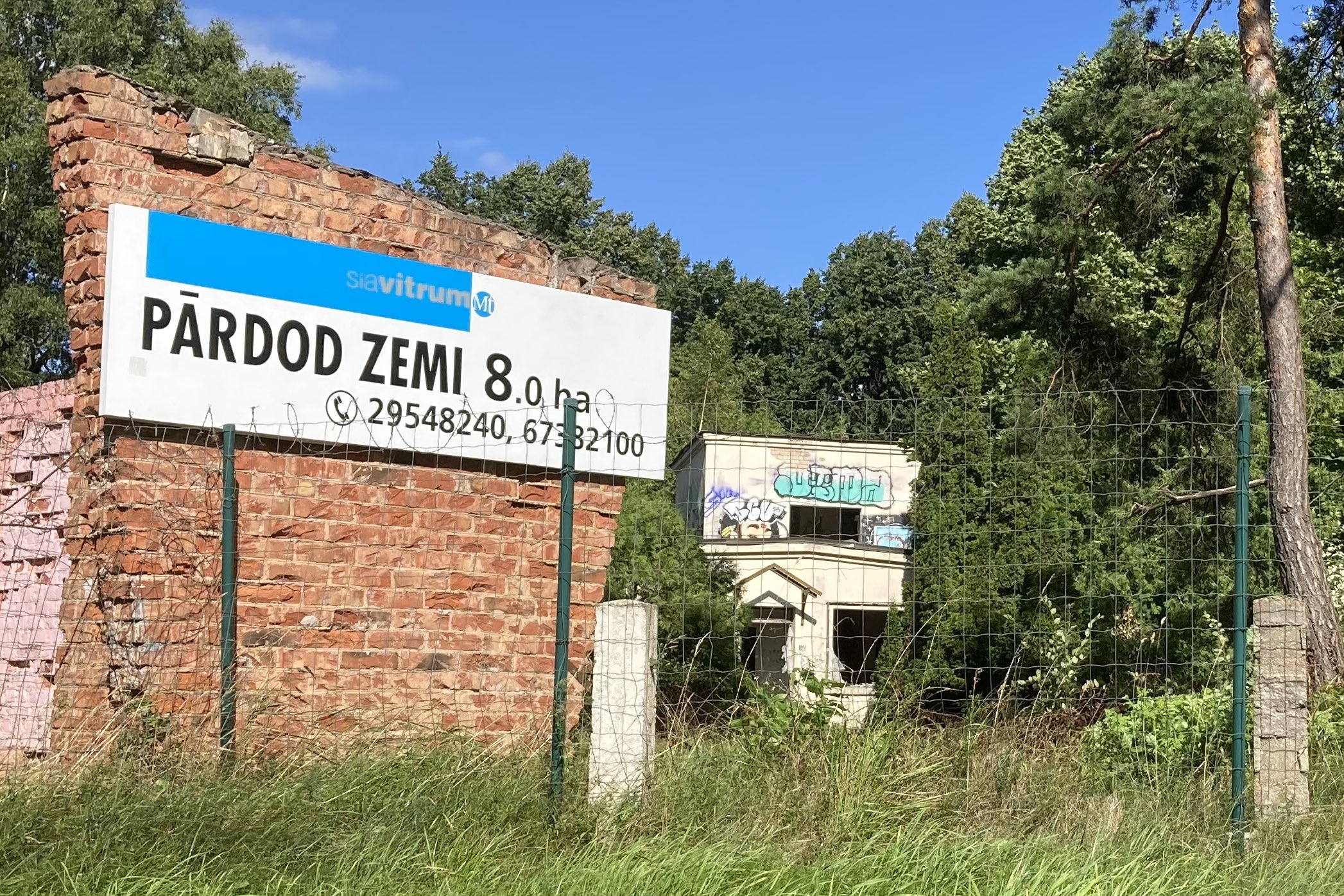
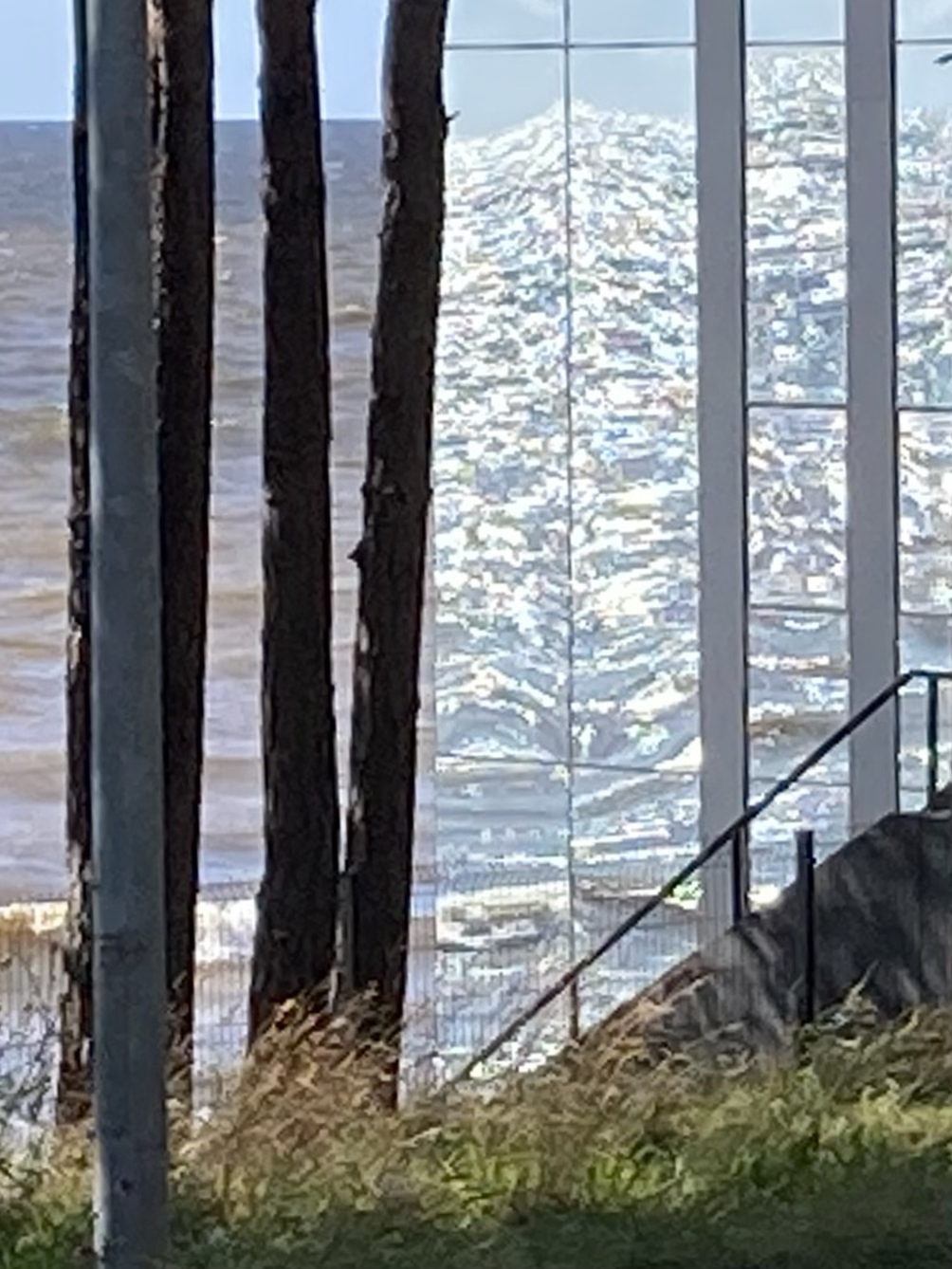
Contemporary architecture and Soviet summer camp estate for sale; two sides of the same road
For Tuesday evening, the canvas screen found a new application, displaying (reverse) filming in Guy Dolev’s performance lecture Cow Park; a hommage to the struggle of the Jerusalemite Armenians to protect their historical ground – once a field for grazing cattle, today a parking lot carrying great significance in the community’s social life.
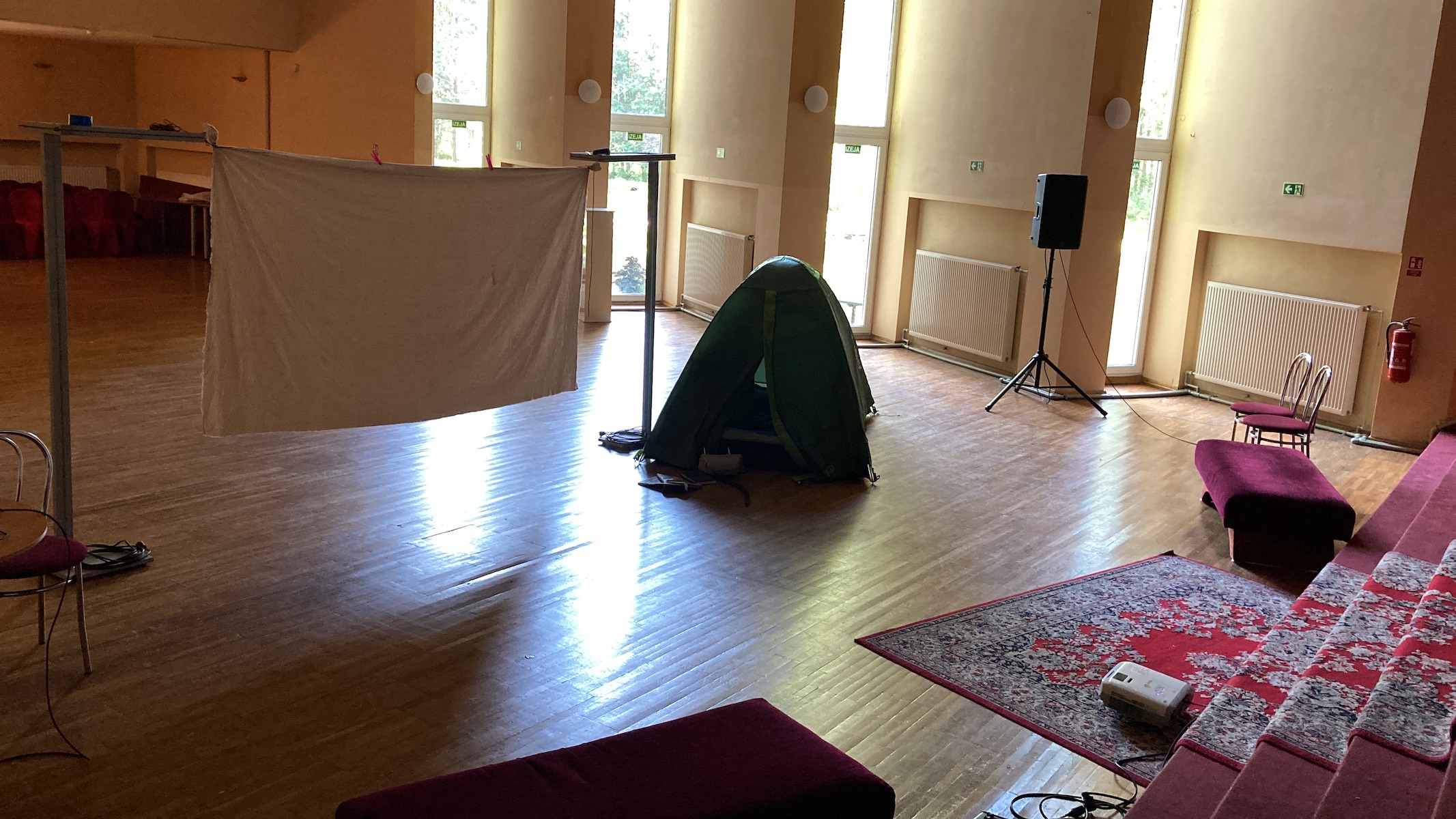
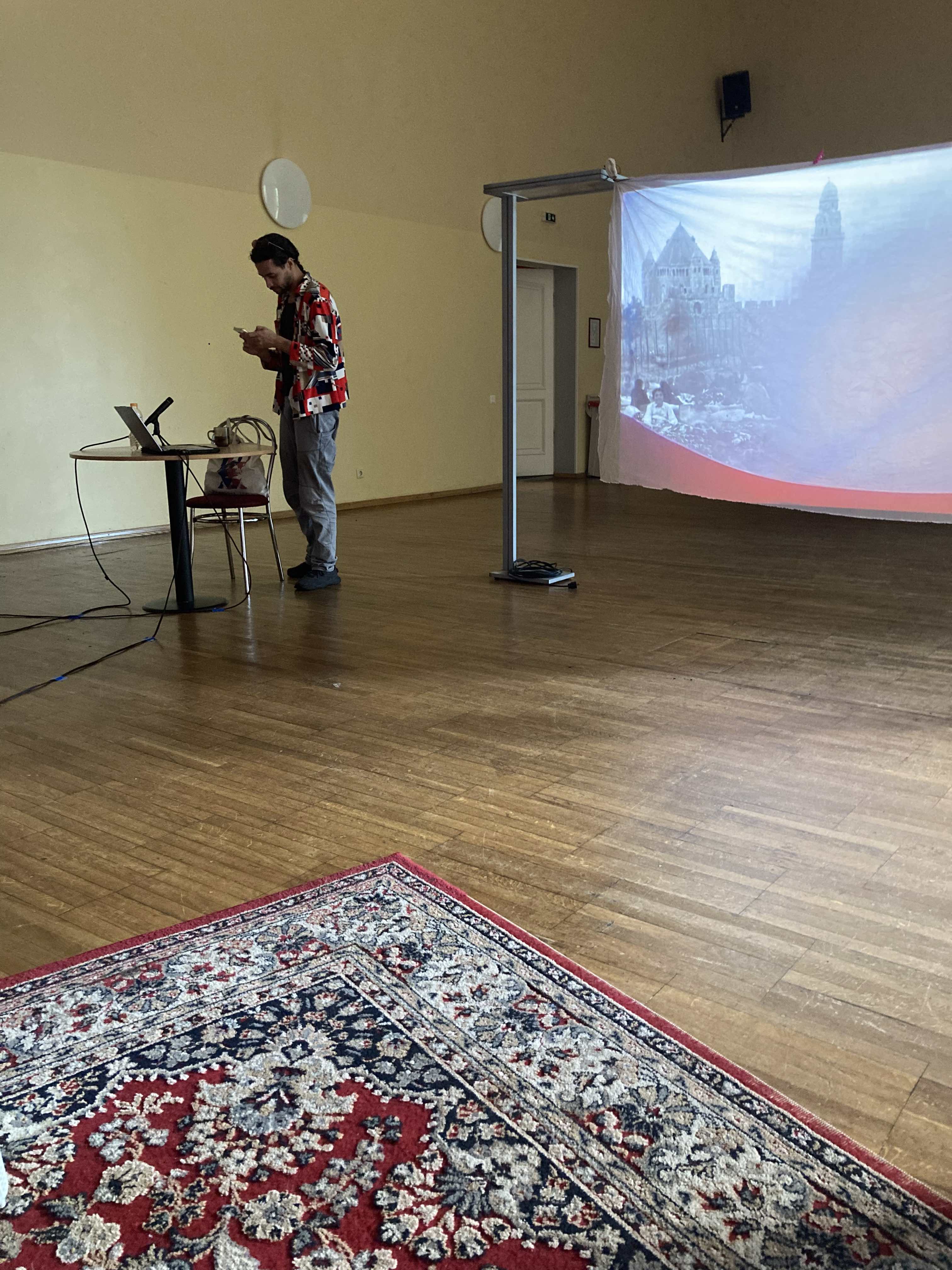
Artist, researcher and teacher Guy Dolev setting up the Cow Park scenography
Wednesday, then, is largely dedicated to lectures on historical events in Estonia, Latvia and Lithuania; three countries with very different, although sometimes converging, fates. This lecture series form the sub-project Shared Stages, Entangled Pasts, funded by the Baltic-German Liaison Office and connecting us to distinguished scholars in the region. We’re also invited to track the bear regalia of the Mamalilikulla people all the way from 19th century Canada to a museum depot in Berlin; to follow the anarchic movement of vagabonds in 1920’s Germany; and to visit the late 20th century’s “countercultural” hippie/settler/prepper utopias in US West coast states – in three lectures by (respectively) Lindsey Drury, Timo Kaemmerer and Johanna Gilje.
Thursday is already wrap-up day – but first, a few more beautiful contributions… among them, setareh fatehi’s Parallaxing-(i): a walk on a shaky bandwidth took us on a walk in the park – in Saulkrasti, and simultaneously, via a groupchat, in Tehran – recreating human dignity in remote presence; followed by Nikola Markovic’s film Spectral Garments and Reworking of Time in the Balkan Family Archive, starring Nikola’s grandmother… an excerpt from a larger work that I hope to come back to in the future.
The canvas made its final appearance as an archival surface during the closing discussion; a playground for the winds, waves and undercurrents of a weeklong shared experience.
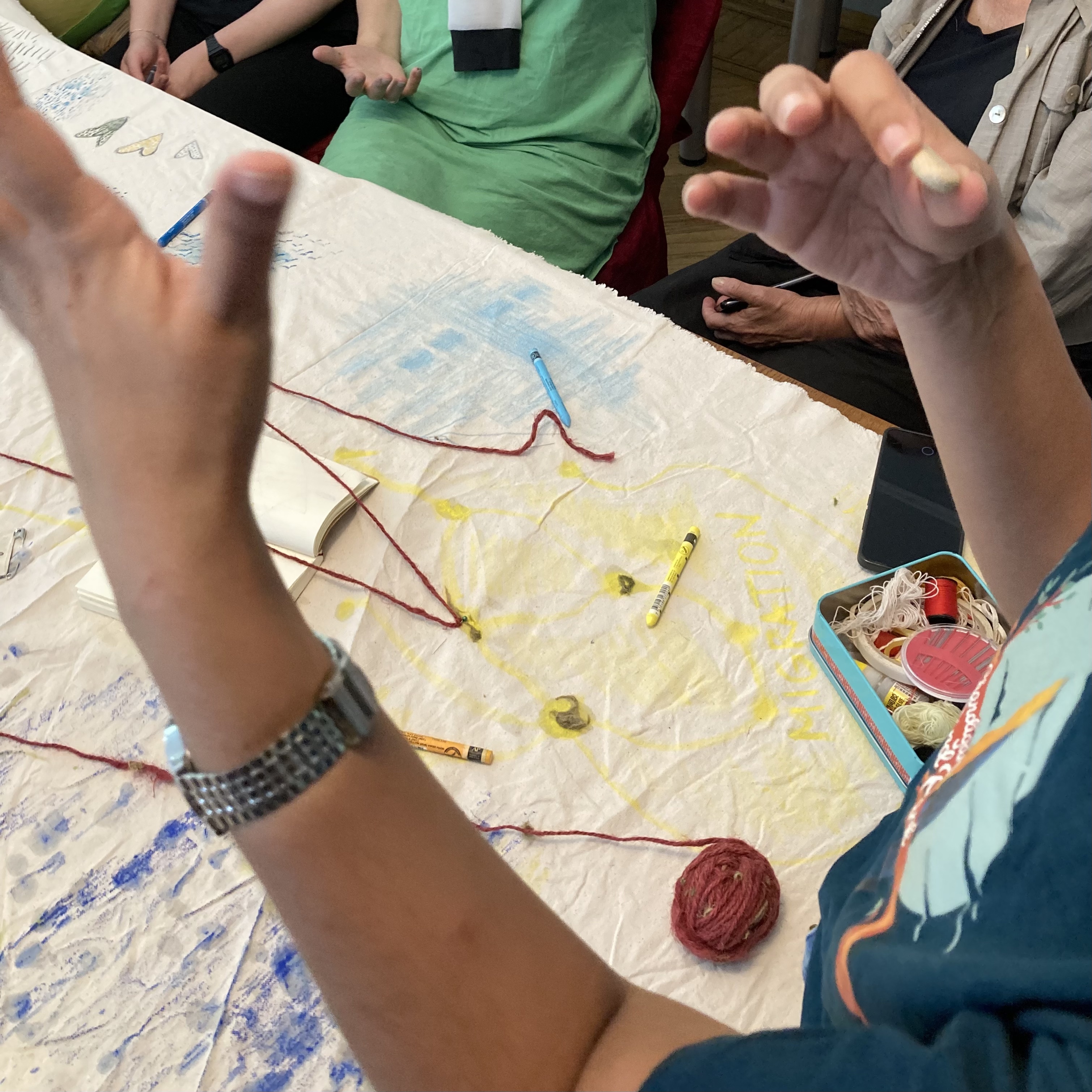
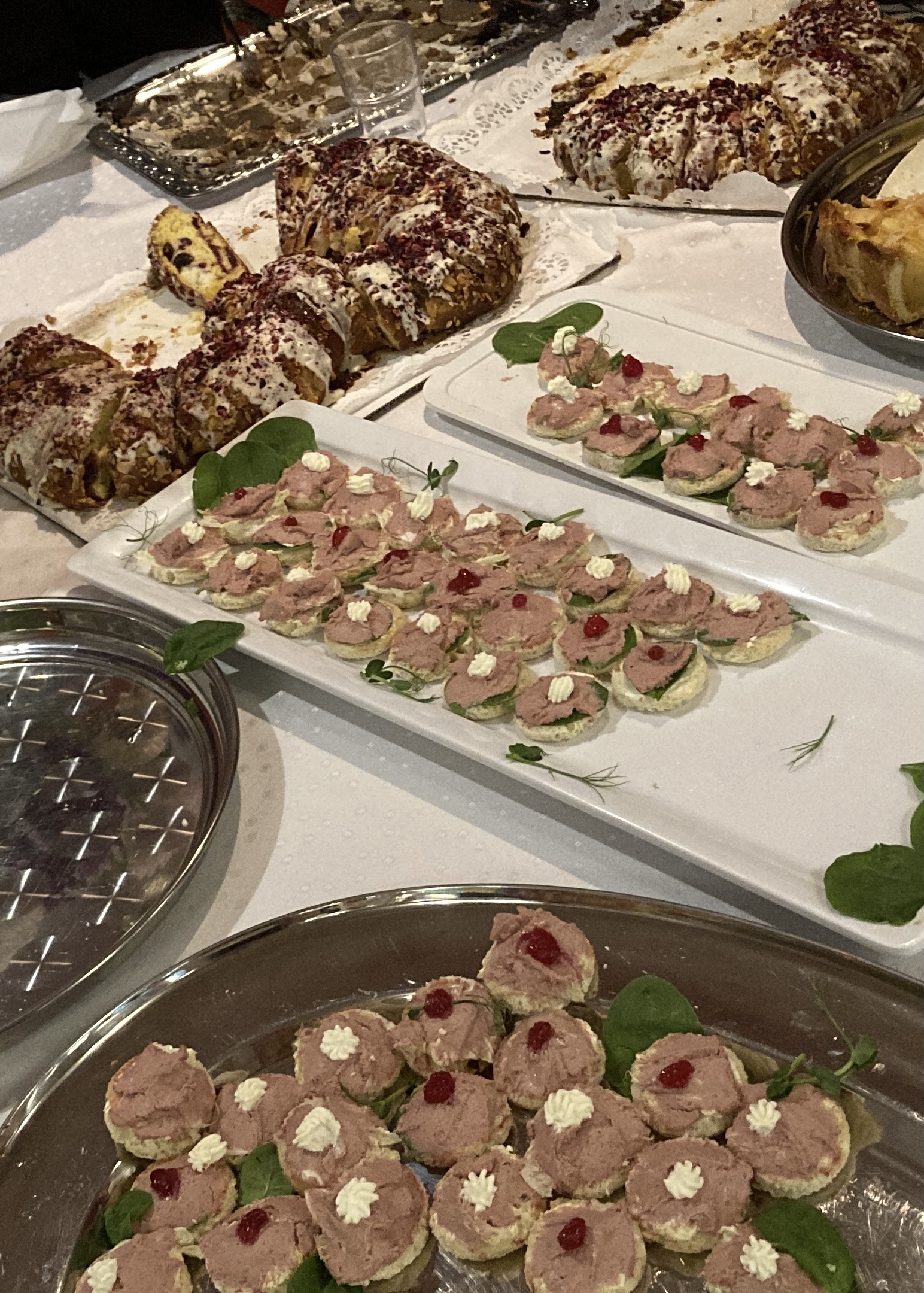
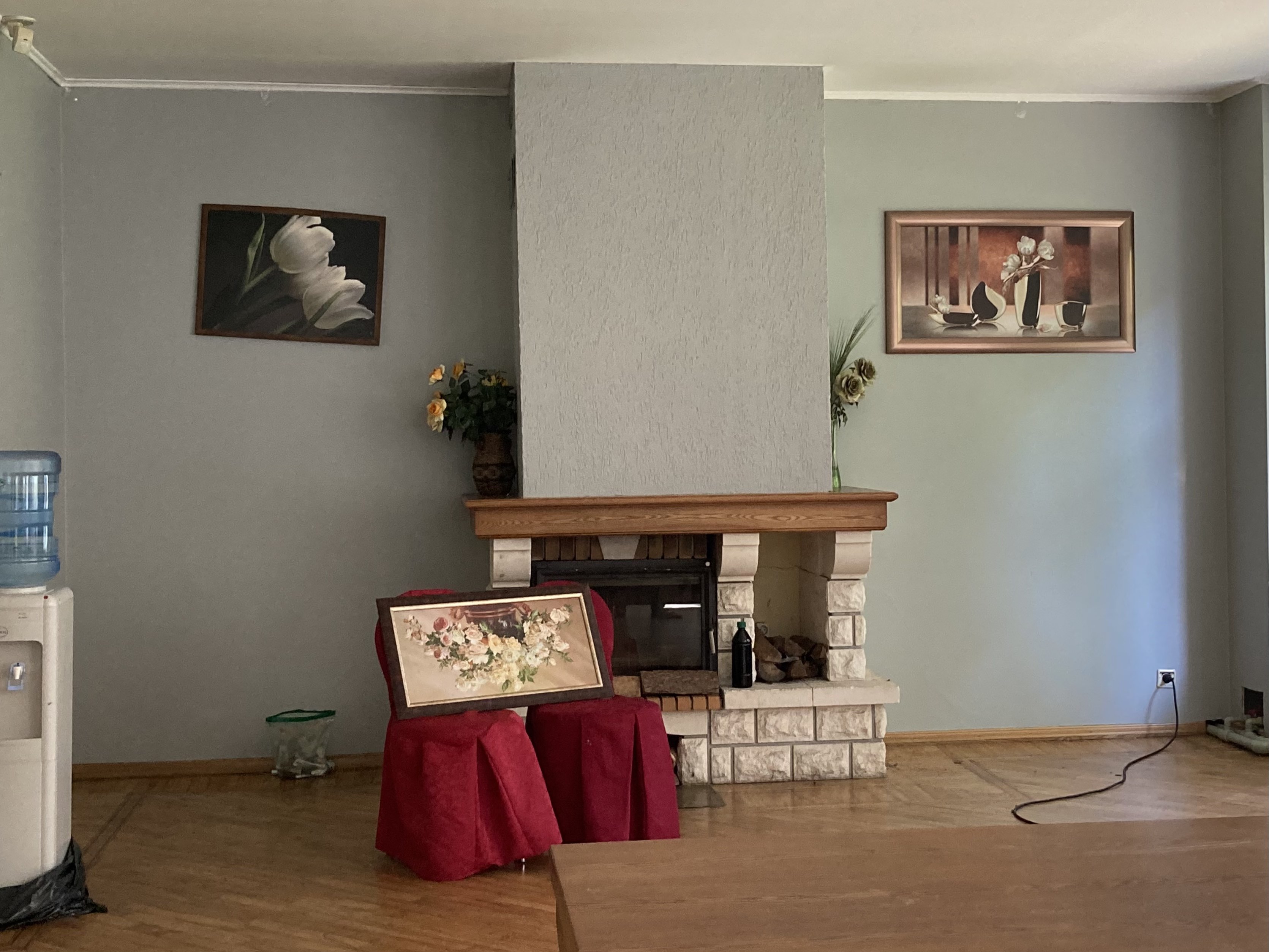
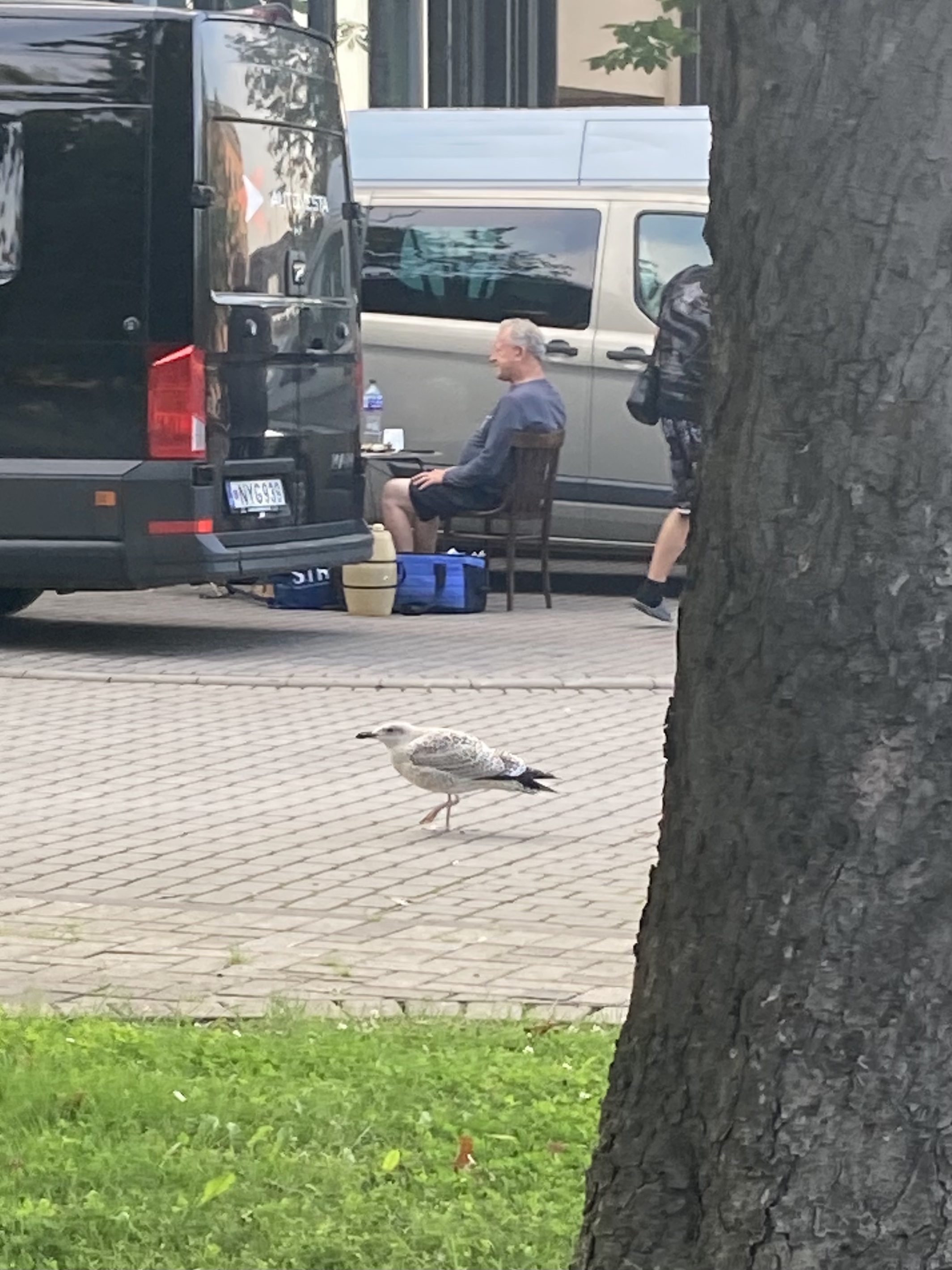
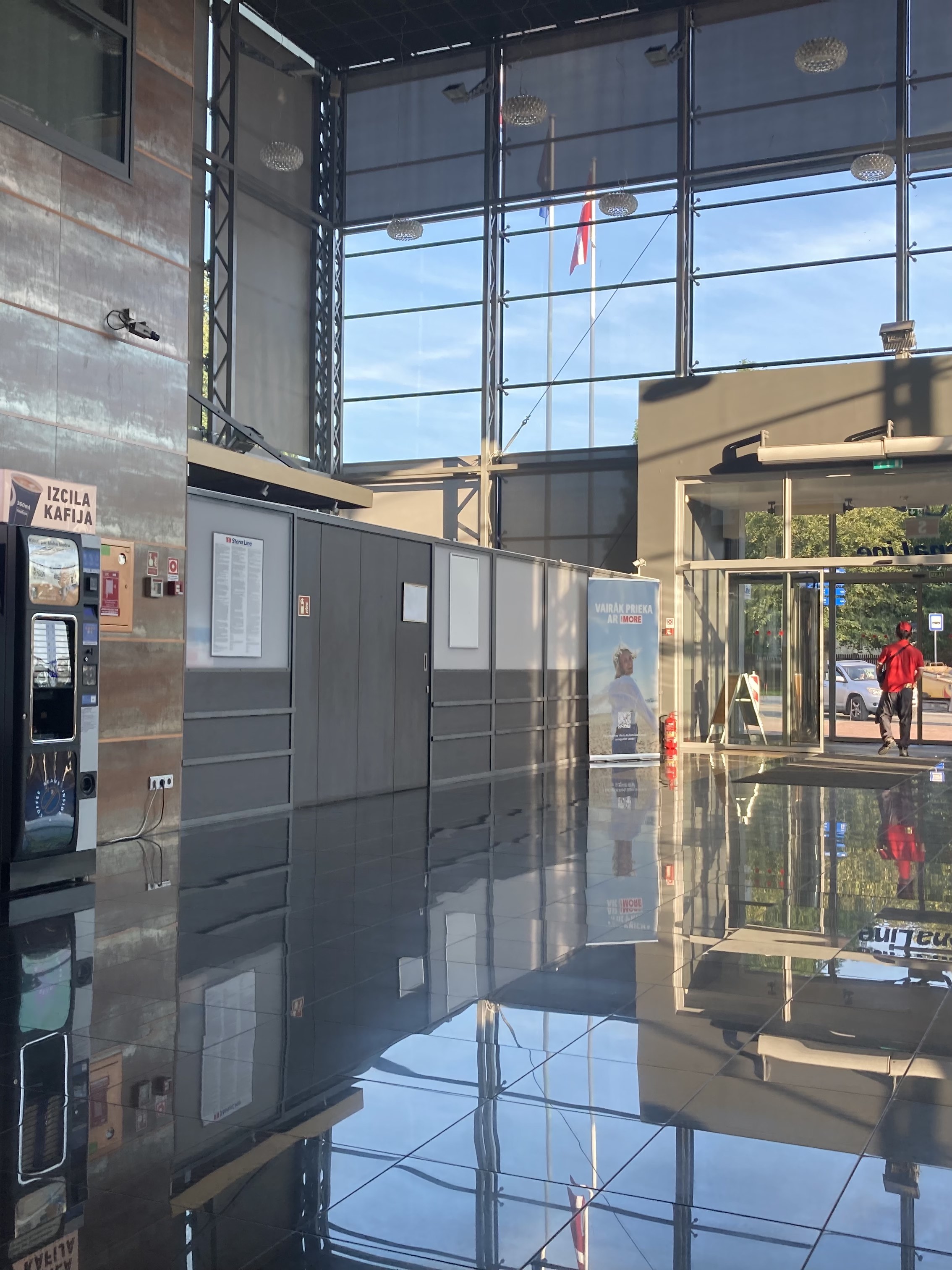
Gala dessert and clean-up time; leaving Latvia by bus and ferry
After the last evening’s gala dinner, and the last morning’s cleaning and resetting of our assigned space, only the goodbyes remain before homeward journeys begin. Back home, I handwash the canvas and enjoy a sweet soft almond candy from Tehran with home-made rhubarb lemonade – immersed in the richness of the experience.
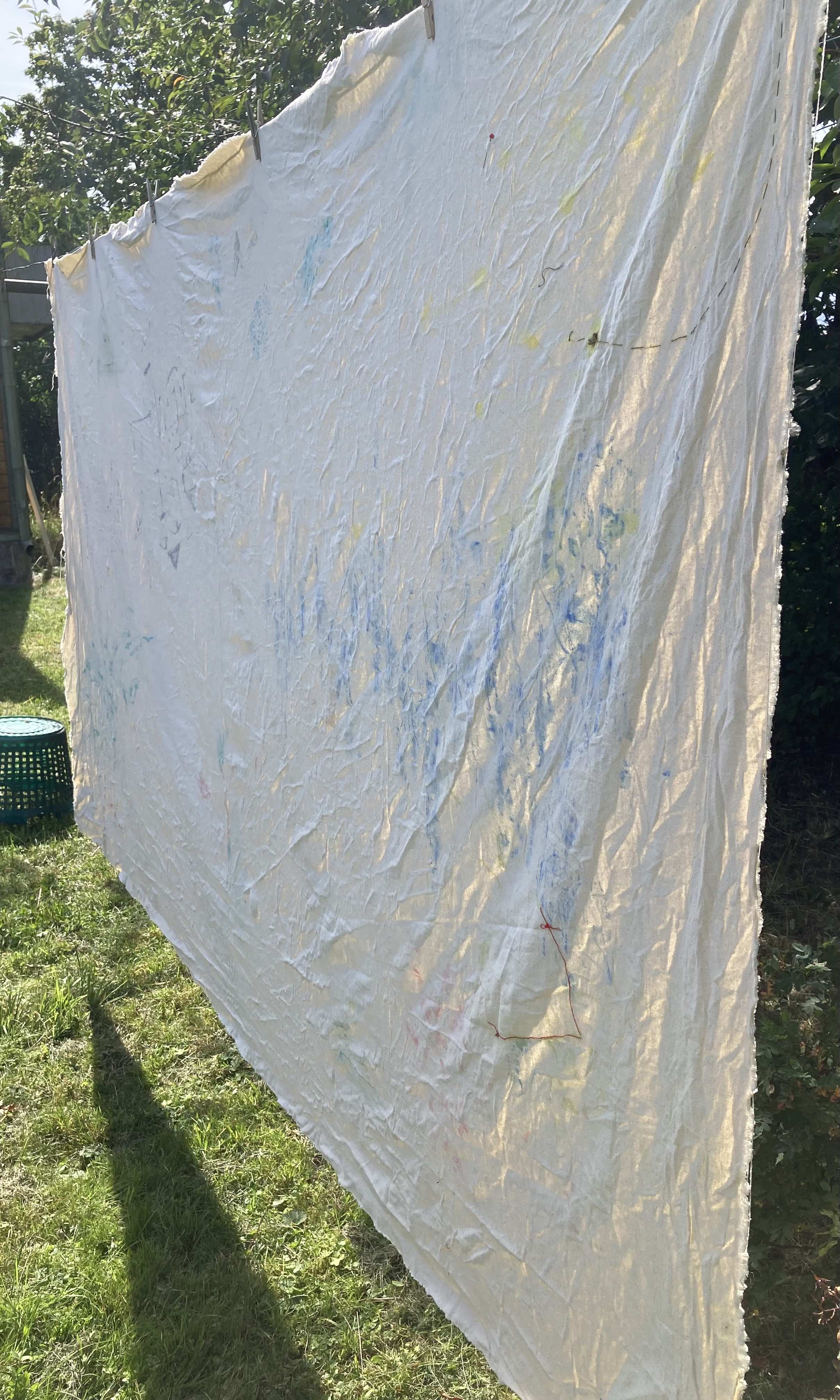
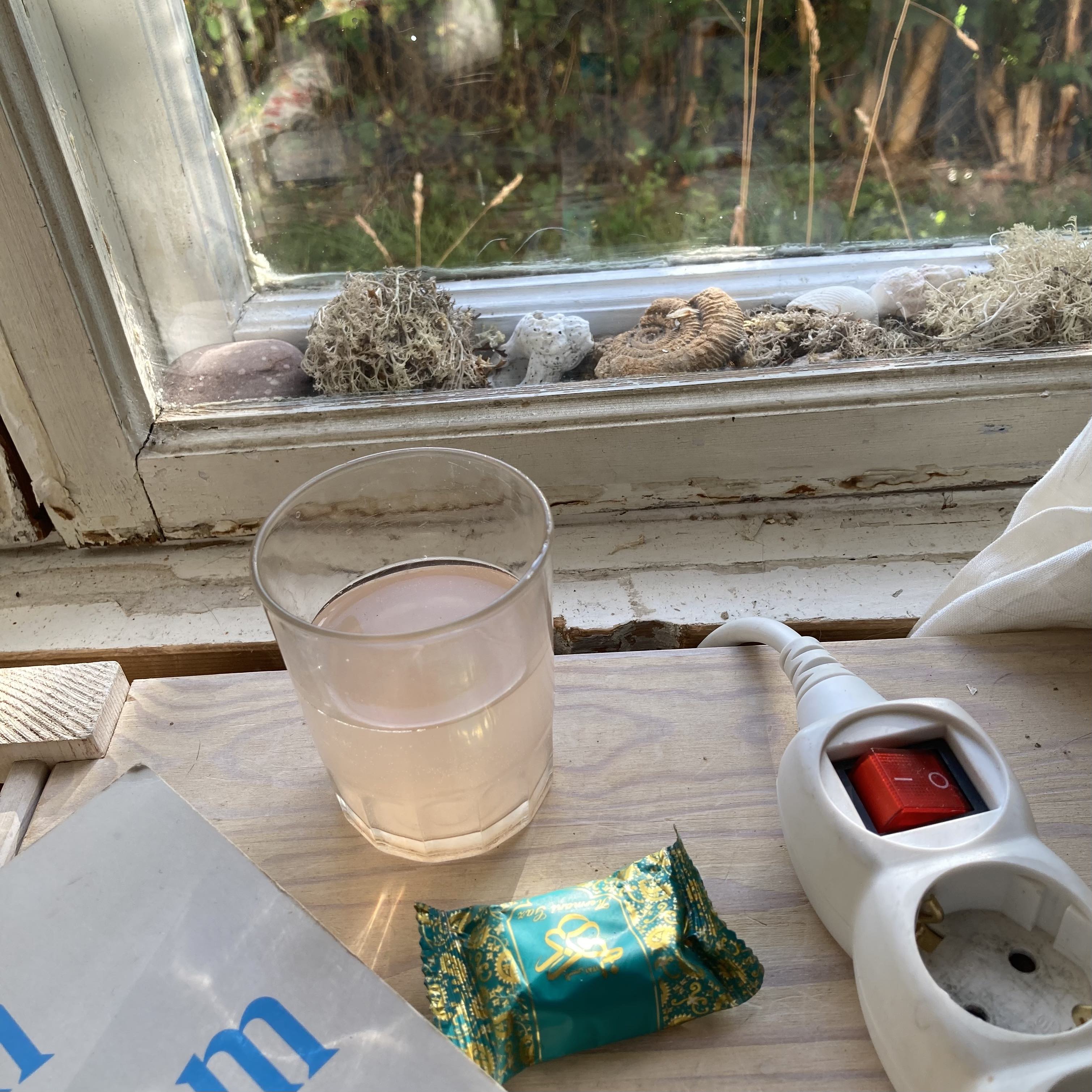
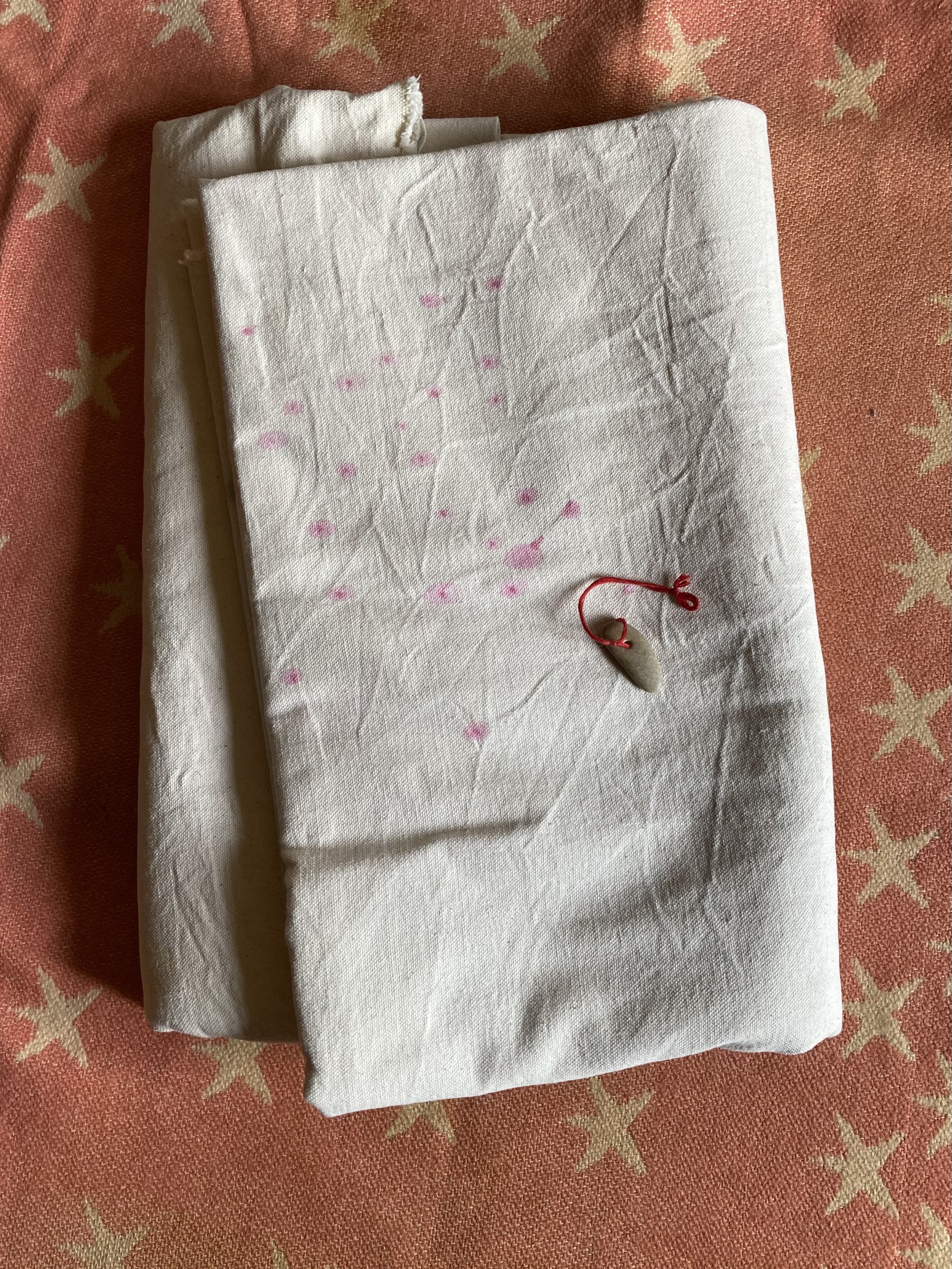
A time to rest and reflect. A canvas carrying memories. A stone, gifted from one of the magic-working reception ladies.
For the months ahead: process, discuss, think forward, make decisions… More (very) soon!