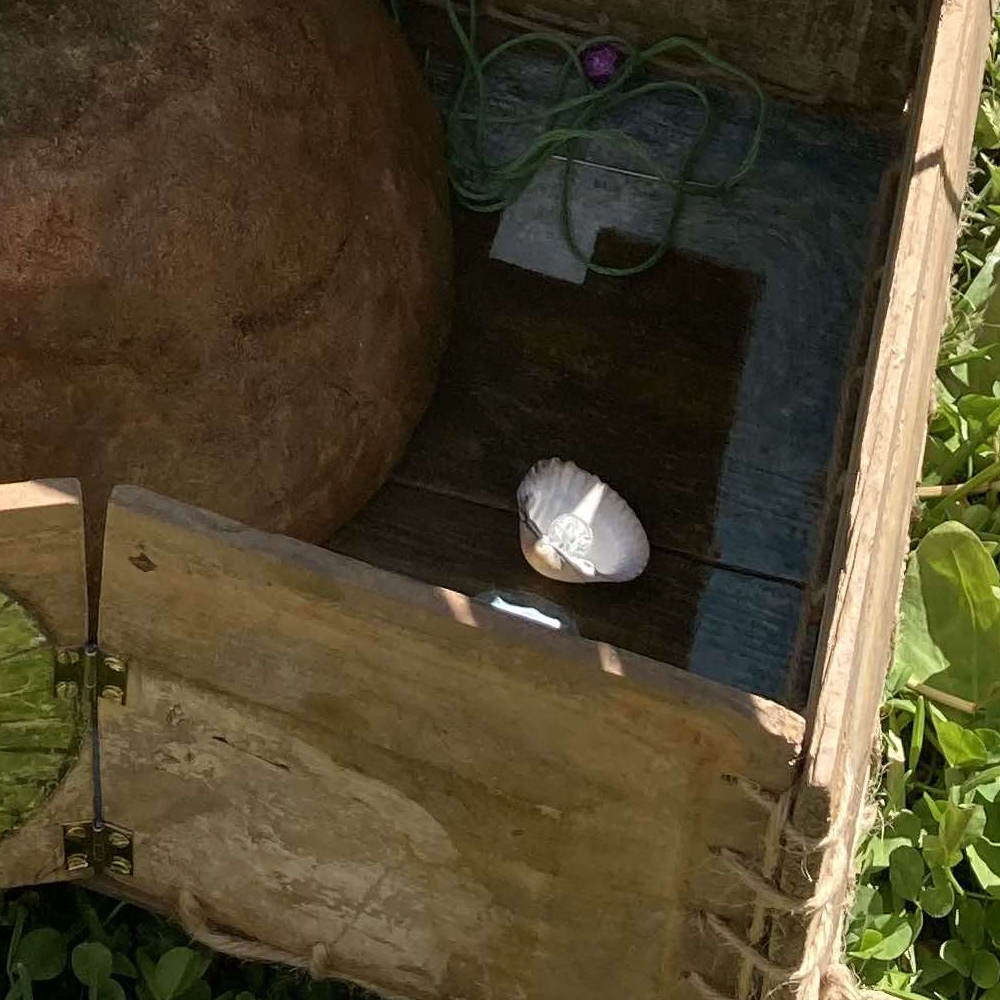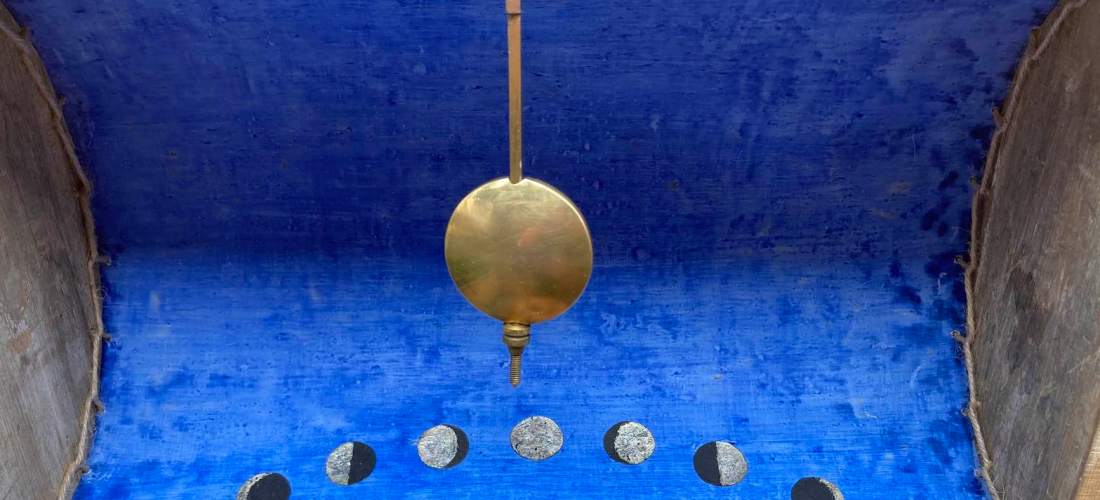
This object has taken form slowly, over the course of more than a year – beginning from a second interview with Obinna, one of the returning participants of the Praxis of Social Imaginaries study circle. Our very first conversation took place already in the summer of 2024; Obinna then told about fertile farmlands in the hilly parts of Enugu State (Nigeria) and the University of Nsukka, the light and heat of a brief stop-over in Dubai, and the whiteness of snow-covered Turku (Finland)… and offered me a seashell from a sandy Danish shore. When we met next time, in March 2025, I was still hesitating over how to begin this mapping; I asked Obinna for more information on his birthplace. In addition to providing more details, Obinna gave me a startling cue: “it has to be a 3D map”.
By then, I had done some reading on historical maps. I also knew that Christianity is the predominant religion in southern Nigeria – maybe that was what sparked an association to the 6th century traveler, monk, and zealous Bible reader Cosmas Indicopleustes.
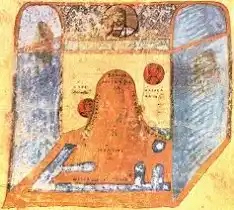
Cosmas Indicopleustes’ world model, showing the World Ocean embracing a continent crowned by a huge mountain, behind which the sun passes – thus creating the difference between night and day.
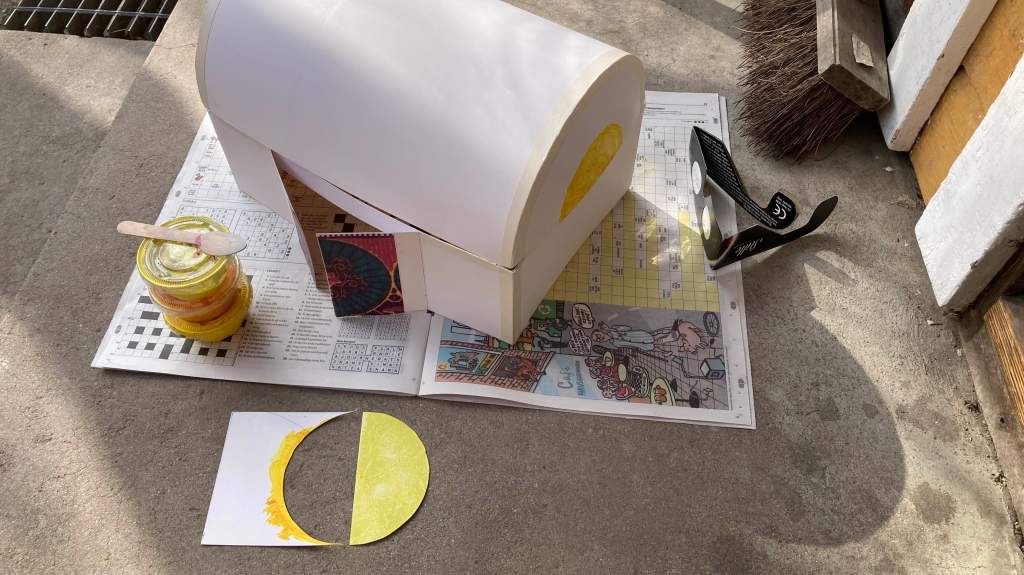
During the partial solar eclipse of March 29, I made a cardboard maquette of Cosmas’s peculiar world-as-a-shrine model. The semi-circular sides of the lid brought another association as I watched the moon disc wandering across the sun: Chimamanda Ngozi Adichie’s novel Half a Yellow Sun.
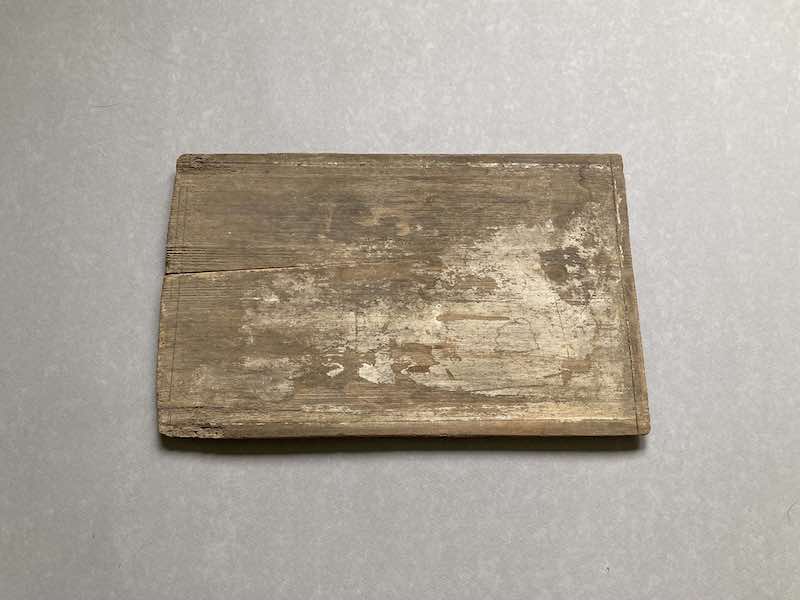
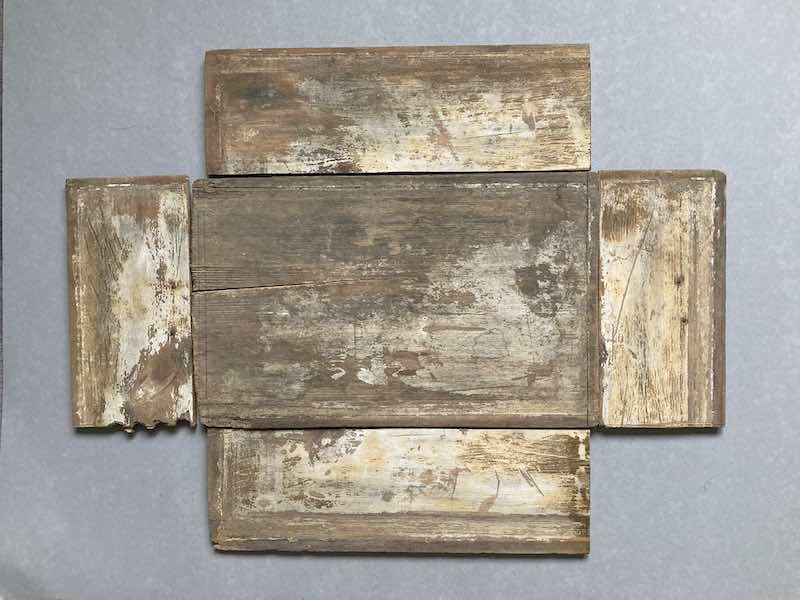
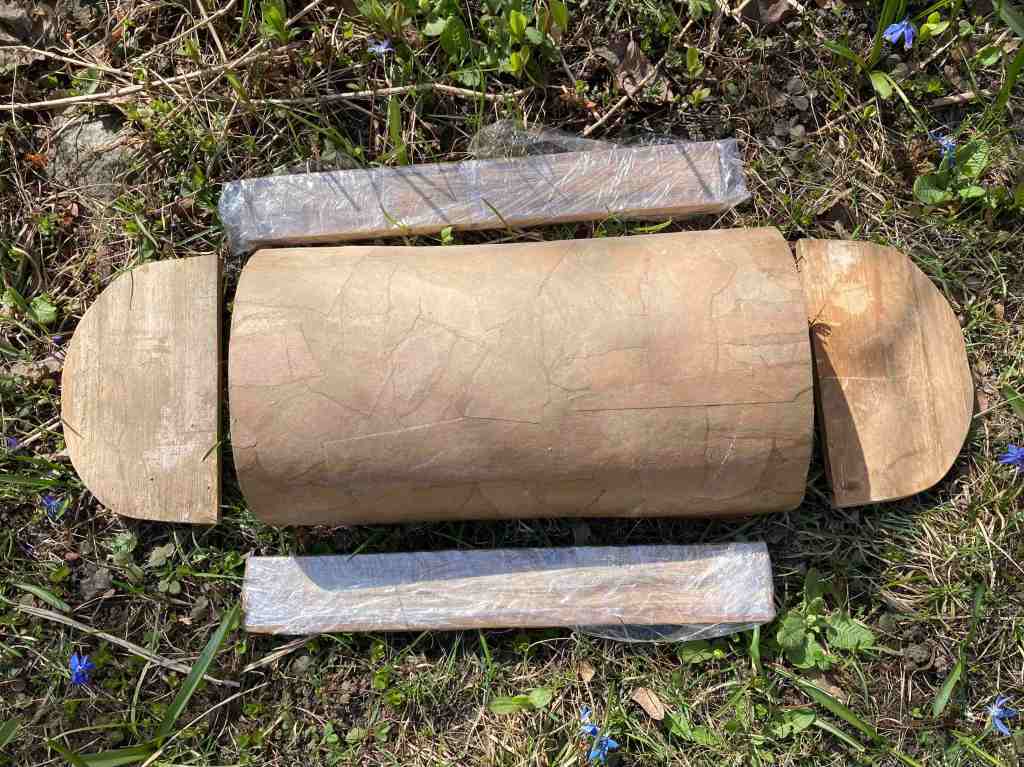
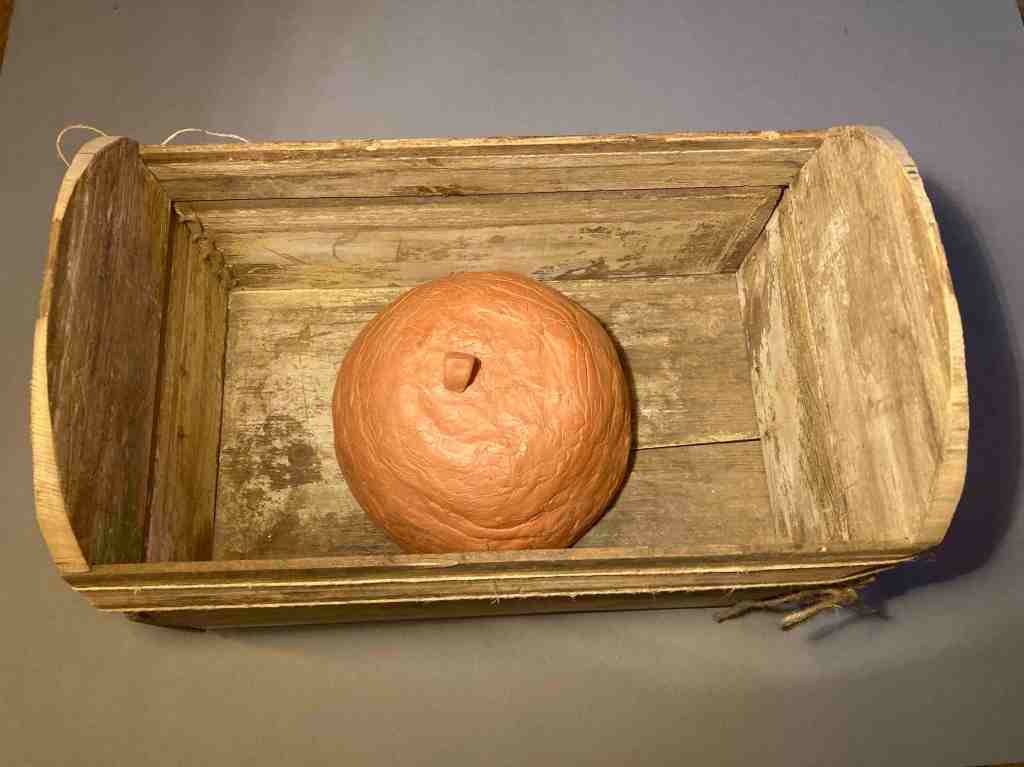
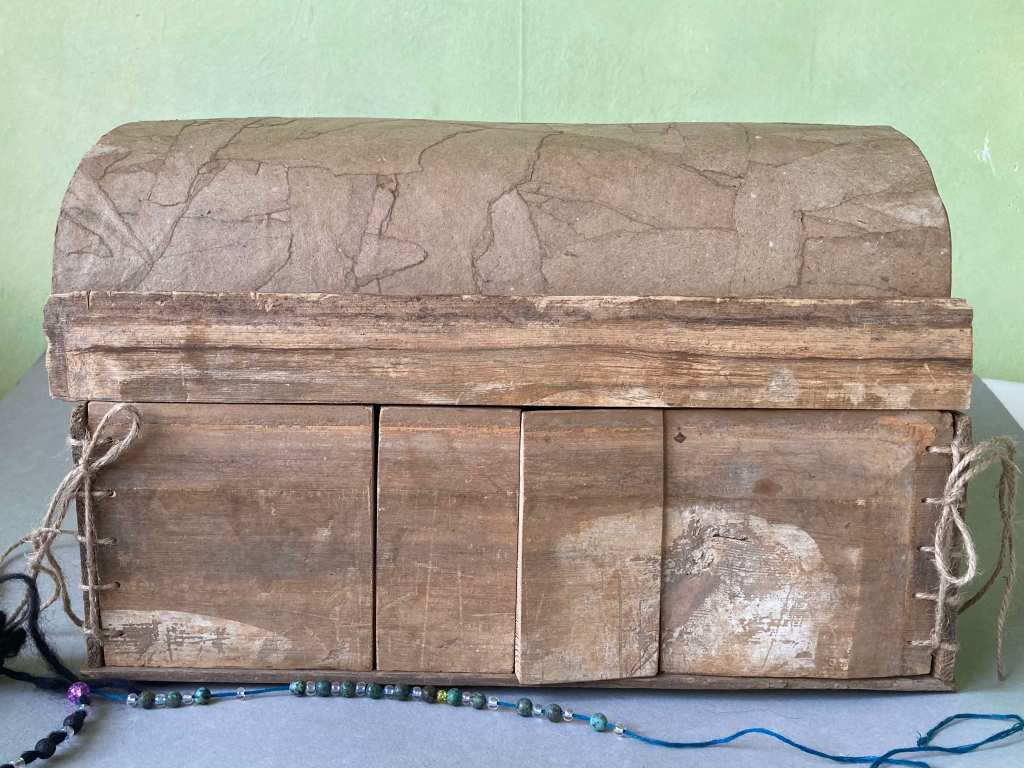
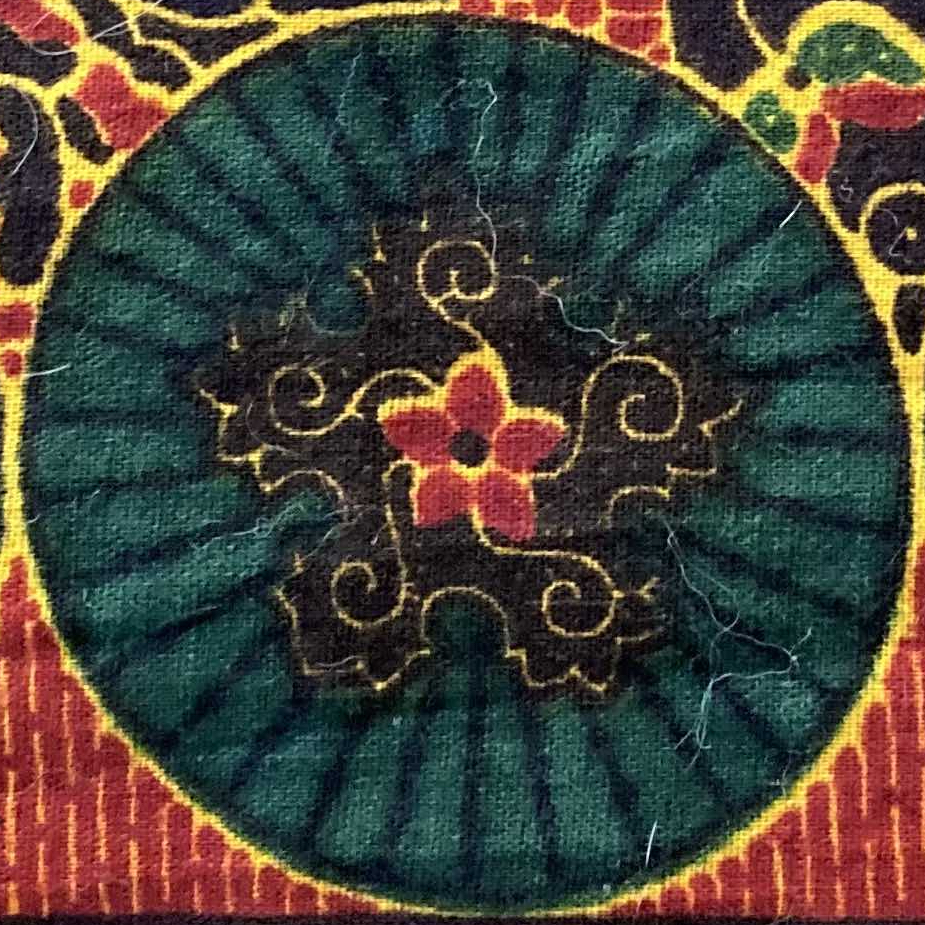
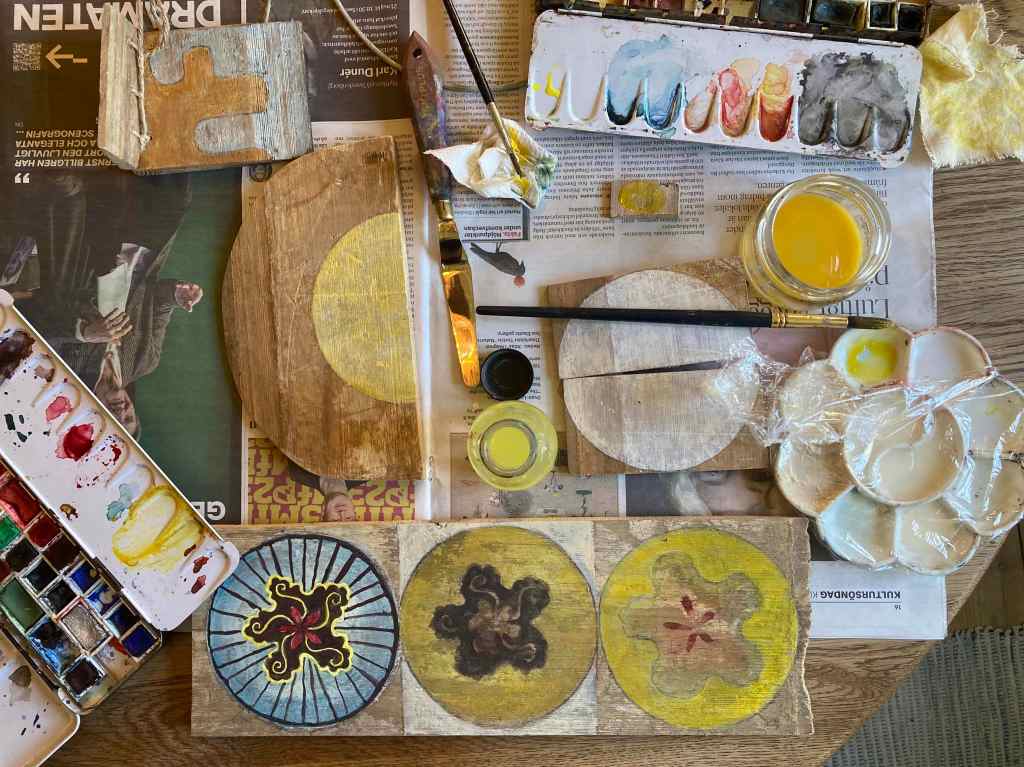
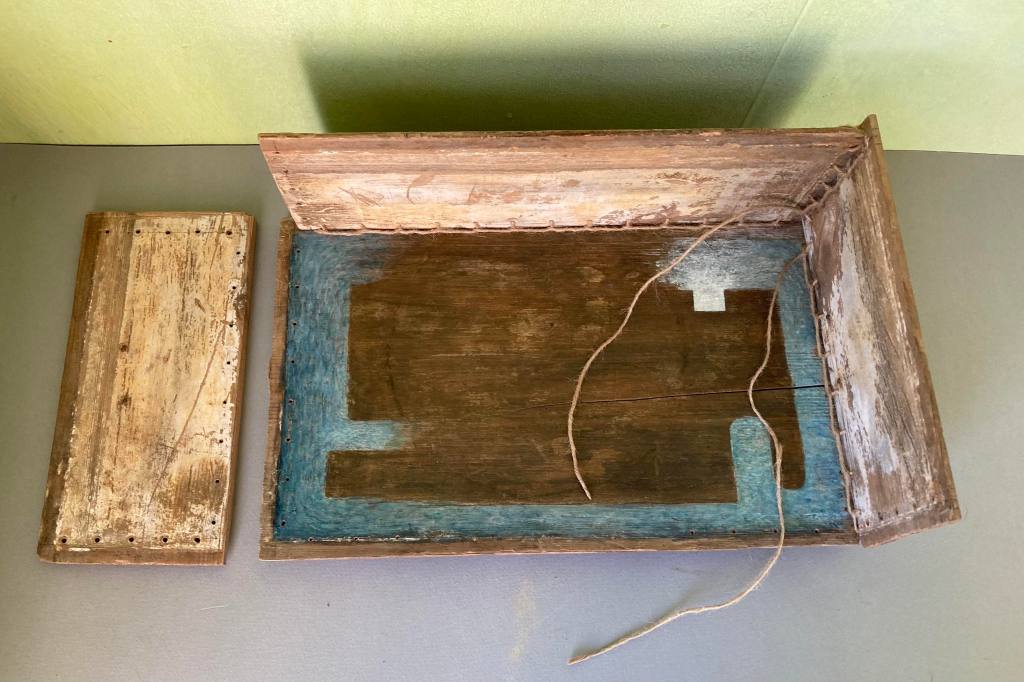
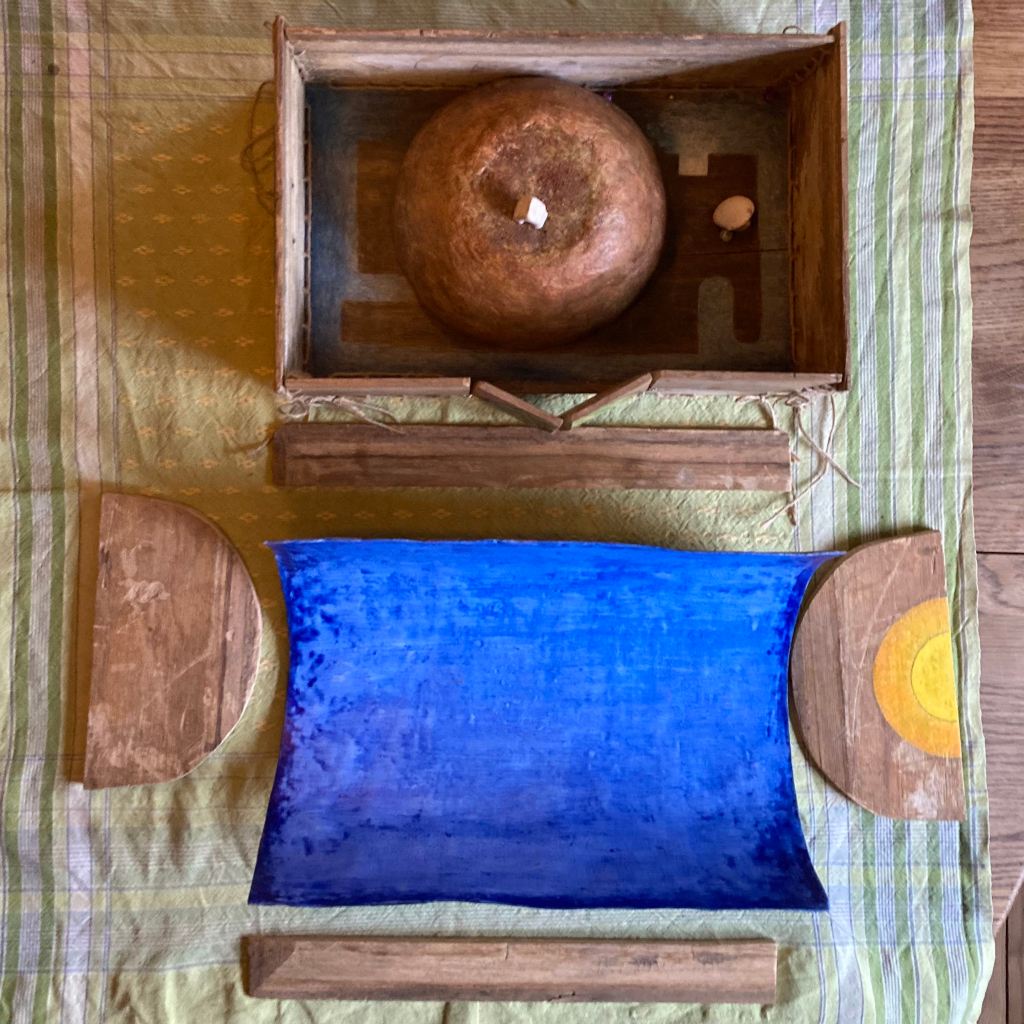
From cardboard maquette to wooden chest with doors and lid; hibiscus print on East African fabric; painting sketchwork, tempera painted world map (modified) and lapis lazuli lid
Over the next months, I cut the bottom and walls of the chest from parts of an old door, and fit them together with hemp string; crafted papier-mâché for the vaulted lid; and formed a mountain and a little house from air-drying clay. I asked for Obinna’s opinion on Chimamanda Ngozi Adichie. I read that deeply moving novel of hers, and furthermore some articles on Nigerian art history – learning a little more about the complexities of this giant nation. In August, we met briefly again; among other things, we discussed instances of cultural appropriation versus cultural exchange, and Obinna brought my attention to the ancient Nsibidi writing.
During the following autumn and winter, various renderings of Obinna’s Itinerary were tried and rejected. In the end, this mapping came out less focused on social interactions, and more tuned in to the inherent beauty of the world and the ways we imagine it.
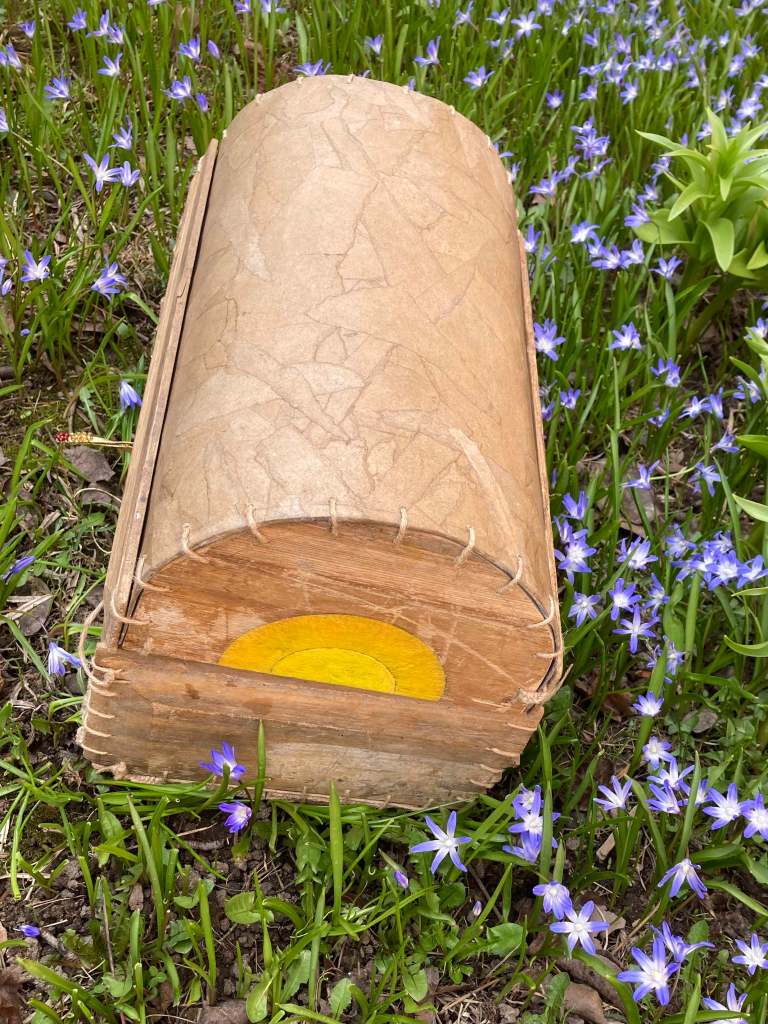
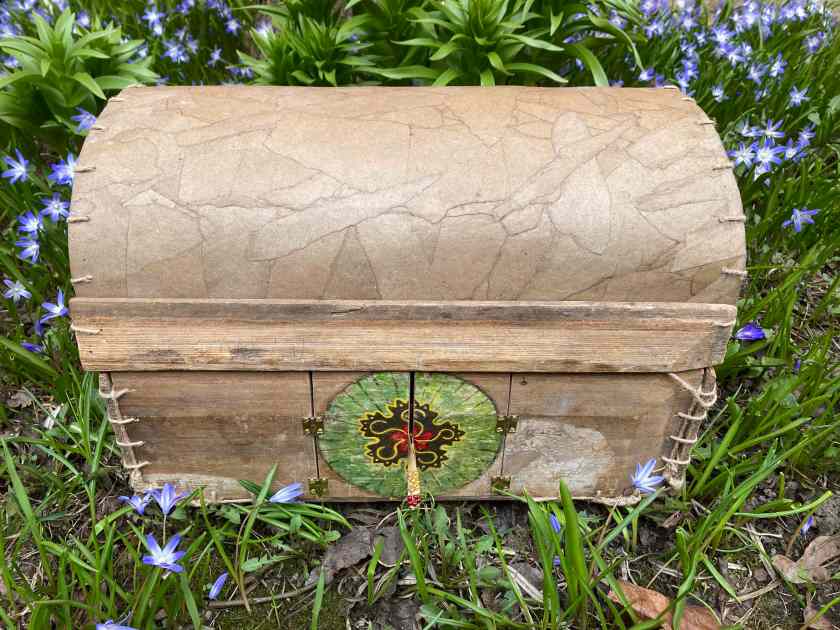
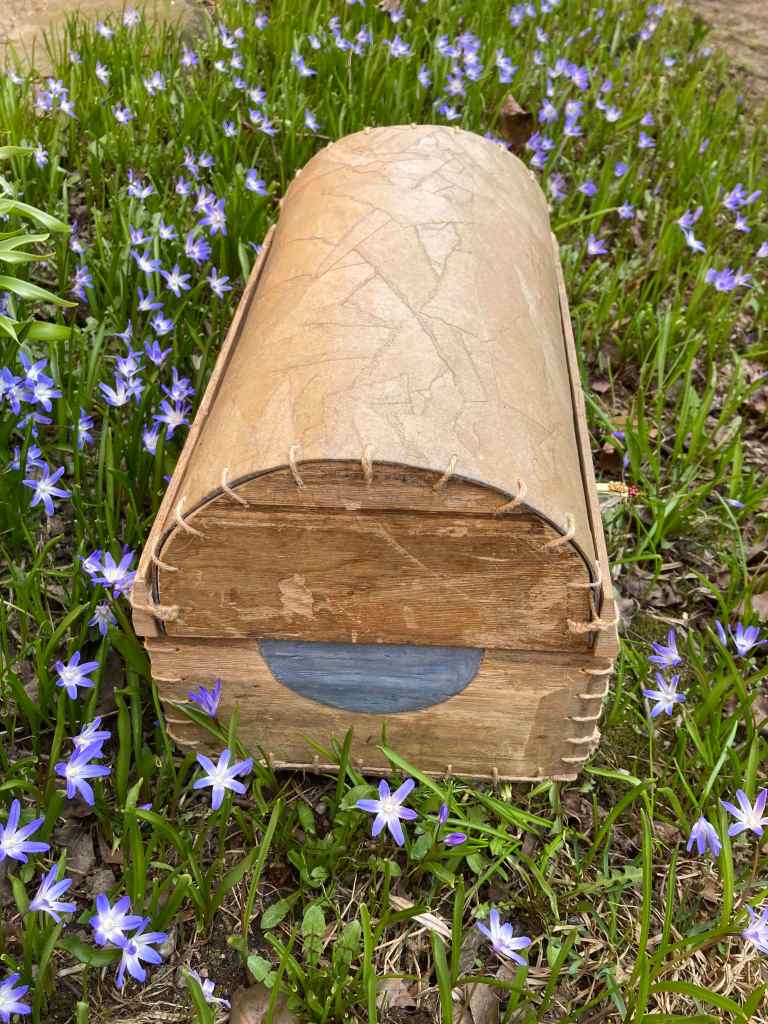
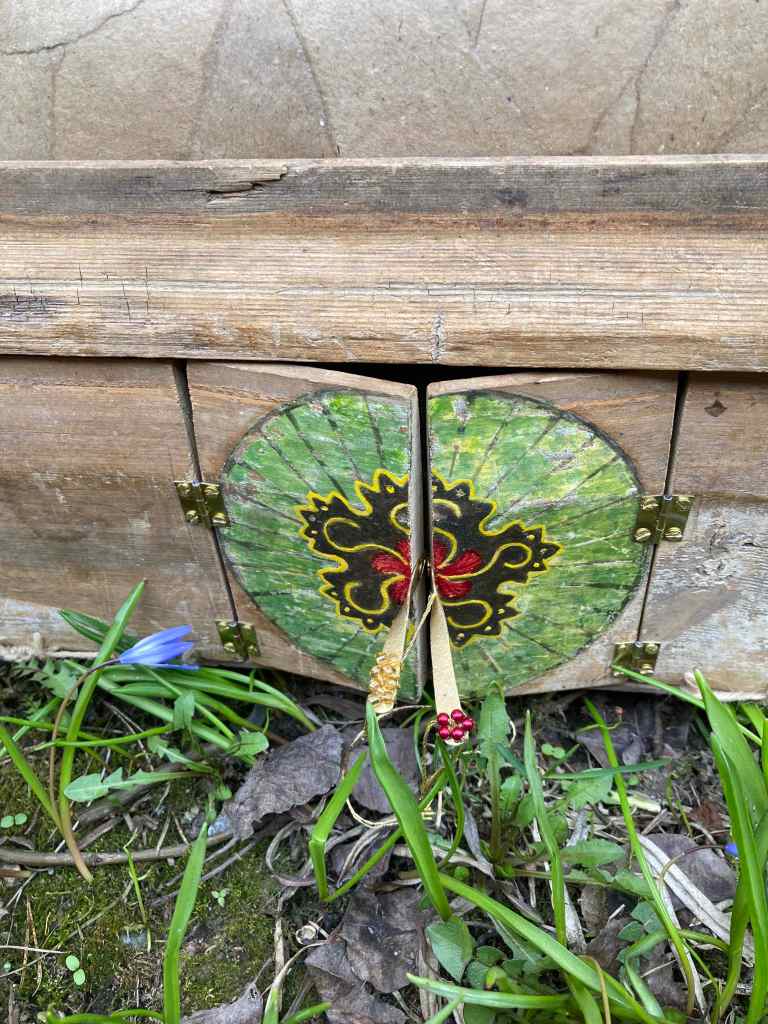
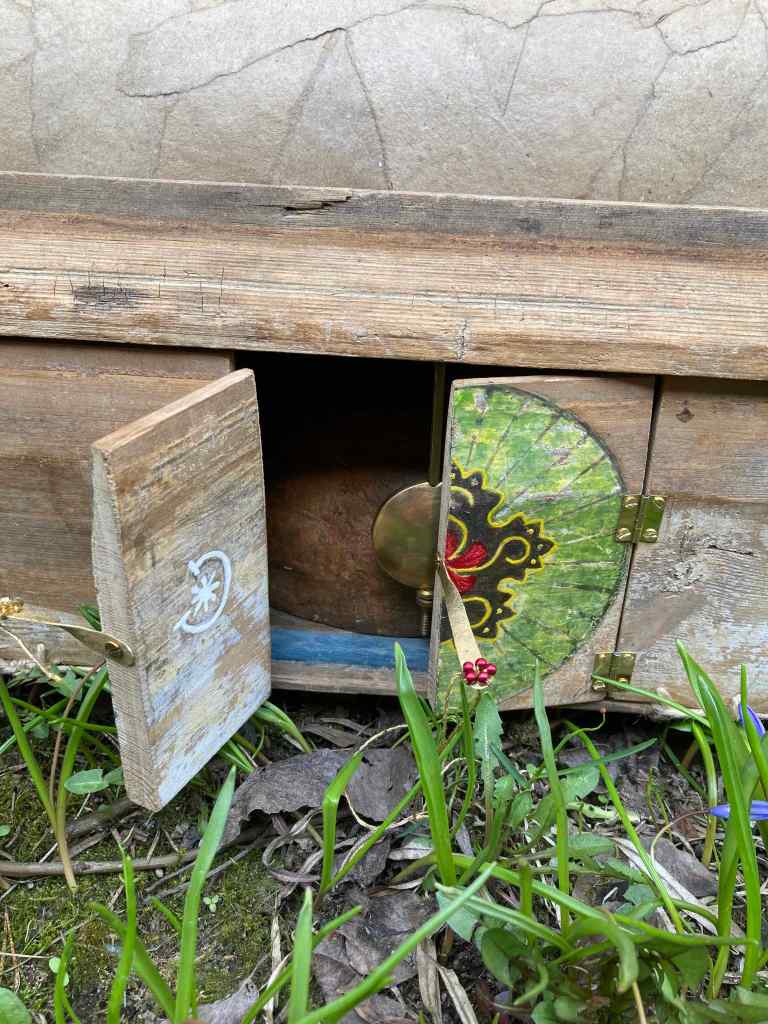
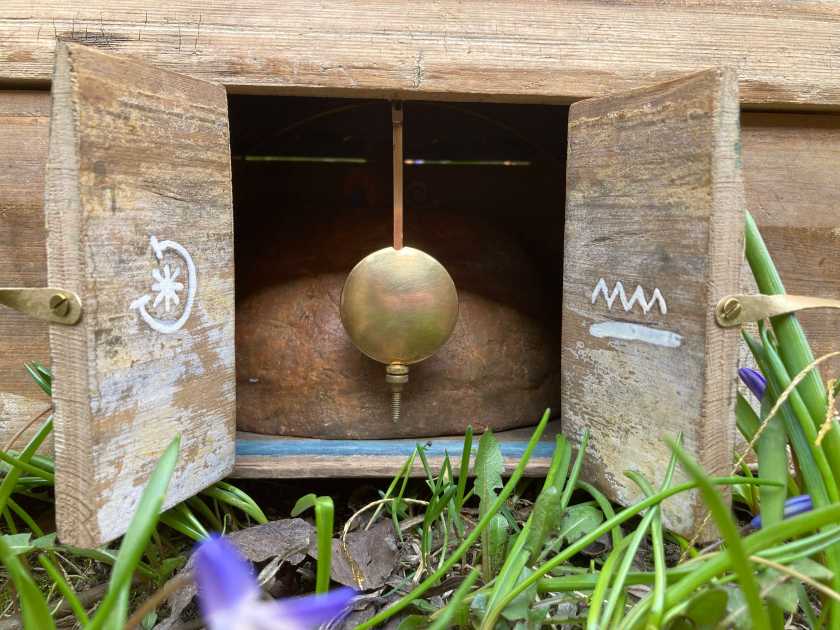
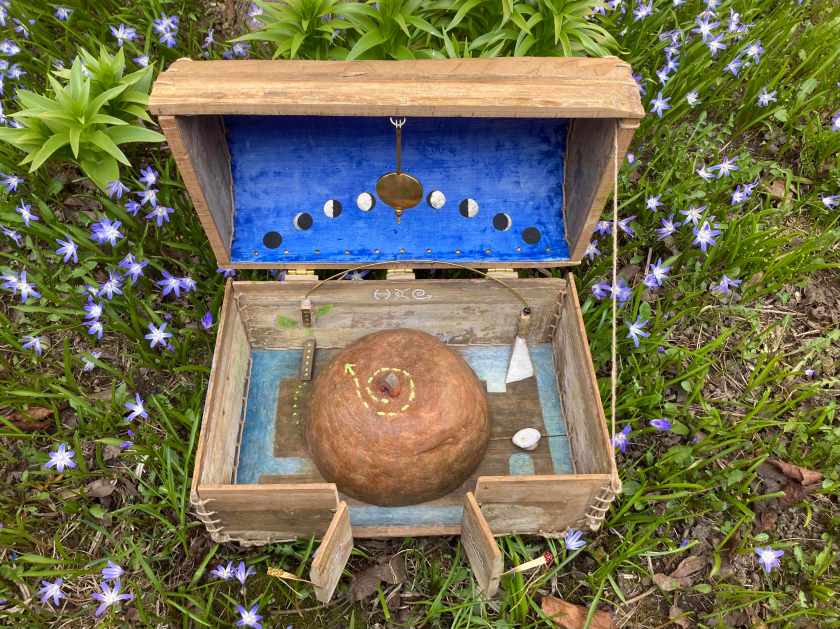
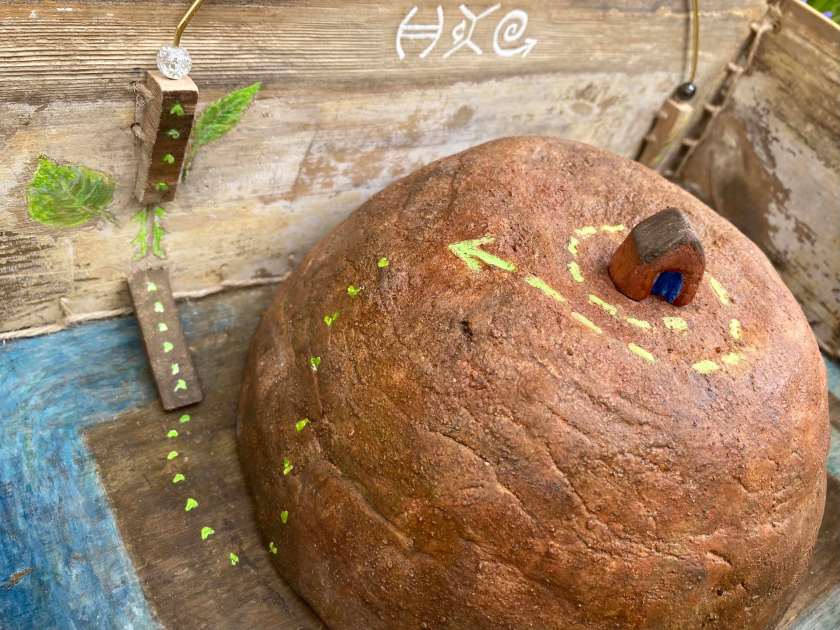
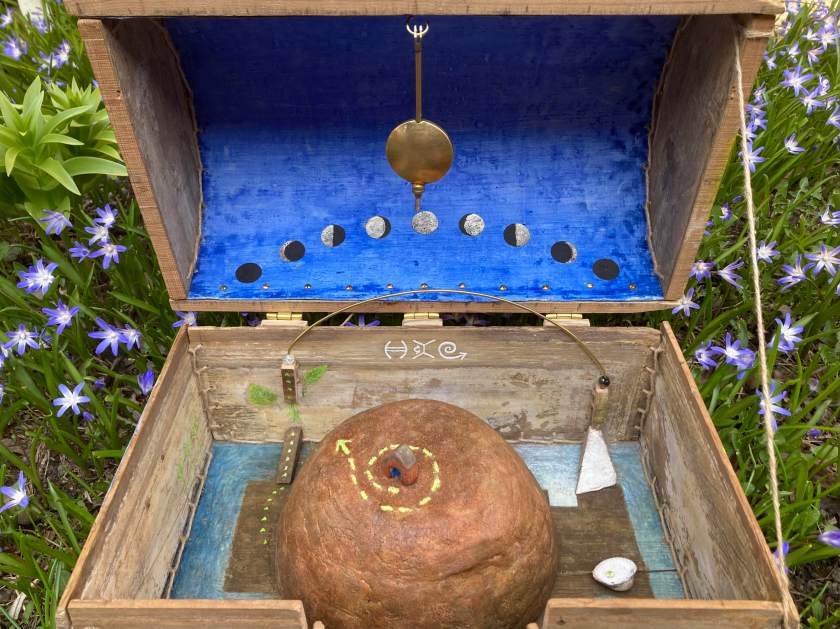
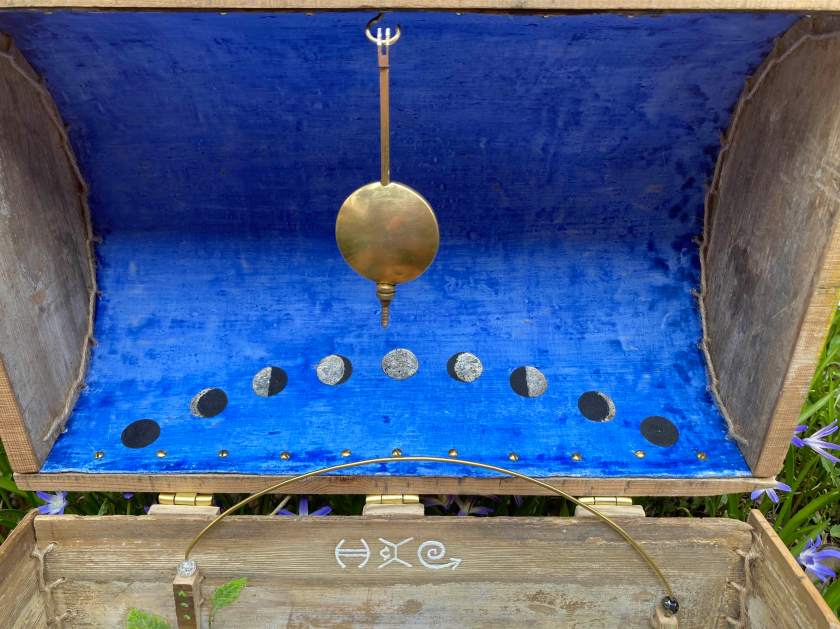
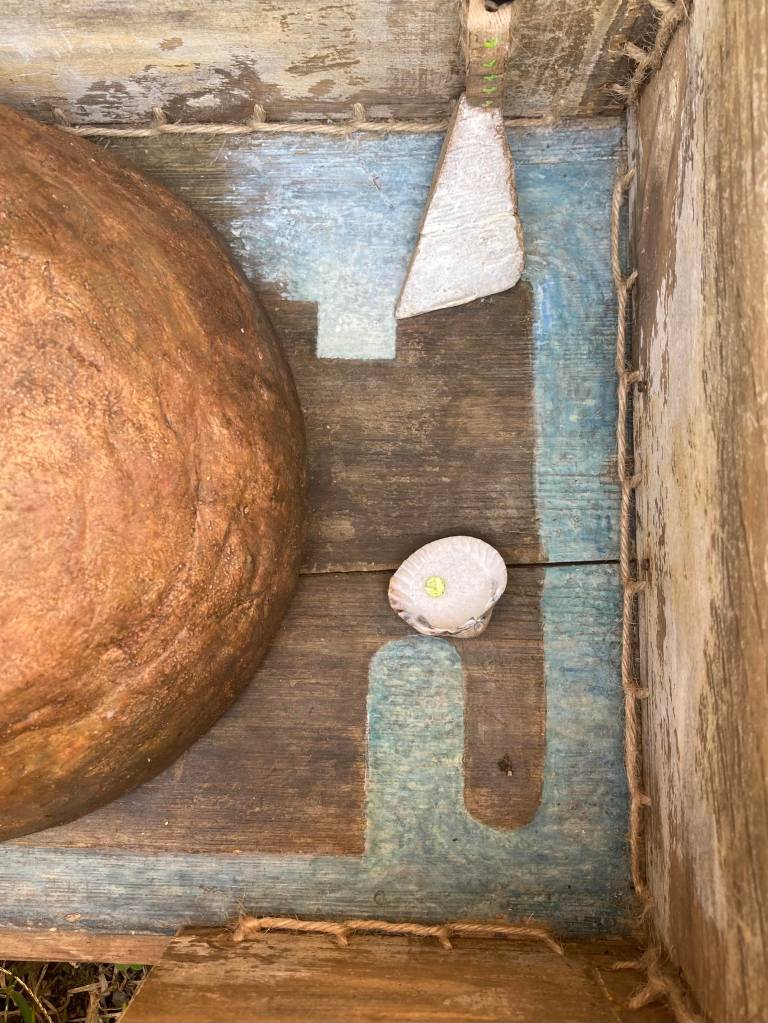
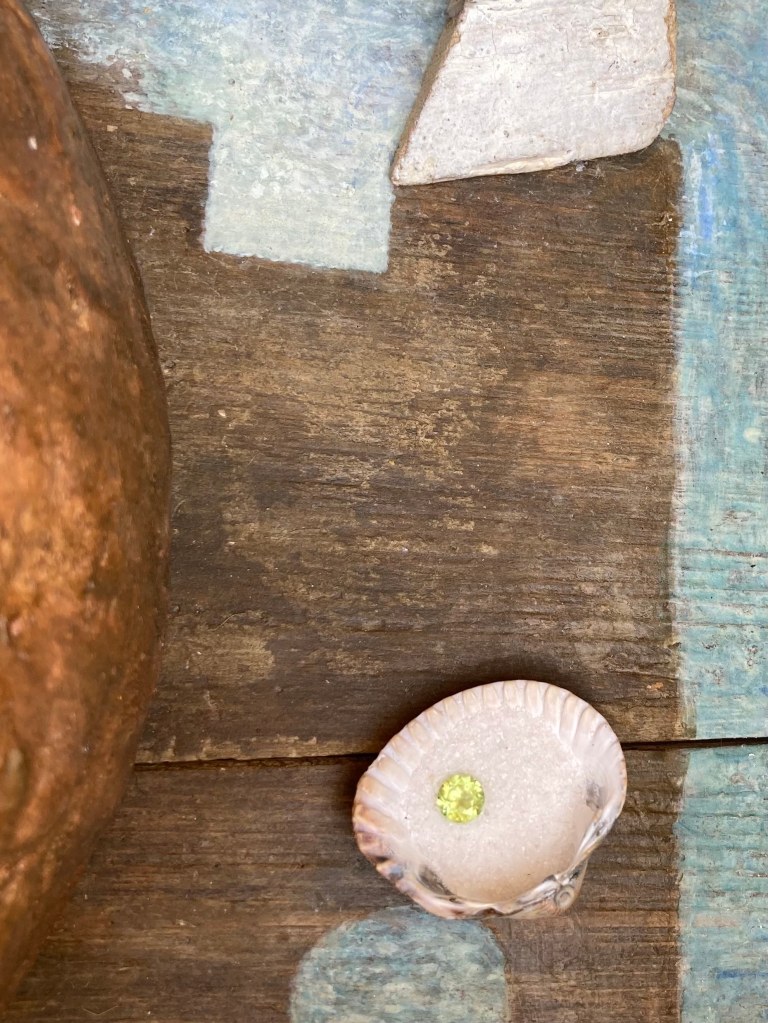
Half sun, half moon; hibiscus wallflower borrowed from a textile design by Wax Mama; green foliage and Nsibidi script; a journey through clarity and confusion…