Mapping Praxis I: threads and butterflies

art, recent work

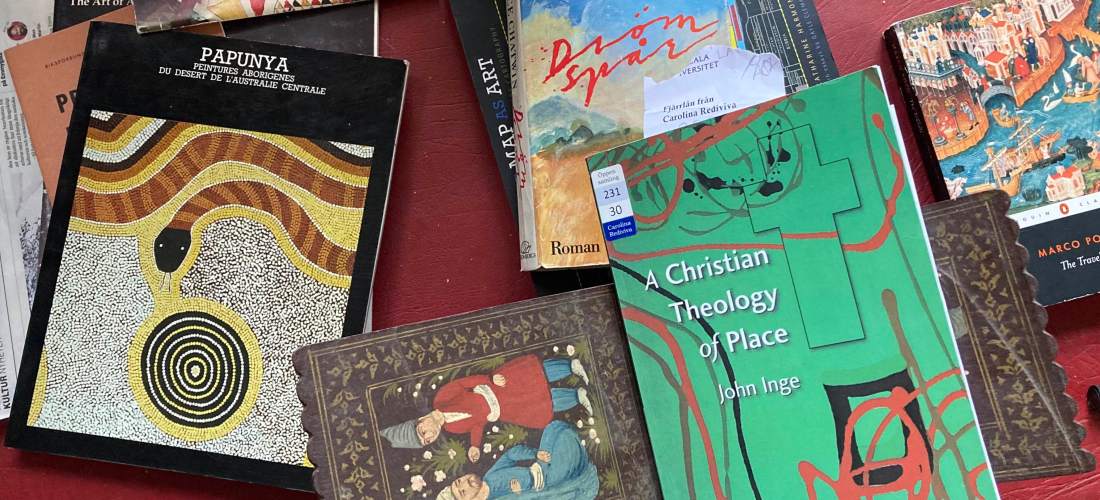
Since the Sigtuna working retreat in November, mapping procedures are on my mind… and all over the place; in books, notes and various materials. Reading and making. Seeking ways, following paths.

One accessible course would be to track the development of map projections, meant to change certain aspects of representation; to advance geodetics, to aestheticize or challenge general understanding – or combinations thereof, such as the “butterfly projection” invented by Bernard Cahill (1909)  and improved  by Gene Keyes (1975), the Dymaxion map by Buckminster Fuller (1943) and the reconsidered butterfly map by Steve Waterman (1996).

This slideshow requires JavaScript.

Three butterfly maps by Cahill and Keyes; Buckminster Fuller’s Dymaxion map; 2013 Waterman butterfly map;
images credit to Wikipedia commons and Gene Keyes’ website

The butterfly map concept provides a starting point. As the Praxis group (and Nordic Summer University) gatherings generally take place in the Nordic-Baltic countries, I have chosen Waterman’s Europe-centered version (1996), reproducing it in varying sizes; A3, 1 x 2 metres and 2 x 2 metres. At the Sigtuna retreat, all participants were invited to mark their own places of special significance on the 1 x 2 metres map. Some persons pinned only one place, others many. Connecting the individual pins with embroidery yarn (remainders from the 2018 Star Roads project) casts a somewhat arbitrary net over the so far colourless cardboard…

Praxis “significant places’ map”; graphite drawing on cardboard, coloured map pins and mercerised cotton threads;
100 x  200 cms; (collaborative work in progress)

Connective threads and pinned places: silver grey: Purmo–Hosaina–Fiji; dark green: Puerto Maldonado (Amazonas)–Madrid–Tartu; greyish brown: København–Reykjavik–Vancouver–Lisboa–Stockholm–Post-Anthropocenic Speculative Diaspora; green: New York City; bright blue: Mariehamn–Lisboa–Åbo–Cottonwood–Kökar–Atupeva/Atupera?; brownish yellow: Herental / de Wimp; dark grey: Nakkila–Åbo–Haifa–North Namibia / Ovamboland; dark red: Alta; warm yellow: Seattle–Taos (New Mexico)–New York–Berlin; light yellow: Tejgadh–Frostviken–Melbourne–Stockholm; light violet: Örebro-Kåvi–Stockholm–Linnés Hammarby–Bern–Kailash–Helgum–Umeå–Lycksele–Visby–Dalhem (Småland).

Before the map, there were the tales of travellers. Before the concept of abstract space, there were a thousand and one places.

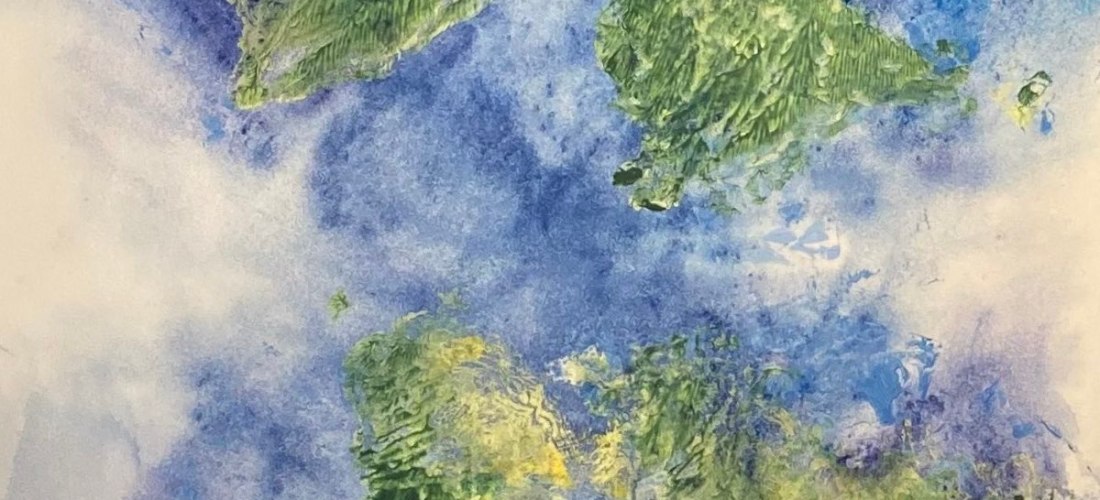
Helena Hildur W: two A3 size butterfly maps;
left: graphite pencil on paper; right: monoprint with graphite shading on paper

Praxis of Social Imaginaries, Working Retreat @ Sigtuna II

art, recent work, time-out

The Praxis of Social Imaginaries – an intriguing title* and an inspiring project, launched by Dr. Lindsey Drury and Dr. Laura Hellsten in 2022; still in its first year out of three, the initiative has managed to attract researchers, scholars and artists from six (!) continents, to gather around readings of mediaeval travellers’ tales. Like distant mirrors,** the written accounts of monks and merchants reflect shifting interests, gradually forming a worldview that impacts our lives deeply even today… And we ourselves, as a working group, are a diverse set of mirrors, framed in so many cultural contexts; from the Amazon forest to Berlin and New York City; from Kampala, Singapore and Adelaide to Sápmi… hopefully opening up for developing new modes of understanding; for social imaginaries more appropriate to our own world.

Views from Sigtunastiftelsen: dining room, garden and library

Our contributions to the Praxis project are partly realized within our respective professional settings – but, since the aim is to nurture genuinely transdisciplinary collaborations, ad hoc gatherings will be held over time as sub-projects emerge. So here we are, in the small mediaeval city of Sigtuna some 45 kms from Stockholm, to spend a weekend together in late November… The venue itself provides unique values; we’re hosted by the Sigtuna Foundation – a meeting ground dedicated to dialogue and openness ever since 1917. Nobel Peace Prize laureate Nathan Söderblom, UN general secretary Dag Hammarskjöld and poet Gunnar Ekelöf are some of the notable Swedes historically connected to this place, which still offers a lively spot for cultural, scientific and interreligious exchange. Anders the librarian gives us a guided tour in his sanctuary of books; some of the items are of venerable age, others come fresh off the presses to spark debate or enhance knowledge in current topics. (Due to GDPR issues, you will neither see Anders in action, nor the amazement in our faces here.) Later, we also got the opportunity to attend an opening at artist-run space Slipvillan, where our fellow project contributor Emma Göransson was part of a group show.

Walking and talking in Sigtuna; Sigtuna Foundation and the ruin of S:t Per’s church

Was there any time for actual work during this working session, then? I think it’s fair to say that shared time, shared experiences and shared meals are meaningful elements in work processes like this one. Equally important, of course, are the moments of structured reflection – both individual and common… and yes, there was time for that, too. Even sleep may bring unforeseen revelations…

…to be continued…

This slideshow requires JavaScript.

* “The imaginary (or social imaginary) is the set of values, institutions, laws, and symbols through which people imagine their social whole.” – Wikipedia: Imaginary (sociology)
**A distant mirror is the title of a renowned book by historian Barbara Tuchman. That specific work isn’t part of the Praxis project reading list; however, the title is too good not to be re-used – with due credit!

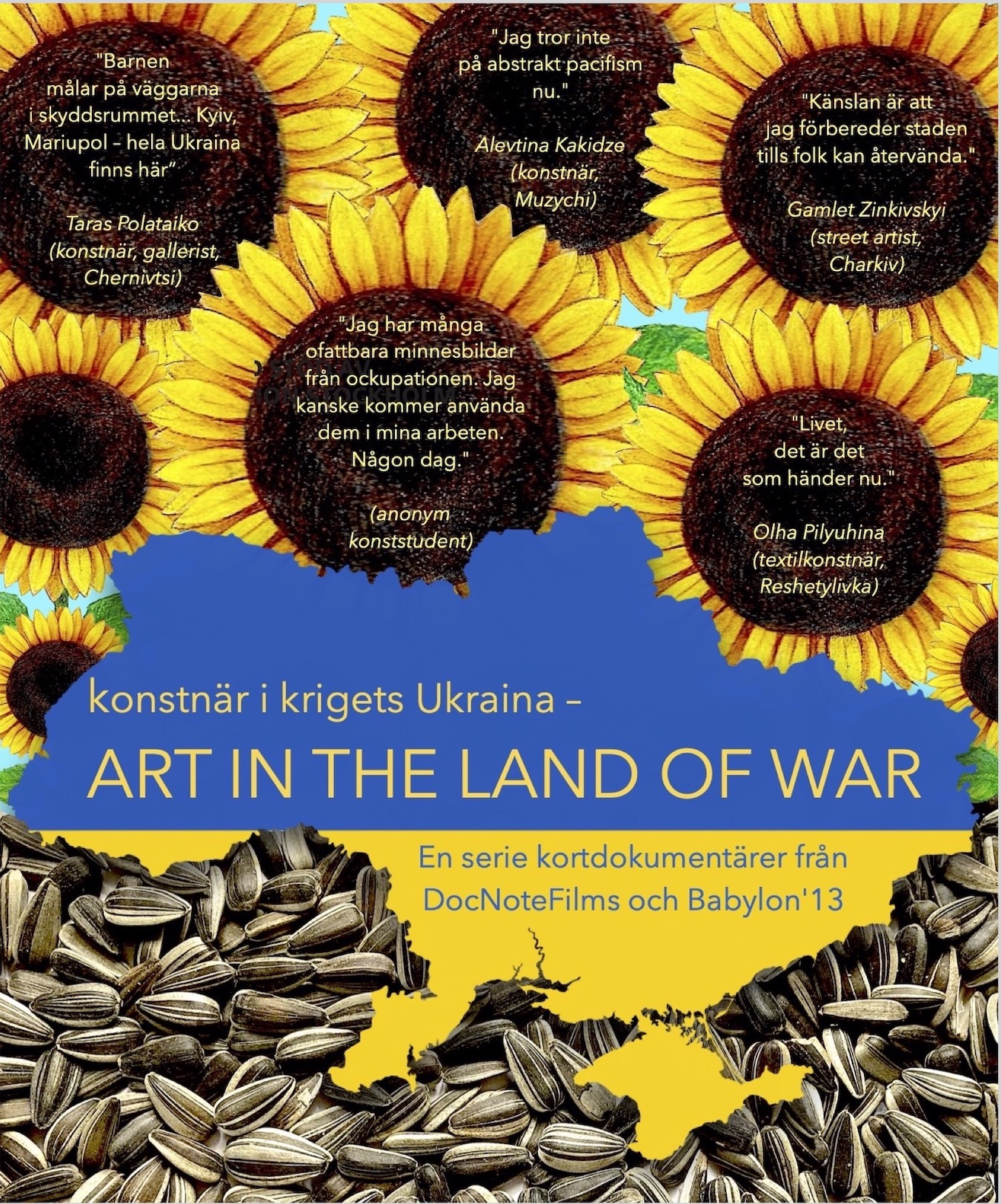
Art in the Land of War

recent work, time-out

What is the role of art when an entire country  is fighting for its life? How is it even possible to create under the conditions of war? The common denominator, I think, is the strive for freedom.

To my understanding, freedom is one and indivisible – just like Spaceship Earth is one for all of us. To paraphrase Caribbean-American poet Audre Lorde: I am not free while any being is unfree.* In February 2022, when Russia’s prior war crime aggression and annexation turned into a full scale invasion of Ukrainian territory, it wasn’t only an eye-opener, but also a compelling urge to take action. How could I, as an artist, support the defenders of our freedom?

Staying in touch (since 2011) with Kyiv-based filmmaker Oleg Chorny, in combination with having a volunteer-run cinema just across the street, finally sparked the idea of organizing a film screening. When I contacted Stadsgårdsterminalen – one of Stockholm’s most creative spaces – the project kind of doubled… In the first months of 2023, I turned to Region Stockholm for funding; in June, my application was granted, and I could start organizing the two screening events. Independent production company DocNoteFilms gave me full access to their short film series Art in the Land of War – documentaries made in 2022-2023, following Ukrainian artists in their studios and workshops; in front of the screen or the loom; in the basement shelter or in the city streets… To pick a choice from the 25 movies wasn’t easy, but in the end ten were chosen to mirror the diversity of Ukrainian art and artists.

On September 23rd, the first screening event took place in rural village Mölnbo. Long-time local residents mingled with more recently settled Ukrainian refugees; home-made borsch and nalysnyky pancakes were served, artworks by Angela Ursol were on display and the band named Ukraina played. Örjan – representing local volunteer organization Caps and Candles for Ukraine – told us about his recent journey to Eastern Ukraine, where much-needed supplies reached its destinations. And the documentaries took us all along to Mariupol, Kyiv, Chernihiv, Muzychi, Poltava, Charkiv… to a  number of artists at work – very diverse in personalities, age, genres and techniques, each one finding their own way in modalities of resistance.

During the following weeks, the next event was announced on walls in central Stockholm as well as online. Another batch of soup and nalysnyky were prepared, all details of the program were finally set, and planning proceeded with the super-helpful staff at Stadsgårdsterminalen. On Saturday, October 7th, volunteers and artists gathered in the morning to arrange everything… Visual artists Liubov Babichenko and Anastasiia Usenko contributed with their artworks, Tomas the technician got everything in order – and by noon, people began to drop in as the soundcheck of domra player Olga Kovalenko smoothly turned into a little concert.

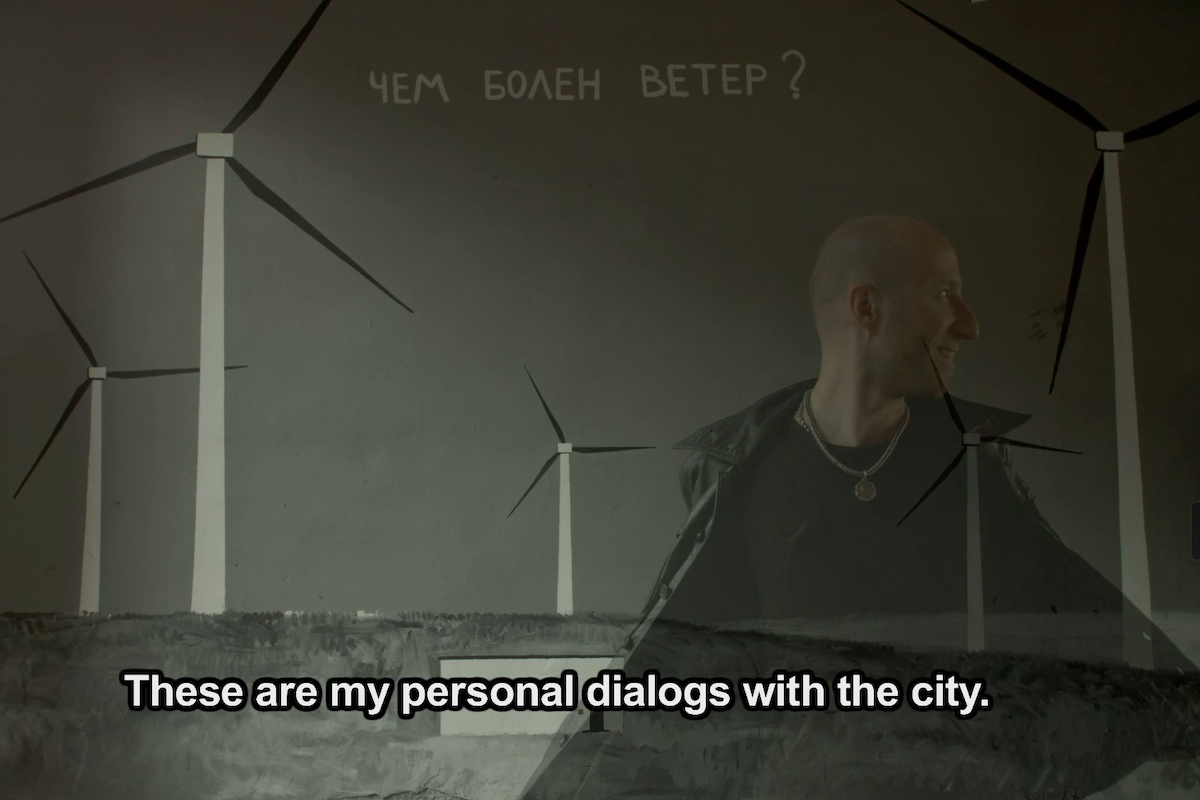
The screening program opened with two films that were made before 2022, and therefore weren’t part of the Art in the Land of War series: first, Derevo / The Tree  – a portrait of a woodcarver, originally created by amateur filmmaker Victor Kyzyma in the 1970s. The faded and damaged remains of Kyzyma’s film were rediscovered in 2017, and brought back to life by contemporary filmmakers Oleg Chorny and Gennadiy Khmaruk; a dreamlike memory, reimagined. Next, Proekt Doschu/Rain Project took us to the city of Mariupol in 2016, to follow the work of street artist Gamlet Zinkivskyi – also known as ‘Ukraine’s Banksy’.

The program proceeded with the recent DocNoteFilms/Babylon’13 documentaries, shown  two by two with a 30 minutes pause inbetween screenings. There were talks by artist Liubov Babichenko, and by Max Valentin – founder and producer at Fabel Kommunikation – who gave us insights from the Ukrainian cultural sector (especially, the changing role of public libraries). We also succeeded to make contact with director Hanna Iarosevych over link from Kyiv; a valuable exchange, as the audience could pose their questions directly to the filmmaker, who emphasized the blooming of contemporary Ukrainian cinema as a part of civil society.

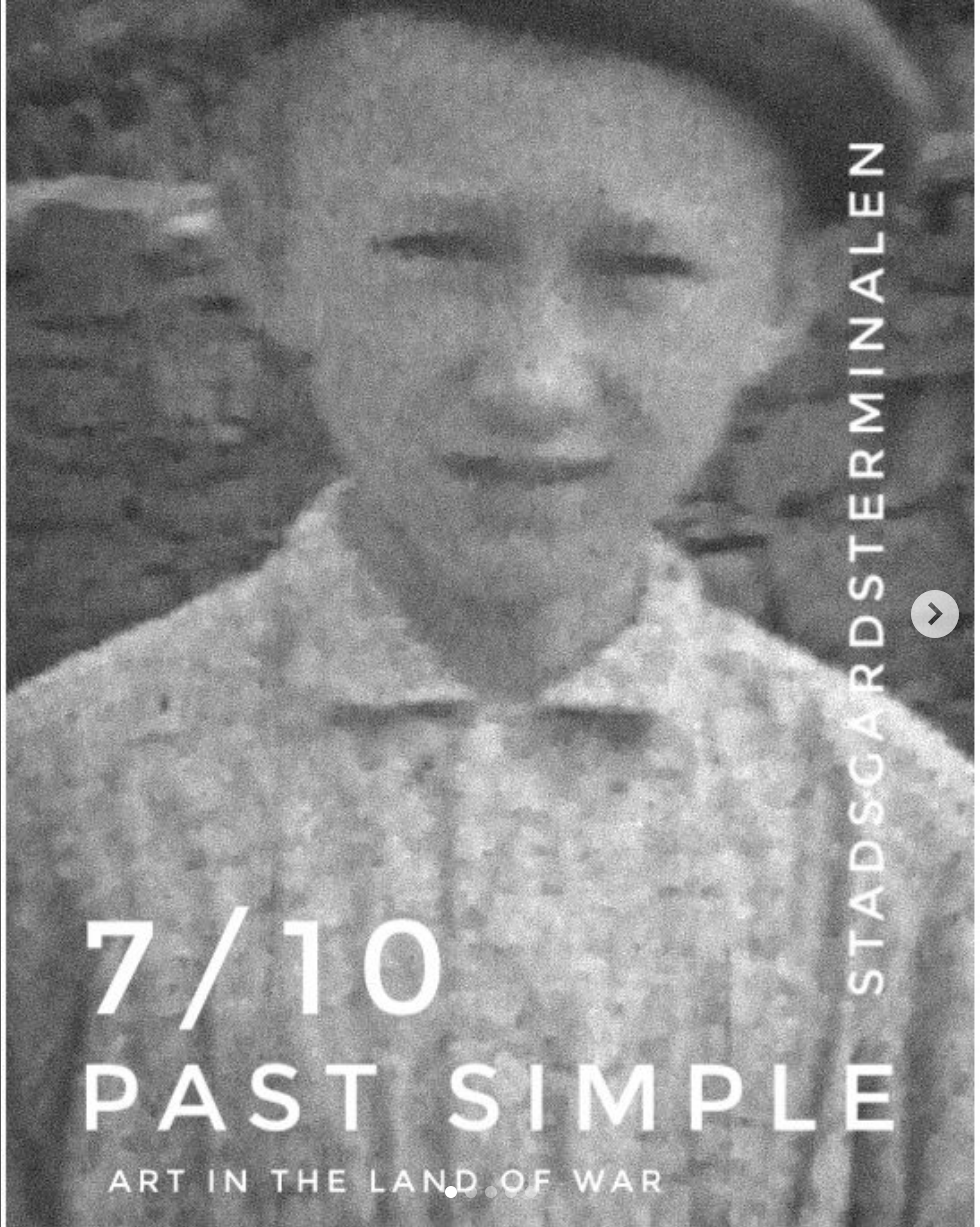
Screenshot PAST SIMPLE

Our final treat was a work by Liubov Babichenko, produced especially for this event and with music by composer Roman Gens; archive documentary PAST SIMPLE – once more connecting with the past, speaking wordlessly about life in peace… projecting hope for the future.

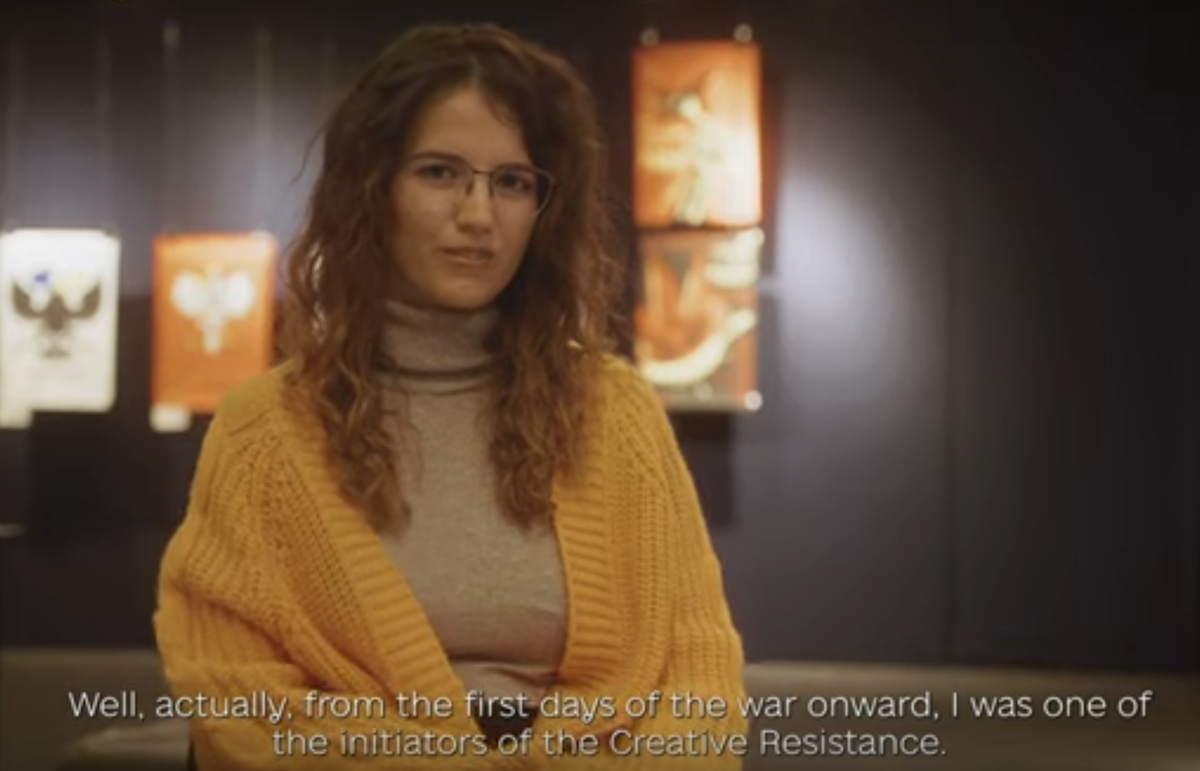
Below, screenshots of some of the artists seen in the documentaries:

Gamlet Zinkivskyi
Street artist Gamlet Zinkivskyi

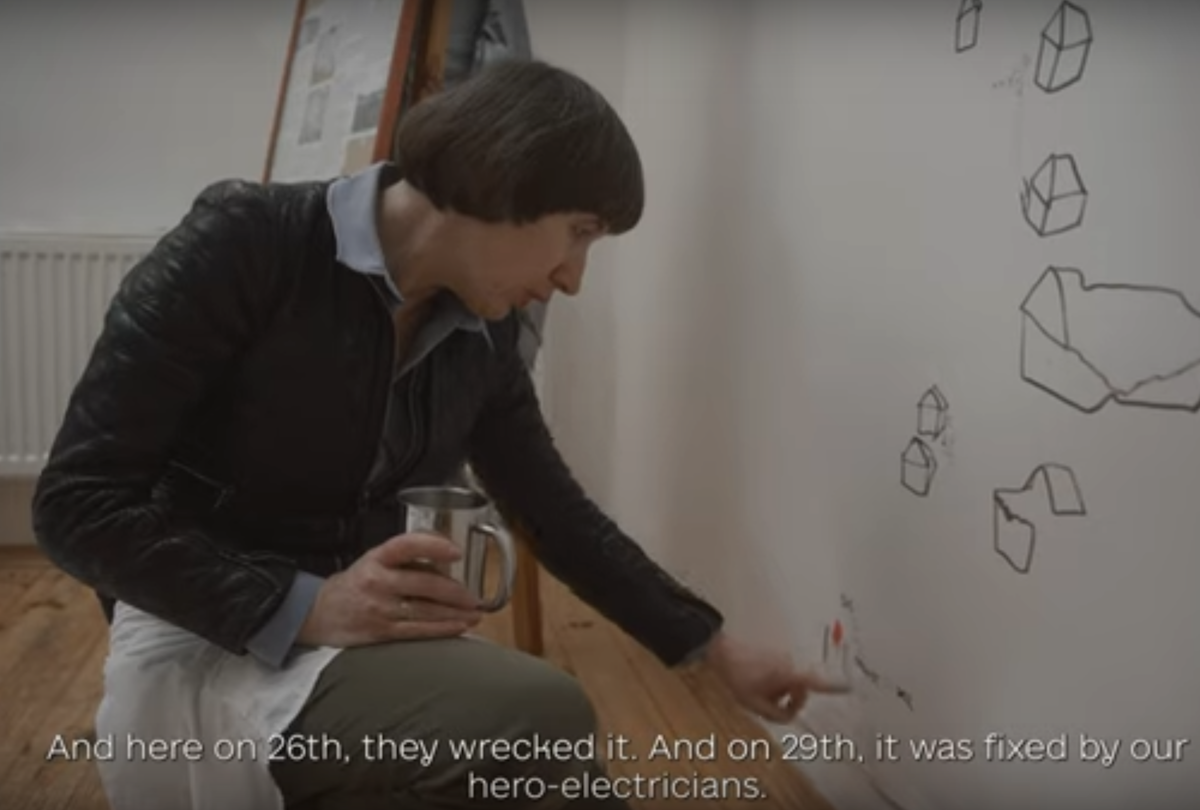
Alevtina Kakidze
Conceptual artist Alevtina Kakidze

Taras Polataiko
Conceptual artist Taras Polataiko

Oleksiy Sai
Artist and activist Oleksiy Sai

Andriy Budnyk's student
Anonymous art student

Lithography 30
Nina Savenko, printmaker at print workshop Lithography30

Alexander Shchetynsky (kopia 2)
Composer Alexander Shchetynsky with colleague at the Kharkiv National Kotlyarevsky University of Arts

Olha Pilyuhina
Tapestry weaver Olha Pilyuhina

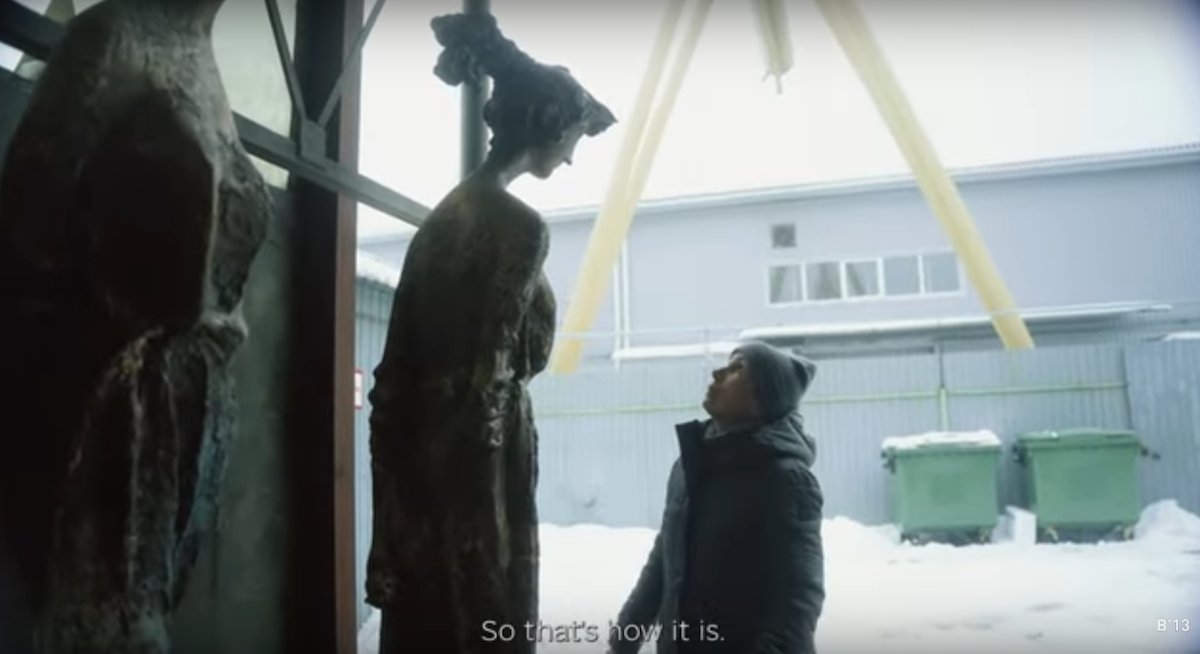
Svitlana Karunska
Sculptor Svitlana Karunska

*original quote by Audre Lorde: “I am not free while any woman is unfree.”

AitLoW affisch

Praxis of Social Imaginaries, Summer session 2023 (Palanga)

art, recent work, time-out, upcoming

End of July, and a group of scholars and artists meet up to continue the journey that begun in March: studying the Praxis of Social Imaginaries. Observing our own times through the lens of mediaeval travel accounts, this transdisciplinary research project is now turning to William of Rubruck and Marco Polo – both speaking to us from the 13th century.

Summer session readings: the travels of friar William of Rubruck (photo credit Laura Hellsten) and Marco Polo’s Book of the Marvels of the World

A diverse bunch of people we are, actually representing all continents except Oceania; diverse also in age and cultural background, not to mention other kinds of situatedness… Reading under the pine trees in Palanga Botanical Garden brings out knowledge and memories from Sápmi and the Amazonas. Listening to voices from the 13th century brings out concern for the silence(d) in history. The ‘brave space’ of genuine dialogue brings out deep emotions of grief, joy and care… as well as the interchange of intellectual perspectives.

The Praxis project will continue for another two years – partly within the alternating Winter and Summer sessions of the Nordic Summer University, and partly in parallel side projects; next gathering planned in November, at Sigtunastiftelsen north of Stockholm. I’ll  have some mapping work to do before that… For now, I wish to cherish the creative flow that emerged from sitting beside Ilona Blumgrund, and our thinking together swiftly and wordlessly.

With great gratitude to Ilona, Adriana, Jackie, Louie, Emilia, Roberto, Tinka, Eduardo, Dorcus – and, of course, co-facilitators Lindsey Drury and Laura Hellsten – à la prochaine!

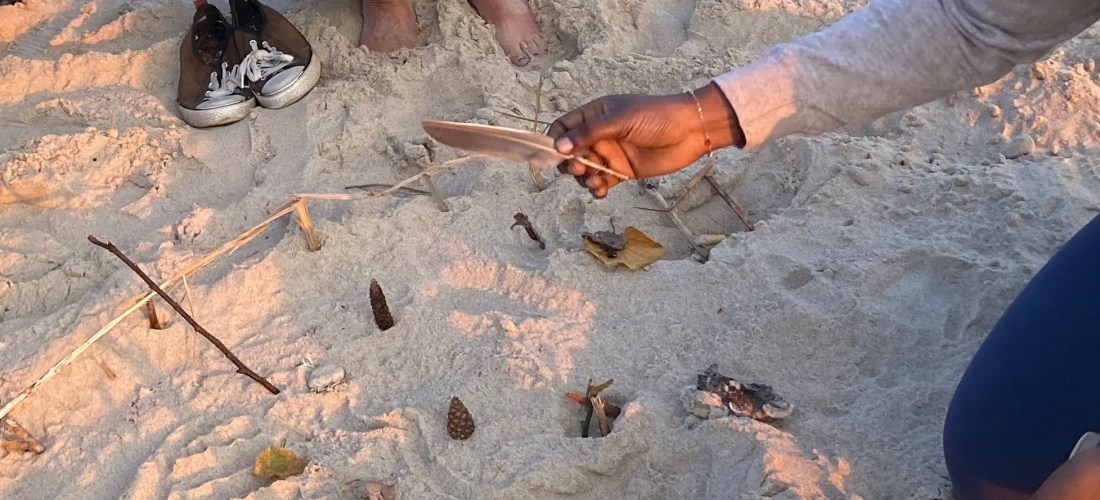
Mapping on the beach; how to realize common values in colonizing the future

About the Nordic Summer University
This particular study circle is but one out of a dozen, which together constitute the Nordic Summer University. From July 27th to August 3rd, the NSU Summer session 2023 was held in Palanga, Lithuania. Keynote speakers Ekaterina Kouznetsova, Amanda Valentin and Epp Annus all focused on different aspects of democracy in our time; academic freedom in an authoritarian society, election monitoring, and Russia’s colonial engagements and imaginaries of supremacy. In daytime, study circles worked independently (and sometimes joined). In the evenings, cultural programs were offered – such as music, workshops and multilingual readings (a practice introduced by Lara Hoffman last summer)… Together with Alina Kalachova, I conducted a mapping event which made us think, as well as cry and smile. A valuable experience.

Keynote speaker Epp Annus presenting a poem by late writer Victoria Amelina (killed in Russian strike on Kramatorsk, July 1st); and a joint reading of short stories on the beach

About Palanga and Hotel Vysuris
The venue and the city itself deserve some attention, too. Hotel Vysuris, built under the Soviet regime, stays almost unaltered since the 1970’s; history alive in many aspects, also in the struggle of the kitchen staff to navigate between different instances of need and want. The long applause they got at the final gala dinner was well earned.

(above) Vysuris restaurant and the last evening’s gala dinner
(below) Some features of the labyrinthic, circular building

And finally, some touristic views from walking in  Palanga – and a treasured gift (thank you so much, Dorcus!):

stenen från Dorcus (kopia)

Praxis of Social Imaginaries, Winter session 2023 (Oslo)

art, recent work, time-out, upcoming

Last month’s notes from the conference in Åbo/Turku briefly mentioned a new research project launched by Laura Hellsten. Here’s a little more on that…

Laura’s scientific approach is shaped by her dual competence as a dancer and a Doctor in Systematic Theology. While she holds a position at Åbo Akademi University, part of her current research will be conducted within the framework of the Nordic Summer University (aka the NSU). Actually, this project has already begun; in early March 2023, the first gathering of NSU Circle 3 Praxis of Social Imaginaries; Cosmologies, Othering and Liminality took place in Oslo. Lindsey Drury – post-doc and co-facilitator of this study circle – is an early modernist historian, and an educated dancer as well. Their common work evolves around mediaeval accounts from travels into ‘unknown lands’; aiming at transdisciplinarity, the methodology incorporates reading aloud, various modalities of movement, academic lectures and discussions, and…

1024px-Hereford_Mappa_Mundi
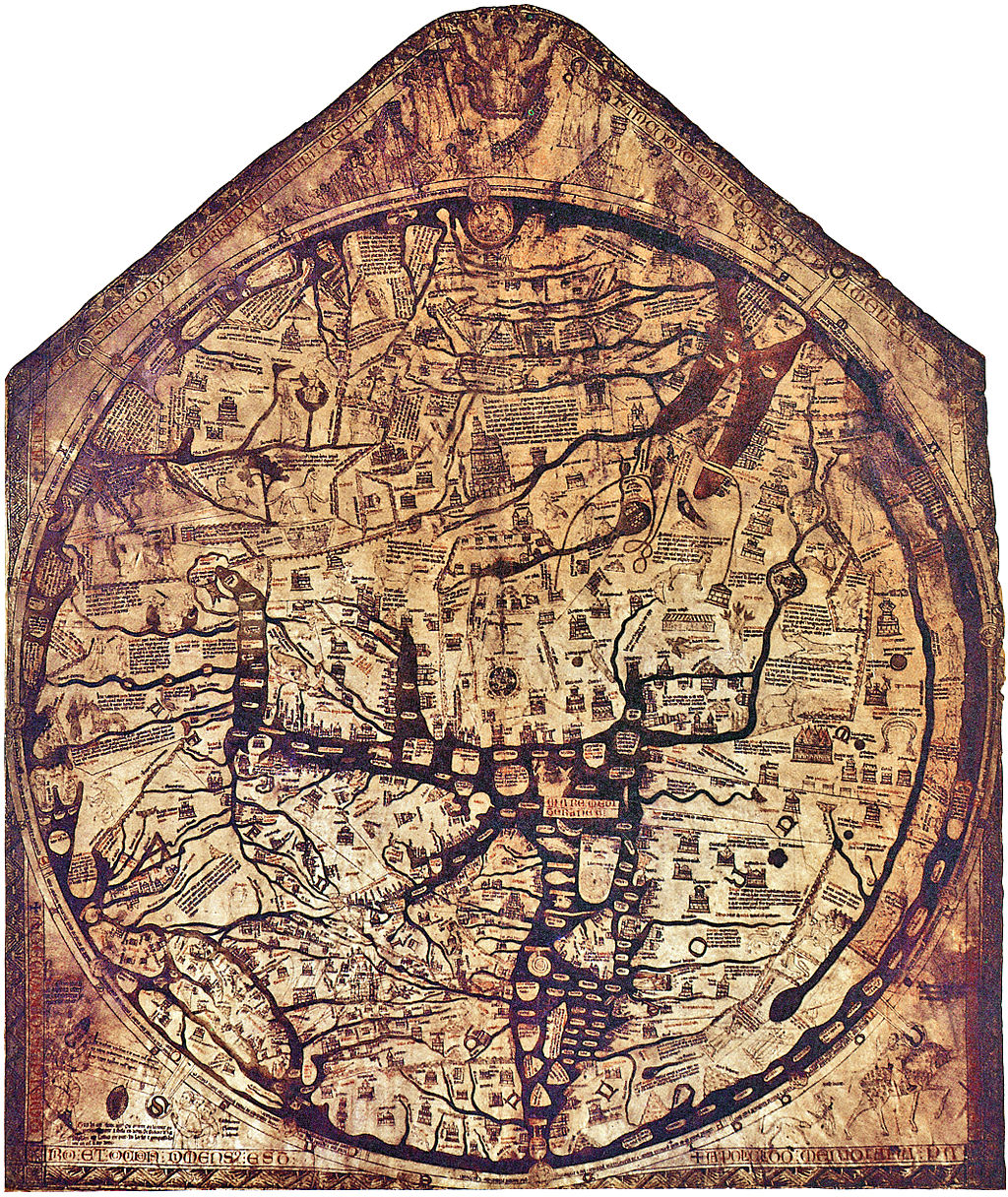
The Hereford Mappa Mundi – a mediaeval world map,
conceived in the very place where Gerald of Wales spent the last part of his life (although nearly a century later) –
presented in a keynote lecture by historian Line Cecilie Engh; picture made available by Wikimedia Commons

…and more? Future will tell.

In this first Praxis session, a number of scholars and artists from different fields and places processed the tales of Gerald of Wales: a monk travelling uncivilized Ireland by the end of the 12th century – reporting back to his learned colleagues and to the English king; picturing Éire and the Irish through a lens of curiosity, religious zeal and practical political thinking.

Here’s my own recap from our five of days walking, talking, listening, disputing and dancing in wintery Oslo:

230304 01b

Domus Theologica (University of Oslo) hosted the event

Streets of Oslo – a signpost pointing the way to a bomb shelter;
Saint Olav guarding sewages and waters underground; icy footway; a cool cat by night

Saint Olaf, king of Norway, accompanies us, as we walk the streets – occasionally trodding along his old pilgrimage path, leading all the way from here to Olaf’s grave in Nidaros (Trondhjem). In his youth, Olaf sailed the Baltic and the North Sea as a fierce warrior, before being baptized and returning to Norway as a Christian king. His image, cast in iron, can be seen on every lid covering the descents to the city’s system of underground sewage pipes. The waters that have cleaned our bodies – or passed through them – is kept from sight and smell in those sewers. Meanwhile, Aker river running through the city, once heavily polluted, is now restored to be the ‘green lung’ of the urban area…

How can one atone for the wrongdoings of history? As we walk and talk, I think this may be the beginning of a pilgrimage.

230305 05b
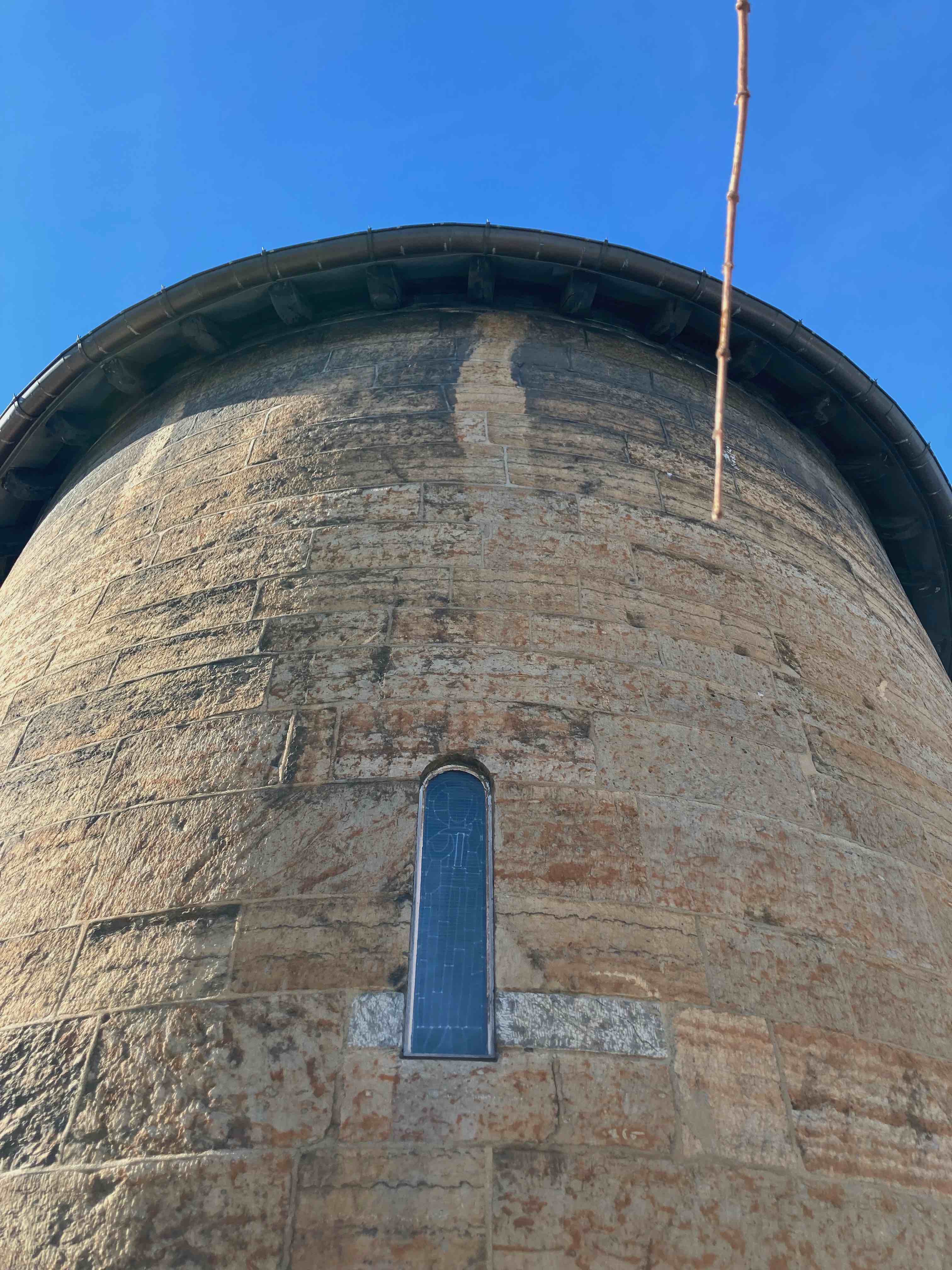
Limestone wall of Old Aker Church – the oldest existing building in Oslo,
erected by the mediaeval pilgrim route

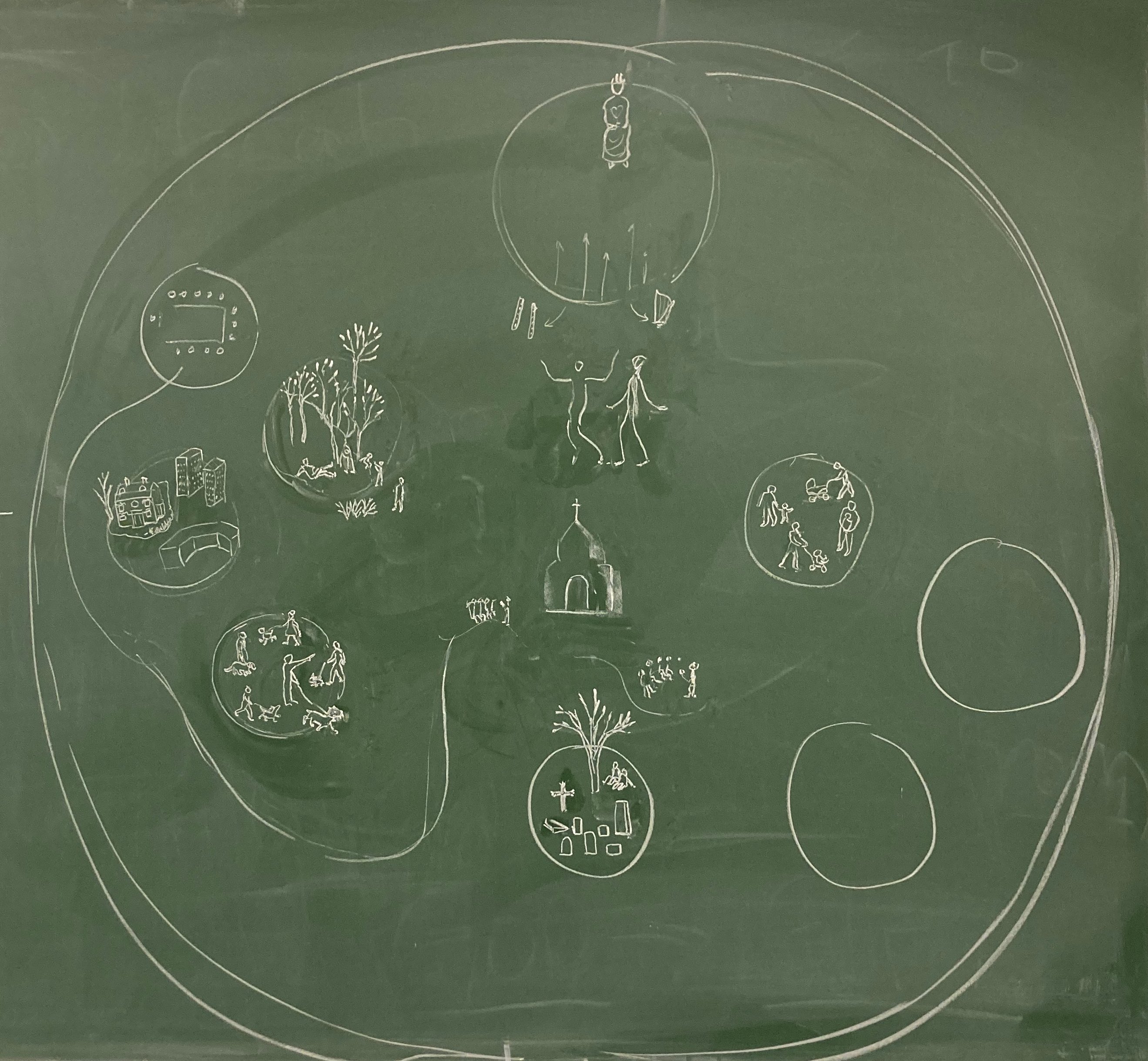
For the closing summary, I did an ad hoc mapping on a classroom blackboard – picturing our experiences as a group: reading Gerald’s tales, listening to Viveca Servatius’ lecture on Hildegard of Bingen, seeing lovers in a churchyard, meeting dogs friendly and angry, slipping and sliding in a park, dancing between graves… Other participants helped me fill in the empty spots.

230305 06b

Next gathering will take place in Palanga, Lithuania, when July turns August. See you there!

230306 14 (kopia)

Homecoming

art, painting

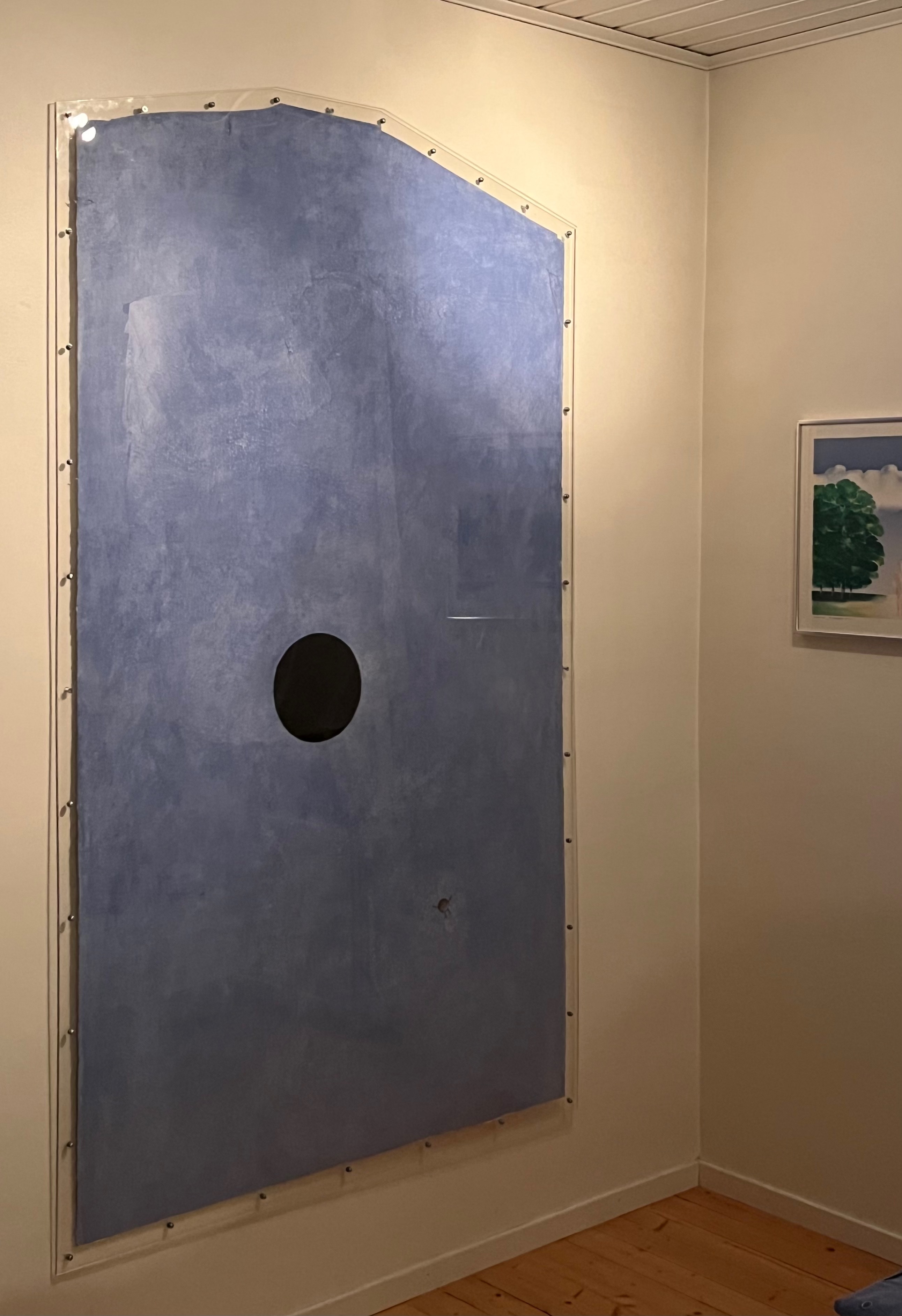
A painting long forgotten. Until, one day, it caught somebody’s attention; a customer, as it turned out.

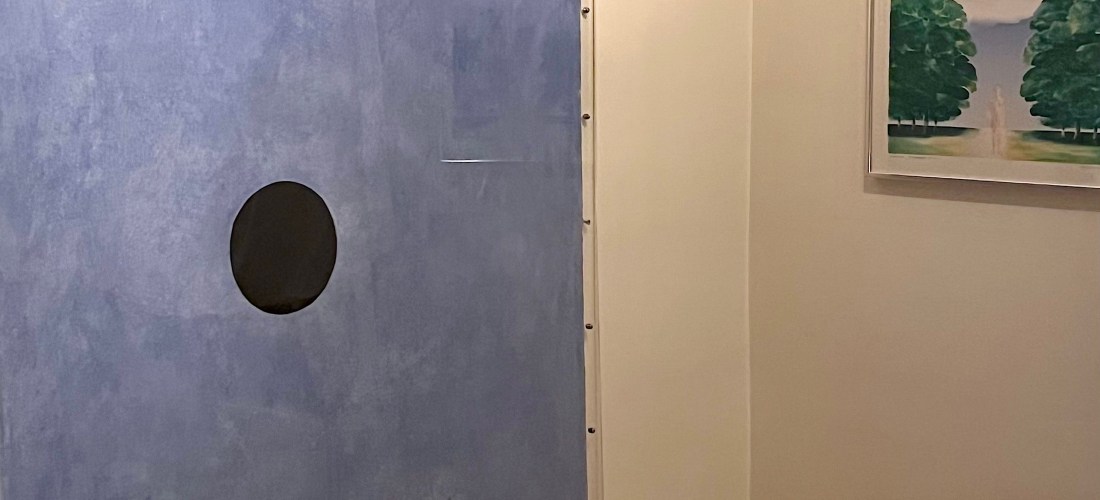
A painting long forgotten, then remembered. Re-membered, integrated: additional lapis lazuli pigment to deepen the colour blue – “light coming into being“. More of the all absorbing, finely ground charcoal for the black circle. The floating tadpole figure outlined anew in charcoal, and graced with gold leaf within. Overall proportions trimmed before mounting between acrylic glass sheets, cut to shape. Then carefully packed for transport…

…and delivered to a private home, situated on an island in the archipelago of Stockholm. Here, a number of smaller artworks were reshuffled along the walls to make space for this one. Good neighbours they will be, for sure… Two windows are providing daylight – one facing east, the other south. Outside, the sky is clear and trees are leafing. Indoors, sunlit rooms still echo from a grand piano long time gone. And so, the painting finally has found its place.

Thank you, B and A, for your hospitality!

This I Know (monterad)

This I Know (final version); tempera, charcoal and gold leaf on paper, 200 x 120 cms

Musical Quarter Interlude

art, time-out, upcoming

Time to move on – from the digital dirtroad experience to an exquisite 19th century building by the waterfront of central Stockholm: the very first concert hall built in Sweden, patroned by the Royal Swedish Academy of Music. Today, the Musical Quarter is multi-functional venue hosting a variety of genres: from folk & world music (permanently housed in the old backyard horse stable) to early music, opera, jazz, philharmonic and purely experimental… in creative process, as well as in public performances and festivals. 

230216 05b

Right now, the prospect of having rents increased by more than 55% threatens the whole initiative. The managing team then decided to mobilize all friends and good powers in Scendödsfestival – a full night’s total music and art experience, with free access for the public – happening on Saturday, March 11th.

I’m very happy to be counted among those friends; last week, I joined a group of visual artists – invited by our much esteemed colleague Tobias Sjöberg – to check out the site. What a marvelous place… 

…and what a kind, professional and receptive bunch of people to work with. Many of us had never met before – I’m eager to see what we’ll come up with together!

More to follow…


Bronze horse close to the Musical Quarter,
casted from a copy of the famous Byzantine horse sculptures in Venice;
an installation by Swedish sculptor Sivert Lindblom (1989)

reconnecting, attuning, integrating

art, recent work

During the Exhibition and Life (reconsidered), a forgotten painting from thirty years ago was brought into the light… Someone found it touching, somehow – because of the lapis lazuli blue? the mere size and shape of the paper? the little “tadpole” figure? the black charcoal circle? I can’t tell. But there it was, for the first time publicly on display.

220512 10c

from day 3 of ‘the Exhibition and Life (reconsidered)’

I was touched, too – reconnecting with the almost forgotten place in my life where this image emerged. A feeling resonating from there to now, setting me in tune again. Urging me to respond from another me. To review the elements – their size, brightness, depth, materiality, tactility; to rethink the proportions and composition; to find a new provider of lapis lazuli pigment; to find a way of mounting the large paper for permanent display.

The lapis lazuli pigment corresponds in an exceptional way with the changing qualities of light; from the midday or afternoon sky, or from electric lighting. An Orthodox rabbi’s wife passes me a quote from an artist whose name she doesn’t remember: “blue is light coming into being”.

This slideshow requires JavaScript.

We’re still in the undetermined process of integration. Proceeding with care.

Business

art, painting

The driving force of the Exhibition and Life (reconsidered) may have been about re-imagining an existing body of work, and co-creating in the here-and-now; yet, the creative drift is inseparably followed by a shadow called economy. Landlords and art material dealers rarely give their goods away; artists have basic human needs as well. Most of us therefore work part or full time in parallel professions (salaried). Hence, I feel the importance of recognizing when someone steps up, willing to actually pay for the artist’s work; especially when that someone is an individual with limited resources, who just happens to be touched by what they experience. This post is for you – to acknowledge the importance of your support; for the artist, it means encouragement and economic relief. For the artwork itself, it means fulfillment. 

above: Snowdrop (left); Spring snowflake (right);
charcoal, chalk and watercolour on paper,
each 120 x 175 cms
below: car packed, heading for home

customers

Dear customers from near and far – I’m deeply grateful for our exchanges: for hours spent together under the hot studio roof, meticulously packing two large drawings for a long car transport; for the spirited talk and delicious ice chocolate cake shared in a beautiful 19th century Stockholm apartment; for all your sensitivity and recognition; and for the influx to my bank account, as well as to Médecins Sans Frontiers (as part of a deal). I hope your purchases keep giving you joy, each day to come!

191211 03b diary painting (Miriam Wolff)
diary painting 191211 03,
oil and blackboard paint on wood panel;
40,5 x 20 cms