
What stays with me now, from the work of this summer session?
I remember the many scenes of unbearable cruelty, committed by the Spanish conquistadores and described in the book of friar Bartolomé de las Casas; and also the absence, throughout his text, of genuine encounters between the author and men and women of the indigenous. Nevertheless, he advocates their right to human dignity and eternal life through Christ. Maybe las Casas – acting in the name of God – kept his eyes so firmly set on the realms of afterlife that he didn’t really perceive the persons in front of him.
I remember the exercise we carried out in pairs, silently observing each other while recalling our first encounter; the recognition and tenderness of the moment. And then, the following actualization of another first encounter: a recorded reading of a document conceived in 1513, by which the conquistadores proclaimed the authority of the Spanish king over the land they were about to conquer. The very act of reading this Requerimento aloud – in Spanish – on any shore where they set foot was taken as a justification to kill, loot and ravage without restraint.


Excerpt from Guillaume le Testu’s Cosmographie Universelle selon les Navigateurs, tant anciens que modernes
(1555/56); illustrated map of Brazil (left); detail (right)*
I remember the words of my fellow participant from South Africa: colonialism is still here.
I also remember images from contemporary dance performances in Mexico; the mixture and fusing of traditions, spun around mythical events and historical figures from both sides of the Atlantic – an in-between space of creativity, pride, grief and resistance. And I remember the group’s (re)enactment of a Mexican mourning ritual: one of us acting the deceased, resting on the ground; the others bringing flowers, colourful pieces of fabric, and whatever we could think of to symbolize respect and appreciation; laying the objects down to adorn him, and thereafter weaving him an invisible canopy of words of affection.
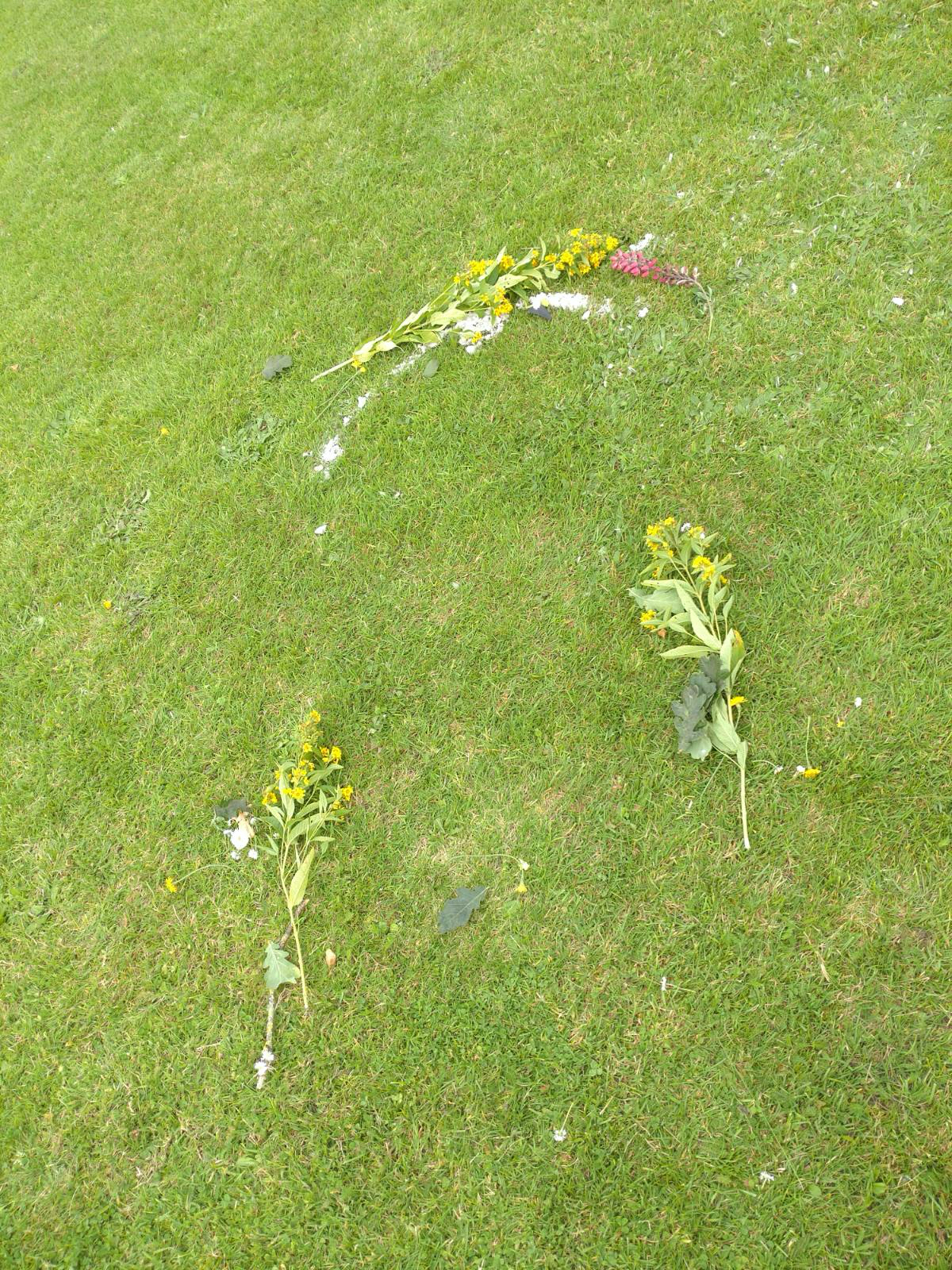
…and now, he’s gone; photo credit Essi Nuutinen

* to see more of Guillaume le Testu’s work, go to: Cosmographie Universelle selon les Navigateurs, tant anciens que modernes
 Helena Hildur W.