Gnestopia/Grassworks/Fält

art, curating


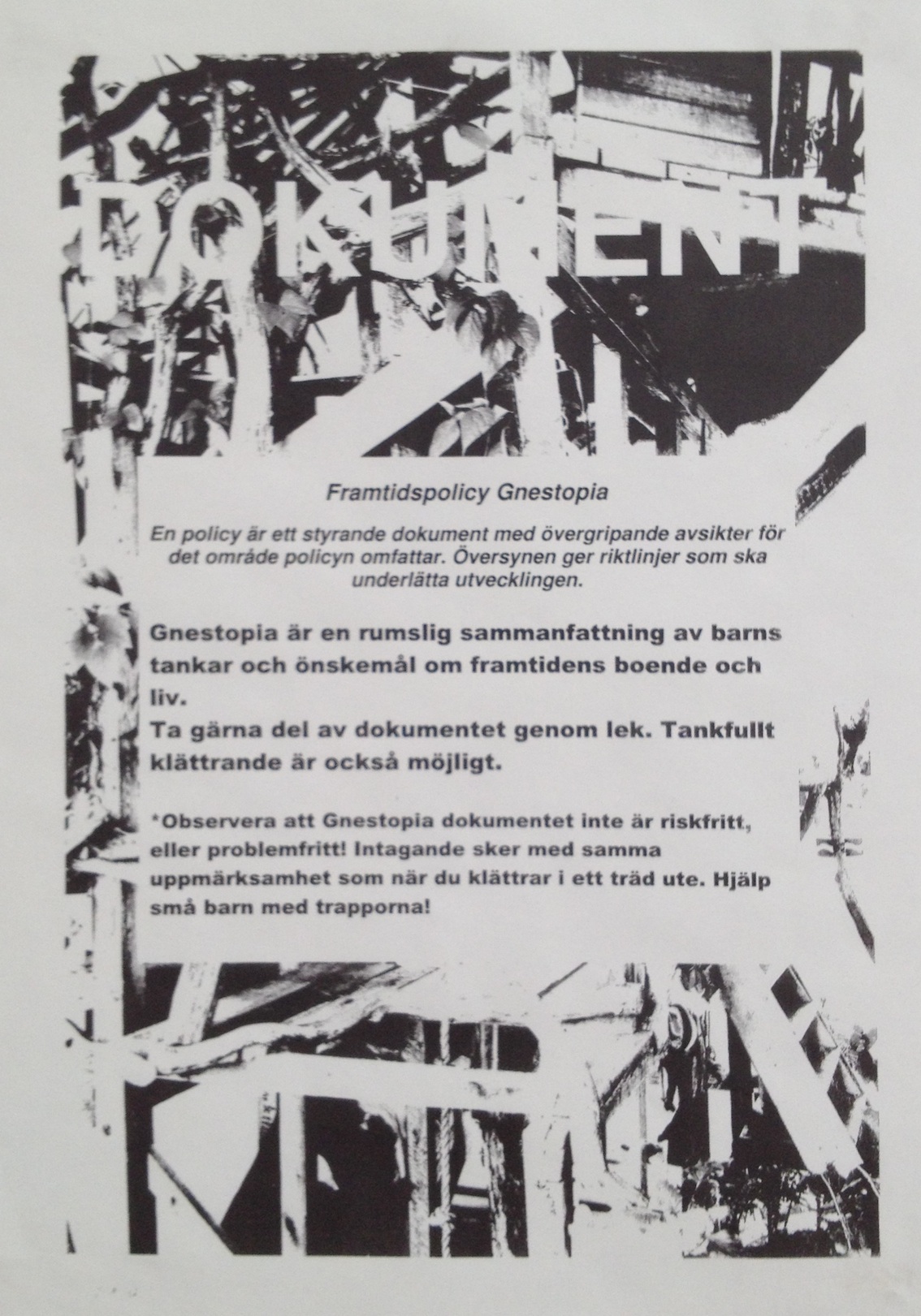
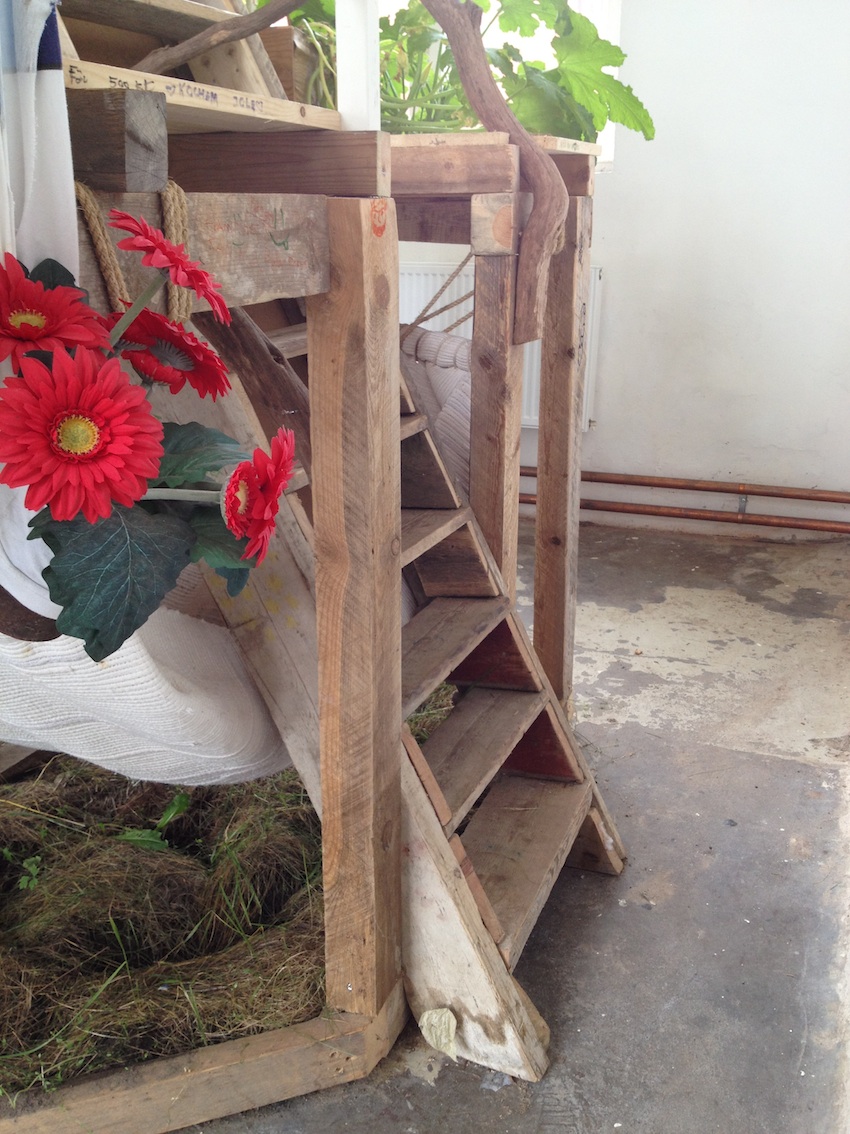
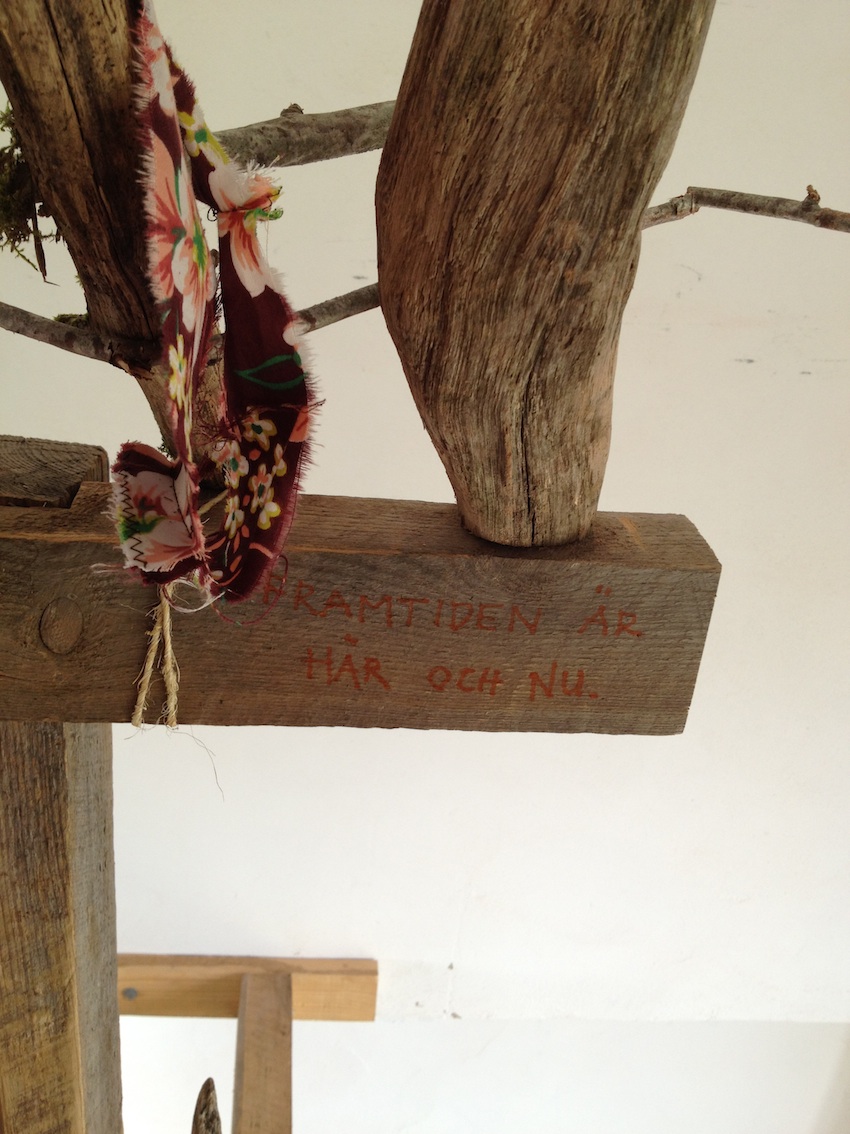
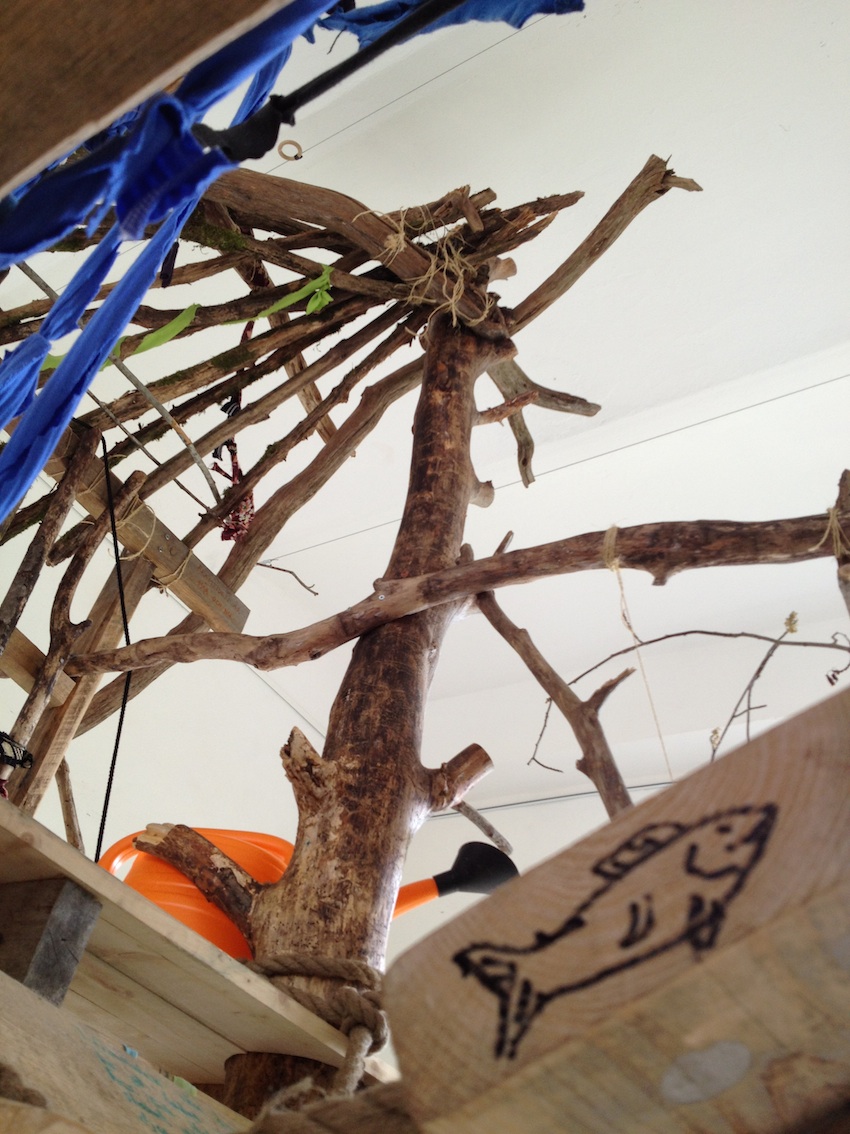
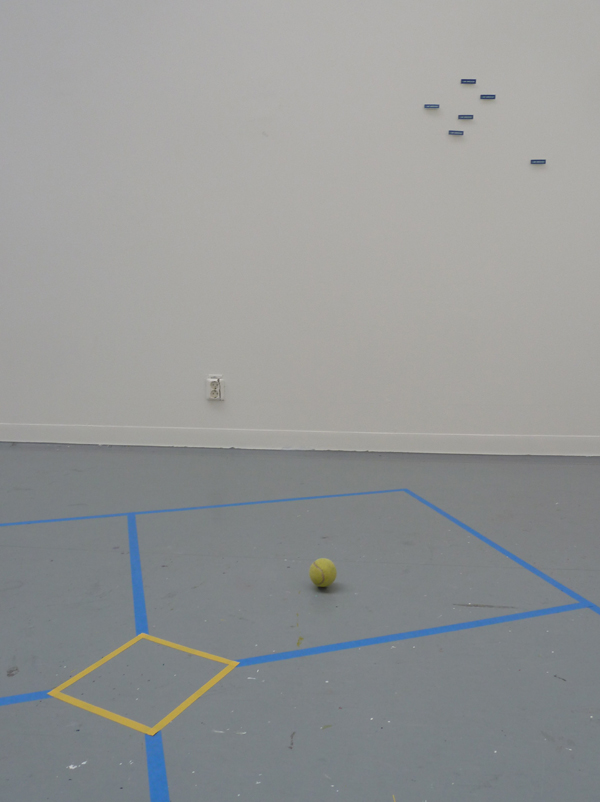
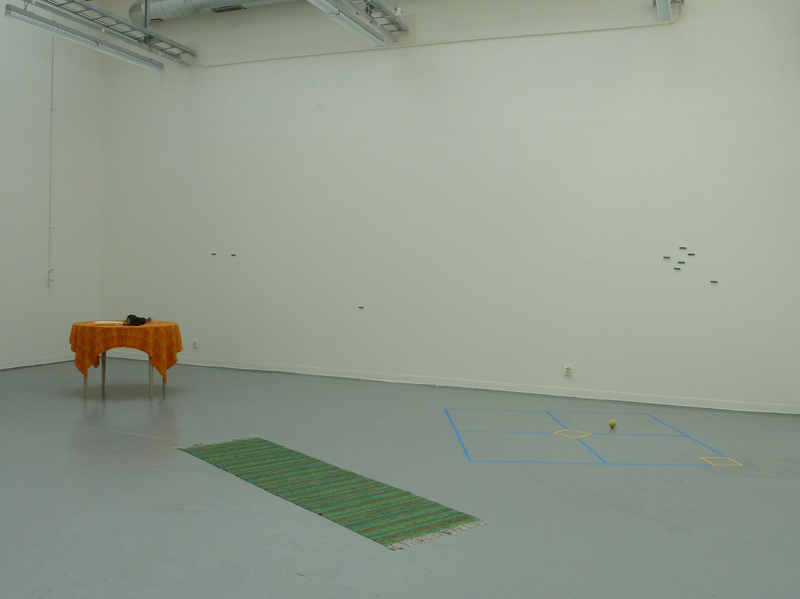
Future policy Gnestopia, artwork by Kultivator at Art Lab Gnesta

Sunday July 22nd was the last day for Gnestopia; it had then been alive and growing for six weeks in our exhibition space at Art Lab Gnesta. It was conceived and constructed by Kultivator – an experimental cooperation of organic farming and visual art practice based in the rural village of Dyestad, Sweden – in collaboration with Gnesta 4th- and 5th-graders. Since the opening in early June, visitors have added their specific thoughts and wishes for the future and seeds have grown to blossom and fruit.
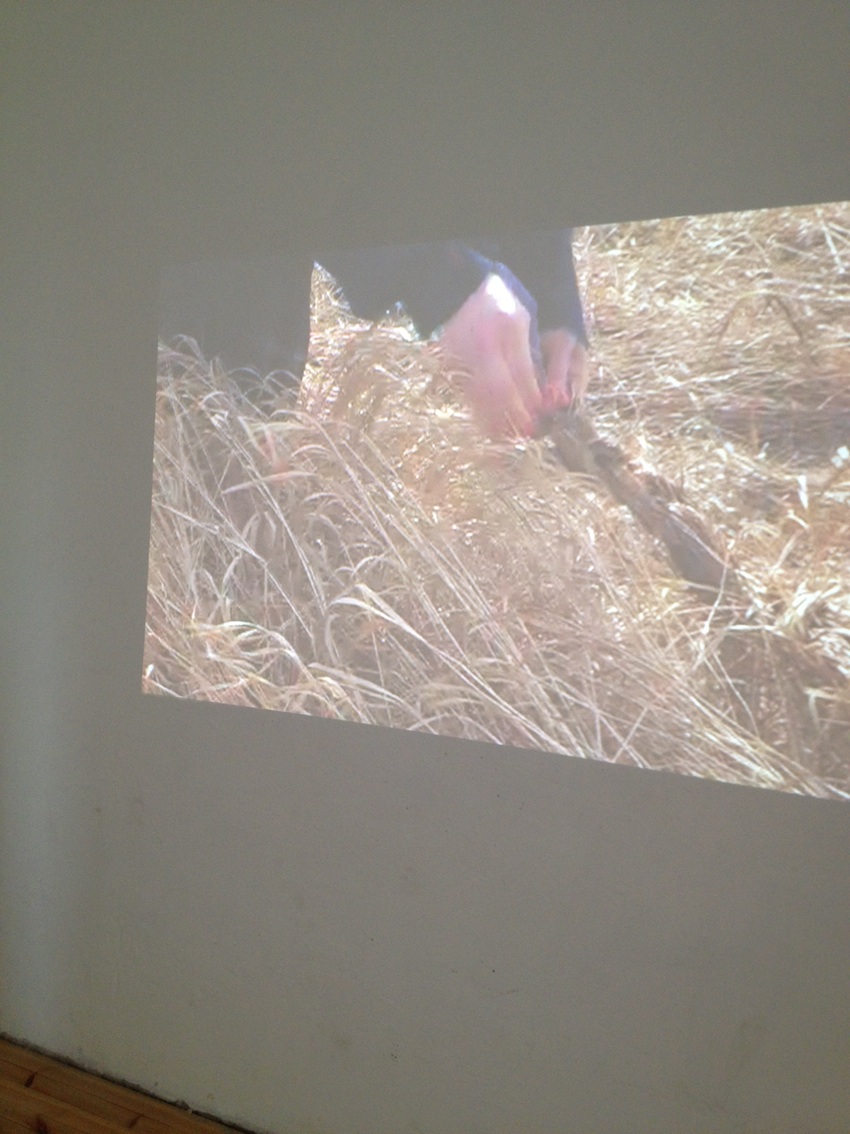
The playful, optimistic mood of Kultivator’s three-dimensional policy document was matched by the subtle and anti-monumental qualities of Grassworks, a video by Emma Göransson. Two hands braiding grass at the shore of a lake, a single voice humming; a celebration of the repetitive, the impermanent, the scarce, the indomitable.


Grassworks, video by Emma Göransson at Art Lab Gnesta

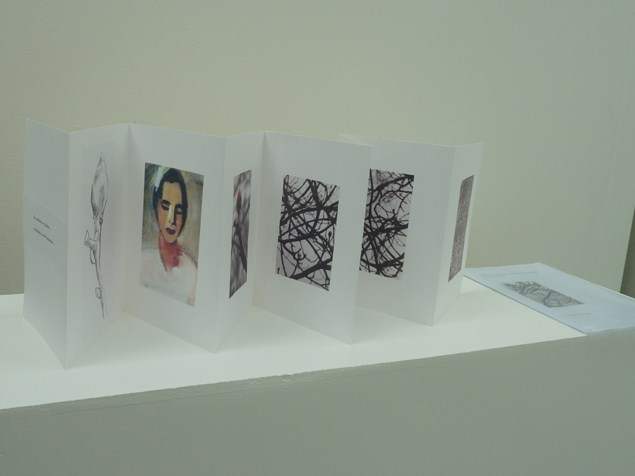
Oh, did I forget to mention Fält (“Field”)? It’s the brand new magazine launched by Art Lab Gnesta; first issue reflecting Green Year 2012 in a summertime mood. A large number of photos – from different photographers, sites and projects – produce a flow of blue, orange and green shades through the pages, while texts (in Swedish) provide food for thought, literally: on food-making as art, mindfulness and a middle-class lifestyle project; on long-term experiences from local biodynamic farmers; also about the Finnish art-and-forest initiative of Mustarinda, about a Mongolian yurt on a tiny island in lake Frösjön, and the mind of the osprey… Here’s the link:

Fält

Artistic Research Processes III

art, recent work

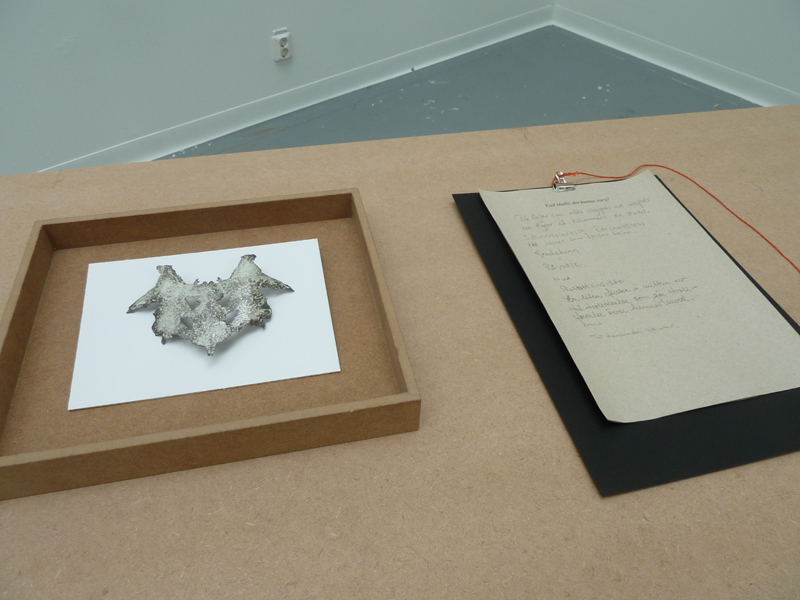
Agnieszka Knap: What Could It Be? – enamelled copper plate object (one of four)

From ritual performance and classical horse dressage conceived as art, to interpretations of ambiguous images… The second day of examination continues with What Could It Be? Of jewellery and perception; a project by Agnieszka Knap, invoking the spirit of psychiatrist Hermann Rorschach and interconnecting craftsmanship, perceptual processes and psychoanalytical psychology. Four out of the ten inkblot images that constitute the Rorschach test have been transformed to three-dimensional objects, cast in multicoloured enamel on 0.1 mm copper plate – thinner than eggshell – and the written text reflects (upon) the process of meaning-making as a parallel to the making of an object.

Gert Germeraad: Rationality, Intuition and Emotion

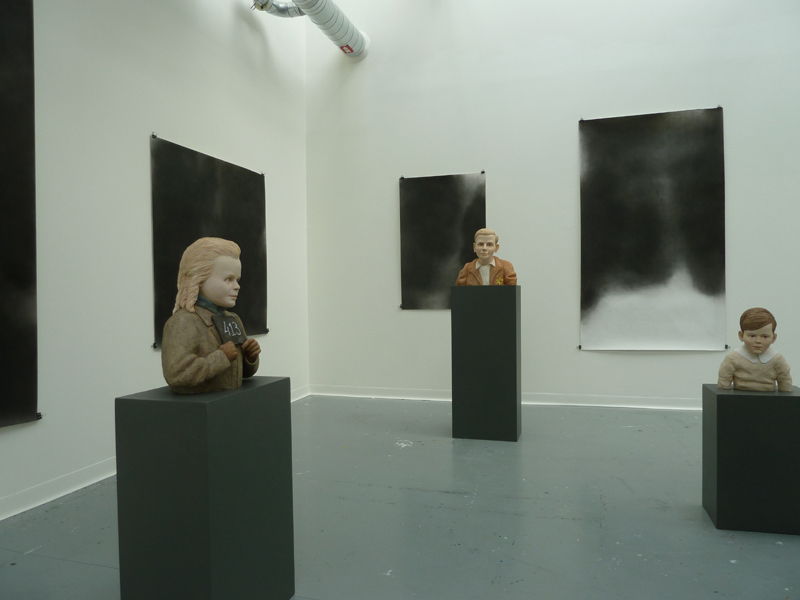
The title of Gert Germeraad’s work could have been a running head for the exhibition as a whole; his own project, a labour of empathy and sincerity, combines sculptural representations of French children disappeared in Auschwitz with large abstract drawings and a profoundly personal text. The three sculptures are modelled in a detached, non-modernistic manner, by adapting measures taken from photos of the lost children. The drawings – there are four of them – similarly vary in size. Text, drawings and sculptures together establish a space of utmost darkness pervaded by light and love.


Ivar Sviestins: Reflections on the Global Photo Project

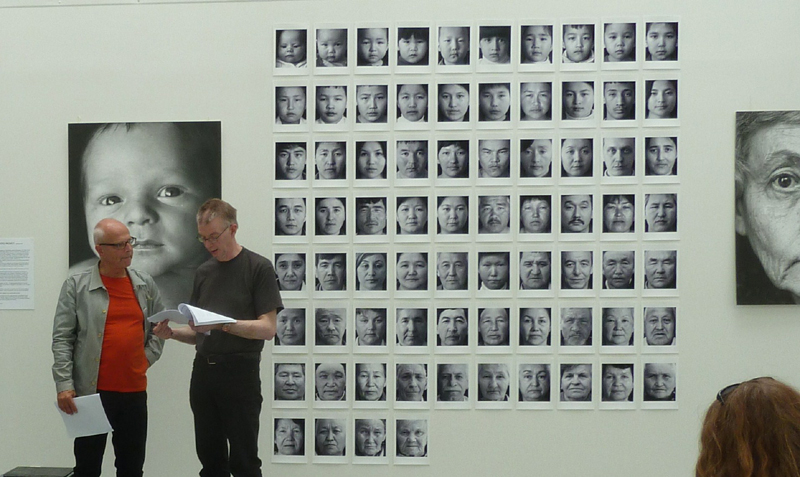
Ivar Sviestins is the photographer behind the Global Photo Project, representing nothing less than humanity itself in a reverse motion of statistic numbers back to individual human beings. The series of portraits picture citizens of a specific country; the choice is made to match the country’s life expectancy data, the framing is strict. And again – paradoxically – the impersonal, almost rigid, set-up helps to uncover the dignity of each person. The course project takes this one step further, through a set of animations; artistically exploring relations between the individual and the collective, between the portrayed person and the beholder, between the moment and the flow of time.
The last examination work, the video installation Whitewash by Antonie Frank, also touched on personal identity and human rights issues; her starting point is her native Canadian origin, only recently recognized. Two video projections were displayed simultaneously, literally down-to-earth, on the lowest part of two adjacent walls, a third one hovering above; black-and-white newsreel cuts, featuring First Nation people of Canada and the US, alternating with freshly made interviews with native Canadians reflecting on their stolen history.

The themes keep coming back, reappearing like the strands of a rope.

Artistic Research Processes II

art, recent work

Examination in the Artistic Research Processes course; thirteen participants of different artistic professions, inquiring into thirteen distinctly different life-worlds. During the first day of examination, topics ranged from encounters with Romani people in Stockholm to a dinner with spirits.

Auli Laitinen: In my Nature

Auli Laitinen works primarily with jewellery as a catalyst of thought, dialogue and interaction; in her project, brooches inscribed with the English text “I AM SWEDISH” were worn by a number of people for some weeks of everyday life. The examination installation and text, and the following discussion, circled sensitively around related experiences  of complex identities.
Identity-making was also a main theme in Angelica Harms’ interviews and photos, picturing Romani men and women of different origins in various settings and social positions and discussing the majority population’s attitudes towards Romanies.
Arne Widman’s exhibition The Symmetry of Being (co-produced together with Magnus Carlén) was on display this spring in one of the major churches of Stockholm; the light and flow of the exhibition seemed to permeate his examination text, turning it into a prose poem.
Also the project of Madeleine Aleman took place in a very specific setting, namely the summer house of Emanuel Swedenborg. Here, a leitmotif in her personal biography found an unexpected artistic articulation; Madeleine Aleman’s own grandfather was a pastor in the New Church of Swedenborg, and during a performance (captured on video by Antonie Frank), the spirits of Isabelle Eberhardt, C G Jung and Emanuel Swedenborg himself were invited to an exquisite dinner and addressed in speech and sound by the artist.
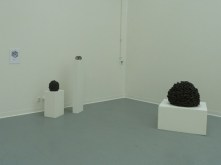
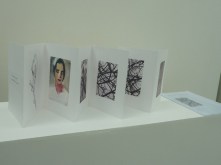
Sophia Rilby: Picturing the picture

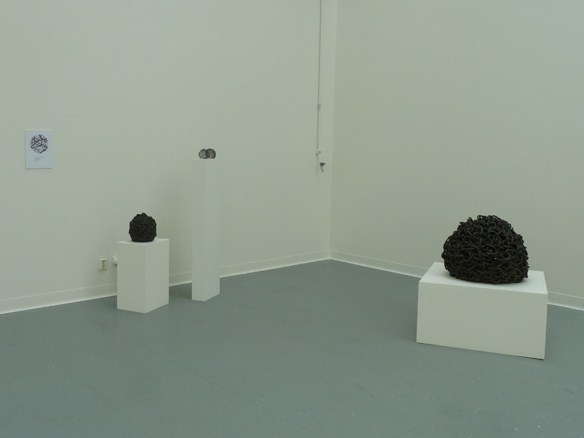
Deeply immersed in the process of shaping a material, the work of Sophia Rilby evolved as a study of growth, folding and closure – employing metal wire and strings of clay much like phonemic units in a developing artistic language.

Lena Oja: Dialogue on Equestrianism

Lena Oja’s project was to ride a horse from her homeplace (some 70 kilometers north of Stockholm) to Konstfack, to end up by performing a dressage program in the very space pictured on this photo. The installation – comprising her text printed on waste paper and glued to the wall, with an empty rostrum placed in front – literally re-presented her action, ardently communicating the essentiality of art.
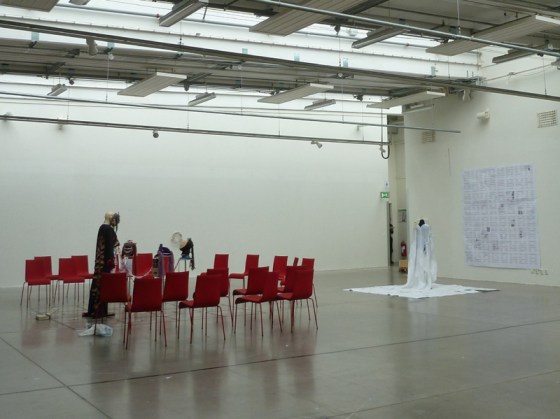
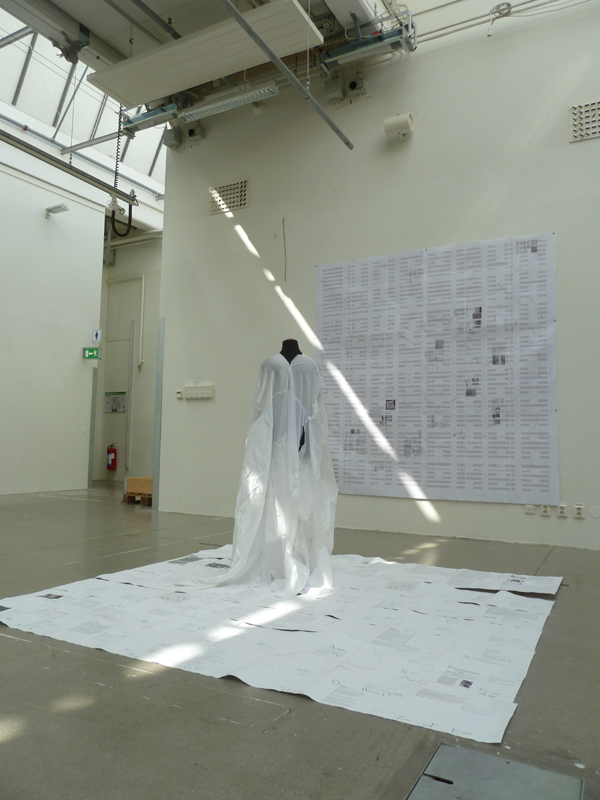
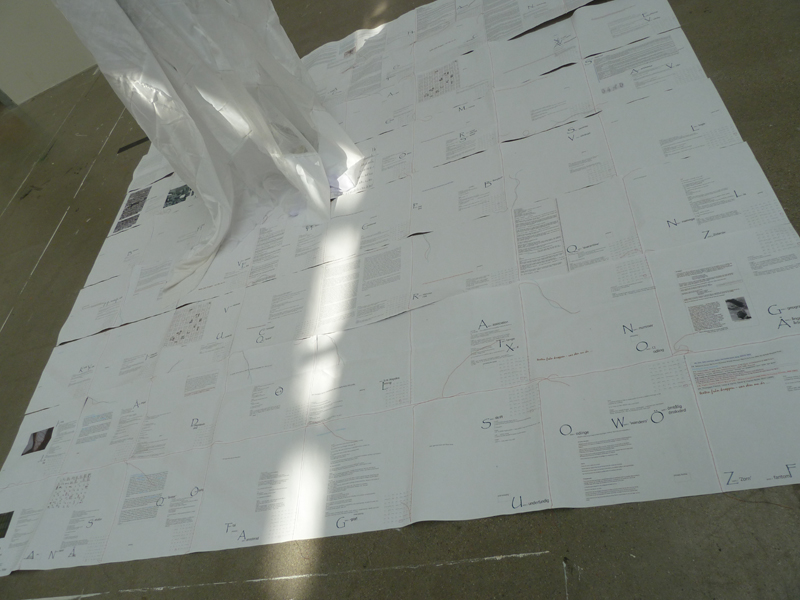
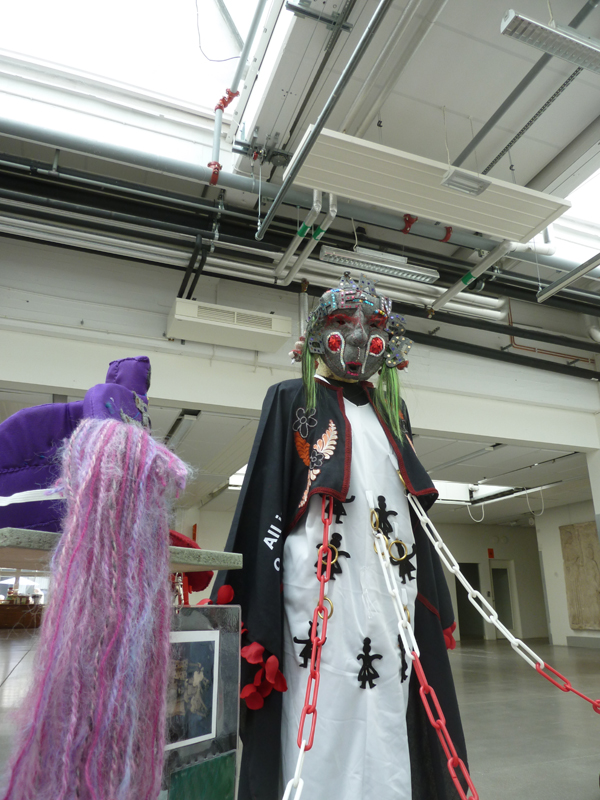
Ana Maria Almada: masks for ‘Juku’ ritual performance, and Anna Odlinge: circular cloak and patterns
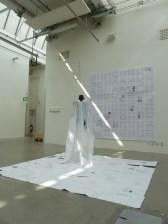
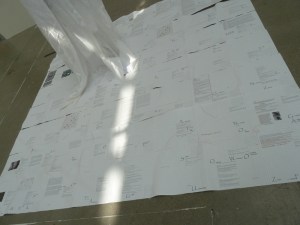
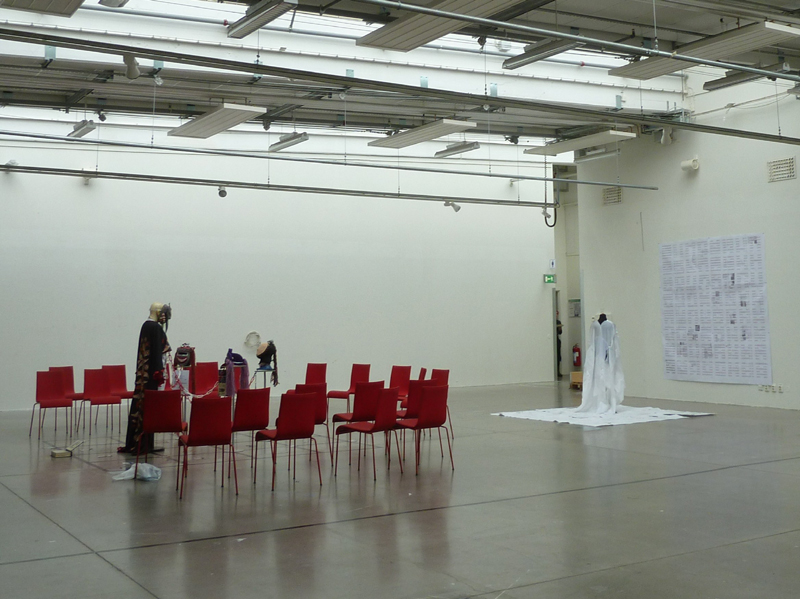
With the mind of a contemporary encyclopaedist, Anna Odlinge collects and arranges constituents of knowledge – superposing graphic patterns such as the Yi Jing/I Ching hexagrams, the squares of a chessboard, star maps and capital letter initials. At this stage of the process, they generate floating relations open to meaning-making through dialogue, and at the same time seem on the verge of being soaked up into a circular white cloak.
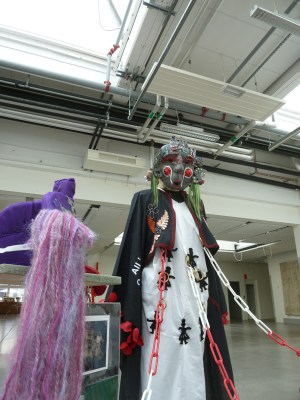
Ana Maria Almada’s creation of a healing ritual – ‘Juku’ – started out by crafting carnivalesque masks and costumes. By their use, a ceremonial place outside of normal time and space could be established, and a choreography involving four persons was performed to express and integrate experiences of enclosure, partition and loss.

Artistic Research Processes I

art, recent work

This course, given at Konstfack University College for Arts, Crafts and Design during spring 2012, has been nothing less than a gently evolving artistic coming-out – for me, and for a number of my fellow participants as well. Course seminars fused clear-eyed analysis with integrative dialogue; a mental space where, recurrently, deep artistic and intellectual challenges were perceived – much thanks to the encouraging emotional safeness. A valid theoretical and practical context elaborated underway, by means of individual art-making interleaved with lectures, talks and workshops. All thanks to professors Emma Göransson and Roland Ljungberg, who settled the premises – a work of Quality, if any. And, in the next step, also thanks to the extraordinary group of participants, each one responding with full professional experience along with empathical and analytical skills: Agnieszka Knap, Arne Widman, Ana Maria Almada, Angelica Harms, Anna Odlinge, Antonie Frank, Auli Laitinen, Gert Germeraad, Ivar Sviestins, Lena Oja, Madeleine Aleman and Sophia Rilby.

From the studio – preparing for examination.

My own contribution is, mainly, a series of meditations; re-experiencing the artistic process as such and trying to capture verbally the situations where artistic choices are perceived – mapping the grounds for decisions made. Here I’m deeply indebted to Robert Pirsig’s discussion on Quality (in his novel Zen and the Art of Motorcycle Maintenance), and I further attempt to establish a discursive bridge between art as action and method and the cultivation of introspective analysis in contemporary science. The text is written in Swedish, and will be available in Swedish DIVA database within short – as will the texts from the rest of the group.
Here are two links to a scientific forum for research on related topics:

Journal of Consciousness Studies

Journal of Consciousness Studies (archives)

Just for fun

recent work, time-out

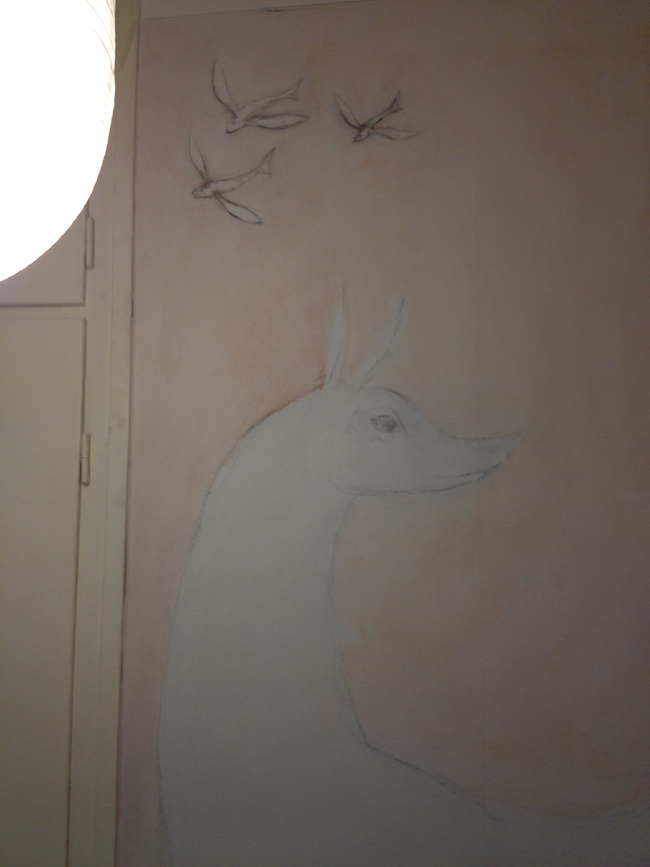
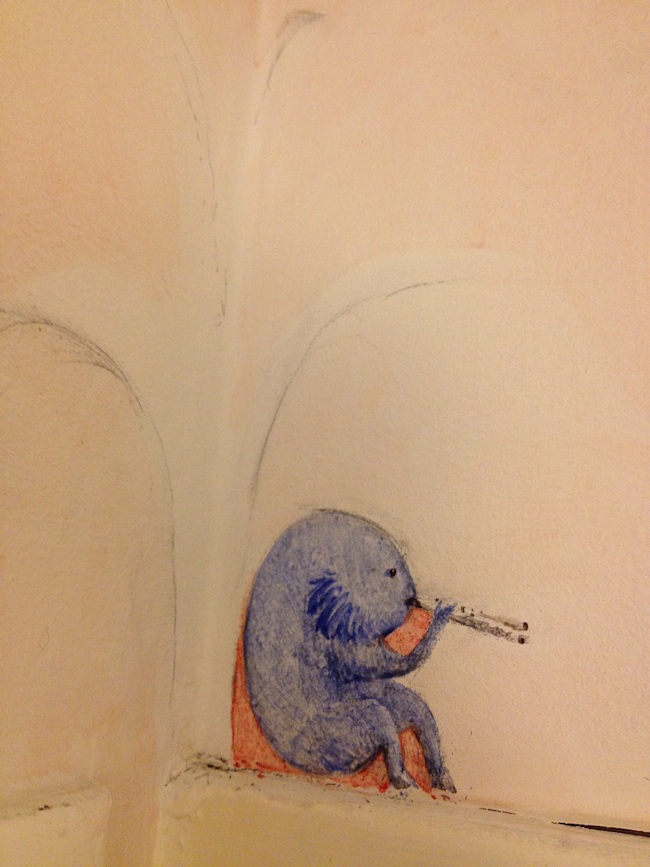
sketch for a wall painting, graphite pen and wall paint

Painting on the walls in my beloved daughter’s and her loved one’s new home. Just for the fun of it.
Otherwise, there’s a lot of things on the agenda; I just finished a school project at Art Lab Gnesta, and now we’re hosting art and agriculture collective Kultivator in the old Brewery building. As for my own artistic work, I’m now turning to text-writing, since I’m again doing a course – Artistic Research Processes – at Konstfack University College of Arts, Crafts and Design. And then there’s the studio work, part of it related to the same course and part of it preparations for an upcoming exhibition in Japan.

All my pleasure.

diary painting XXVIII

art, recent work

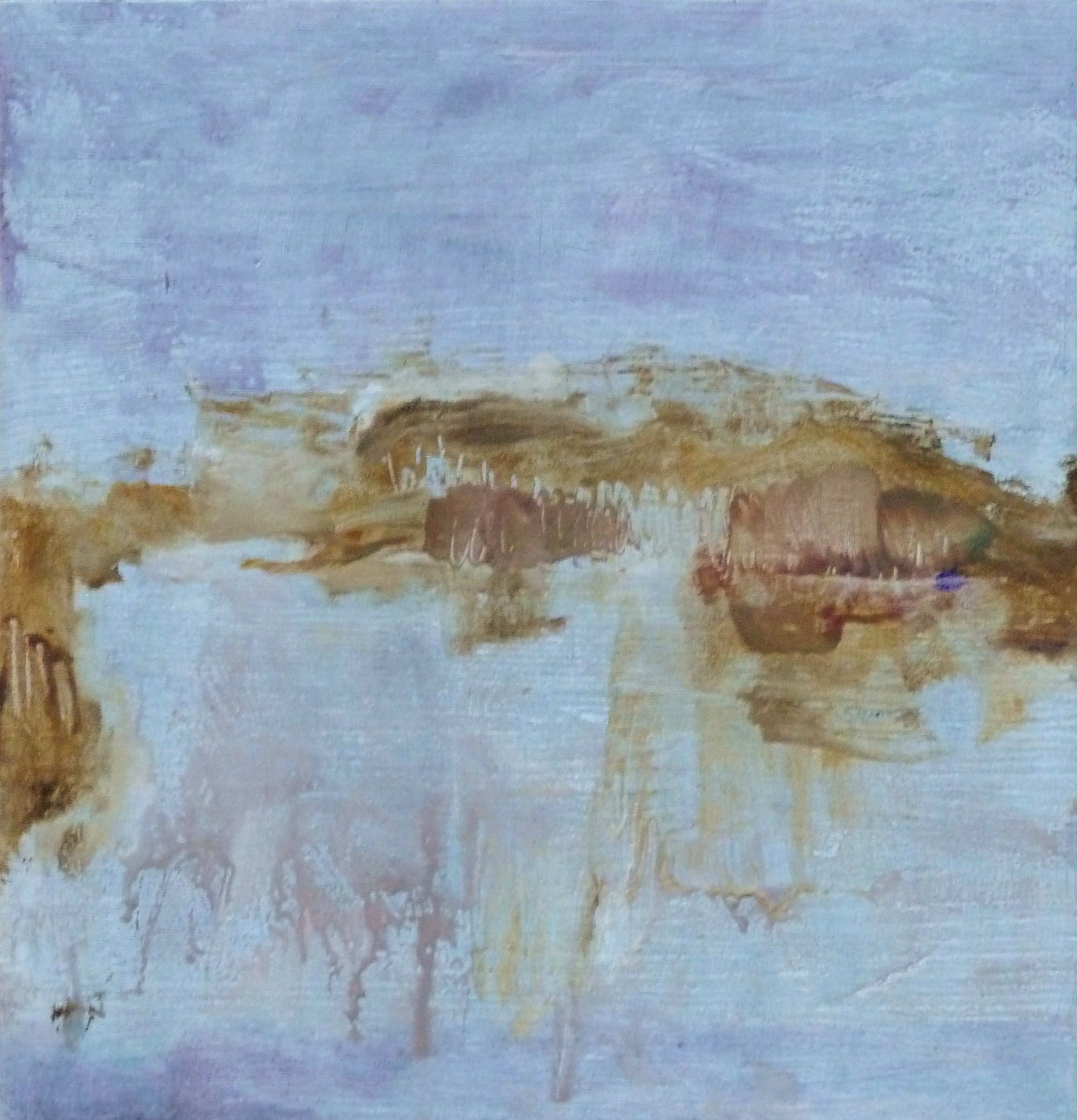
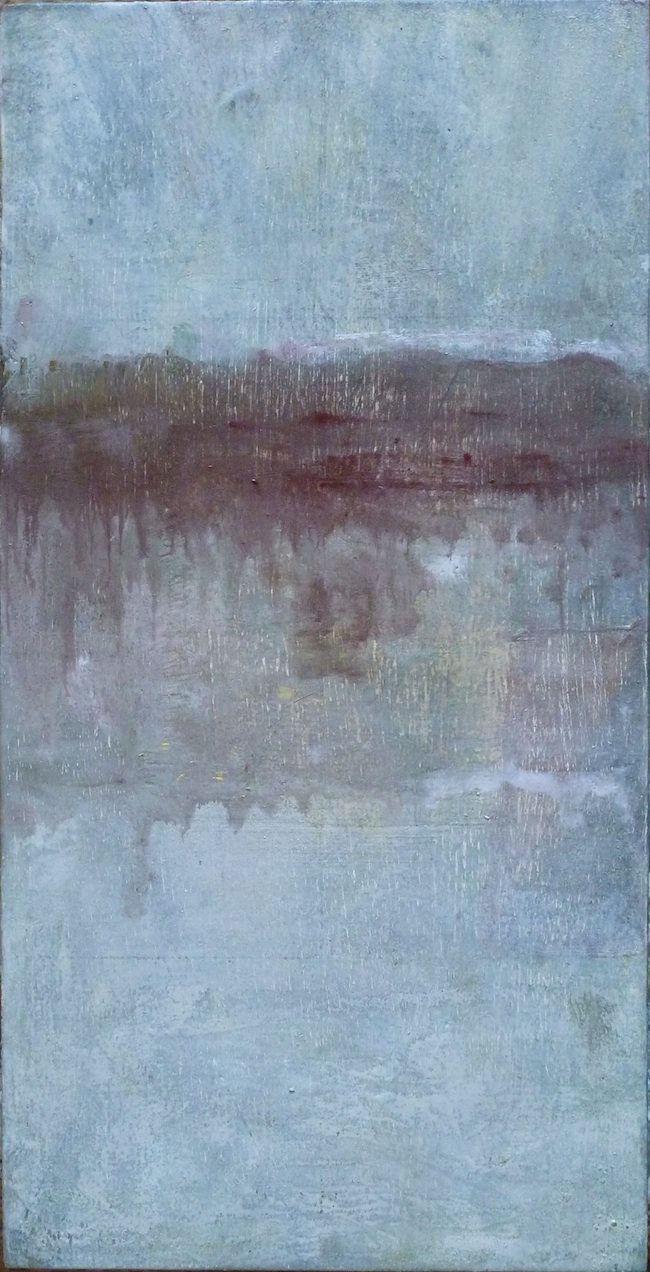
120306; oil on wood panel

“Perhaps one of the greatest riddles of human nature is this: today we are discovering that we are really beings of becoming inhabiting a universe of becoming. So why are we always looking for eternal un-becoming? (…) what if matter, ground and existence is nothing solid, fixed, dead forever, but a living and creative event?” – Yeshayahu Ben-Aharon

after Turner

art, recent work, time-out

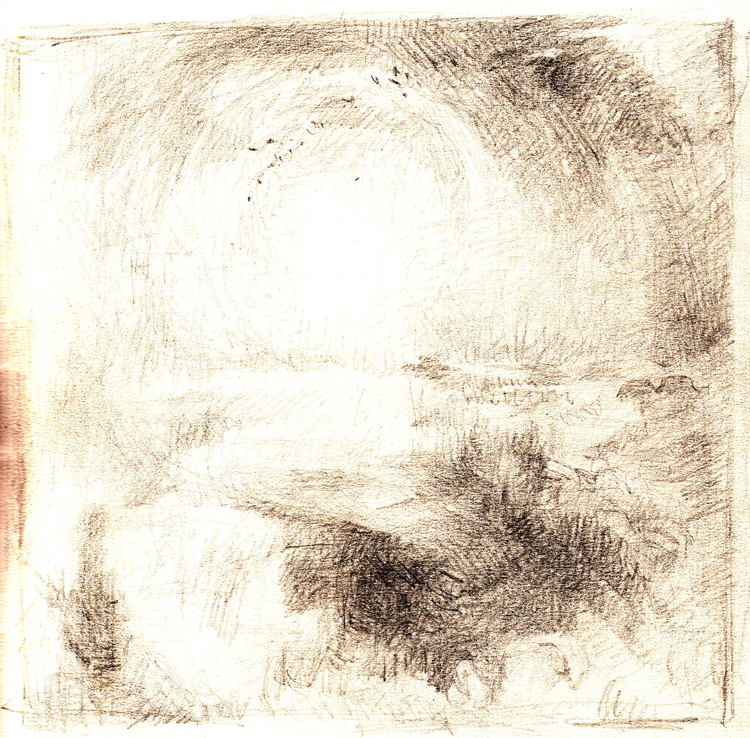
HHW. after Turner, “Shade and Darkness — the Evening of the Deluge”; graphite pencil on paper

The complexity of  JMW Turner’s work is stunning and miraculous. Yesterday, I spent some hours with a couple of them, pencil in hand.
It was the next-to-last day of the Turner/Monet/Twombly exhibition at Moderna Museet (Stockholm); queuing started before opening, and hundreds of people filled the exhibition space. Yet the atmosphere was relaxed, friendly – the museum guards attentive in a quiet, kind way; the public taking turns in looking closer or from a distance at the paintings, giving each other time and talking softly under their voices; and the murmur had a warm tint to it. Several times, I heard dialogue develop between strangers, and also got involved myself.

This is just how it should be. Turner’s painting doesn’t give itself away instantly. There is always more to see. Composition is often powerful, compelling, and works at first sight. Then, if you stay with the images, they deepen and evolve on different levels; figuratively, choreographically, materially, spiritually.

HHW. after Turner, ” ‘Light and Colour (Goethe’s Theory) – the Morning after the Deluge – Moses Writing the Book of Genesis'”; graphite pencil on paper