Mapping Praxis VII: Maps and Legends

art, recent work

The Praxis study circle continues to inspire and inform my work with Mapping Praxis. By now, we’ve read a sequence of books from the 12th to the 16th centuries; texts that have mirrored and shaped the beginnings of modern-times’ colonialism. During the same period of time, a rapid development of mapping techniques took place, providing tools for the subjugation of non-European cultures and the following extraction of resources.

Guillaume le Testu’s 16th century map of Brazil (featured in the previous blogpost) pictures an archaic landscape where dragons dwell together with monkeys and other animals, and naked men are all at war with each other – sometimes molesting helpless victims, dismembering and burning them alive; a representation of indigenous peoples as blood-thirsty pre-humans in a paradise turned hell. There’s only one person sporting a dress (perhaps made from leaf foliage, following the example of Adam and Eve). She is the only woman depicted, and she also carries a crucifix as she strides confidently towards a naked, but seemingly grateful man… On the same map, the arrival of Europeans is marked by a ship with billowing sails at sea, and shining cities adorned with pennants along the coast. In reality, it was the Europeans wreaking havoc and committing genocide in the Americas as well as in Africa; le Testu’s visualization can be seen as pure and unashamed propaganda – a kind of pre-digital deepfake.

Today, the strive towards decolonialisation has sparked initiatives of counter-mapping / counter-cartography, in science and activism as well as in art.

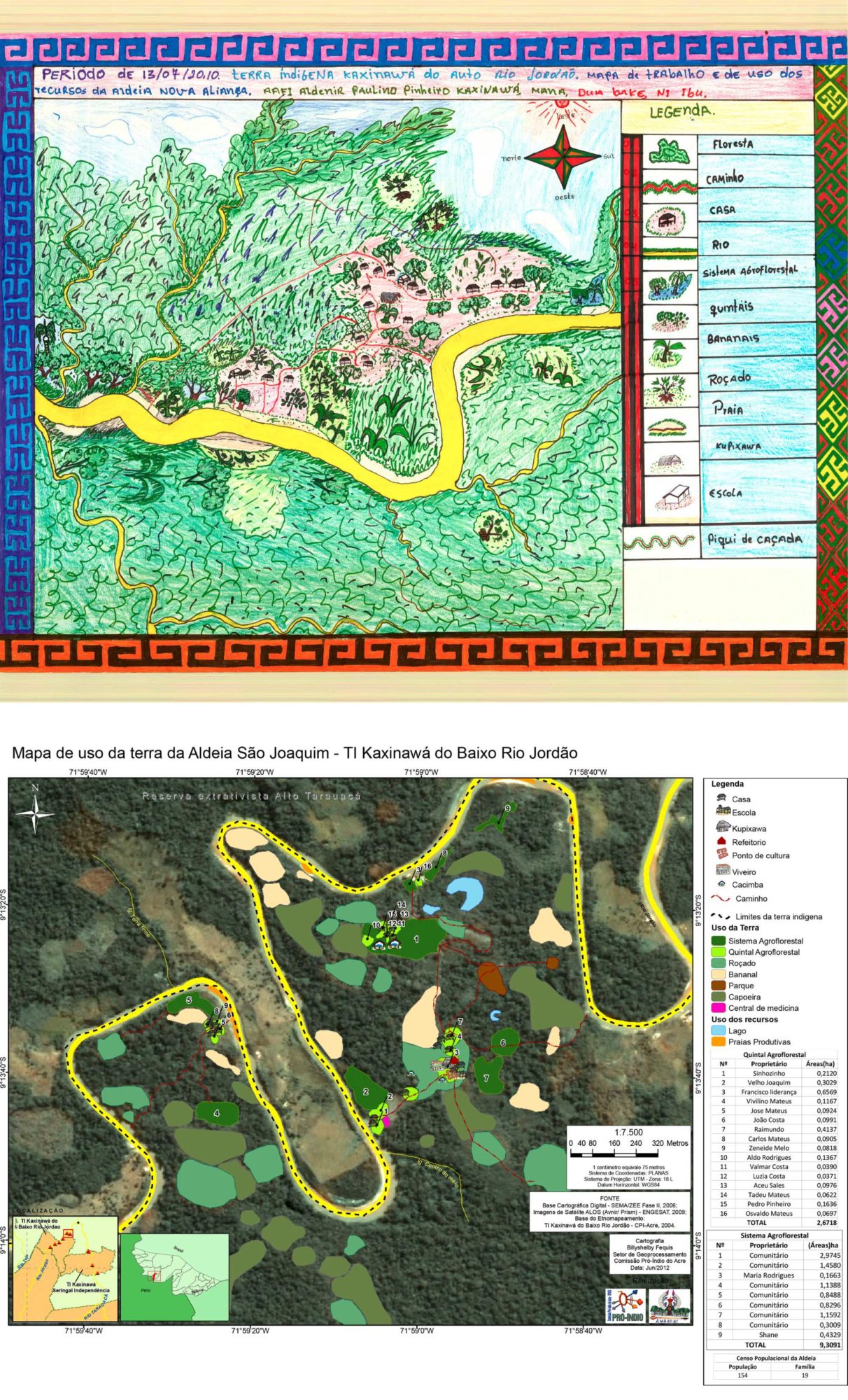
acre-original-1-1212x2000Two maps from ‘Indigenous Cartography in Acre​. Influencing Public Policy in Brazi​l’ (via This Is Not An Atlas)

These are two contemporary maps from Brazil – part of the outstanding collection of counter-mappings known as This Is Not An Atlas by German kollektiv Orangotango. They are illustrations from a project by the organization Comissão Pró-Índio do Acre (the Pro-Indian Commission of Acre), which has been working since 1979 to support indigenous communities in the state of Acre. In contrast to a colonizer’s map, these ‘ethnomaps’ are tools for de-colonializing the mind as well as the land.

The ethnomaps made by indigenous communities are important planning tools for the protection, conservation and
management of natural resources. They fill the void of information found on official maps. They also expose
opinions, ideas and aesthetic preferences. Furthermore, they are a powerful tool that can be used for various
political purposes. The maps are also powerful tools to fight for certain claims. The production of ethnomaps
creates the possibility for indigenous peoples to build their knowledge and values on the Indian’s relationship with
‘the other’, thus contributing to the formulation of a future strategy by enabling non-indigenous people to
understand the processes of occupation of geographical space. It also sheds light on social interdependencies
within the economic, political and ecological contemporary world. In this case, the cartographic knowledge of and
for indigenous peoples can be an important advocacy tool within the territory and the cultural and intellectual
heritage it depicts.

Renato Gavazzi, Indigenous Cartography in Acre​. Influencing Public Policy in Brazil​

There’s a lot more to gather from the website of This Is Not An Atlas; especially, I’ve looked into The Counter Cartographies of Exile, a community project which took place in Grenoble (France) in 2013. It brought together thirteen asylum seekers, two geographers and three artists, using multi-disciplinary methodologies to bridge the divide between immediate experience and communicative skills. Starting out from the intention to open a creative space of hospitality, and to breach some cartographic norms of migratory representation, the project evolved over time. In the end, the maps came across as ‘trajectories of memory’ – neither true, nor false.

Counter-Cartographies of Exile

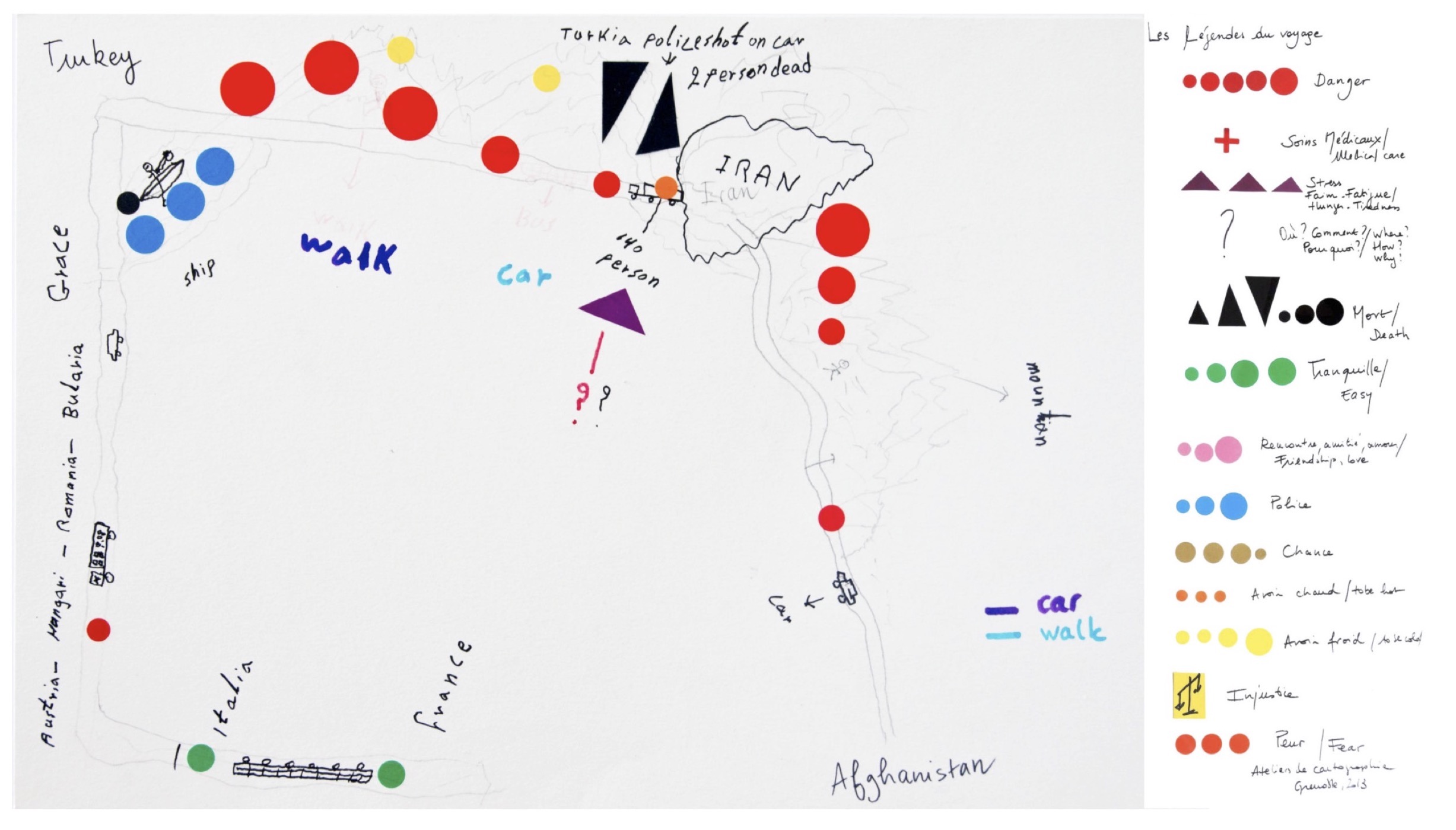
‘From Afghanistan to France; The Counter Cartographies of Exile’ (via This Is Not An Atlas)

From Afghanistan to France
The map presented here […] sketches a trail of exile from Afghanistan to France. It was created
by H.S*, who was seeking asylum in France when we met.
[…]
The map’s zenithal view makes it possible to understand the places and the distances involved at a glance, but it is
not the only perspective that is presented. The map is also drawn from ground level, using the path pursued, and
from inside the trailer behind a truck. In the frontal view, the mountains around Afghanistan and Iran break with
the zenithal perspective, and so do cars, trucks, boats and an individual on the road. Returning to ground level, one
perceives the space as a landscape of displacement for H.S., who represents himself in his work. This map blurs the
dichotomy between the map as a grid and as a route.
[…]
This map of exile is not the creation of a totalizing eye; it is also seen from below, from the walking point of view
and the multiple practices and tactics used to cross geopolitical borders. In this sense, From Afghanistan to France subverts the conventional and normative maps of migrations and nation states.
[…]
In addition, From Afghanistan to France is not only a cognitive or mental mapping. In order to read the map, it is
necessary to read the map legend (see map at the end of the article). Here the different symbols do not represent
rivers or settlements; instead, they symbolise the fear, danger, police, injustice, friendship, love… encountered en
route.​

*The use of the initials has been decided by the person itself.

Counter Cartographies of Exile

The last section of this quote highlights the use of map legends (keys) as a visual meta-level; a means to clarify the context, the values and priorities of the mapper. This is something that I bring into the Mapping Praxis project – which also, by the way, is a process evolving through continued dialogue, deepening over time.

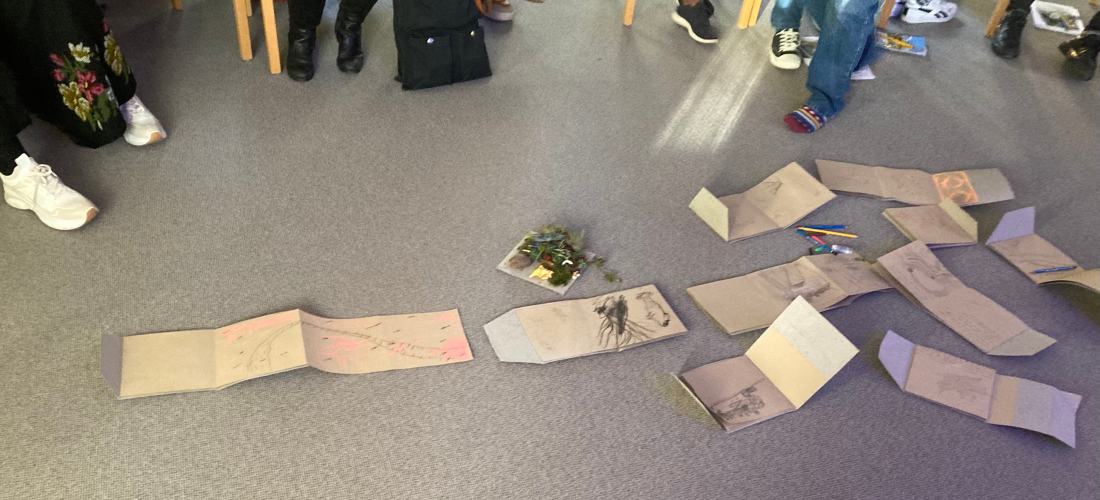
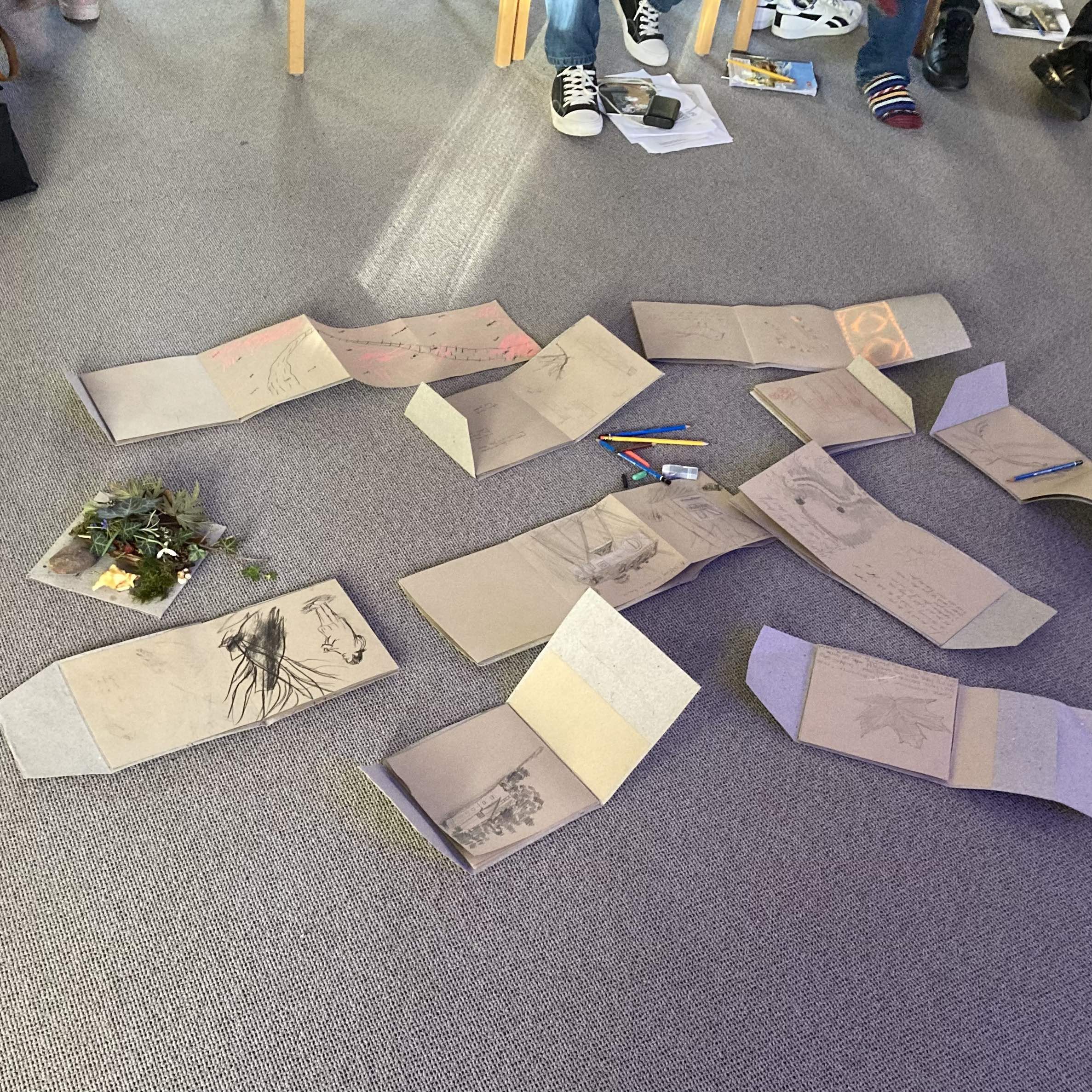
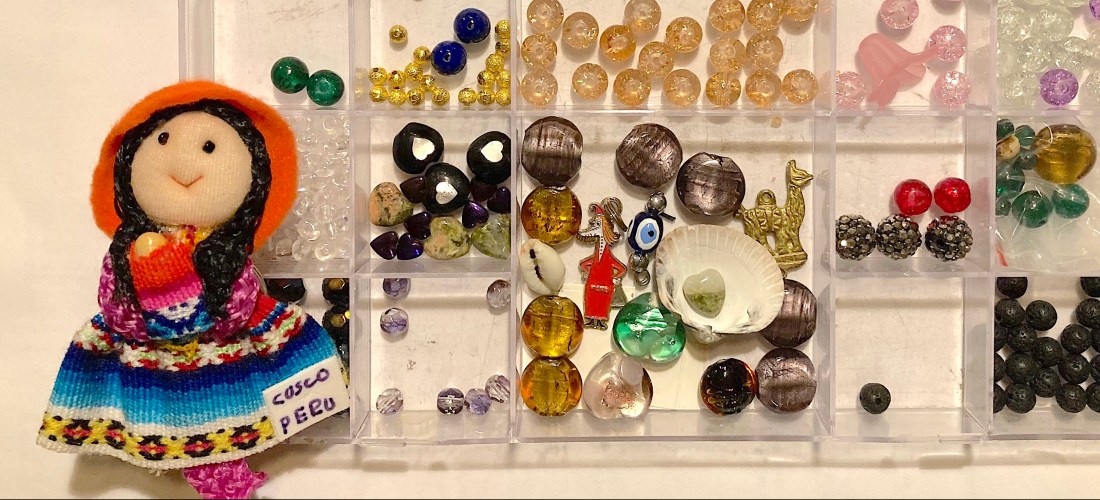
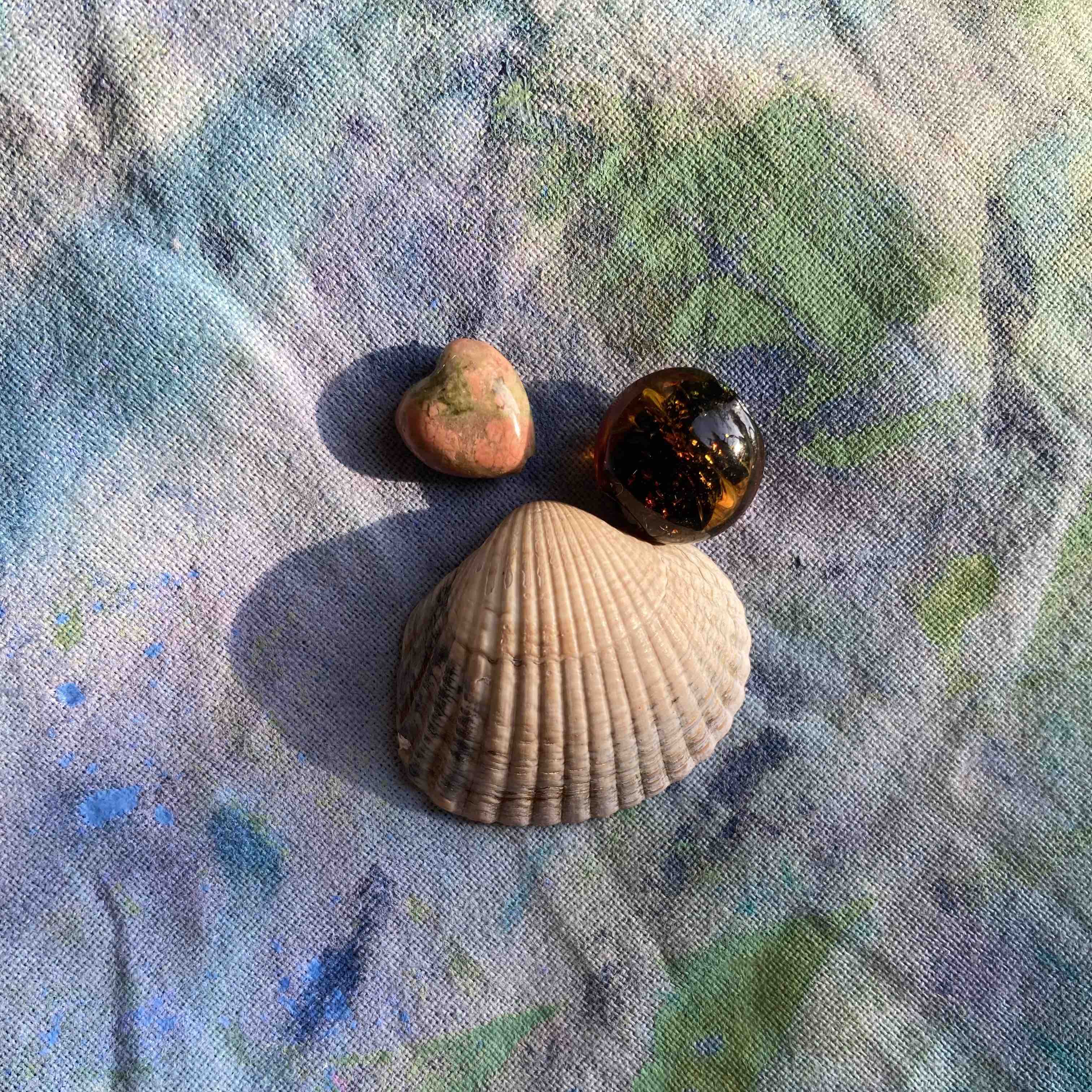
Assorted small objects; Mapping Praxis resources, work in progress


Praxis of Social Imaginaries, Summer Session 2024 @Løgumkloster II

art, recent work

What stays with me now, from the work of this summer session?

I remember the many scenes of unbearable cruelty, committed by the Spanish conquistadores and described in the book of friar Bartolomé de las Casas; and also the absence, throughout his text, of genuine encounters between the author and men and women of the indigenous. Nevertheless, he advocates their right to human dignity and eternal life through Christ. Maybe las Casas – acting in the name of God – kept his eyes so firmly set on the realms of afterlife that he didn’t really perceive the persons in front of him.

I remember the exercise we carried out in pairs, silently observing each other while recalling our first encounter; the recognition and tenderness of the moment. And then, the following actualization of another first encounter: a recorded reading of a document conceived in 1513, by which the conquistadores proclaimed the authority of the Spanish king over the land they were about to conquer. The very act of reading this Requerimento aloud – in Spanish – on any shore where they set foot was taken as a justification to kill, loot and ravage without restraint.

Excerpt from Guillaume le Testu’s Cosmographie Universelle selon les Navigateurs, tant anciens que modernes
(1555/56); illustrated map of Brazil (left); detail (right)*

I remember the words of my fellow participant from South Africa: colonialism is still here.

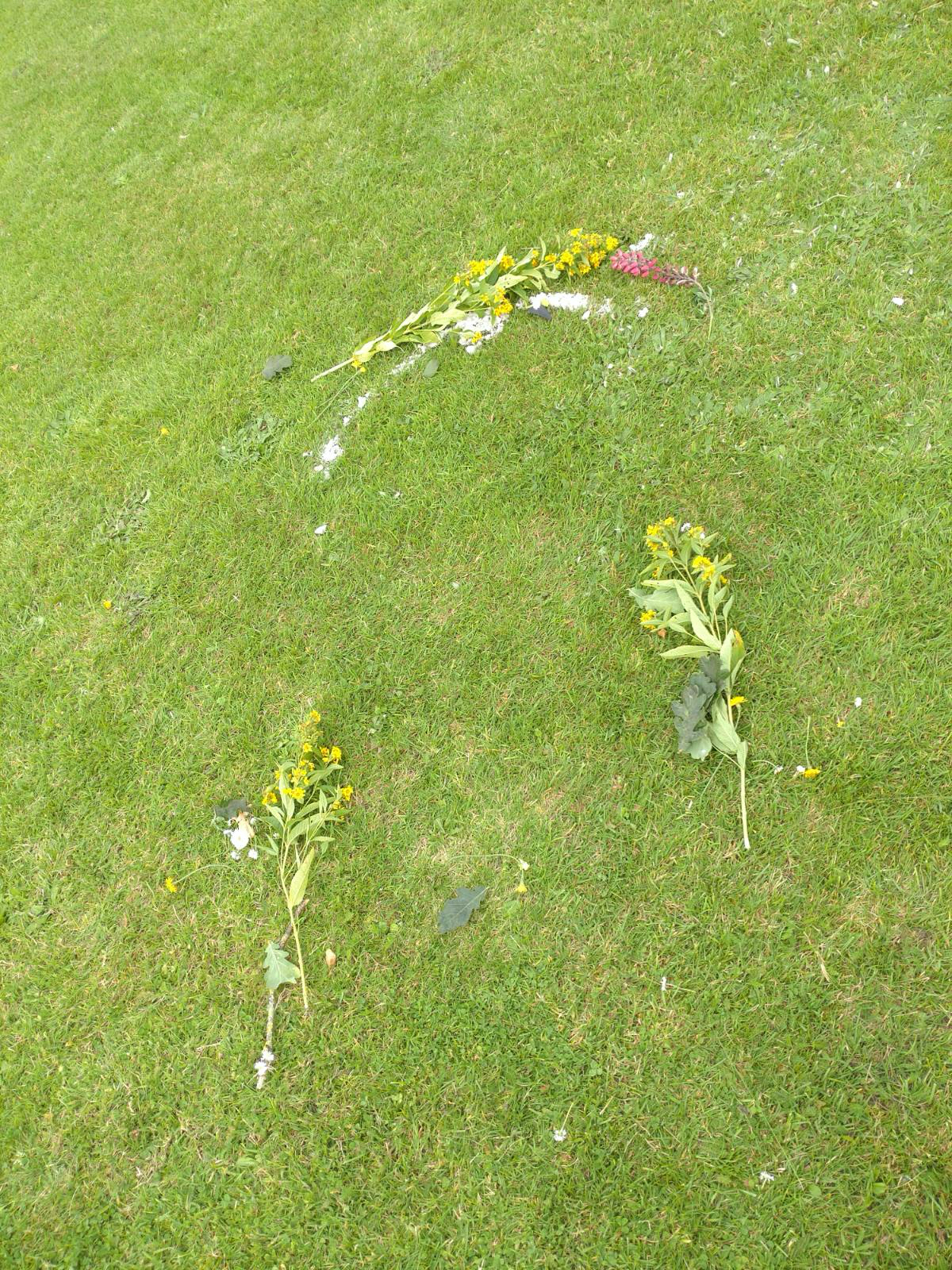
I also remember images from contemporary dance performances in Mexico; the mixture and fusing of traditions, spun around mythical events and historical figures from both sides of the Atlantic – an in-between space of creativity, pride, grief and resistance. And I remember the group’s (re)enactment of a Mexican mourning ritual: one of us acting the deceased, resting on the ground; the others bringing flowers, colourful pieces of fabric, and whatever we could think of to symbolize respect and appreciation; laying the objects down to adorn him, and thereafter weaving him an invisible canopy of words of affection.

2024 07 ES 03
…and now, he’s gone; photo credit Essi Nuutinen


* to see more of Guillaume le Testu’s work, go to: Cosmographie Universelle selon les Navigateurs, tant anciens que modernes

Praxis of Social Imaginaries, Summer Session 2024 @Løgumkloster I

art, recent work, time-out

2024 07 LH 01
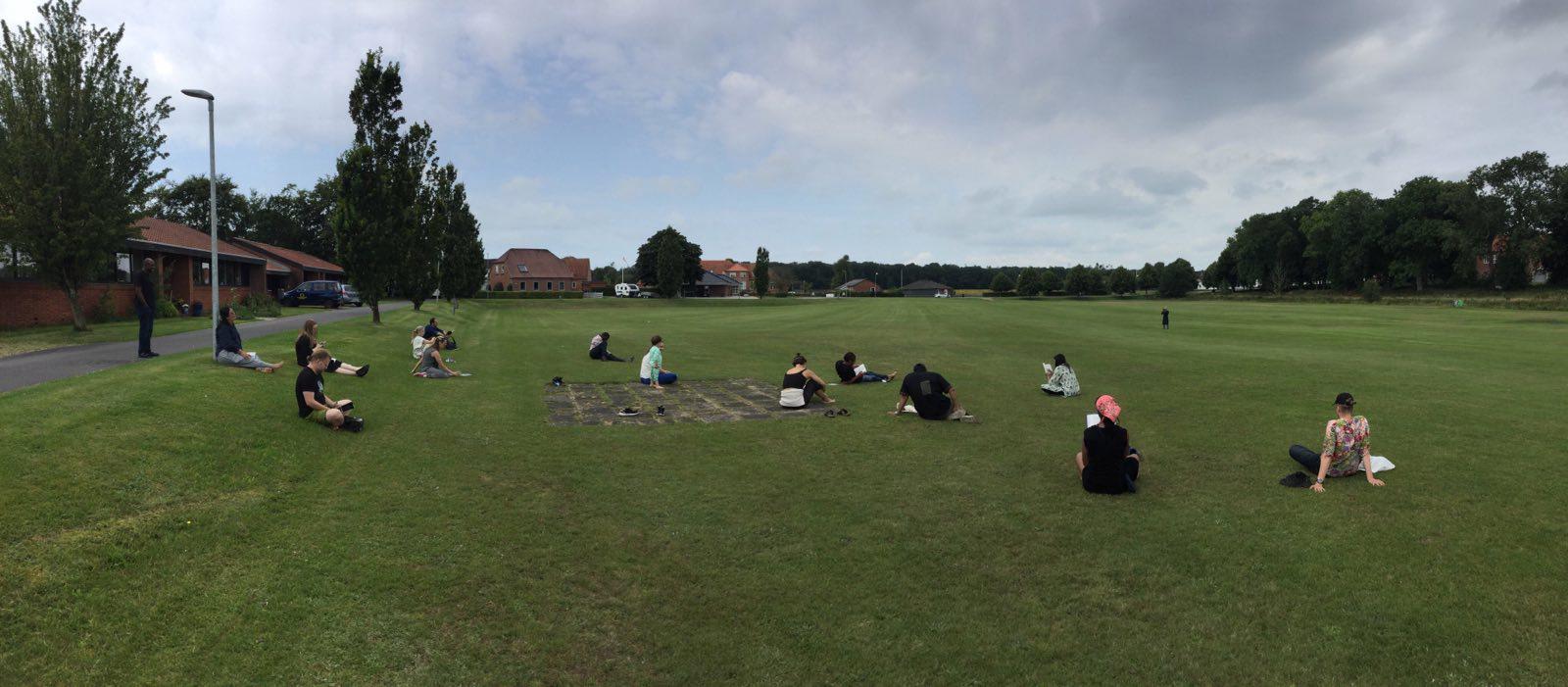
the Praxis group at work in Løgumkloster Folkehøjskole, Denmark; photo credit Laura Hellsten

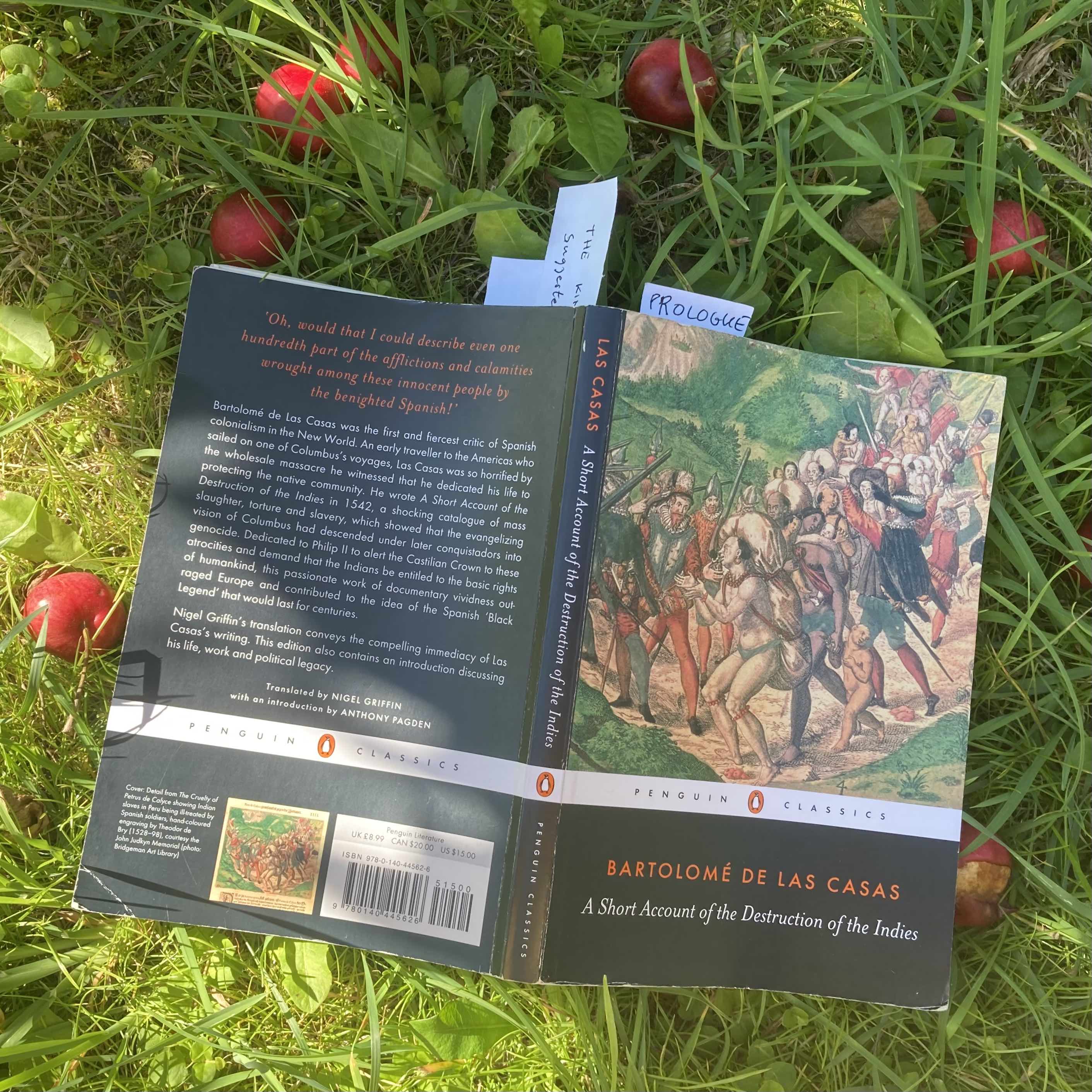
Early August, and I’m landing home after attending the 2024 Summer Session of the Nordic Summer University; after yet another week of working together with the Praxis group (or, more formally:  Circle 3, The Praxis of Social Imaginaries. Cosmologies, Othering and Liminality – one out of ten ongoing study circles within the NSU)… Our focal point this time has been A Short Account of the Destruction of the Indies by Dominican friar Bartolomé de las Casas – a fiery document from the 16th century, intended to alert the Spanish king to innumerable atrocities committed by his conquistadores in the Americas.

A Short Account

Seventeen people came together for this occasion, bringing perspectives from Peru, the US, South Africa, Nigeria, Bangladesh, India, Germany, Portugal, Denmark, Finland and Sweden… Over and over, I feel such a great gratitude for being part of this group – diverse, experienced, and creative as it is; acting together as an instrument for processing the text, even when the subject matter touches on possible conflict lines such as religion, race, or the legacies of colonial history; finding out, along the way, how community research could be conducted in a transdisciplinary setting.

Ever since the study circle began in 2023, co-facilitators Lindsey Drury and Laura Hellsten have offered multiple approaches to the text. This time, participants were actively invited to take the lead for a morning or afternoon class – resulting in reading sessions and workshops staged from very diverse fields of professional experience: for instance, highlighting the text sections about legal structures, or experiences of ‘the first encounter’; introducing complementary texts and imagery from early encyclopedic efforts to document indigenous culture* – thus inviting the group to visual and performative interpretations – as well as movement and mindfulness exercises; not to forget the practises of reading aloud, listening, talking, and writing….

It should also be mentioned, that the Nordic Summer University is open to parents bringing their kids – there’s always a Children’s Circle welcoming the young ones. However, our circle of adults had the great joy of hosting little J. (two years and a half) who preferred staying around his parent. His gentle presence, communicative skills and stunning dance moves gracefully gave us a model for human interplay.

above: dance historian Lindsey Drury presenting documents from the early encounters between the Mesoamericans and the Europeans, along with later and contemporary pictures of mestizo dance cultures;
below: local micro-examples of 20th and 21st century Danish culture

…and if photos are lacking from most working sessions, it may be because then we were all immersed in the actual co-creating of knowledge…


*specifically, the Huexotzinco Codex, the Florentine Codex, the Codex Azcatitlan and the Codex Telleriano Remensis


Mapping Praxis VI: Rob’s Itinerary

art, recent work

Robertho Paredes is an award winning photographer born in Puerto Maldonado, Peru. His itinerary sets out from the Western fringe of the great Amazon rainforest. Trying to track his many travels over the world actually creates a pattern not unlike his own name signature!

Setting out from the Amazon – Madrid to Milano – Lima to Puerto Maldonado – a home under the clear sky of Tartu

Having cruised the seas, studied and worked his way around three continents – making many friends meanwhile – Robertho eventually turned his gaze back towards the Amazon. Trained in art, photography and ethnography, he returned to his birthplace to document the forest and those whose lives depend on it; the indigenous Amazonian peoples, including his own family members. The records of accumulated experience, shared by his relatives, reflect a culture of intimate awareness and care; substantial knowledge, invaluable to counter the threats of reckless exploitation.

To me, Rob’s itinerary is in so many aspects connected with water: with the grand rivers and oceans, with the icy, snow-covered seashore where we met in March, and the warm rain in the jungle. It makes me think of the inner ocean of our mother’s wombs, where we swim before being born to the world outside; of our body liquids connecting us with the ancient sea and with life itself…

I’d like to close with a quote from Robertho’s website – the words of indigenous artist Yesica Patiachi, speaking of the Amazon river:

“El río es parte del bosque, es ese río, el líquido que vemos. Parte del río está en los árboles. Hay que pensar que está también en sus venas, este líquido, que es el agua. La Amazonía es el espacio donde se genera este río volador.”

“The river is part of the forest, it is that river, the liquid that we see. Part of the river is in the trees. We must think that it is also in their veins, this liquid, which is water. The Amazon is the space where generates this flying river.”

After completing his Master’s degree in Folkloristics and Applied Heritage Studies at the University of Tartu in June 2024, Robertho is currently seeking ways contextualize his future research. His work can be followed at Monte Alto by Robertho Paredes.

Mapping Praxis V: Lindsey’s Itinerary

art, recent work

Lindsey Drury – dancer, writer, historian, researcher, and co-facilitator of the Praxis of Social Imaginaries study circle – became my second interviewee in Mapping Praxis. Born in Seattle (USA), her itinerary encompasses places in America, Asia, and Europe; the City and the Sea as well as the Desert.

Lindsey’s Itinerary

Lindsey’s travel pattern differs from Frank’s, yet there are similarities… The interviews I’ve carried out so far in Mapping Praxis hint at some common features; tentatively, I attribute particular colours and materials to shared experiences – such as danger, falsehood, connectedness, legacy, friendship, love, death, spiritual/intellectual development, clarity…

In addition, I try to find – or craft – visualizations of the uniqueness of certain places.

This slideshow requires JavaScript.

As for Mapping Praxis as a whole, I wish to place this work in the tradition of critical mapping and counter-cartographies; I’ve been inspired by, among others, the German kollektiv orangotango and their project This Is Not An Atlas – which explicitly aims to “support /…/ actors who instigate social change by prefiguring social alternatives” and to “learn /…/ how to initiate emancipatory processes from below”. This resonates deeply with me. I also feel encouraged, and learn, from the results of many workshops presented on the Not An Atlas‘ website – especially the mappings titled Counter Cartographies of Exile, and Materiality Language of Cartography.

My next interlocutor will be Robertho Paredes – photographer and filmmaker from Puerto Maldonado (Peru), and fellow participant in Praxis of Social Imaginaries study circle. To be continued…

Mapping Praxis IV: Frank’s Itinerary

art, recent work

This ongoing Mapping Praxis project springs from my long-time interest in how nomadism, travels and migration shape our lives and thinking; an urge to visualize dimensions – both spatial and non-spatial – of leaving, arriving, (re)settling, and (sometimes) returning. Following the Praxis of Social Imaginaries working sessions, I’ve had the benefit to reflect (on) emerging topics, as well as conducting workshops together with participants from oh! so many places and walks of life. During the latest gathering of the Praxis network in Oulu, I could also carry out three interviews for Mapping Praxis.

Here’s a rendering of the first interview: Frank’s Itinerary.

This slideshow requires JavaScript.

Frank’s Itinerary

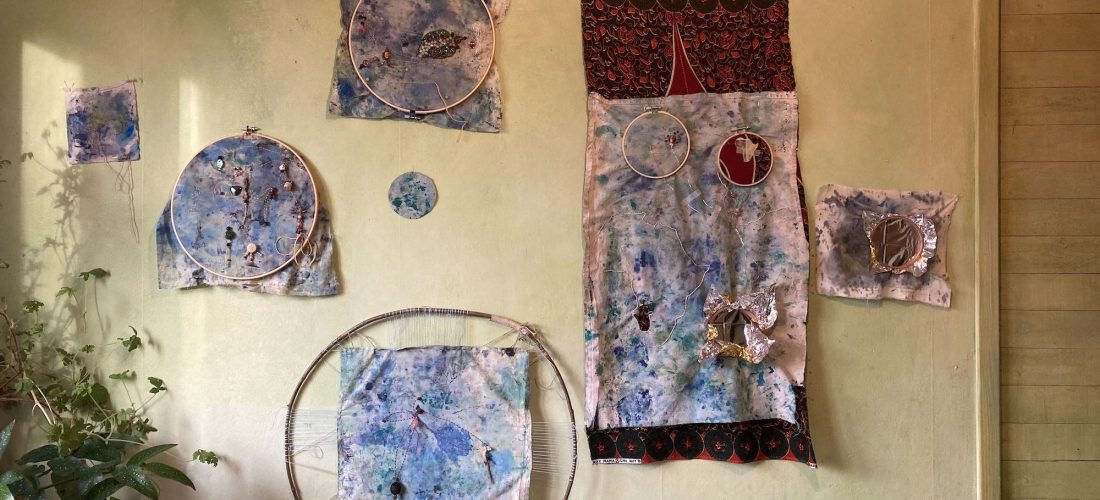
Frank’s Itinerary is made from various materials: paint-stained cloth framed in an embroidery hoop; mercerised cotton threads; acrylic, glass, umakite, rhinestone and lava pearls; whole nutmeg, fishbone fragment.

Frank Berger himself is a multi-gifted composer, singer and musician. His closest collaboration within the Praxis network is with Sámi/Swedish artist Emma Göransson; their mutual interest in ‘animated landscapes’ being transformed into music and textiles in their project Spirit Land/Vuoiŋŋalaš Eanadat.

Bonus: here’s Frank playing a traditional wedding march from Esse (Finland) on his hurdy-gurdy:

Praxis of Social Imaginaries, Winter Session 2024: Oulu Review

art, recent work, time-out

This winter session of the NSU Praxis circle was hosted by the Oulu Museum of Art. Here, we spent four days reading, writing and discussing; twenty persons from Africa, Europe, Asia and the Americas. Some of us were ‘oldies’ in this group, other ‘newbies’; some were Christians, others Muslims, some from yet other religious/cultural backgrounds… Earlier Praxis sessions have been dedicated to the tales of monks and merchants,* but this time, we turned to the Muqaddimah by Ibn Khaldun (1332-1406); a highly learned jurist and historian, possessing extensive knowledge as well as a keen mind – and sometimes also named ‘the father of sociology’. For six centuries, the Muqaddimah has served as an introduction not only to history, but also to the methodologies of empiricism and critical thinking.

The Muqaddimah
Obviously, a few days will be far from enough for the study of such a book . Circle facilitators Laura and Lindsey offer different approaches to help us along: reading aloud together, reading thematically from keywords, reading individually while making notes, reading in pairs while walking… One of the group reading sessions deals with Ibn Khaldun’s treatise on ‘the craft of midwifery’ – a short but extremely interesting portion of the text. Lindsey suggests that the women in the group take turns in reading, while the men listen in silence. Fareeda begins, followed by Justina, Tinka, Didi, myself, Puja, Dorcus, Emma…

“Midwifery is a craft that shows how to proceed in bringing the new-born child gently out of the womb of his mother and how to prepare the things that go with that.
/…/
This is as follows: When the embryo has gone through all its stages and is completely and perfectly formed in the womb /…/ it seeks to come out, because God implanted such a desire in (unborn children). But the opening is too narrow for it, and it is difficult for (the embryo to come out). It often splits one of the walls of the vagina by its pressure, and often the close connection and attachment of its covering membranes with the uterus are ruptured. All of this is painful and hurts very much. /…/ In this connection, the midwife may offer some succour by massaging the back, the buttocks and the lower extremities adjacent to the uterus. She thus stimulates the force pushing the embryo out /…/ She uses as much strength as she thinks is required by the difficulty (of the process).
/…/
[The] midwife undertakes to massage and correct (the new-born child) until every limb has resumed its natural shape and the position destined for it /…/ After that, she goes back to the woman in labour and massages and kneads her, so that the membranes of the embryo may come out.
/…/
She then returns to the child. She anoints its limbs with oils and dusts it with astringent powders, to strengthen it and to dry up the fluids of the uterus. /…/ She makes it swallow an electuary, in order to prevent its bowels from becoming obstructed and their walls from sticking together.
/…/
Then, she treats the woman in labour for the weakness caused by the labour pains and the pain that the separation causes her uterus. /…/ The midwife also treats the pain of the vagina that was torn and wounded by the pressure of (the child’s) coming out.
/…/
One can see that this craft is necessary to the human species in civilisation. Without it, the individuals of the species could not, as a rule, come into being…”

Clear voices transmitting substantial knowledge in a space of concentrated listening. When reading is finished, discussion begins. We note the qualities of the text; the care and factualness, the absence of misogyny. We wonder how Ibn Khaldun managed to collect this information? We compare the practices of Maghreb in the 14th century to our own – diverse – experiences. We keep listening, now to each other; male and female voices weaving invisible patterns of expanded understanding… A precious moment in time.

Apart from the reading sessions, we spend little time in the city. Our accommodation is located on one of the islands nearby, in three comfortable cabins close to the seashore. Each day, four or five from the group form a cooking team, to prepare and serve a ‘dinner keynote’: a Croatian pasta dish, a Peruvian dinner, a veggie curry… Communal cooking is another great way of getting together, and the significance of the evening meal goes even deeper as three of us are celebrating Ramadan.

After five intense days, we return home. The work continues.

Above: Oulu, city old and new;
Below:  Frank doing spontaneous parkour outside the museum

*namely, Gerald of Wales, William of Rubruck and Marco Polo.

Praxis of Social Imaginaries: Upcoming Winter Session in Oulu

art, recent work, time-out

240312 01
New moon over the Old City of Stockholm, for the first time visible in this month of Ramadan. It’s Tuesday, March 12th, and I’m leaving with the overnight ferry to Finland – heading to the city of Oulu/Uleåborg. Praxis of Social Imaginaries

In Åbo/Turku, Frank Berger meets me for the eight hours’ train ride due North. Among the things I’ve brought for the occasion, there’s a puzzle crafted from the Waterman version of a ‘butterfly map’. Having worked for some time with printed variations of the butterfly, I felt an urge to break  up that fixed form; and so, I painted the map on separate pieces of board, thinking that it would be interesting to see how people chose to combine them. Well, Frank doesn’t leave me disappointed…

This slideshow requires JavaScript.

A musician’s hands, and an open mind, at work; photos HHW.

…as he carefully plots out a number of unknown continents, crowned by a white Terra Incognita.

In the afternoon, we finally arrive in Uleåborg/Oulu – a city of islands and bridges, situated where Oulujoki river meets the Baltic. Here, the Praxis group is gathering for yet another symposium. More to follow!

Mapping Praxis III: Butterfly Wings

art, painting, recent work

Our precious planet, a fragile butterfly in space. Countless motley facets, an ever-changing kaleidoscope.

Our personal life stories, itineraries meandering through moments and places. How do we blend our voices together beautifully? How do we translate the sounds of winds and waves, birds and trees, humming insects, the singing fishes in the deep? And the animal screams from the slaughterhouses?

Here, some recent ‘work in progress’; watercolour renderings of the octants that together constitute the Waterman butterfly map projection.

This slideshow requires JavaScript.

Eight watercolour paintings, each 18×26 cms; Helena Hildur W. (2024)

Suddenly, I remember Ukrainian artist Alexander Krolikowski, who taps the signals of passing satellites to portray the Earth’s surface… “When you love someone, you take pictures of them, right?”

Yes – in times of war, we do love’s labour.

Screenshot

Screenshot

Screenshot from short documentary Art in the Land of War, episode 7: Alexander Krolikowski by DocNoteFilms (2022)

Mapping Praxis II: complementary perspectives

art, recent work

Nordic winter days: sparse light, long nights. Preparing for upcoming symposium within the Praxis project at Oulu Art Museum in March. Today, I’m also very happy and grateful for the travel grant approved yesterday by Kulturfonden för Sverige och Finland – kiitos! Tack!!

Hours spent reading, painting, printing, stitching… my mind floating between the concept of (abstract) space – iconized in world maps of various projections – and individual itineraries, tales of personal experiences in specific places…

…representing two complementary perspectives on our lived and living world(s); both wondrously fused together in pictures sent from the crews of NASA’s Apollo space missions.* Here below, the very first photo of planet Earth as viewed from beyond orbit – captured from Apollo 8 on Dec. 21st 1968, by astronaut Bill Anders. Upon returning, Anders commented: “We came all this way to explore the Moon, and the most important thing is that we discovered the Earth.”

02-Apollo-Earth-image-AS08-16-2593-6a6f1d3-e1647940090384Photo credit: NASA / restoration by Toby Ord

* Read more about the Apollo voyages, images and photo restoration project: BBC Sky at Night Magazine (published January 23, 2024)