Interplay at the ECP III

art, recent work

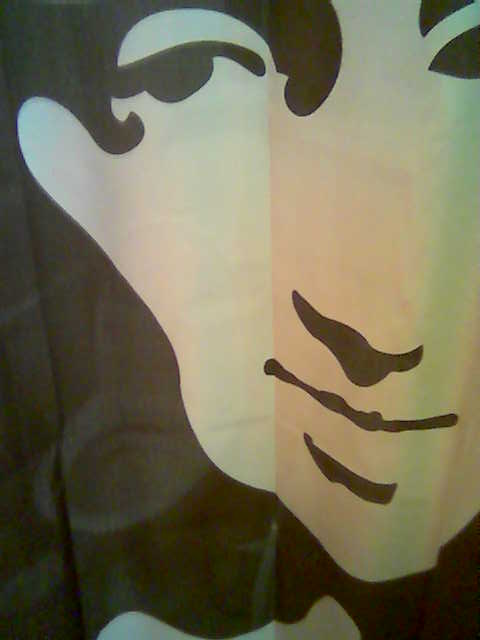
Early Saturday morning; la Gioconda smiles at me from the shower curtain.

Yesterday, two more nomads of the Nomadic University generously accepted to join the performance, so now only the Arabic voice is missing.

The ECP session begins at 9 am. After a week or more with overcast sky, the sun shines in through the large side window at Artisten. A loose in the programme; I take the opportunity to call for an Arabic speaking person in the audience, and yes – there is actually one.  He accepts to participate. By now, there are quite a number of persons involved – all open, generous, sincere and courageous.

Interplay at the ECP II

art, recent work

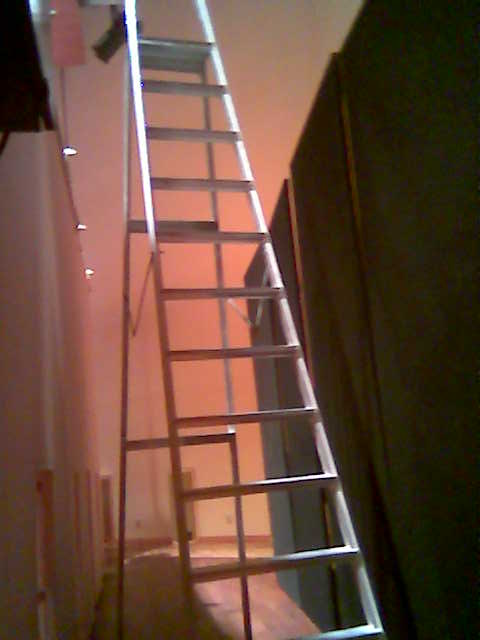
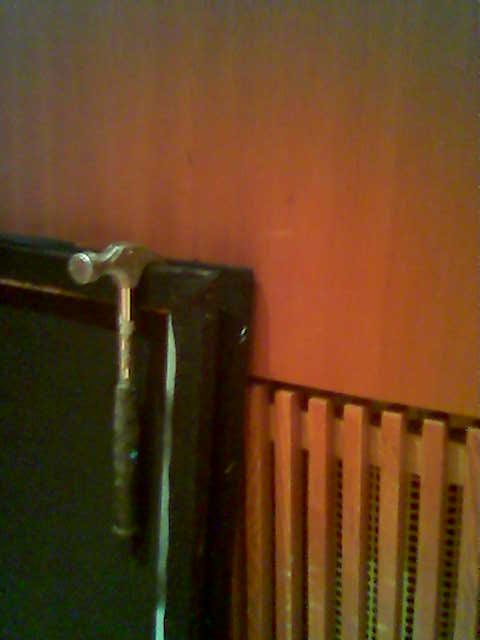
    preparations; stretching the fabric, attaching plummets and placing the screens onstage

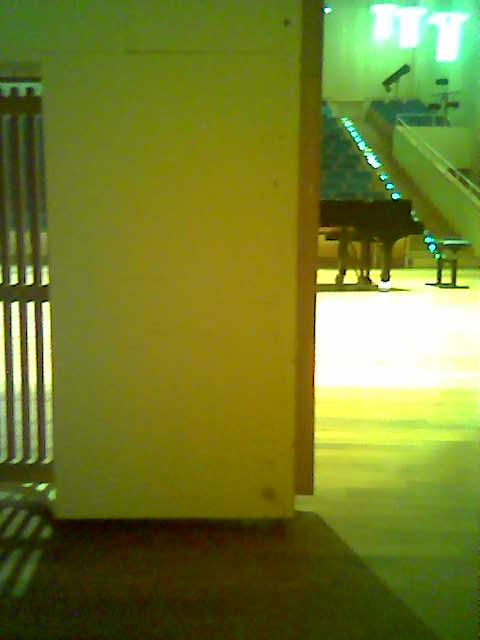
The venue for this session is Artisten, Academy of Music and Drama at Gothenburg University.

I spend Thursday night and early Friday morning checking out material conditions; there are eight screens measuring 1,15 x 2,90 metres available – splendid! the black sheets will fit perfectly on them.
And the plummets will hang from plastic pipes nailed to the top edges. Anders, technician at Artisten, provides me with everything I need, and preparations run smoothly.
But then there’s the human factor. We will need some time to rehearse. And in fact, I do not know who will read the Italian, Finnish and Arabic versions yet. Or, if the Russian voice will arrive in time tomorrow.

As Tooticky points out, ‘everything is very insecure… which is exactly what soothens me’.

Interplay at the ECP I

art, recent work

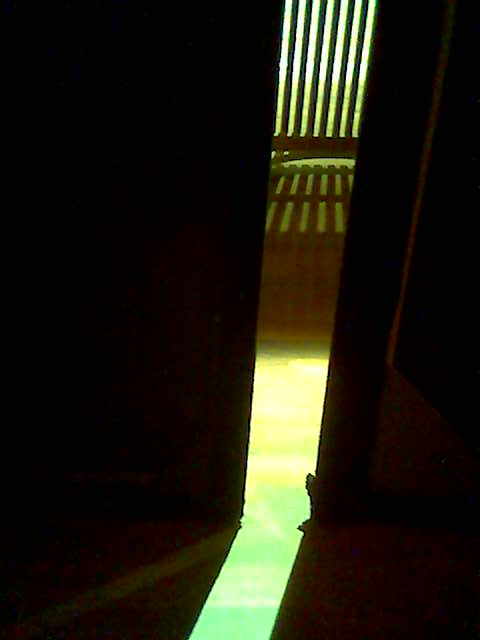
backstage at Artisten, Academy of Music and Drama in Gothenburg

At the NUrope oasis in Åbo/Turku, June 2009, I staged a two-part workshop named Image upon the wall.
In late September, I was asked to do it again at the ECP session in Gothenburg, December 11th to 13th – as a performance within the NUrope presentation.

The performance, being the visualization of an actual process involving a number of people, then had to be literally re-created; re-thinking the concept, re-calling cooperation partners, re-newing the framing and re-writing the text.

Last Thursday, I took a train to Gothenburg, bringing a box of white chalks, four black cotton bedsheets, five plummets and a text rendered in five languages, printed out in three copies each.

Theories, methods and practices II

art, recent work, teaching

‘Method’ as a way of making out one’s direction between perceiving and conceiving…

The first word to stand out here is ‘one’; because this is something to be carried out by one-self.
Conception springs from perception, and perception is sensual experience; thus, personal.

By this definition, ‘method’ does not apply to the use of intellectual pre-conceptions.

Theories, methods and practices I

art, recent work, teaching

“The common-sense understanding of the word ‘method’ may be something like: ‘a set-up of presumptions and techniques used systematically to arrive at a certain result’… A method, understood as a procedure or a process, should be something going on between theory and practice.”

Let’s say, now, that ‘method’ is a way… a human act of making out a direction from what is perceived (the sense-world) and conceived (thought).

This is rather a broad description.
A special case, with a more narrow, or precise, definition, would be ‘scientific method’. ‘Scientific method’ – and the science produced by it – may be seen as the core of modernity.
In the post-modernity we currently share, some people would have science devaluated to ‘just another story’; a contextual truth told by just another group of people (male white Western scientists?) to fit their own agenda.
The funny thing about this attempted devaluation is that it frequently seeks to legitimate itself exactly by the (ab)use of scientific terms – preferrably fetched from the most prestigious fields of mathematics and physics.
In this aspect, mathematicians and physicists Alan Sokal and Jean Bricmont pointed out some French philosopher queens and kings to be very naked. This was done already back in the nineties; I cannot find that kind of philosophy better clothed today.

Logic thinking, scientific method and quantitative research springs from a millennia-long, careful cultivation of thought – not only in Europe.
On the other hand, science cannot (and does rarely) claim to interpret our life-worlds fully. In everyday life, we alternatively employ logic thinking and the language of art and myth.
It shouldn’t be too provocative to say that logos and mythos are both generic human modes of thinking; that they both tell us beautiful and challenging truths; and that they ought not be confused.

The initial quotation is from a text of mine called to care in a peculiar way; see page in English.
For Bricmont’s and Sokal’s elucidating review of some post-modern philosophers’ methods, see Impostures intellectuelles (French version) or Fashionable nonsense. Post-modern intellectuals’ abuse of science (English version); Bricmont and Sokal 1997/98.

diary painting XIX

art, recent work

091104091104; oil on wood panel, 21 x 22,5 cms

Green has long ago yielded for the reds, yellows and browns of autumn, and today the first snow is falling.

Recalling the last weeks or months, I find that I have spent quite some time teaching as well as learning from other people who, to some significant extent, live at the borders of language; be it by creative work (artists and writers), by neurophysical sufferings (people with dementia or autism), or by the cultivation of meditative experience – sometimes in combination, sometimes not.

Somehow, this seems relevant to the question whether there is a method to die.