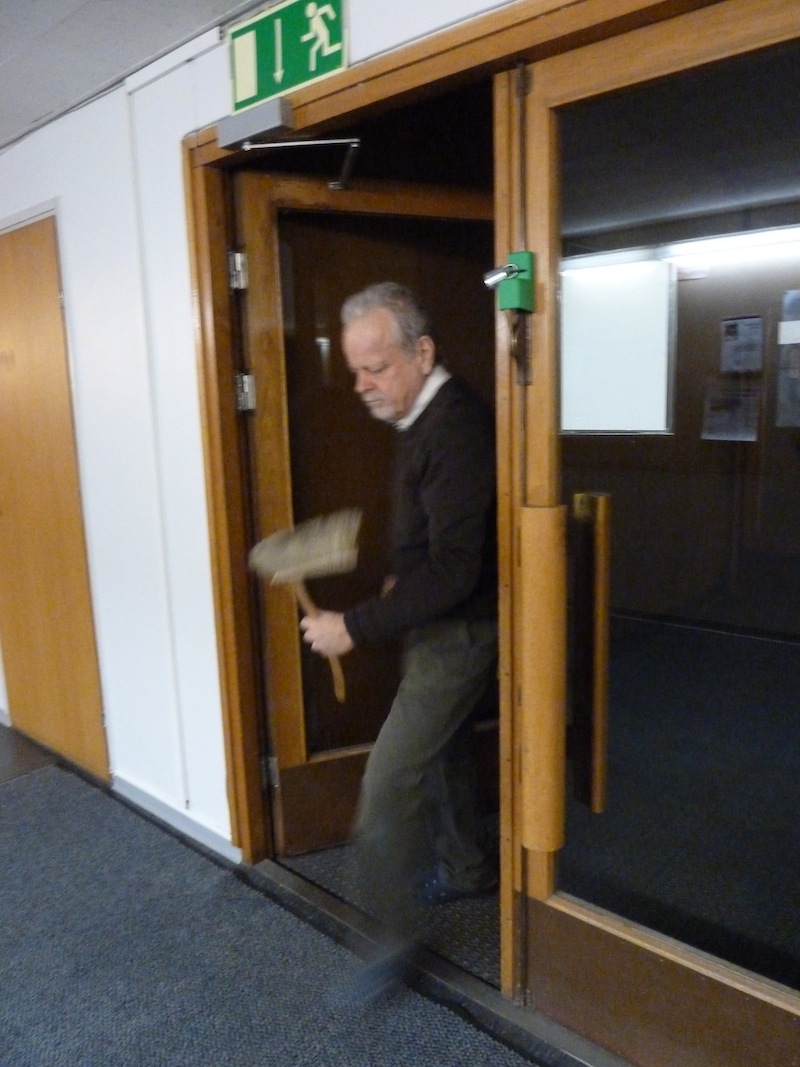
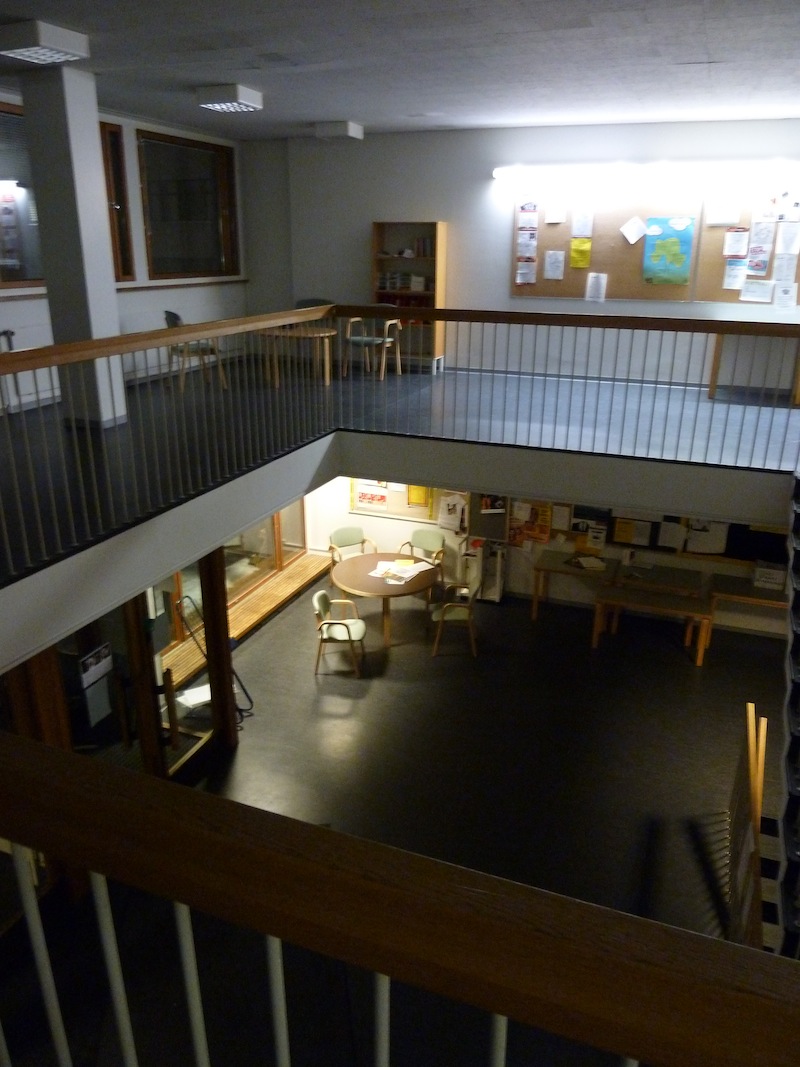
 “Hanken” entrance hall in 2011; photo HHW.
Almost fifty years later – the Business School entrance hall in 2011.
People have their ways, living their lives… doing their best. Still, far from perfect.
Hey Woldemar – how do we fit into the image?
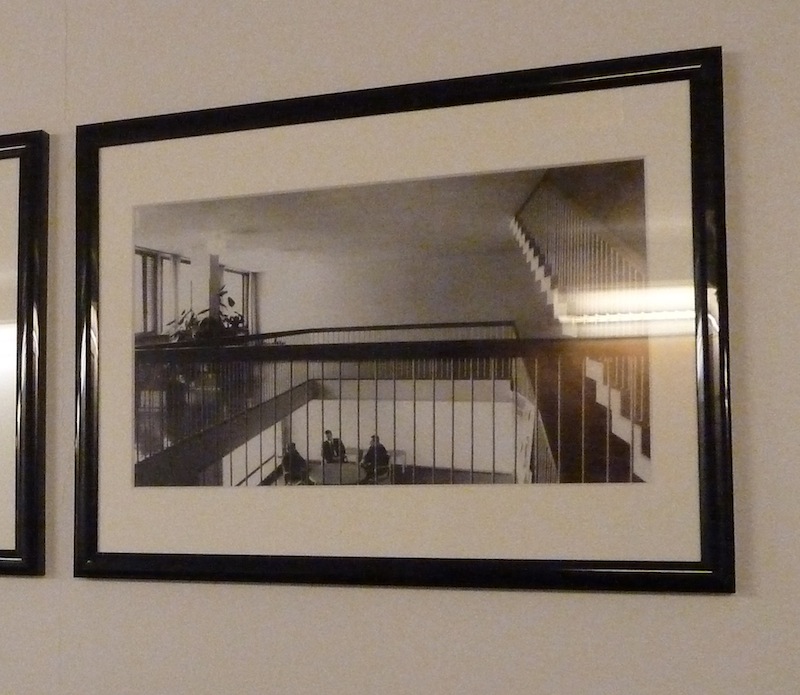
“Hanken” entrance hall in 1963, framed original photograph in corridor; photo HHW.
A black-and-white photograph, showing the entrance hall of the brand new Business School in 1963. So, this is how it was meant to be: clean, straight-lined and flooded with light; a space framed and barred where submissive nature thrives in its allotted place and humans are the subjects of Enlightenment.
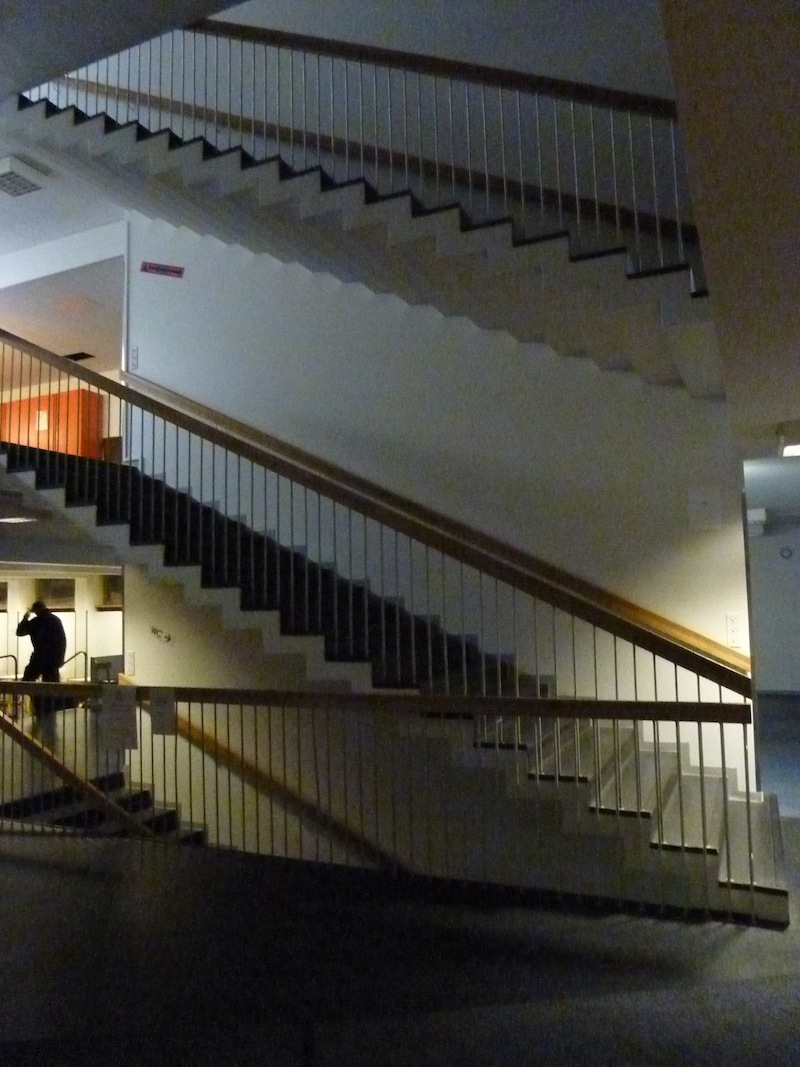
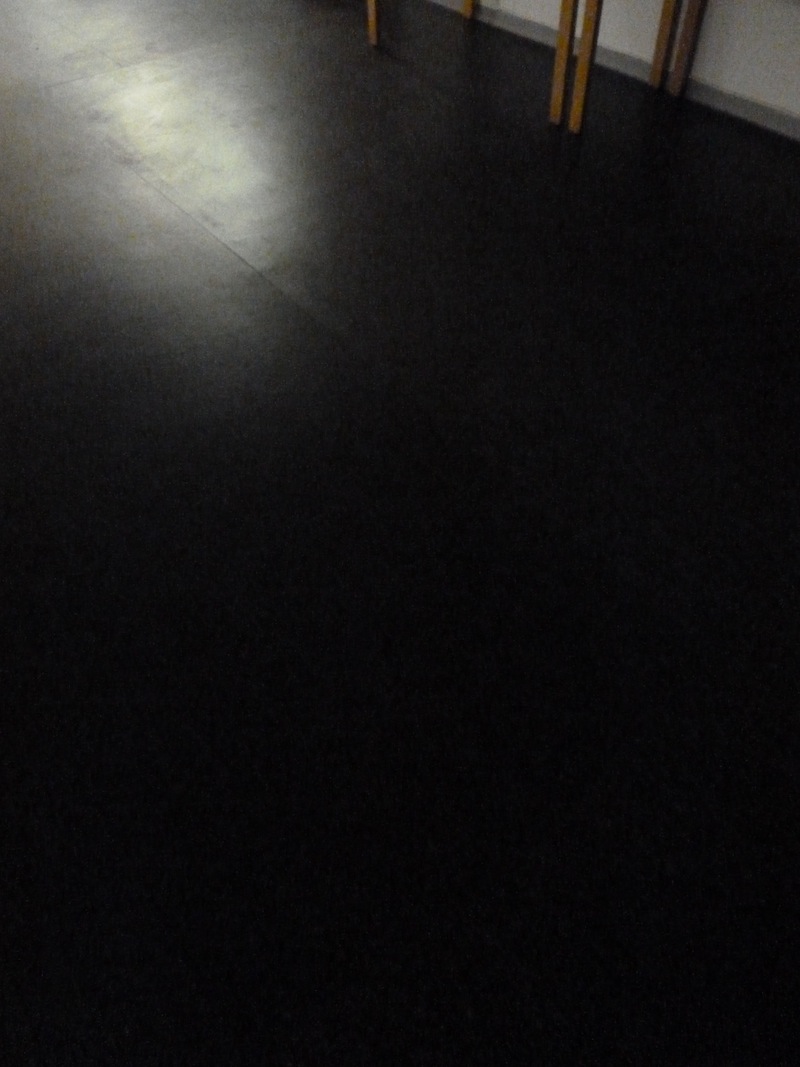

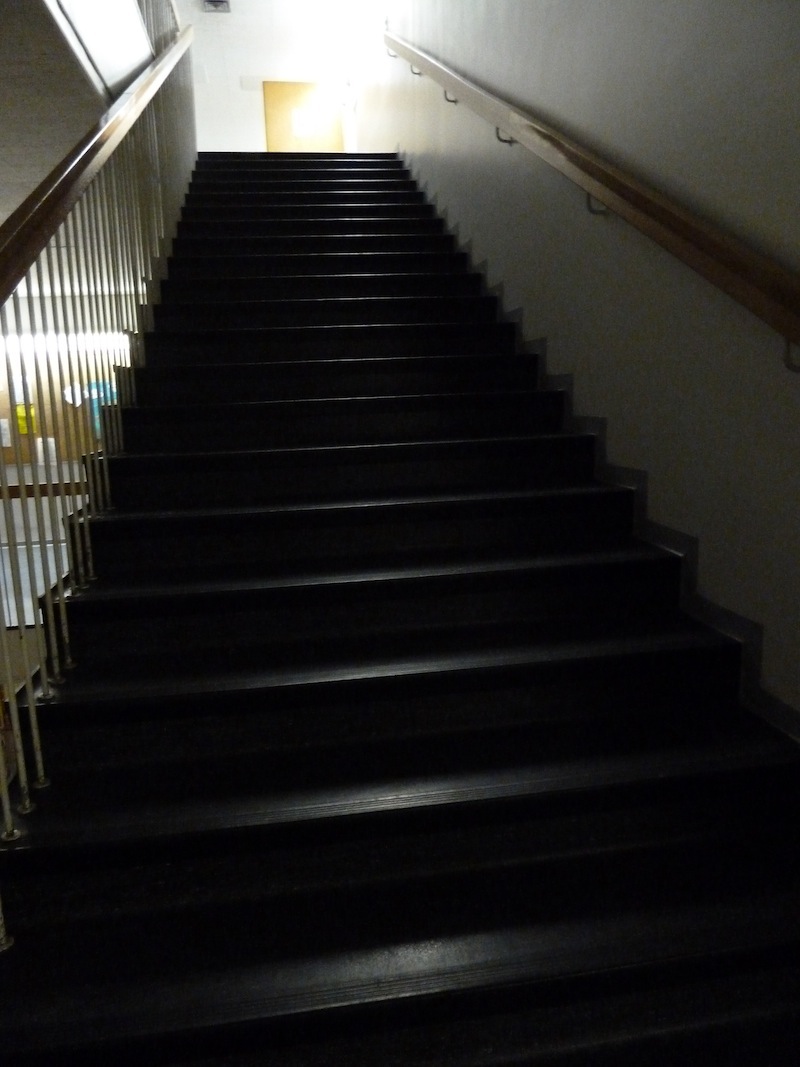
 Åbo Akademi University Business School, light and spaces; all photos by HHW.
The Business School building: a functionalistic work by Åbo Akademi architect Woldemar Baeckman. Built in 1963, it emphatically expresses a positivistic vision, carried by the craftsman’s knowledge of materials as well as the relative scarcity of the time. An appropriate setting for anyone who would wish to make a comment, philosophically or by means of art, to the contemporary state of things; the mind-set of Enlightenment taken to, and beyond, its utmost consequences.
Here the LICHTWECHSEL exhibition will take place, opening on March 17, 2011.

Åbo Akademi University Business School, entrance from above; photo by HHW.
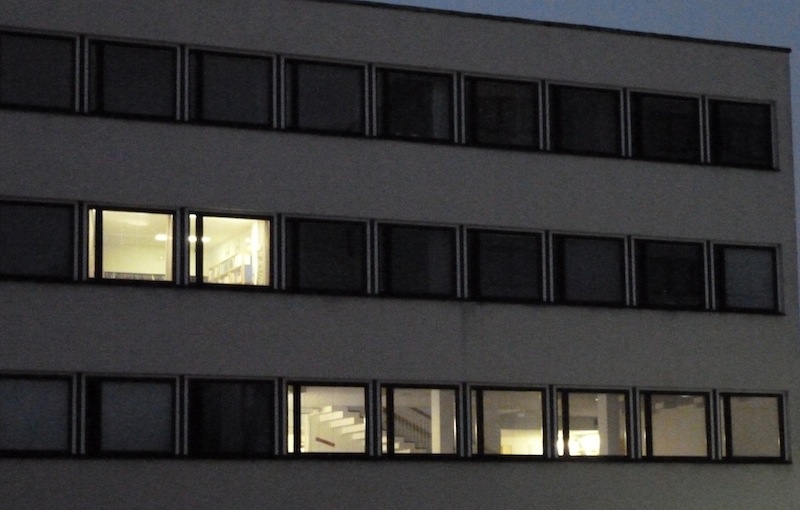
Åbo Akademi University Business School, one January morning;
photo HHW.
And here’s the next project: in March, the Nomadic University will stage an art event at Åbo Akademi University Business School.
Austrian artists Luise Kloos, Erika Lojen, Aurelia Meinhart and Ingeborg Pock will bring their art journey – from Graz via Vilnius, Riga, Tallinn and Helsinki to Åbo/Turku – into the modernistic white building known as Hanken in Åbo/Turku.






Today, the atmospherical sea is all white, as if coagulated light, and full of movement.
Snow is knee-high in the fields, sometimes up to the thigh. A little less in the woods. In settled areas, it turns the cars, roadsigns and railings – the very streets – into organic sculpture, emphasizing the spatiality of all things.
I need not borrow the eyes of Goethe or Wittgenstein. But I would have enjoyed their company in this surrounding whiteness.
By the way, I am now – to my great surprise and joy – coordinator at the Nomadic University for Art, Philosophy and Enterprise in Europe. Whatever artistic faculties I possess, I will bring them into the process.
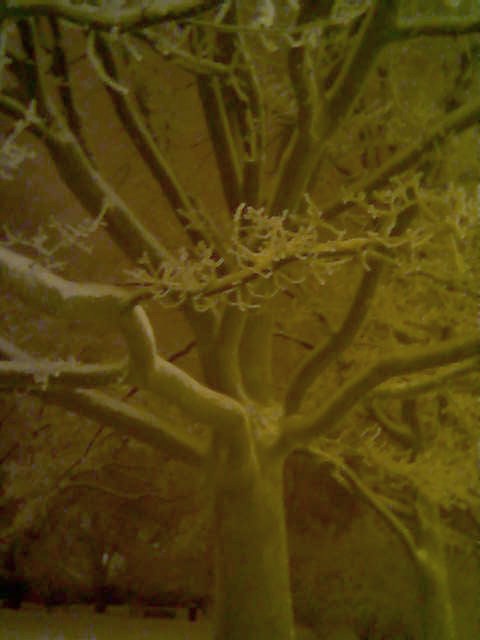
Going on a one-day trip to Åbo/Turku to see Bengt and Kim for a good day’s work. I walk along the Aura river from the harbour, pass the castle following the old Castle street to the marketplace and cathedral square.
Weather has been less cold for a while now, at times even damp; since days, hoarfrost is building on any surface that isn’t covered with snow. Trees like birds ruffled up in down covering, sheltered in darkness.
In Kim’s company, I experience the city by ear. It becomes an instrument, resounding people’s feet and voices, cars and church-bells and doors opening and shutting; all sounds muffled, all corners softened by the snow.
In Venice, a truly magnificent thunderstorm passed by during the night between Friday and Saturday; sounding like canonades, turning electricity off, and – lights out – pouring rain over the city for hours.
Saturday night – June 27th – at the dance biennale, the Compagnia dell’Accademia Nazionale di Danza di Roma performed a show at Teatro Piccolo Arsenale.
The first piece was announced beforehand as an homage by Pina Bausch to the company: a short solo, elaborated from Bausch’s choreography Nefes (‘Breath’), by Cristiana Morganti of Wupperthal Tanztheater;
sudden spotlights on; and a red-dressed woman dancing like a flame of joy, all alone in the large scene space, never a moment of hesitation or doubt until, too soon, conclusion; dance ending as abruptly as its beginning.
After a short pause, the second piece, Da ora in poi by Jacopo Godani;
the whole company on stage, men and women alike all dressed in dark, and again this softness and staccato, blending into hermaphroditic beauty; Hermes and Aphrodite; flow; transmission of movement taking priority over manifestation of individualities; and, at a certain moment, all sitting low on scene floor; some movement upwards, spotlights flashlighting the high-up ceiling and a hundred fingertips tapping like raindrops, then dark again; last night’s thunder and rain recreated within the Arsenale building; soon transforming to a movement like walking underwater; then transforming again…
On Thursday, June 25th, German choreographer and dancer Pina Bausch was diagnosed with cancer. On Tuesday, June 30th, she passed away.
 cleaner on stage at Teatro La Fenice, Venice
Art is the most essential in life.
Art tells no lies.
 Helena Hildur W.