fabric and felt II

art, recent work, teaching

The journey has begun. Our fellow friends, students and teachers from the seminar, have reached Athens, Greece, by now. Those of us remaining behind gather in the Blue atelier in the morning. Our journey will be of another kind, roaming not so much over miles, but through our minds. We go out to meet Mats, the gardener, in the rose garden. He provides us with pruning shears and tells us about the place; how this once was grazing land around a rock where sloanbushes, rowan trees and wild roses still grow. We listen while cutting dead twigs from one of their cultivated kindred, a Rosa alba Minette…
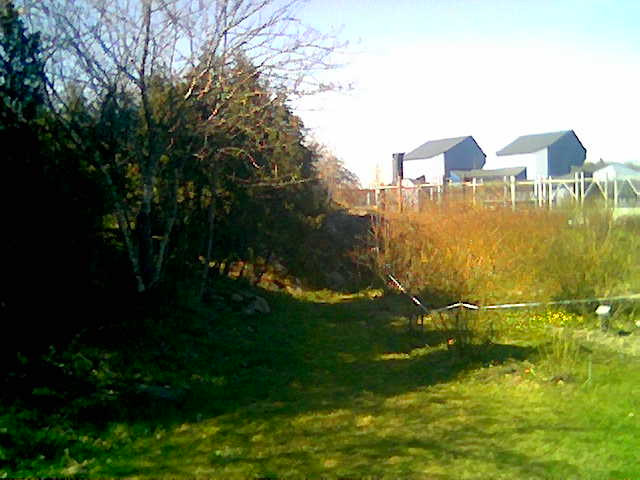
Now, in the wide grounds of the Steiner seminar there is much more than the rose garden. Mats takes us for a walk to some of the places and we experience the characteristics of each one through to the knowledge he shares with us.

In southern countries, the garden is often shaped within protecting walls; a place of shelter and shade with life-giving water where water is scarce and rare. Here, in the North, with an abundance of lakes and watercourses and vast dark forests, one would rather seek the open and place the garden by a forest fringe where the sun gives sweet warmth. We look upon the rocks and hedges, pathways and plants; the manifold situations and meetings created here by artists and craftsmen – beginning with Bruno Liljefors a century ago, then continued by Arne Klingborg, Erik Asmussen and others, up till today; we look at our surroundings through this understanding.

In Hellas, gods were close to human beings; everyday life interweaved with divine presence. In nature, this could be sensed as tangible qualities at certain sites; temples and sanctuaries were designed to frame them. We, the barbarians, will now make our attempt to grasp Hellene spirit by rendering it into our own means of expression. For this sake, we decide to work with two of the places we have found appealing; when we meet tomorrow, we will see how each of us sets out for the task.
fabric and felt I

art, recent work, teaching

piece of cloth

During the last three weeks, the students at the Steiner-seminar have been working with art history – more exactly, Hellene antiquity. Now the greater part of the group are leaving for a two weeks’ journey to Greece: to visit some of the places and to sense there what remains from the period… However, one third of the group will stay home, and so we will try to explore what immaterial traces of ancient Greece could be found, here-and-now, in our own minds.

A beginning might be to consider not only the greatness of Hellas, but also what was on the move beyond its borders… an attempt to define by the negative. Remember that one thing the Greek brought us is the concept of the ‘barbarian’.

The art of weaving is said to be under the patronage of Zeus; warp and weft – the vertical and horizontal complementarities – visualizing the universal harmony of male and female (and therefore, a piece of cloth should never be cut).

The barbarian East, on the other hand, not only constituted the back countries of early Greek colonies – the mythic home of amazons, among others. It was also where the art of felting was developed.

Fabric and felt, civilization and barbarism; let’s see where this could take us.

piece of felt

colour exercises

art, recent work, teaching

This morning saw the first sun ray since autumn in our kitchen. Snow in the afternoon.

bild056.jpg bild013.jpg bild020.jpg bild062.jpg

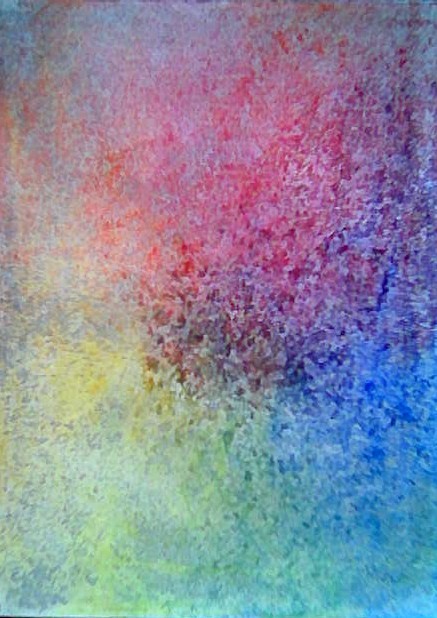
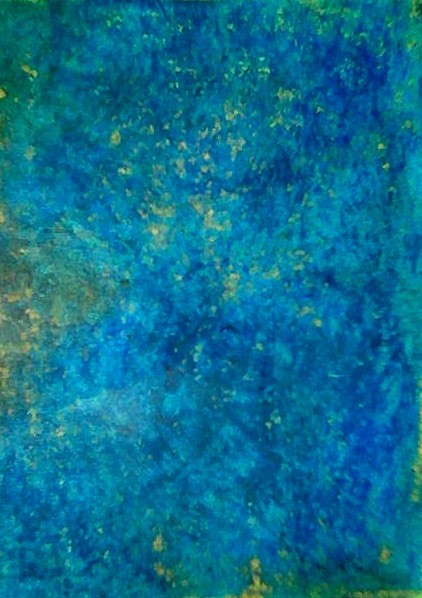
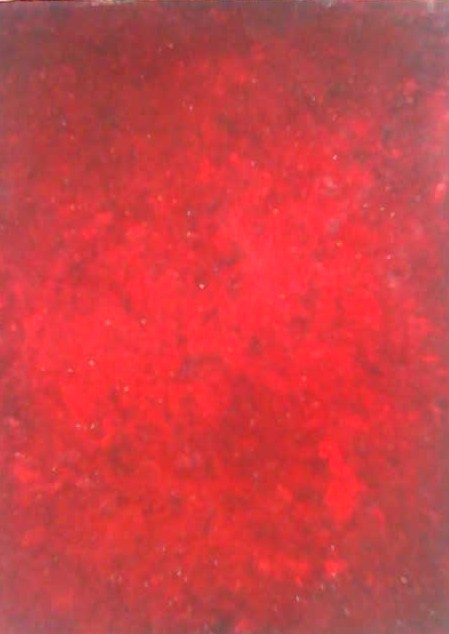
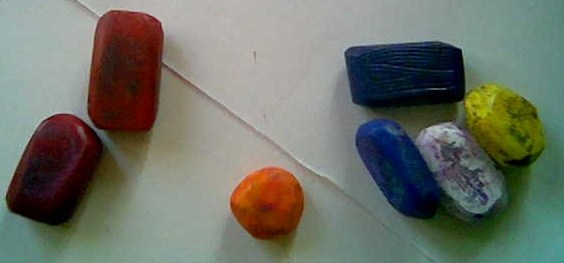
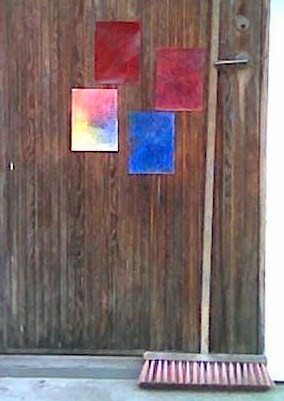
In between, from last week’s experience, some basic colour exercises; wax crayons, white paper. These wax crayons come in six primary colours; two yellow, two reds, two blue. In each pair, there is a difference in temperature and brightness, as well as in colour; of the two yellow ones, for instance, one tends towards green and the other towards orange; and so, secondary colours can be obtained in various shades of luminance. Their ‘bodyness’ belongs to the wax rather than to the pigments.

bild-63.jpg

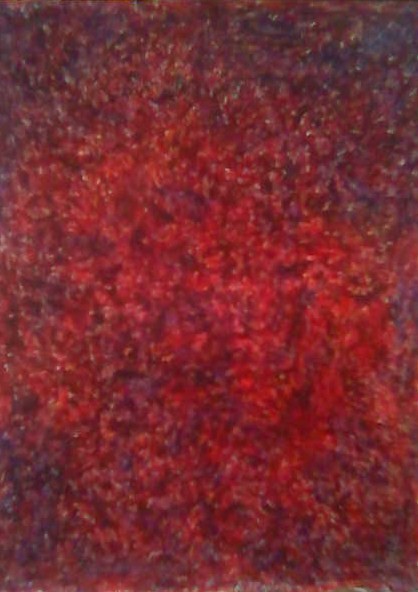
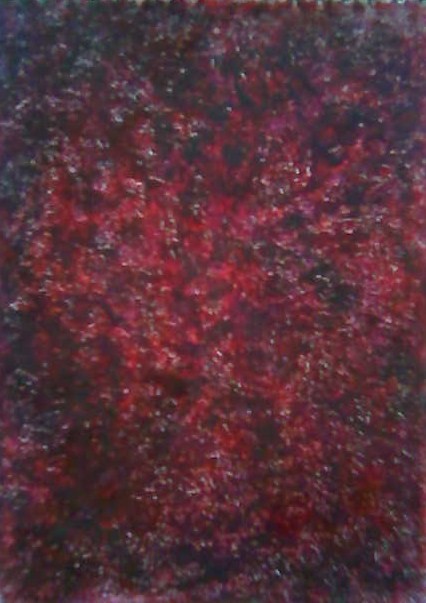
Go from the white sheet through bright red, blue and yellow to darkness. Then back to brilliance again, now with a depth.

bild069.jpg bild071.jpg bild068.jpg bild037.jpg

Go deeper.

a question of materiality and tradition

art, teaching

Again, I have been invited to the Steiner seminar in Järna, since the third-grade students wanted to do oil painting.

Historically, making paint using different kinds of oils is said to be developed from tempera techniques at a time when painters were occupied with the problem of representing three-dimensional space upon the two-dimensional plane – parallell to the construction of linear perspective. It came to predominate in European and North American art into modern times; actually, even as a part of modernity… the word modern, by the way, first appearing in English language in 1585 (according to Merriam-Webster dictionary). At Istanbul Modern, the museum’s historical survey takes as its starting point the first oil-on-canvas portrait of an Ottoman sultan in the 18th century… Today, the concept modern is commonly replaced by contemporary, so as to recognize the post-modern experience. And oil painting, on the art scene, seems mostly a ‘retro-garde’ concern.

Consequently, I ask myself: how come young persons ask for guidance in the technique of oil painting today? How could I respond to this?

14-stilleben-med-citrus.jpg

still life with citrus; oil on wood panel, 20 x 30 cms

I couldn’t. I had to change it into a question of materiality, and of tradition.

Materiality – since oil paint can be a means of getting acquainted with pigments, to gather experience of their characteristics; the blueness of cerulean blue, for instance, is but the first impression; experience gains a deeper knowledge of its specific heaviness, opaqueness, temperature, its changing qualities… of the silveriness which will manifest itself in certain blendings…

Tradition – since there is something to the tradition of oil painting which cannot be reduced to the making of modernity’s concepts, but rather deals with the cultivating of human perceptivity; the eye’s ability to reveal a connection between light and matter…

There is more to this. Go deeper.

ps. And what did the students do? First week, their exercise was to copy a painting; choices ranged from William Turner to Swedish painters Vera Nilsson, Anders Zorn and Ivan Agueli. Second week, their palette was limited to only one colour (for instance, the different reds), together with white and palette medium. Extremely traditional, material too… The students, as usual, took on their task with the kind of seriousness which is very close to joy. What more could I ask for? Again, thank you all.

space and time drawings III

art, teaching

tonal-eurythmy-1.jpgtonal-eurythmy-3.jpgtonal-eurythmy-2.jpg

tonal-eurythmy-4.jpgtonal-eurythmy-5.jpgtonal-eurythmy-whoops-sorry.jpg

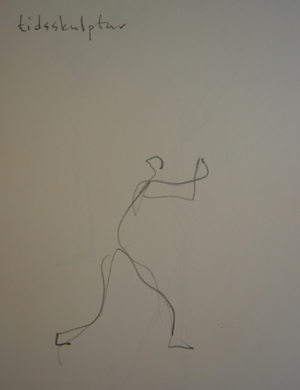
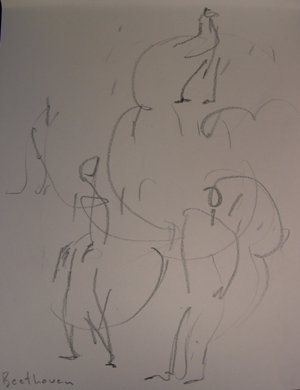
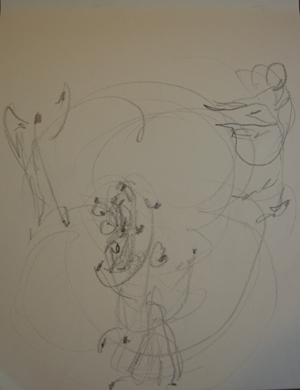
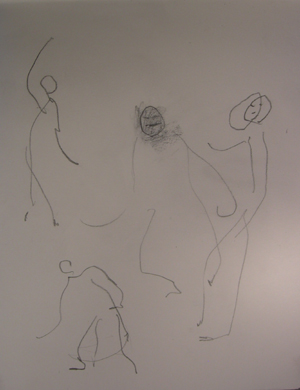
movement studies; graphite pencil on paper

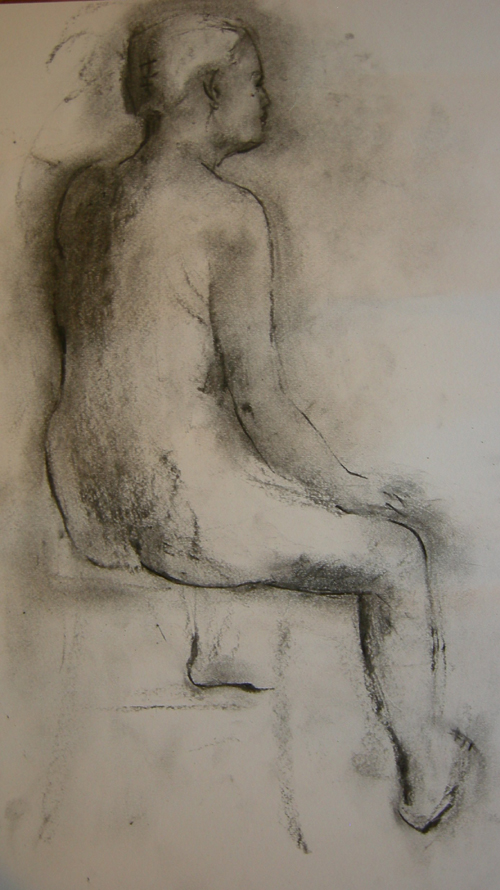
Tuesday January 15th; visiting the eurythmy students, today working with tonal eurythmy. The piano player performs a phrase; teacher translates into a movement scheme; the piano repeats the phrase over and over, students absorb into their bodies what they are taught and what they hear, bringing it out in movement. We, the art students and teachers, follow the process in our drawing. Back in the Blue Atelier after the morning break, we have a model sitting perfectly still upon a chair in front of us. And so, we’re thrown back into art school tradition…

In traditional art school drawing, one deals primarily with the issue of representing space on a surface, looking for proportions and using (different kinds of) perspective. Little attention is paid to the dimension of time; though, in the world of senses, time is the actual mode of existence. In drawing – is it possible to shift focus between space and time? In trying – how does my mind change?

sitting-still.jpg

model study; charcoal on paper

space and time drawings II

art, teaching

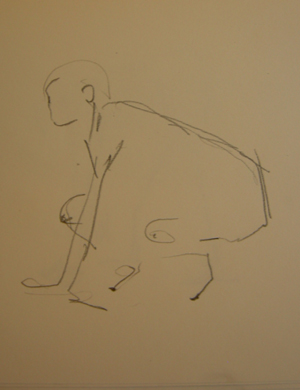
Monday January 14th; staying in the Blue Atelier, our classroom, working with a model doing short stands (30 seconds to three minutes each).

To draw a line is to make a cut. Drawing is nothing about showing the eye’s reality, it is about visualizing thought. So, drawing the line, I impose a wound upon the world of senses. And so my effort in drawing must be to heal this very wound, by turning my mind to seeking not the singularities but the whole.

short-stand-30-secs.jpg

short stand (30 secs); graphite pencil on paper