Studies in Remoteness I

art, upcoming

The first call is out – come join us in Berlin!

CALL FOR PARTICIPATION:

DUPLICITY / DUPLICITÄT: Betwixt Intimates and Strangers

NSU Circle 1 Winter Session 2026
Institut für Theaterwissenschaft, Freie Universität Berlin
January 29-31, 2026

Due date for session proposals: 1st December, 2025
Due date for non-presenting participant registration: 9th January, 2026

This opening symposium of the collaborative research project Studies in Remoteness explores remoteness as connected with duality, in-between spaces, self-conflicted states, and epistemic ambiguity. We will examine remoteness as a way of being situated (perhaps conflictedly) between apparently different identities, geographies, and epistemologies. Even as the word ‘duplicity’ suggests masked deceitfulness, its implication of the two-sided and two-faced provides a means to query the dichotomies (distant and near, intimate and stranger) experienced by those labelled “remote”.
We particularly invite proposals that engage with voices and worldviews often marginalized or erased in dominant knowledge systems.

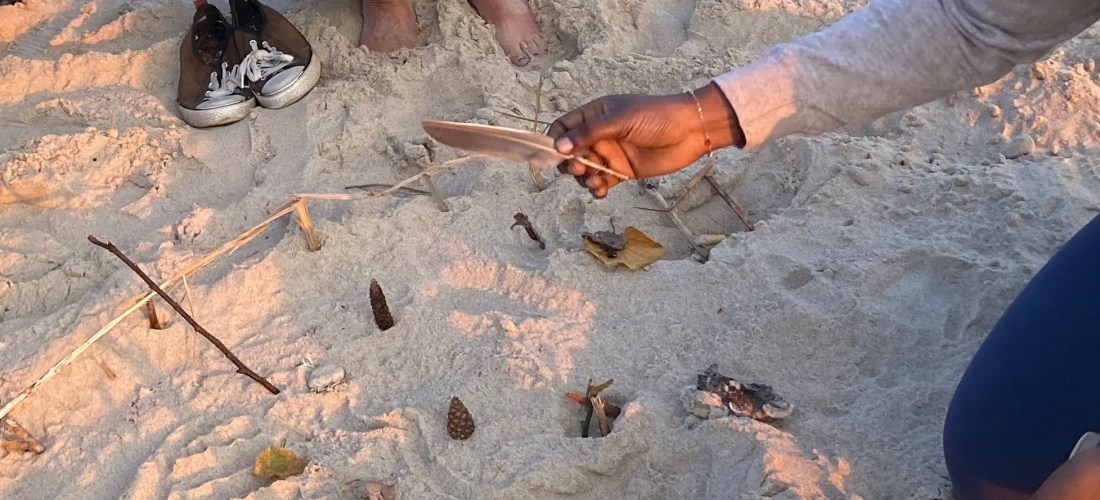
Photo © Salad Hilowle, from the exhibition Homeplace;
courtesy Cecilia Hillström gallery (Stockholm)

Event Structure
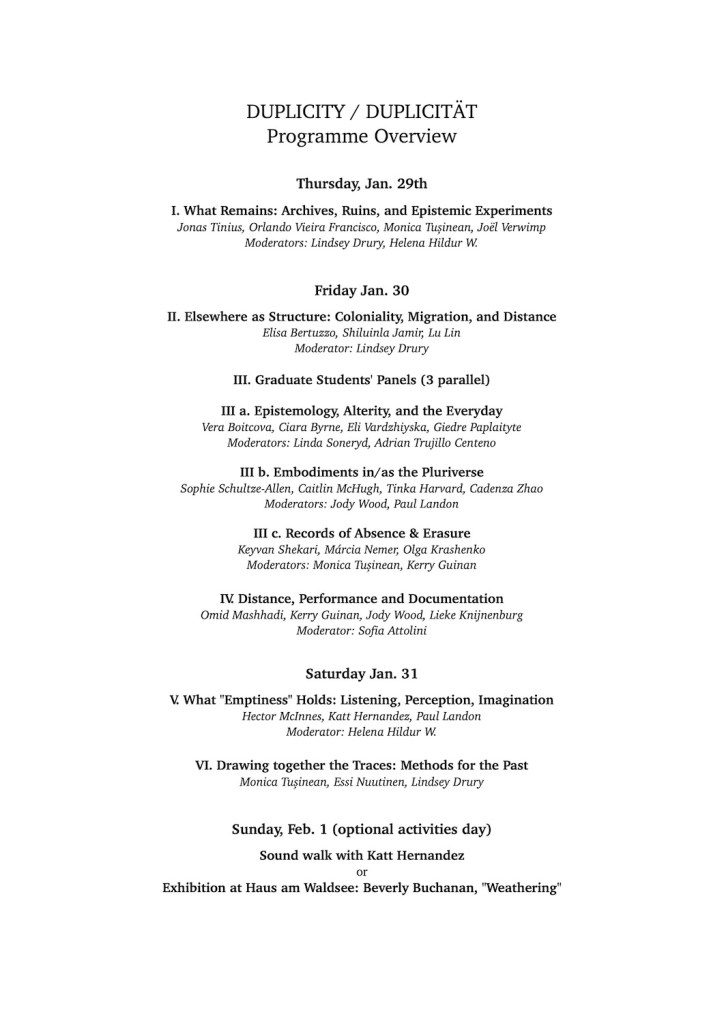
The symposium begins with a welcome evening on the 29th, and is then divided into two themes over two full days (30th-31st). Sessions will include presentations, readings, discussions, and creative workshops that draw from cultural studies, performance histories, and artistic research practices. Participants are invited to lead thematic sessions, but do not have to do so to participate. Within the context of Berlin, the symposium will further inquire the ways that duplicity informs observation by investigating the cityscape as an intricate weave of depths and surfaces, concealments and revealments.

Thursday, Jan. 29th: Welcome evening
Introduction, presentation round and get-together dinner.

Friday, Jan. 30th: Inquiring Art, Politics, and Performance in Berlin
How does duplicity inform, arise from, or interact with the politicization of art in Berlin? What is concealed (made remote) and revealed (made available) in the process?

Saturday, Jan. 31st: Intangible Goods/Invisible Architectures: Performing Deindustrialisation
How does duplicity inform people’s everyday lives? How does it affect the city’s inhabitants – architecturally, aesthetically, as well as in work and everyday practices? What is made remote, and what is made available in economic transactions, public infrastructures, and the wider built environment? How can we research peoples’ experiences of this, and the impacts upon their lives?

Participation fee
Participants need to pay a €30.00 membership fee to the Nordic Summer University; for participants with institutional support, the amount is €55.00. In certain cases, this fee may be waived or reduced. Housing and food are self-organized, and the organizers have reasonably priced recommendations for registrants.

How to Apply
if you wish to lead a thematic session (research and/or artistic presentation, reading session, hands-on or discussion session) – please submit an application (up to two pages) with a session abstract and facilitator bio by December 1st, 2025.
if you wish to simply participate – please send us a letter of intent, and a bit of information about yourself, by January 9th, 2026. Earlier applications are encouraged, as the symposium is first-come-first-served. Students may receive ECTS credit (further information available by request).

Applications can be sent to to one of (or both) the following email addresses:
lindsey.drury[at]fu-berlin.de
helenahildur[at]gmail.com

Studies in Remoteness is coordinated as a study circle within the Nordic Summer University by the scholar Lindsey Drury and artistic researcher Helena Hildur W, in cooperation with – among others project members Tinka Harvard, Shiluinla Jamir, and Essi Nuutinen.

Read more:

Duplicity/Duplicität 
Almost any place on this planet labelled “remote” by one person is to another an intimate home. Almost any stranger met on the street is, to someone, a most intimate friend. No place or person, then, is ontologically remote. Instead, remoteness emerges as a condition paired with its opposite. Remoteness is duplicit.

Duplicity often carries connotations of trickery – as a disguise that renders the reality of a person or situation inaccessible; remote. The term duplicity thus gestures toward performance. Yet, acts of pretend, staging, or performance aren’t merely façades behind which reality lurks; they also offer ways of conjuring real contexts for social engagement. Antonin Artaud’s Le Théâtre et son Double, Friedrich Nietzsche’s Die Geburt der Tragödie, and Hannah Arendt’s The Origins of Totalitarianism all tie art and performance to politics by addressing duplicity as a political and creative force that divides and connects, hides and reveals, undermines and sustains – to transform. Artaud, particularly, makes the radical proposal that perceivable reality is a respondent Doppelgänger of the theater (rather than the other way around).

As anthropologist David Graeber described, politics is a fundamental social imaginary – “that dimension of social life in which things really do become true if enough people believe them” – but to participate effectively, one must never acknowledge this fact (2011: 94). Graeber used this assertion to connect politics to artistic practice, further arguing that, “for the art world to recognize itself as a form of politics is also to recognize itself as something both magical, and a confidence game – a kind of scam” (ibid). While the term “scam” typically implies deceit or fraud, this symposium considers the “scam” as a kind of strategic duplicity that enables both art and politics to function – not in spite of, but through their resistance to absolute transparency. The imagined, the artificial, and the staged become crucial mechanisms by which social and political truths take shape. While “scams” are negatively connotated (perhaps most easily attributed to quacks, charlatans, imposters, grifters, and snake oil salesmen), in this symposium, we look at the so-called “scam” as a duplicity that, precisely by undermining any chance for so-called ‘transparency’, allows art and politics alike (and in connected ways) to function.

In Berlin, this dynamic can be exemplified in Adrian Piper’s 2017 participatory performance The Probable Trust Registry at Hamburger Bahnhof, which invited viewers to sign contracts with themselves, committing to ethical principles such as aligning their actions with their assertions. Though the contracts were non-binding, the work adopted the aesthetics of bureaucratic authority – golden desks, formal presentation, institutional context – to lend them weight and seriousness. In doing so, the work “pretended” (in German, vorgehabt) in the original etymological sense – to put forward or give forth (especially of) illegitimate claims – demonstrating how acts of imagination and presentation have historically blurred into claims of power, identity, and truth. Piper’s performance reveals how duplicity can create the conditions for sincerity. The work thus operated in the tense space between the real and the unreal, using the artifice of officialdom not to deceive, but to make truth socially legible.

The city of Berlin’s architecture is shaped by a history of small industry and local craftsmen. Many of the city’s spaces have been transformed into a postindustrial landscape of corporate offices, bars and restaurants, arts organisations, storefronts, and living spaces. The city is physically marked, by consequence, with visible duplicity of the original intent and current use of its architecture. A realm of urban aesthetics has emerged that explores the way this duplicity can be exposed and concealed. This architectural duplicity is expanded into political space via buildings like the Reichstag and much problematised Humboldt Forum, both of which play with the partial presence and absence of historical materials in the ways they have been reconstructed.
A similar ethics of in/visibility permeates the performance and presentation approaches within urban service industries, where the labour of vast numbers of workers is labelled as “intangible goods”. The service industry is informed by a complex history of labour deeply engaged with performances of concealment and revealment. Like theatres, for example, restaurants are organized into a “back of house” site of preparation and production which facilitates a “front of house” space of presentation and consumption. The relationship between these two sites is often central to the restaurant’s approach to the dining experience: a working kitchen exposed to the meandering eyes of restaurant patrons is representationally different than a restaurant that conceals cooks and their labour behind a wall and a swinging door, only to be visible as inferred craft within completed dishes. Duplicity, then, is not simply deceptiveness – but it renders parts of life and work remote in order to curate economic interactions.

This symposium invites reflections on duplicity as an aesthetic, ethical, constructive, and political practice: how it structures relations of trust and suspicion, performance and belief, transparency and opacity. We welcome participants who wish to explore the multiple registers of duplicity, and interrogate its role in shaping both everyday life and collective futures!

***

About Study Circle 1:

Studies in Remoteness does foundational theoretical, artistic, and historical work toward initiating a new field of interdisciplinary research in critical remoteness studies. To unpack the geopolitical, environmental, and cultural dimensions of ‘remoteness’ – particularly, in the circumpolar North – we will center Indigenous scholarship and critiques of extractive colonialism, as well as artistic and embodied approaches, in a series of six symposia across the Baltic rim between 2026-2028.

The project turns its attention to the notion of “a place far away”– be it the regional peripheries or cartographic borderlands between nation states; the residential areas of Indigenous/minoritized communities; historical testimonies and lacunae; sub-cultural meeting spots or your neighbour’s kitchen. Theorizing modernity by turning to its so-called outskirts, the project inquires sensoria of absence, distance, and neglect that have blossomed along the frontiers of colonial empires and sedimented among the margins of modern infrastructures of “global connectivity”. With lingering attention, Studies in Remoteness intends to unsettle conditions of obscuring or exoticising – resolutely acknowledging histories, topographies and epistemologies with an eye to how these might come into “intense proximity”, as coined by Okwui Enwezor.

As a three-year collaborative research project, Studies in Remoteness brings together a network of scholars, artists, and activists to engage in community-based research practices. By establishing a co-creative space for community building and artistic practices – open for the sharing of facts, questions, concerns and practices – we believe that our work will prove enduringly relevant.

***

Studies in Remoteness Nordic Summer University webpage
Studies in Remoteness Freie Uni Berlin webpage

Featured image (above):  Feierabend. Nordufer Ecke Fennbrücke, Berlin-Wedding, November 2022
(People walking home from work. Nordufer corner of Fennbrücke, Berlin-Wedding)
Attribution: Babewyn via Wikimedia Commons – thank you, Josh, for your generosity and your beautiful photos!

Introducing the Studies in Remoteness

recent work, upcoming

The Studies in Remoteness is a study circle framed within the Nordic Summer University, set to begin in January 2026 and ending in 2028. We’ll meet twice yearly, for a Winter and a Summer Session (the latter being integrated in the annual gathering of all circles in the Nordic Summer University).

Studies in Remoteness deals with the ingrained notion of “far away places” – be it the regional peripheries or cartographic borderlands between nation states; the residential areas of indigenous/minority communities; historical testimonies and lacunae; the sub-cultural meeting spots or your neighbour’s kitchen… With lingering attention, our studies intend to reset conditions of neglect and exoticism – unfolding the histories, topographies and epistemologies of such places “far away”.

Based in the Nordics, the Studies in Remoteness study circle will keep the circumpolar Arctic as a recurring theme – while actively inviting the perspectives of de-colonial thought and indigenous research from all continents, as well as practices grounded in feminist, queer and artistic approaches.

The Studies in Remoteness will be co-coordinated by Dr. Lindsey Drury of the Freie Universität in Berlin, and myself, Helena Hildur W. – in collaboration with (among others) Dr. Shiluinla Jamir poet/writer/theologian Tinka Harvard, and PhD student Essi Nuutinen, as well as current and former board members of the Nordic Summer University.

We warmly welcome scholars, students, artists and activists to engage with us in exploring the potentials of Remoteness!

Contacts
lindsey.drury[at]fu-berlin.de
helenahildur[at]gmail.com

Studies in Remoteness study plan

Winter Session 2026
Topic: Duplicity / Duplicität: Betwixt Intimates and Strangers

January 29–31, 2026 – Institut für Theaterwissenschaft, Freie Universität Berlin
This opening session explores the two-sided, the between spaces, the self-conflicted, and the epistemic ambiguity and multiplicity that emerge from these. Engaging with voices and worldviews often marginalized or erased in dominant knowledge systems, we will examine what it means to be situated (perhaps conflictedly) between radically different identities, geographies, and epistemologies.

Summer Session 2026
Topic: Intimate engagement with historical remoteness
July 2026 – Latvia, venue TBA (NSU Summer Session)
Set within the Baltic context, this session considers the emotional and material legacies of remoteness as lived through history. We will explore how historical displacements, erasures, and distances are felt and remembered in intimate ways, drawing on personal and collective memory. This gathering invites an affective turn in the study of remoteness, focusing on its textures, rhythms, and deep temporal resonances. 

Winter Session 2027
Topic: Circumpolar Remoteness
March 2027 – Stockholm, Sweden
This event focuses on Arctic and subarctic contexts. We will draw on Indigenous scholarship and critiques of extractive colonialism to unpack the geopolitical, environmental, and cultural dimensions of northern remoteness. The session aims to build translocal solidarities by linking Arctic struggles with broader conversations on colonial geography.

Summer Session 2027
Topic: Infrastructures of Remoteness
July 2027 – Nordics, venue TBA (NSU Summer Session)
This session investigates the built and bureaucratic structures that create, sustain, or “overcome” remoteness. From roads and cables to administrative systems and zoning laws, infrastructures mediate experiences of distance, disconnection, and neglect. Participants will analyze how these material forms shape spatial hierarchies and consider what decolonial or alternative infrastructures might look like.

Winter Session 2028
Topic: Sacredness and protection
(early) April 2028 – venue TBA
This session examines the entanglements betweenremoteness, sacredness, and practices of protection,asking what is being protected, by whom, and to whatends. While sacredness can offer a vital language ofresistance and refuge – protecting landscapes,cultural sites, and spiritual traditions fromcommodification and harm – it also risks beingmobilized in the service of exclusionary andsecuritized nationalisms. In the Nordic/Baltic context, where histories ofoccupation, resistance, and identity are deeply tied to​ land and place, we will critically assess how appealsto the sacred may be co-opted into ethnonationalistnarratives that frame cultural heritage as a borderedasset under threat. Participants will explore howprotection can drift into securitization, whereremoteness becomes less a zone of care and more afrontier to be policed. The session encouragesnuanced discussion on how to differentiate betweenemancipatory and repressive forms of protection​ – andhow the sacred might be reclaimed without beingenclosed by nationalism.

Summer Session 2028
Topic: Being Lost
July 2028 – Baltics, venue TBA (NSU Summer Session)
This gathering embraces theaffective and existentialdimensions of being lost –physically, conceptually, or temporally. We will consider howdisorientation can unsettle fixedunderstandings of place and self,opening up space for new orientations. “Being lost” will betreated not as failure, but as amethod for inquiry, reflection, andresistance.

Read more and follow the project:
Studies in Remoteness

Featured image (above): Senator Lisa Murkowski visiting the Faroe islands, 2019
Attribution: United States Senate – Office of Lisa Murkowski, Public domain, via Wikimedia Commons

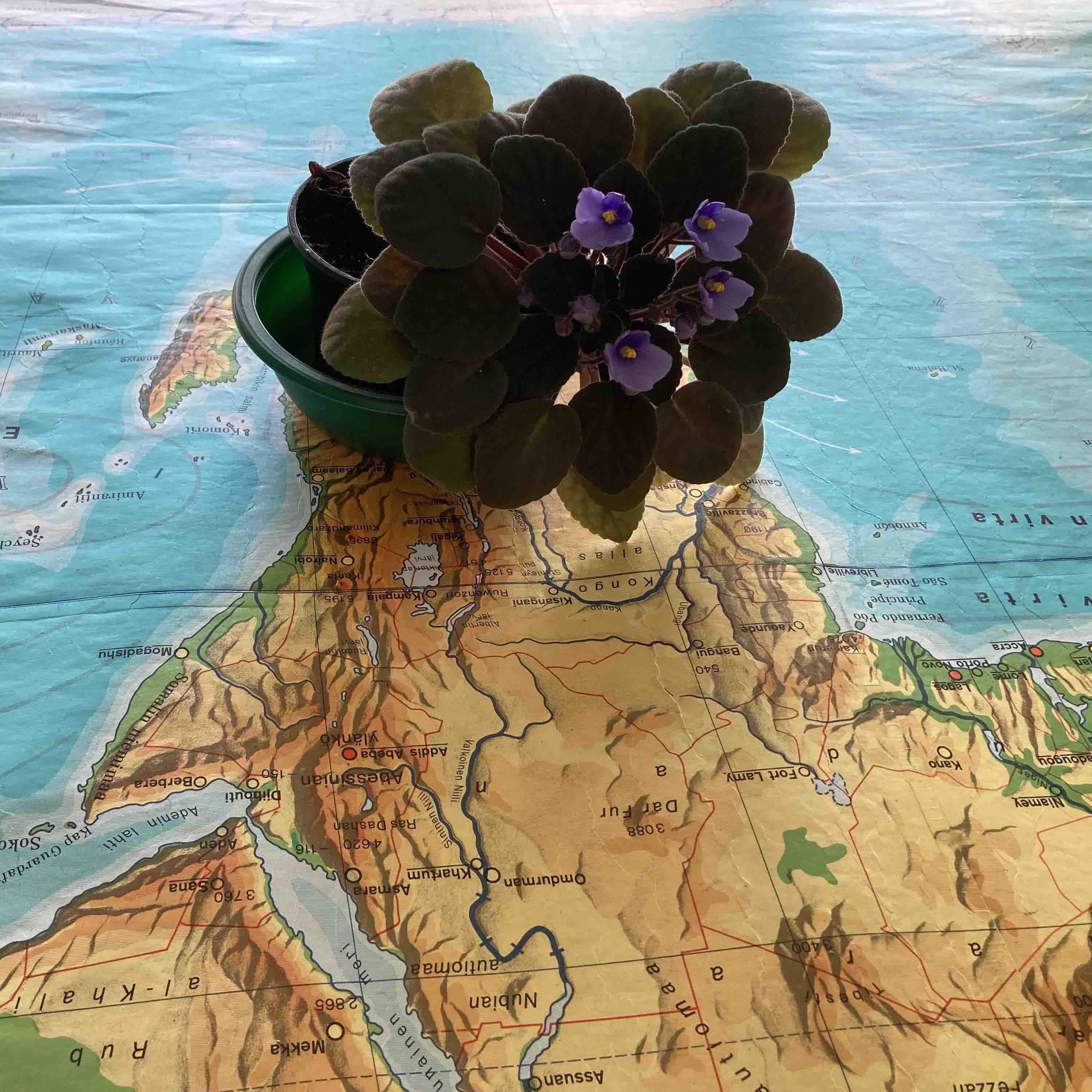
Below: an Usambara violet (Streptocarpus ionanthus), a species classified as “near-threatened” in its native habitat – the Tanzanian Usambara (Dughulushi) mountain range, where cloud forests are today increasingly being cut down in order to give way to extended agriculture. Collected in the 19th century by British and German colonizers, further examined and propagated in Europe, the Usambara violets now survive largely as pot plants on narrow window sills around the world.
Art’s Birthday Rebirth: Soundtower Growing Roots

art, recent work, upcoming

Being part of the Ljudtornet (Soundtower) sound/art platform has been inspiring, joyful and rewarding in so many ways… From the beginning in 2018, we have realized six ANTENN festivals in the old Watertower of Gnesta (engaging almost a hundred Swedish and international sound artists, musicians, filmmakers, and other exhibitors/performers); we have made web radio broadcasts reaching listeners globally; and since 2020, we have celebrated Art’s Birthday on the 17th of January by making original sound/art installations.

From the Watertower into the forest; photo HHW.

When the local municipality decided to lock the watertower permanently in 2023, the Soundtower staged a mourning march and farewell ceremony. We lost a homeplace, but the spirit stayed with us; we kept on collaborating, in various constellations, and kept in touch. In November 2024, some of us took part in a manifestation for Ulvaskogen/Wolves’ Wood – a local forest, threatened by brutal logging. From this event, a seminal thought began to grow… and on Art’s Birthday 2025, the seedling reached the light.

The Soundtower is growing new roots… 

This slideshow requires JavaScript.

“The Light in Wolves’ Wood” event, Nov. 17th, 2024;
contributions by Soundtower artists Julia Adzuki, Patrick Dallard, Tomas Björkdal, Rolf Schuurmans, Helena Hildur W, the Ministry for Environmental Grief;
photos by Eliot Freed

Praxis of Social Imaginaries, Summer session 2023 (Palanga)

art, recent work, time-out, upcoming

End of July, and a group of scholars and artists meet up to continue the journey that begun in March: studying the Praxis of Social Imaginaries. Observing our own times through the lens of mediaeval travel accounts, this transdisciplinary research project is now turning to William of Rubruck and Marco Polo – both speaking to us from the 13th century.

Summer session readings: the travels of friar William of Rubruck (photo credit Laura Hellsten) and Marco Polo’s Book of the Marvels of the World

A diverse bunch of people we are, actually representing all continents except Oceania; diverse also in age and cultural background, not to mention other kinds of situatedness… Reading under the pine trees in Palanga Botanical Garden brings out knowledge and memories from Sápmi and the Amazonas. Listening to voices from the 13th century brings out concern for the silence(d) in history. The ‘brave space’ of genuine dialogue brings out deep emotions of grief, joy and care… as well as the interchange of intellectual perspectives.

The Praxis project will continue for another two years – partly within the alternating Winter and Summer sessions of the Nordic Summer University, and partly in parallel side projects; next gathering planned in November, at Sigtunastiftelsen north of Stockholm. I’ll  have some mapping work to do before that… For now, I wish to cherish the creative flow that emerged from sitting beside Ilona Blumgrund, and our thinking together swiftly and wordlessly.

With great gratitude to Ilona, Adriana, Jackie, Louie, Emilia, Roberto, Tinka, Eduardo, Dorcus – and, of course, co-facilitators Lindsey Drury and Laura Hellsten – à la prochaine!

Mapping on the beach; how to realize common values in colonizing the future

About the Nordic Summer University
This particular study circle is but one out of a dozen, which together constitute the Nordic Summer University. From July 27th to August 3rd, the NSU Summer session 2023 was held in Palanga, Lithuania. Keynote speakers Ekaterina Kouznetsova, Amanda Valentin and Epp Annus all focused on different aspects of democracy in our time; academic freedom in an authoritarian society, election monitoring, and Russia’s colonial engagements and imaginaries of supremacy. In daytime, study circles worked independently (and sometimes joined). In the evenings, cultural programs were offered – such as music, workshops and multilingual readings (a practice introduced by Lara Hoffman last summer)… Together with Alina Kalachova, I conducted a mapping event which made us think, as well as cry and smile. A valuable experience.

Keynote speaker Epp Annus presenting a poem by late writer Victoria Amelina (killed in Russian strike on Kramatorsk, July 1st); and a joint reading of short stories on the beach

About Palanga and Hotel Vysuris
The venue and the city itself deserve some attention, too. Hotel Vysuris, built under the Soviet regime, stays almost unaltered since the 1970’s; history alive in many aspects, also in the struggle of the kitchen staff to navigate between different instances of need and want. The long applause they got at the final gala dinner was well earned.

(above) Vysuris restaurant and the last evening’s gala dinner
(below) Some features of the labyrinthic, circular building

And finally, some touristic views from walking in  Palanga – and a treasured gift (thank you so much, Dorcus!):

stenen från Dorcus (kopia)

Praxis of Social Imaginaries, Winter session 2023 (Oslo)

art, recent work, time-out, upcoming

Last month’s notes from the conference in Åbo/Turku briefly mentioned a new research project launched by Laura Hellsten. Here’s a little more on that…

Laura’s scientific approach is shaped by her dual competence as a dancer and a Doctor in Systematic Theology. While she holds a position at Åbo Akademi University, part of her current research will be conducted within the framework of the Nordic Summer University (aka the NSU). Actually, this project has already begun; in early March 2023, the first gathering of NSU Circle 3 Praxis of Social Imaginaries; Cosmologies, Othering and Liminality took place in Oslo. Lindsey Drury – post-doc and co-facilitator of this study circle – is an early modernist historian, and an educated dancer as well. Their common work evolves around mediaeval accounts from travels into ‘unknown lands’; aiming at transdisciplinarity, the methodology incorporates reading aloud, various modalities of movement, academic lectures and discussions, and…

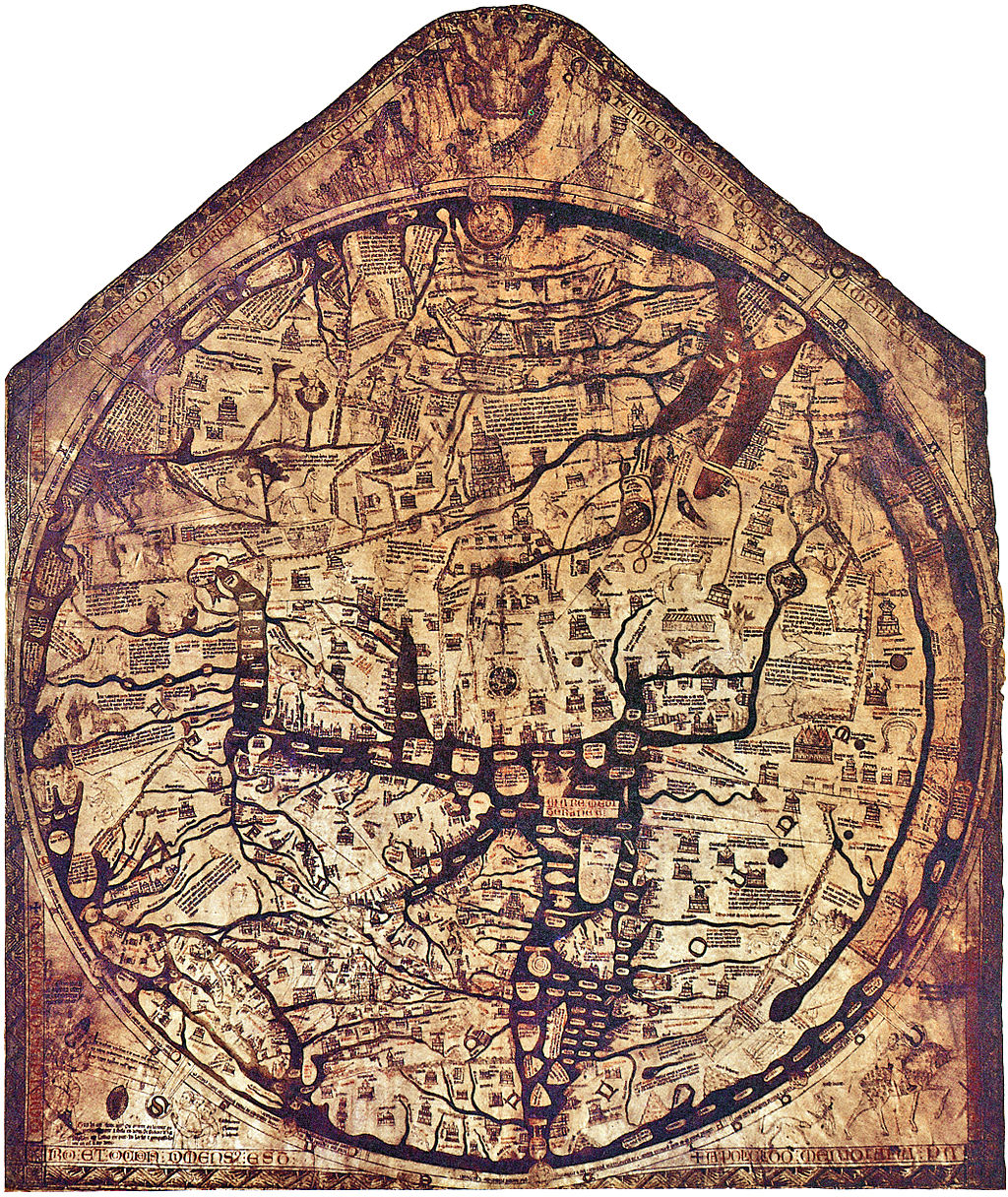
1024px-Hereford_Mappa_Mundi
The Hereford Mappa Mundi – a mediaeval world map,
conceived in the very place where Gerald of Wales spent the last part of his life (although nearly a century later) –
presented in a keynote lecture by historian Line Cecilie Engh; picture made available by Wikimedia Commons

…and more? Future will tell.

In this first Praxis session, a number of scholars and artists from different fields and places processed the tales of Gerald of Wales: a monk travelling uncivilized Ireland by the end of the 12th century – reporting back to his learned colleagues and to the English king; picturing Éire and the Irish through a lens of curiosity, religious zeal and practical political thinking.

Here’s my own recap from our five of days walking, talking, listening, disputing and dancing in wintery Oslo:

230304 01b

Domus Theologica (University of Oslo) hosted the event

Streets of Oslo – a signpost pointing the way to a bomb shelter;
Saint Olav guarding sewages and waters underground; icy footway; a cool cat by night

Saint Olaf, king of Norway, accompanies us, as we walk the streets – occasionally trodding along his old pilgrimage path, leading all the way from here to Olaf’s grave in Nidaros (Trondhjem). In his youth, Olaf sailed the Baltic and the North Sea as a fierce warrior, before being baptized and returning to Norway as a Christian king. His image, cast in iron, can be seen on every lid covering the descents to the city’s system of underground sewage pipes. The waters that have cleaned our bodies – or passed through them – is kept from sight and smell in those sewers. Meanwhile, Aker river running through the city, once heavily polluted, is now restored to be the ‘green lung’ of the urban area…

How can one atone for the wrongdoings of history? As we walk and talk, I think this may be the beginning of a pilgrimage.

230305 05b
Limestone wall of Old Aker Church – the oldest existing building in Oslo,
erected by the mediaeval pilgrim route

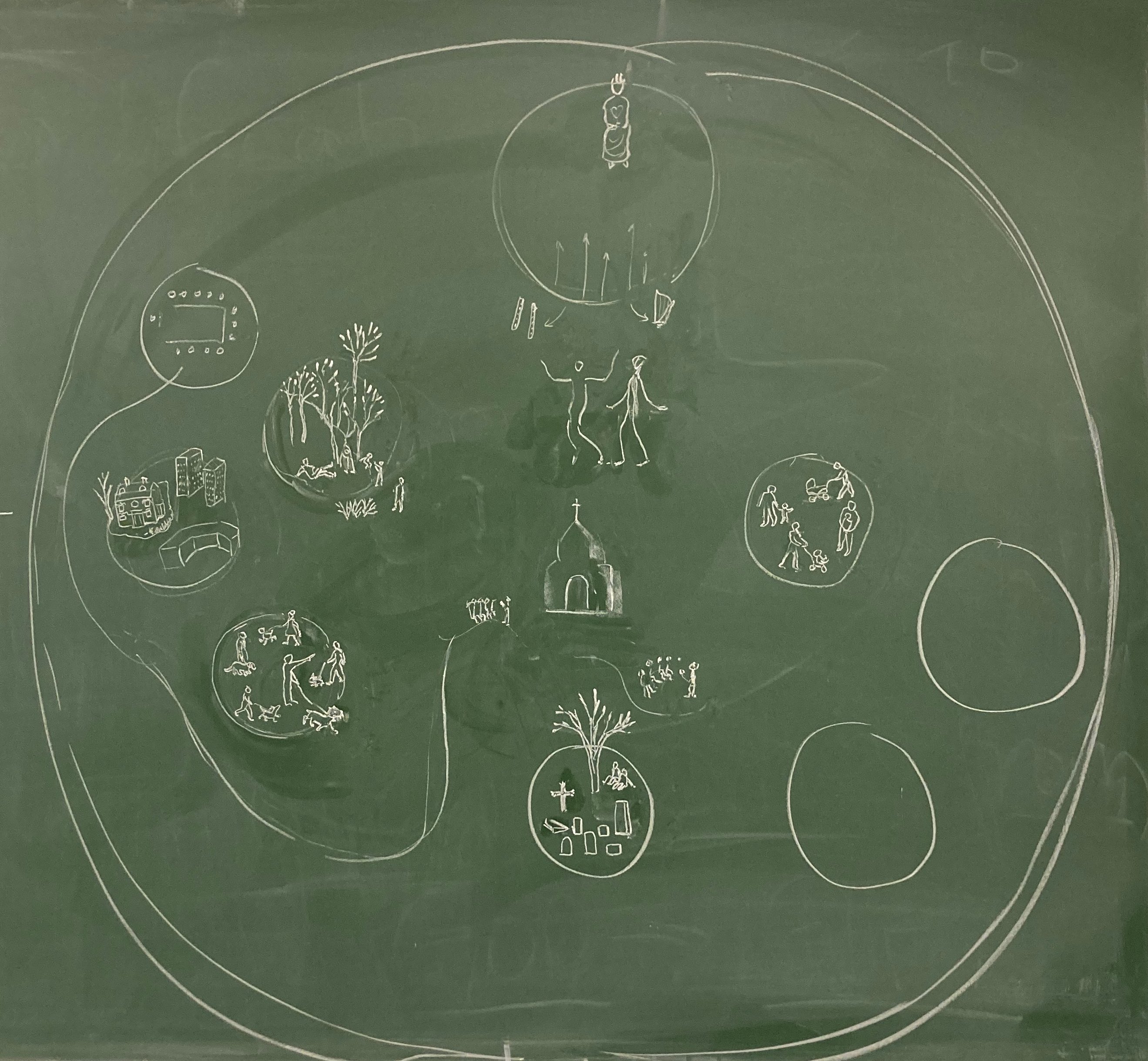
For the closing summary, I did an ad hoc mapping on a classroom blackboard – picturing our experiences as a group: reading Gerald’s tales, listening to Viveca Servatius’ lecture on Hildegard of Bingen, seeing lovers in a churchyard, meeting dogs friendly and angry, slipping and sliding in a park, dancing between graves… Other participants helped me fill in the empty spots.

230305 06b

Next gathering will take place in Palanga, Lithuania, when July turns August. See you there!

230306 14 (kopia)

Musical Quarter Interlude

art, time-out, upcoming

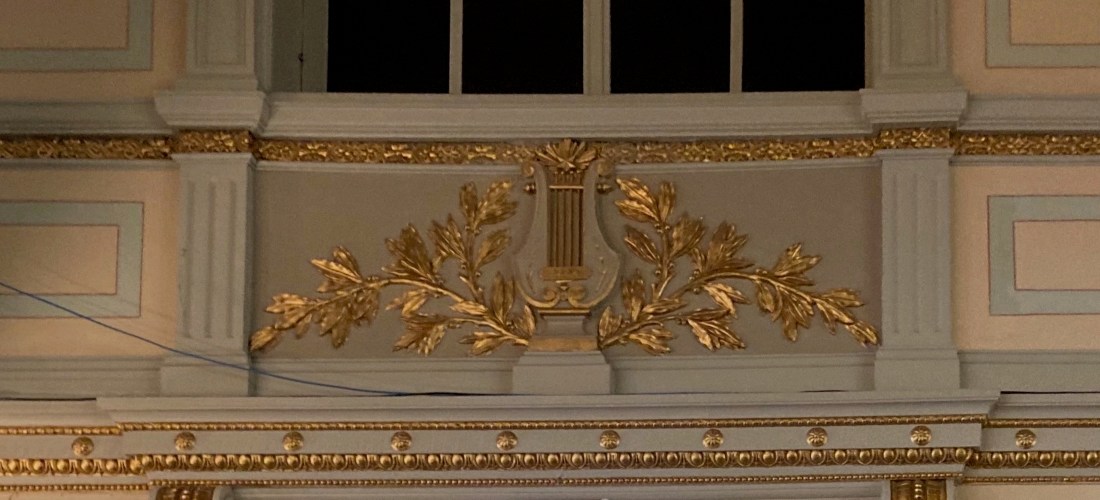
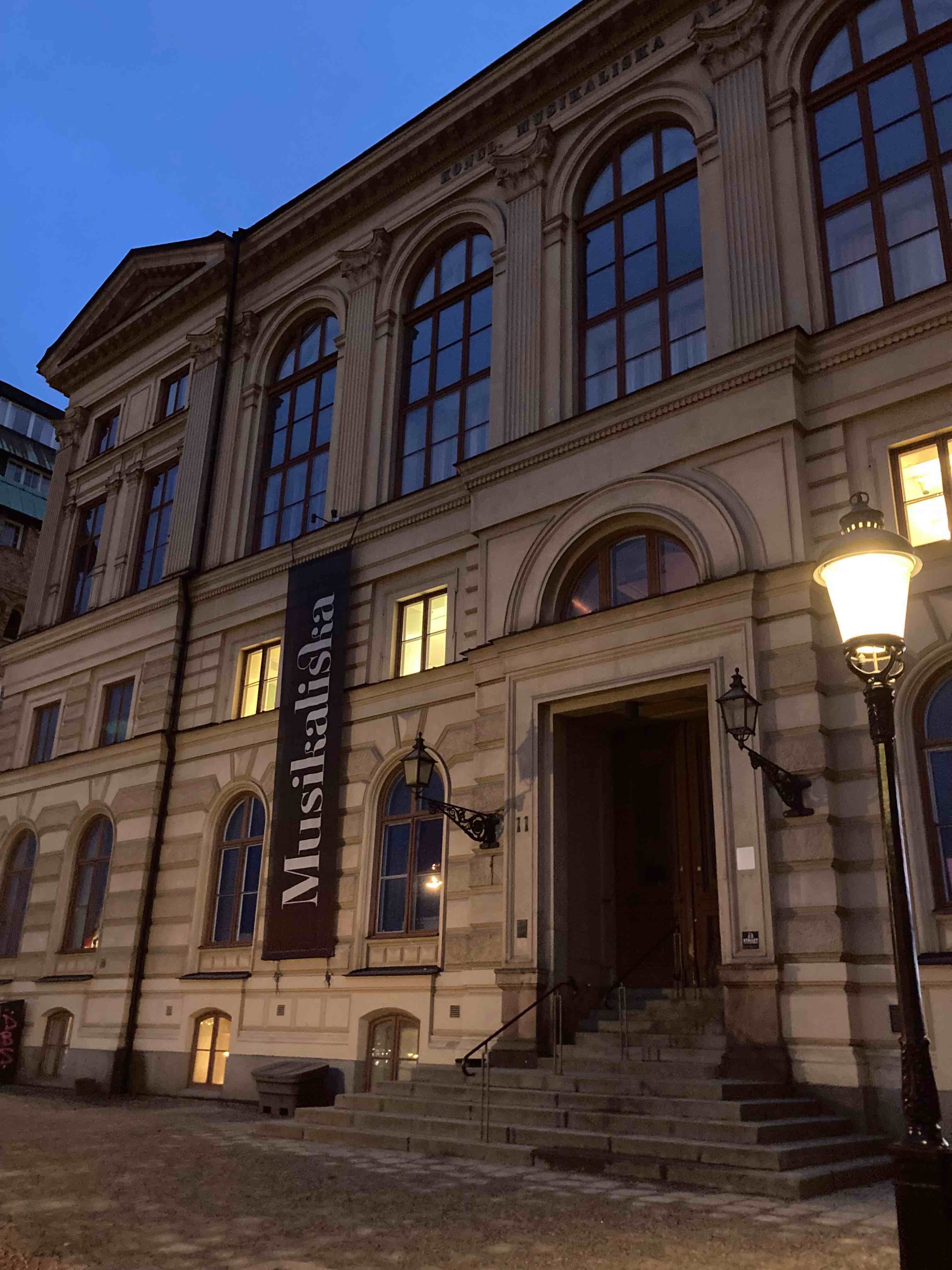
Time to move on – from the digital dirtroad experience to an exquisite 19th century building by the waterfront of central Stockholm: the very first concert hall built in Sweden, patroned by the Royal Swedish Academy of Music. Today, the Musical Quarter is multi-functional venue hosting a variety of genres: from folk & world music (permanently housed in the old backyard horse stable) to early music, opera, jazz, philharmonic and purely experimental… in creative process, as well as in public performances and festivals. 

230216 05b

Right now, the prospect of having rents increased by more than 55% threatens the whole initiative. The managing team then decided to mobilize all friends and good powers in Scendödsfestival – a full night’s total music and art experience, with free access for the public – happening on Saturday, March 11th.

I’m very happy to be counted among those friends; last week, I joined a group of visual artists – invited by our much esteemed colleague Tobias Sjöberg – to check out the site. What a marvelous place… 

…and what a kind, professional and receptive bunch of people to work with. Many of us had never met before – I’m eager to see what we’ll come up with together!

More to follow…


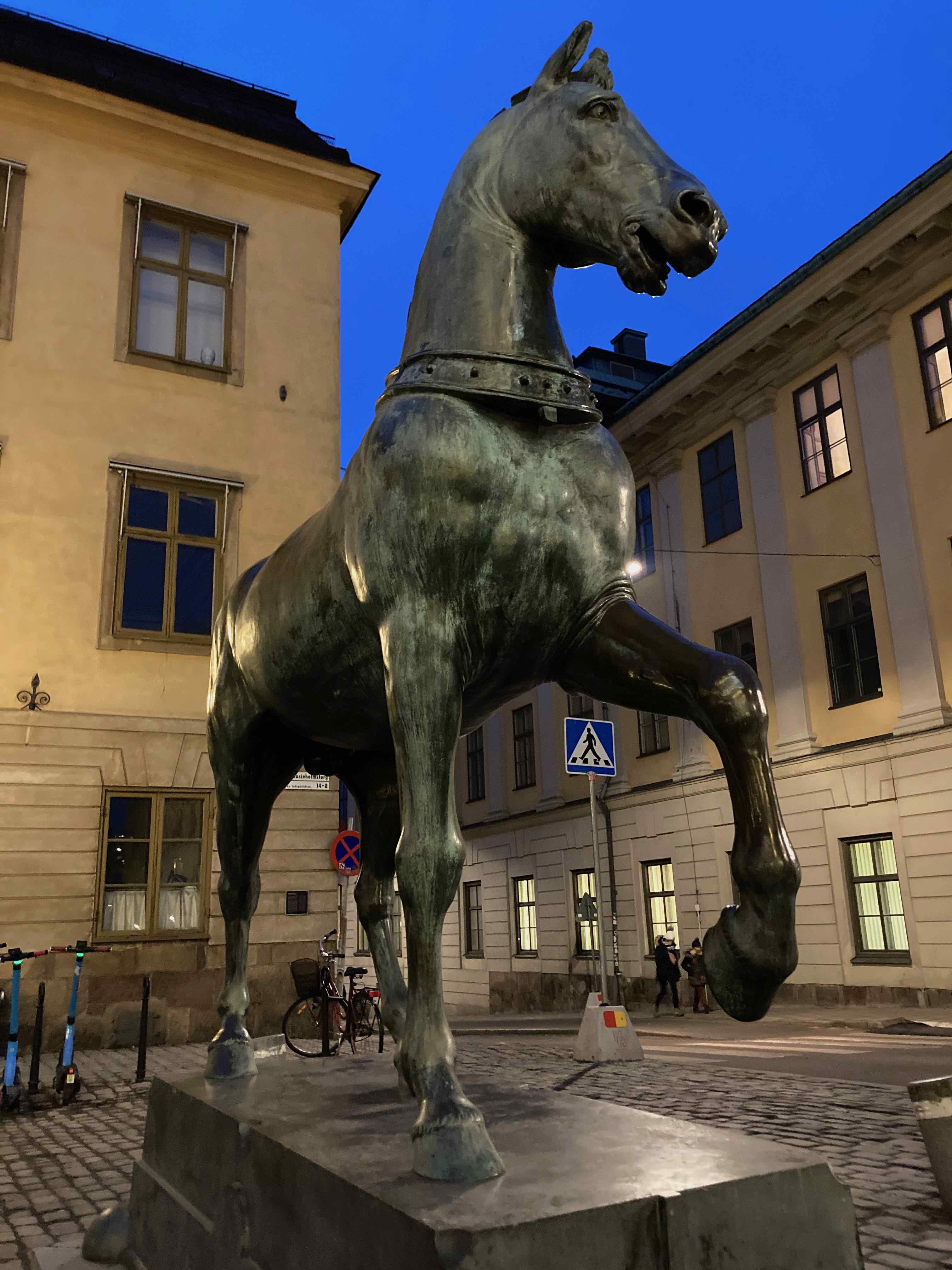
Bronze horse close to the Musical Quarter,
casted from a copy of the famous Byzantine horse sculptures in Venice;
an installation by Swedish sculptor Sivert Lindblom (1989)

Upcoming: the Exhibition and Life (reconsidered)

art, curating, upcoming

In late autumn 1986, I staged the Exhibition and Life in the gallery space of the Royal Academy of Art in Stockholm. Being a fifth year student at the Royal Institute of Art, I had a studio space in that same building; so, I brought my collected body of work – unsorted – onto the gallery floor. The exhibition took shape continuously until it closed. The title was suggested by my firstborn, then six-and-a-half years old.
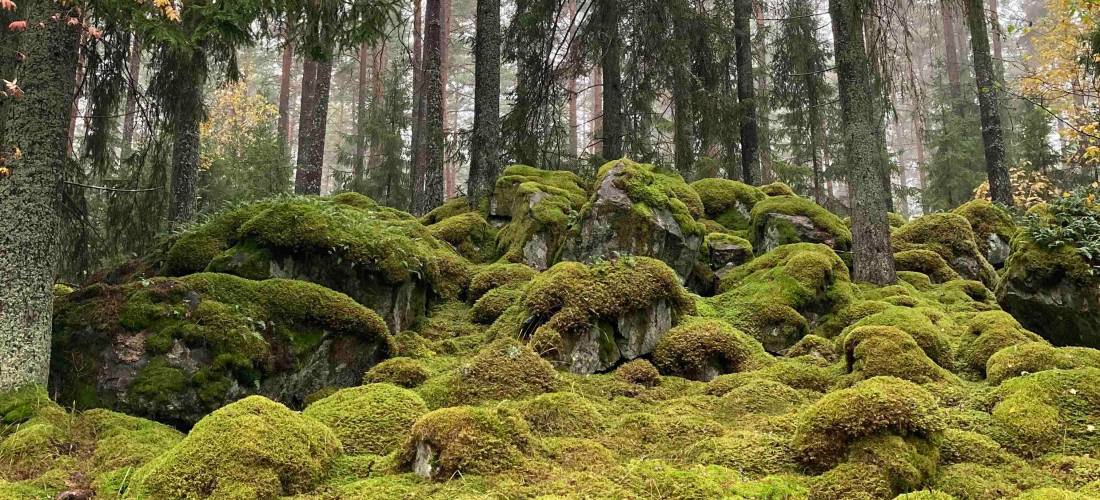
Today, over three decades later, it’s time to reconsider.

The Exhibition and Life (reconsidered) reflects the initial process – using paintings, drawings and objects made during the last few decades as material. Again, the exhibition will be in constant change – as life itself. For a deepened experience, visitors and guests are invited to actively take part; by (re)curating and (re)arranging, by interventions and performances of your own, as well as in shared reflections and public talks.

Utställningen och Livet (en omprövning)

The Exhibition and Life (reconsidered) will open Tuesday May 10th, and close Sunday June 5th. Open every day 12-5pm; Tuesday evenings until 8pm.

Documentation and programme updates will be published here continuously.

220506 05c

the venue: Hälsingegatan 43, Stockholm

Hälsingegatan karta

Art for Ukraine by Duo Contradiction

art, upcoming

Welcome to bid in this art auction for the benefit of Ukraine! You can partake digitally, by registering through Duo Contradiction website; or, if you happen to be in Stockholm by March 26th, by showing up at Birkaterminalen venue. There will be borsjtj and fascist-fighting spirit! No profit will be taken – the full income will go to humanitarian aid organizations in Ukraine (see below). More than 100 artists of many nationalities contribute; I feel grateful and honoured to be one of them.

Art for Ukraine beneficiary organizations (to be updated)
Shelter PLUS “[we] started a process of large-scale evacuation of disabled people. We are confident that Ukraine will win this war but while it is taking place it’s very often impossible for disabled on wheelchairs or with gross mental illnesses to go down to basements and bomb shelters. And the same refers to urgent evacuation, if some place is under mass shooting.”

191211 07b
191211 07;
leaf gold, leaf silver, oil and blackboard paint on wood panel,
44 x 22 x 2 cms (2019)

Bilder från Nysund / New Sound Images IV

art, recent work, time-out, upcoming

One last day of preparations in the Watertower; installing and trying out sound equipment, mounting paintings, making shutters…

…and attaching them to windows, to keep daylight out; plotting projections, and mending the net of a sinker…

Quiet talking, electronically generated songs of light; sounds of wind and voices, bells and flutes floating within the tower. Tomorrow, Sunday January 16th, we’ll be ready to celebrate with you!

220115 06

Appearing on photos: Johannes Ferm Winkler together with Ljudtornet members Tomas Björkdal, Erik Peters, Patrick Dallard, Johanna Dahl, Julia Adzuki, Karin Lindström Kolterud; all photos by HHW.

Bilder från Nysund / New Sound Images III

art, curating, recent work, time-out, upcoming

Ljudtornet preparing for Art’s Birthday in the Watertower; testing new projectors, piloted by Johannes Ferm Winkler in the most gracious way. A setup is forming…

IMG_0222
At the same time, in other places: celebrations of Art and of the waters at Nysund are evolving. Sound art, installations and music by Erik Peters, Karin Lindström Kolterud, Tomas Björkdal, Johanna Dahl, Rolf Schuurmans, Patrick Dallard and Julia Adzuki will all flow together here in the next couple of days. Welcome to the Old Watertower in Gnesta on Sunday! Or listen worldwide via Art’s Birthday network on Monday.

IMG_0236(all photos by HHW.)