Quality and Research II

art, recent work, teaching

Bubble foil covering the windows, and a stout electrical heater in the atelier; temperature is climbing slowly. But I still can’t get any connection between camera and computer.

‘Qualitative Research’ may be described as research which is not primarily dealing with quantitative data (such as can be measured and treated stathistically), nor aiming at ‘generalizability’ or ‘objective truth’; it is rather interested in ‘perceived’,  ‘constructed’, or ‘created’ truth – though not necessarily denying the value of  the ‘objective’ or of quantitative methods.

It may be claimed that art in itself is pure qualitative research.

However, in the context of this course (see previous post) with visiting professor Liora Bresler from the University of Illinois, qualitative research is understood through the theory and practise of academic tradition. There seems to be some confusion about the concept Aesthetic-based; whether it refers to the setting – the site or object of observation – or rather if it points to a mode of perception to be cultivated by the partakers.

I believe this initial – opening – confusion is good.

peace and war

art, recent work

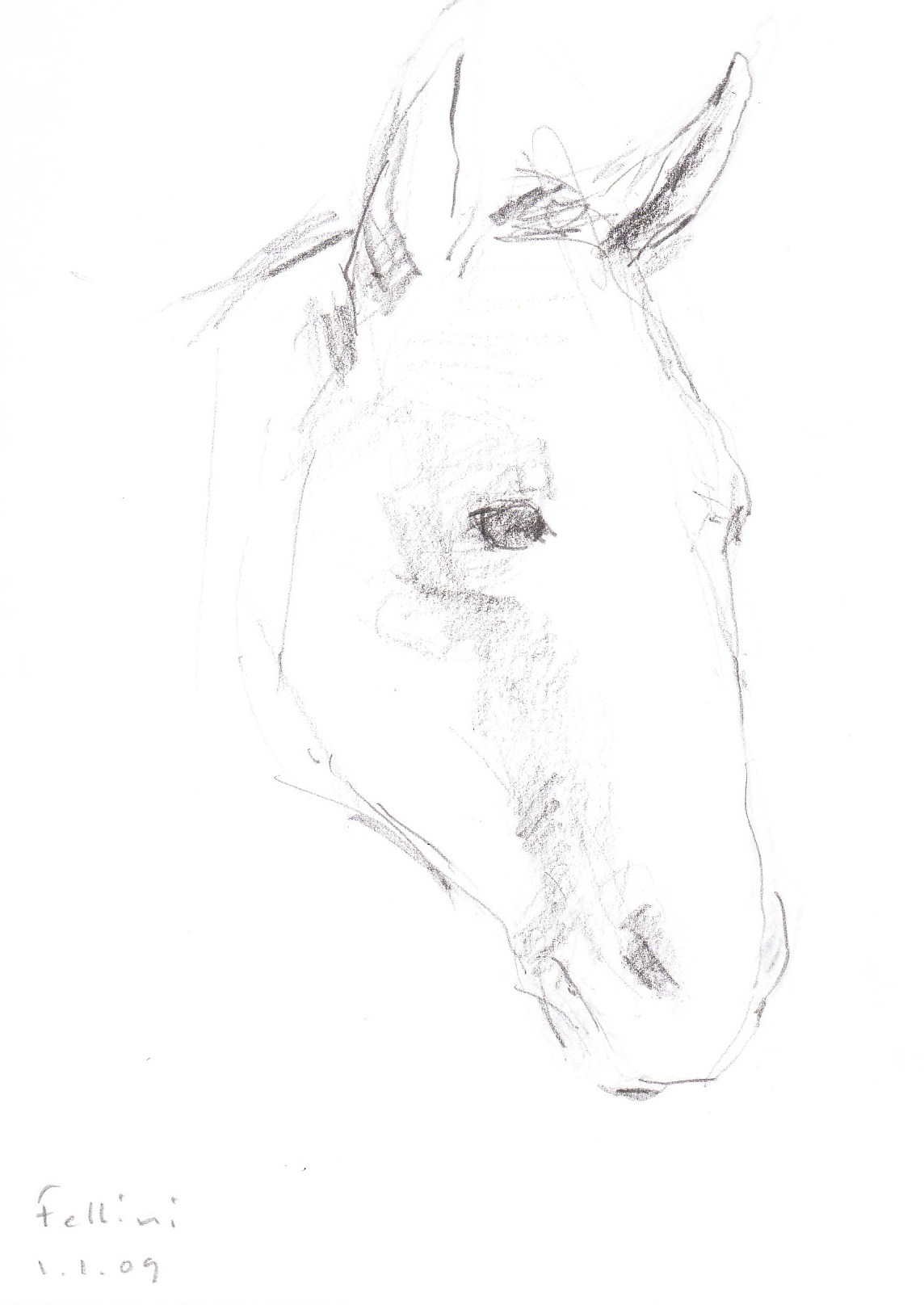
090101-1-fellini 090101-2-fellini

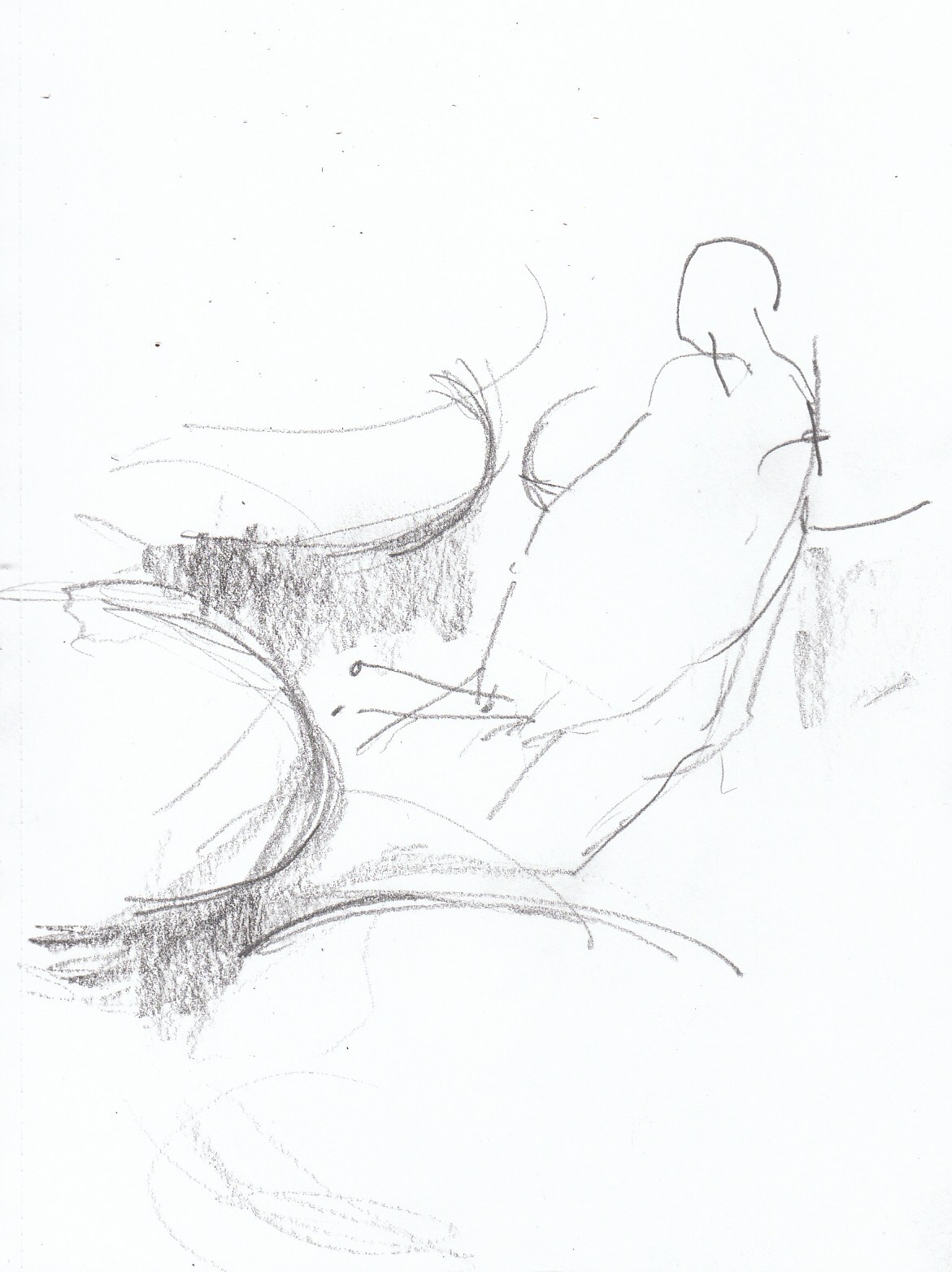
Fellini; graphite pencil on paper, 21 x 15 cms

Went to visit our daughter, working in a dressage stable, over New Year’s Eve. Short hours of daylight followed by cold, clear nights with Venus and the crescent moon over dark meadows. Those noble horses.

And then, bombs over Gaza.

Returning home, 16 degrees below zero, freezing cold in the studio.  And for the people locked up in Gaza: still more bombs, missiles, shooting.

One world.

http://www.avaaz.org/en/gaza_time_for_peace/?cl=164026500&v=2623

Orchestra rehearsal IV

art, recent work

konserthuset-081201-1 konserthuset-081201-2

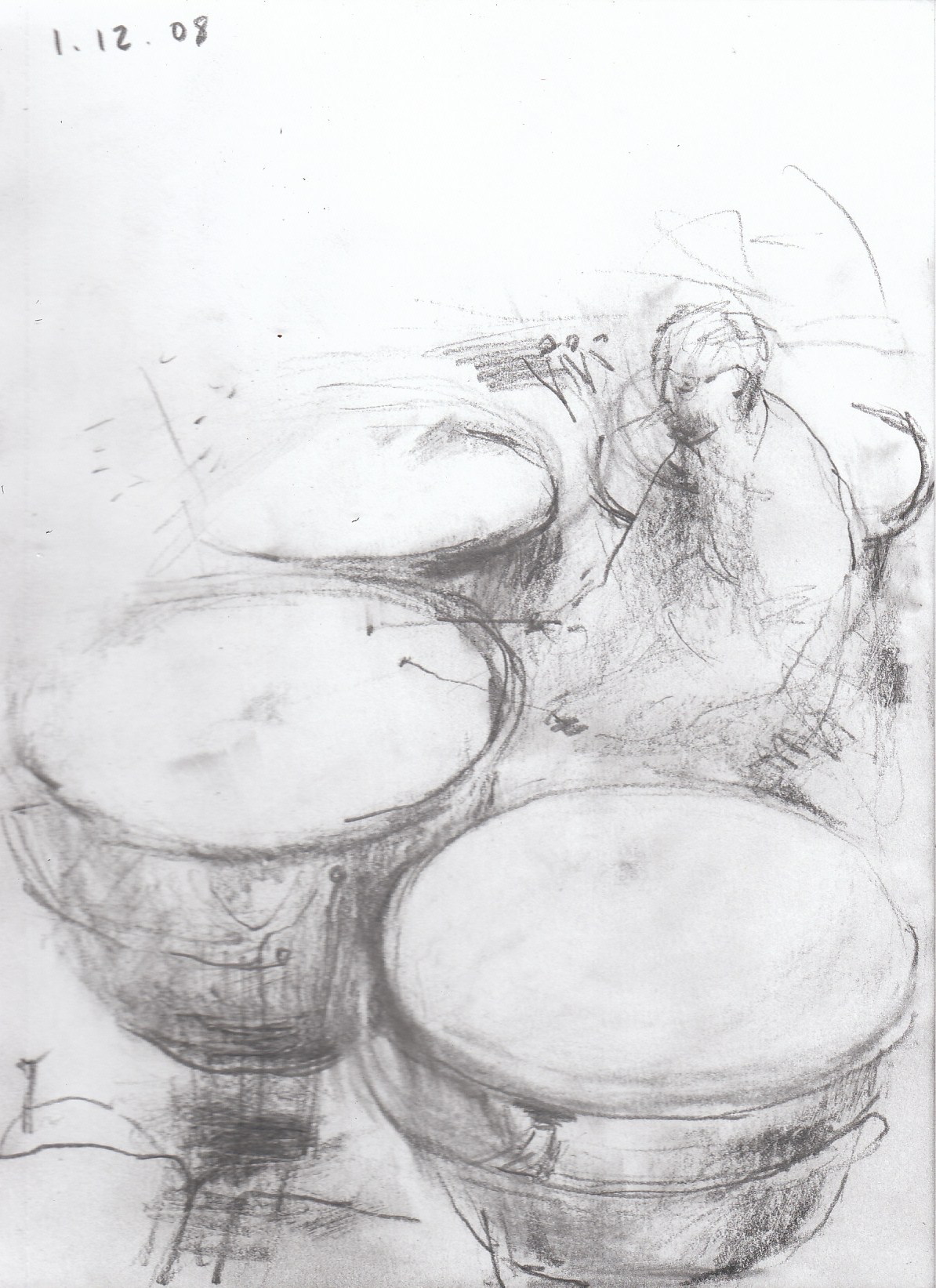
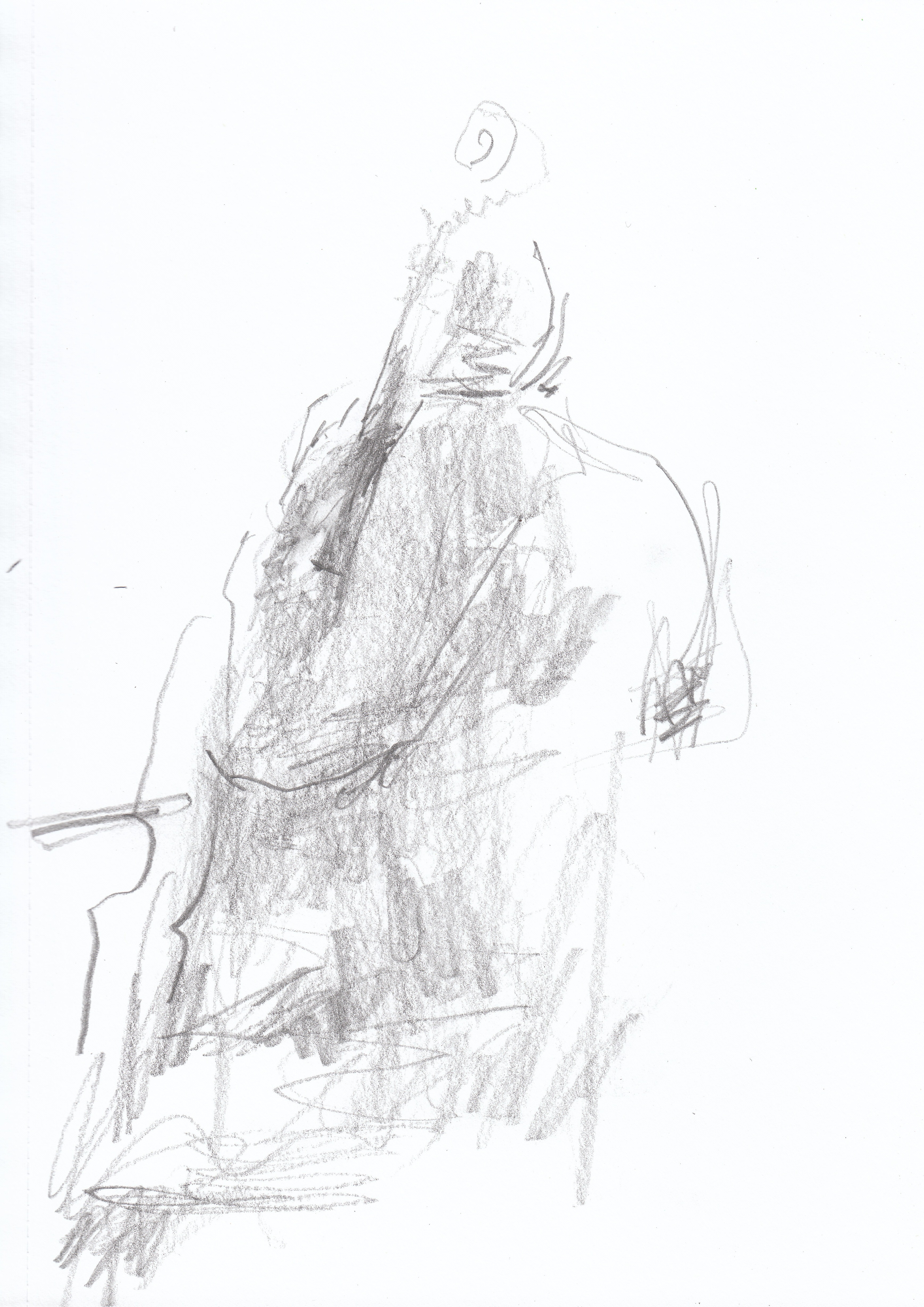
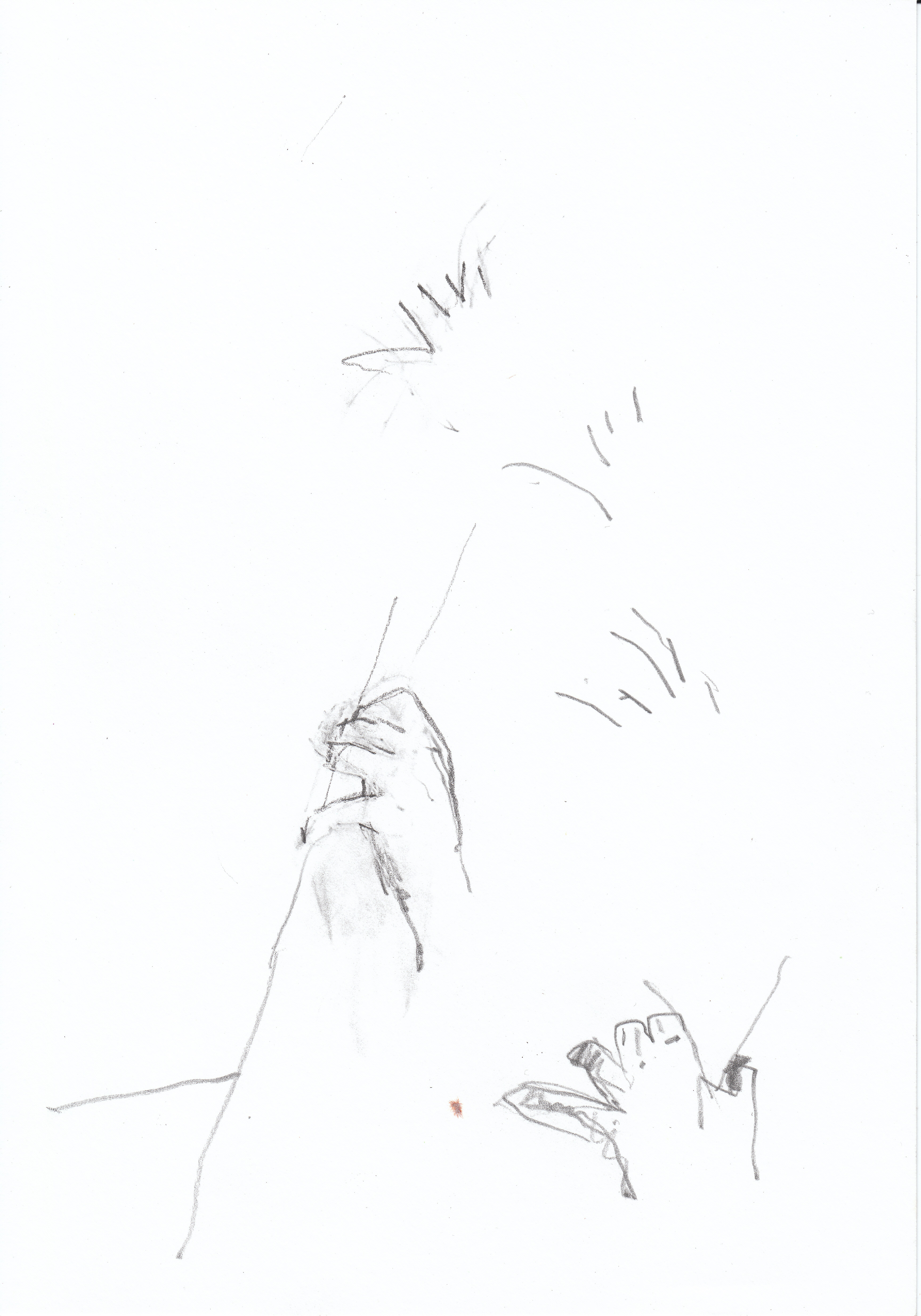
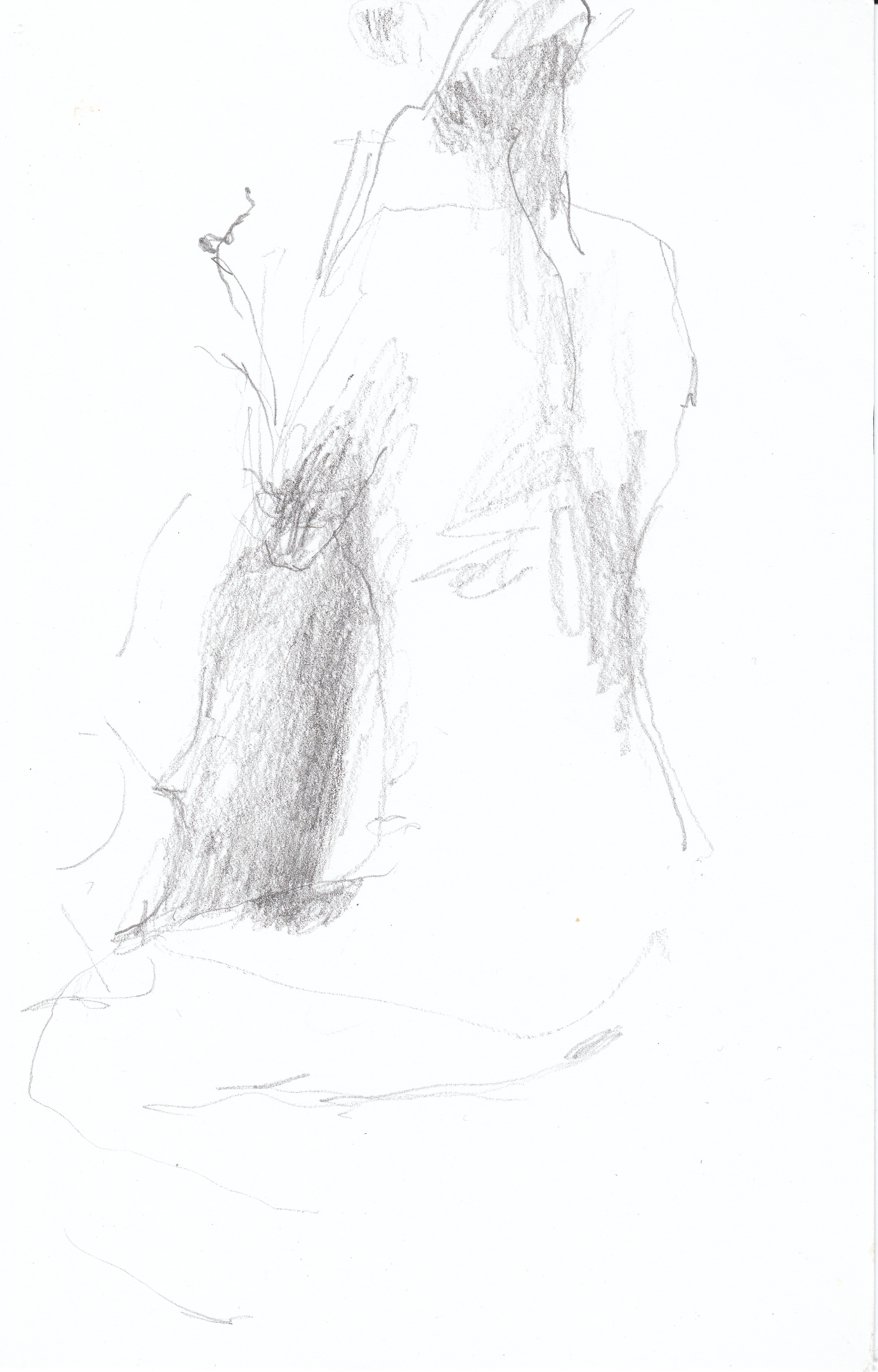
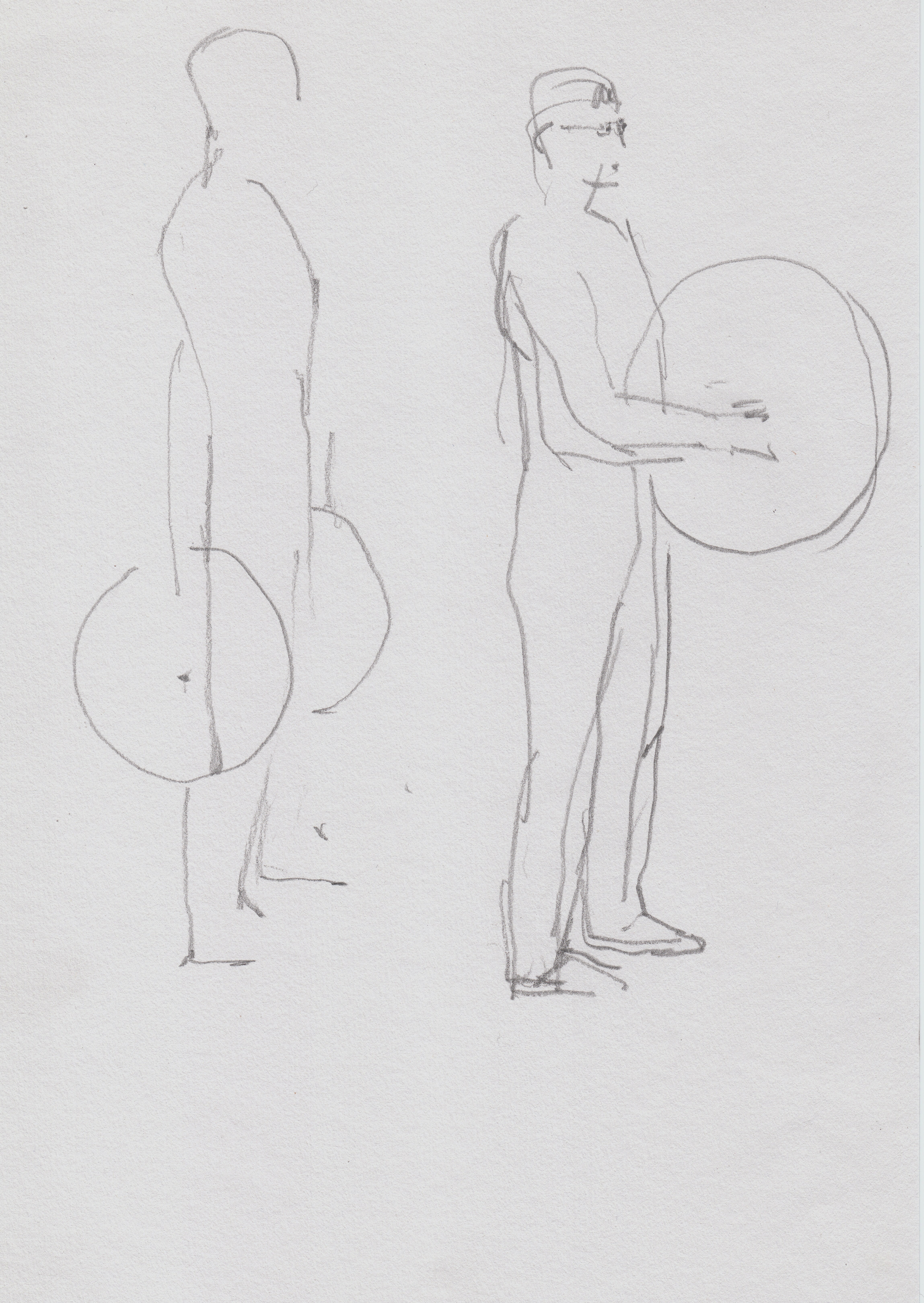
timpanist with his instruments; graphite pencil on paper, c. 21 x 15 cms

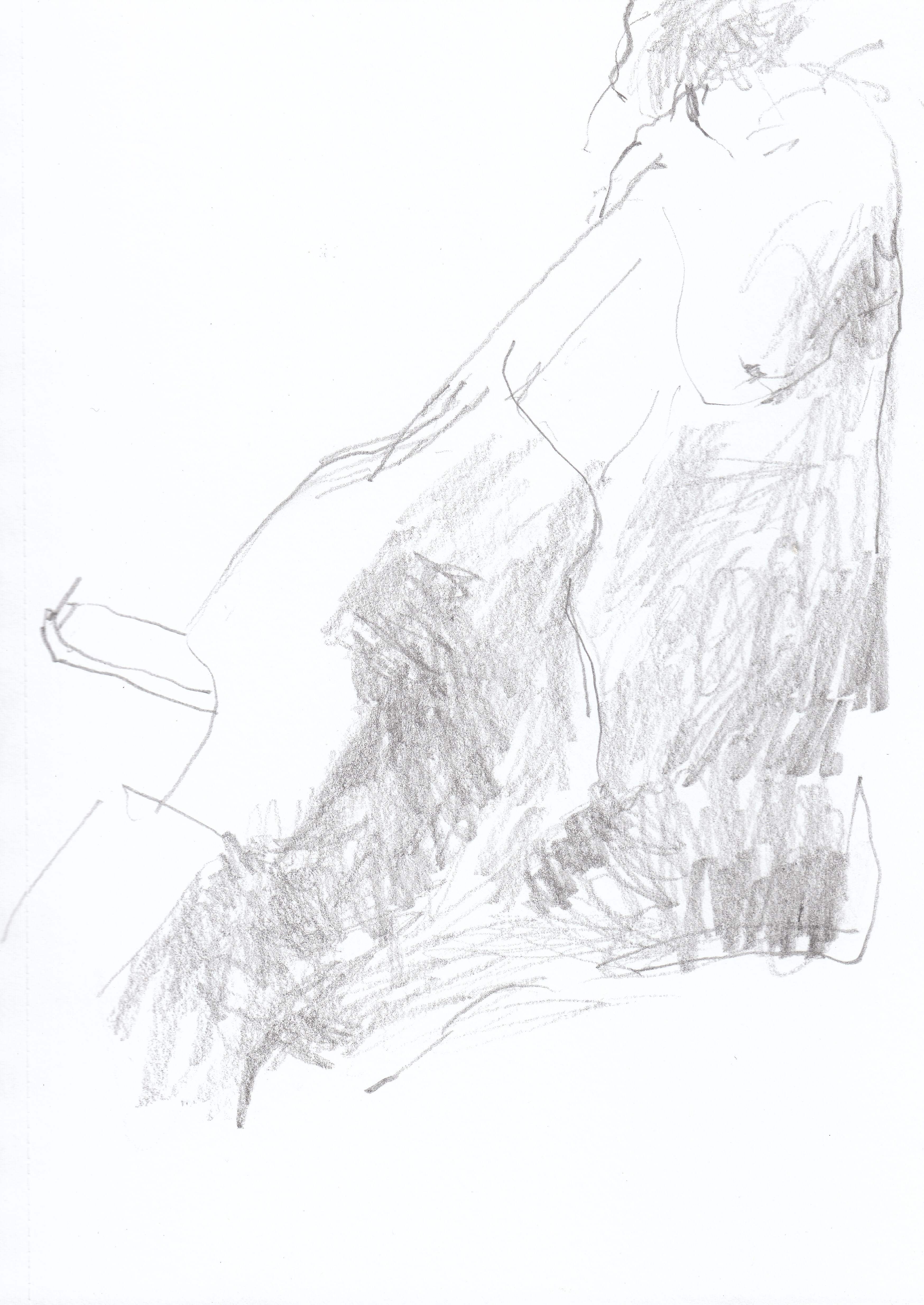
I was mistaken; I have to re-formulate. This polarity is not about time-and-space matters, the way dancers do it. It’s more like the visible world calling for the invisible. Material bodies of instruments and human beings, interacting to shape the immaterial/imaginary space of music.

Thanks to the orchestra and its various directors for sharing their working process with me.

konserthuset-081201-3

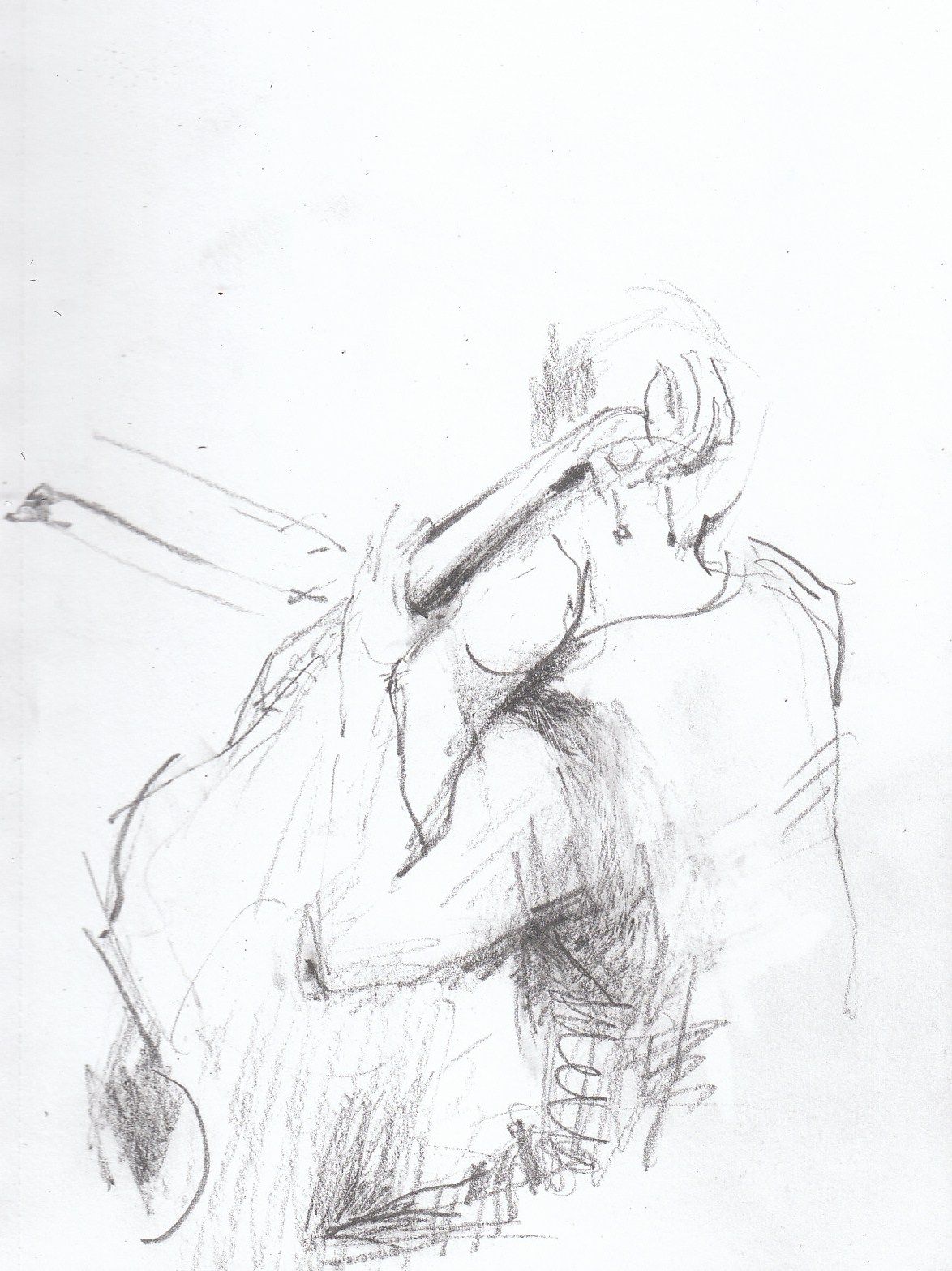
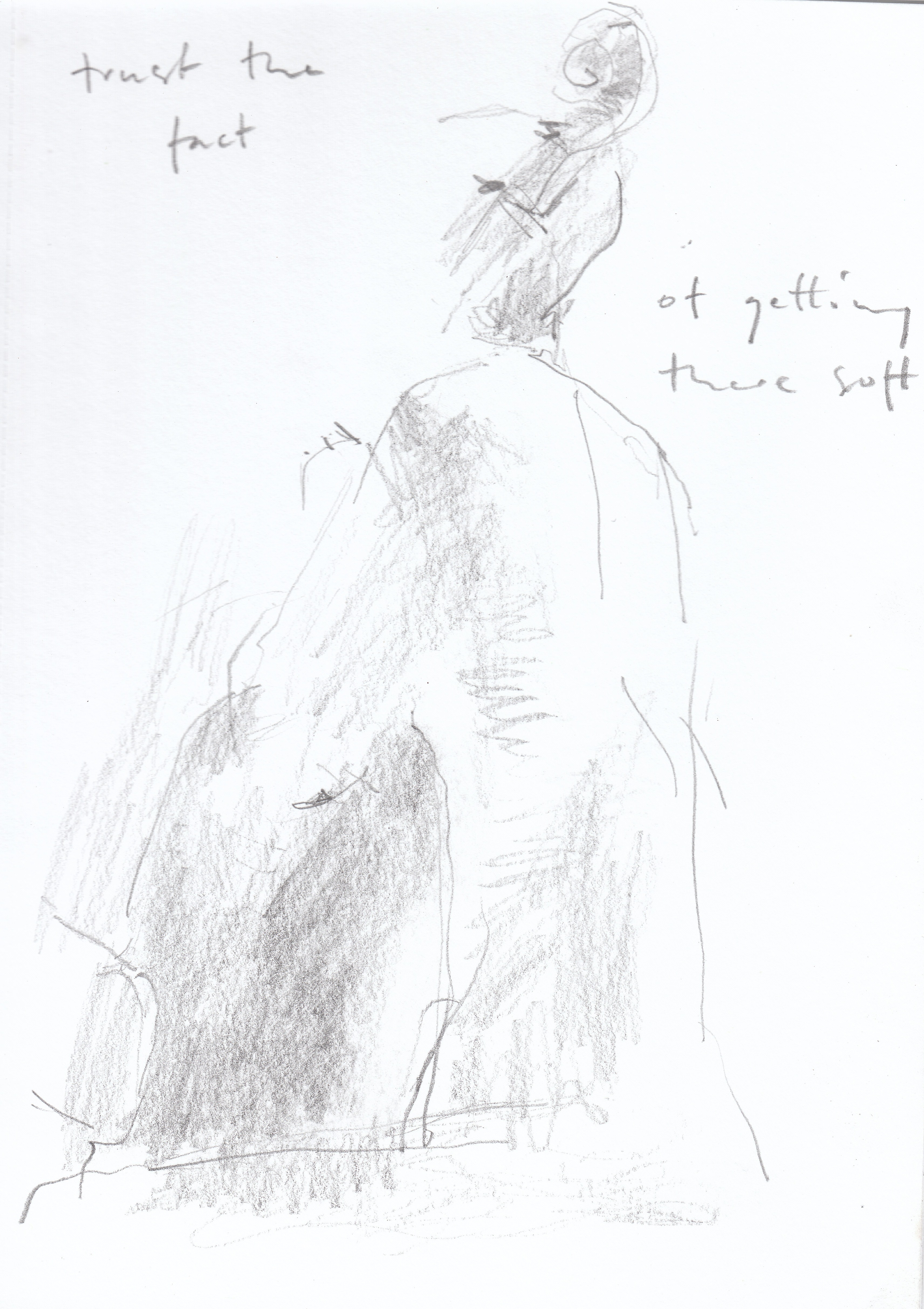
cellist with her instrument; graphite pencil on paper, c. 21 x 15 cms

orchestra rehearsal II

art, recent work

konserthuset-081107-3 konserthuset-081107-2

konserthuset-081107-4 konserthuset-081107-6

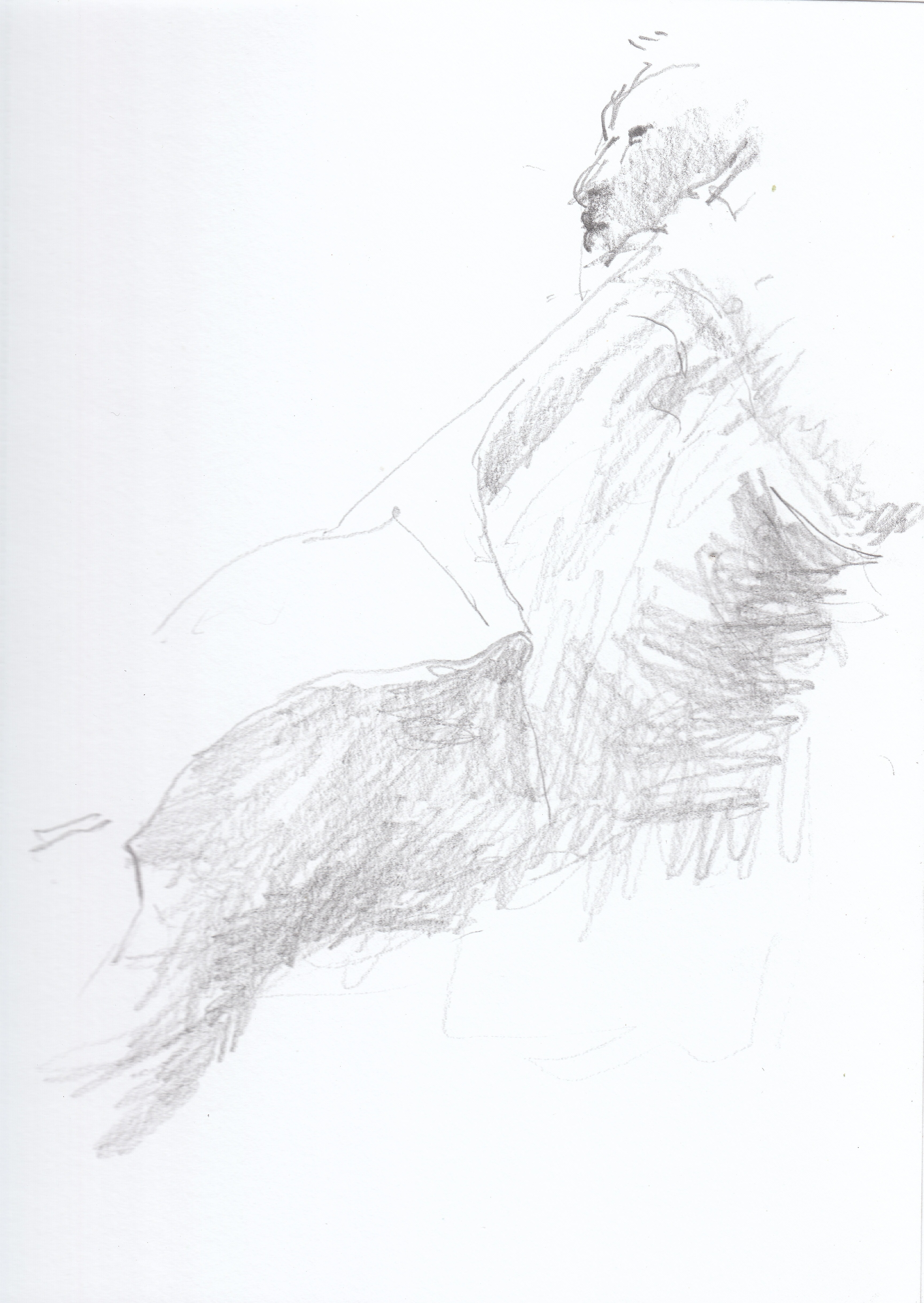
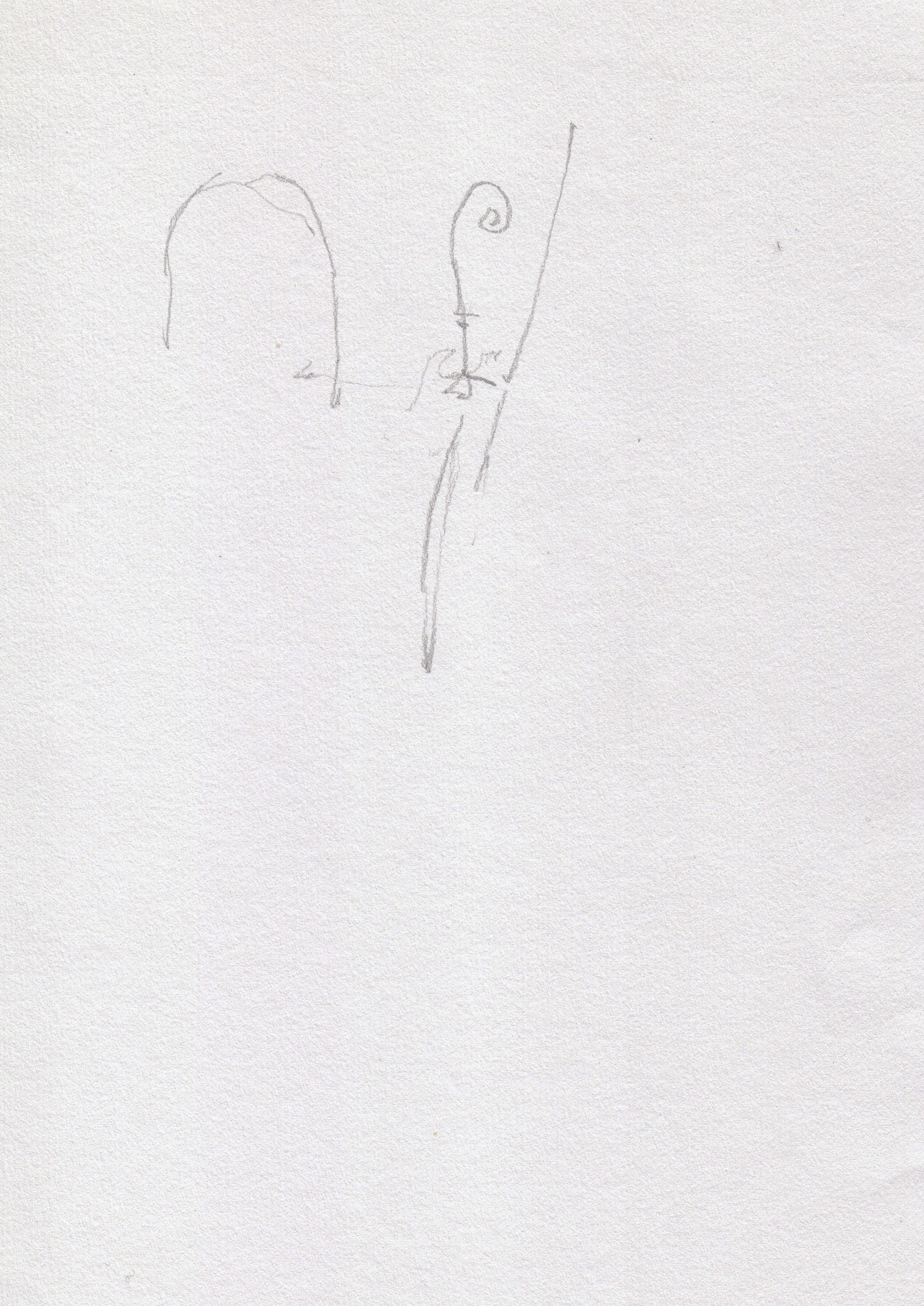
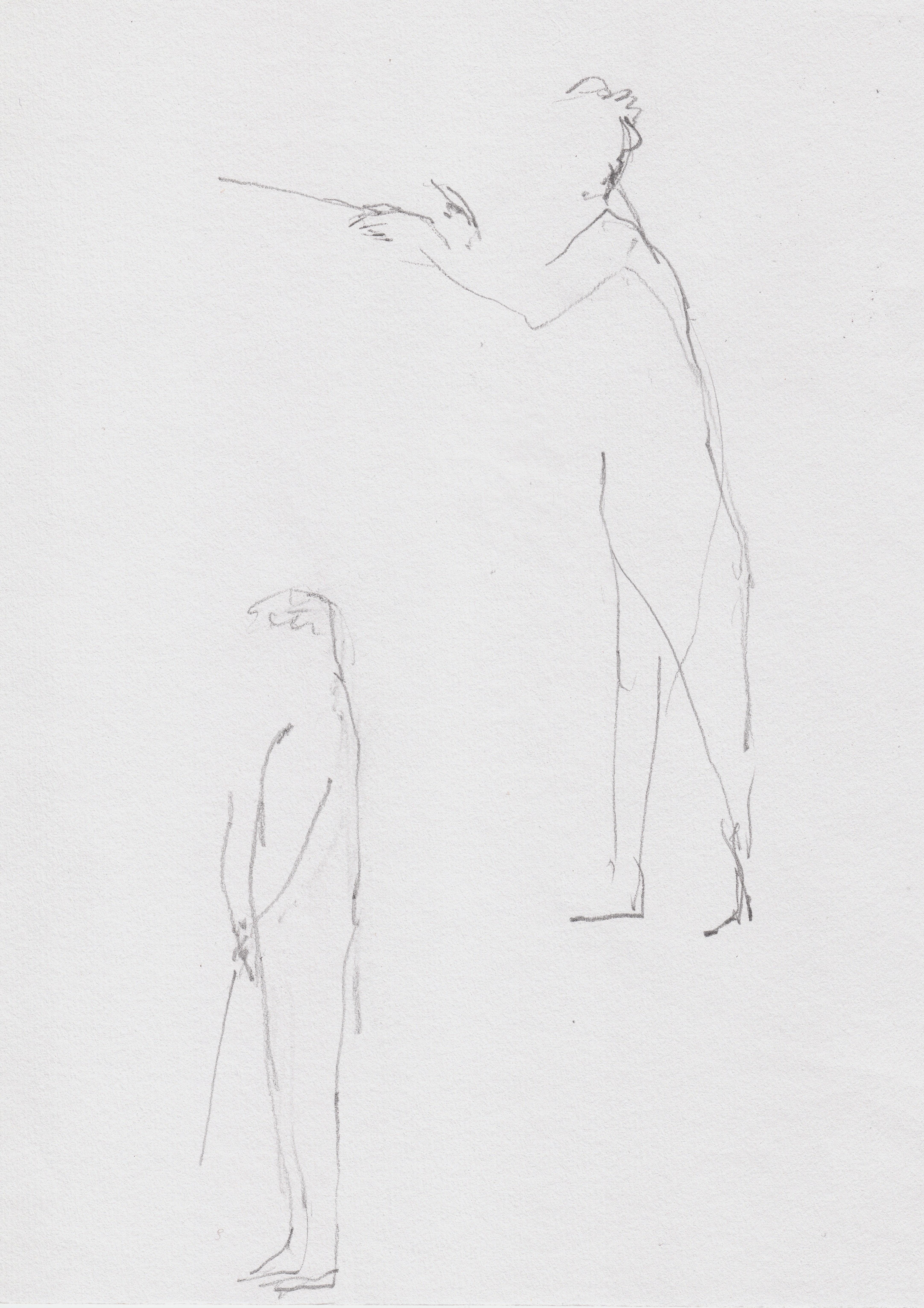
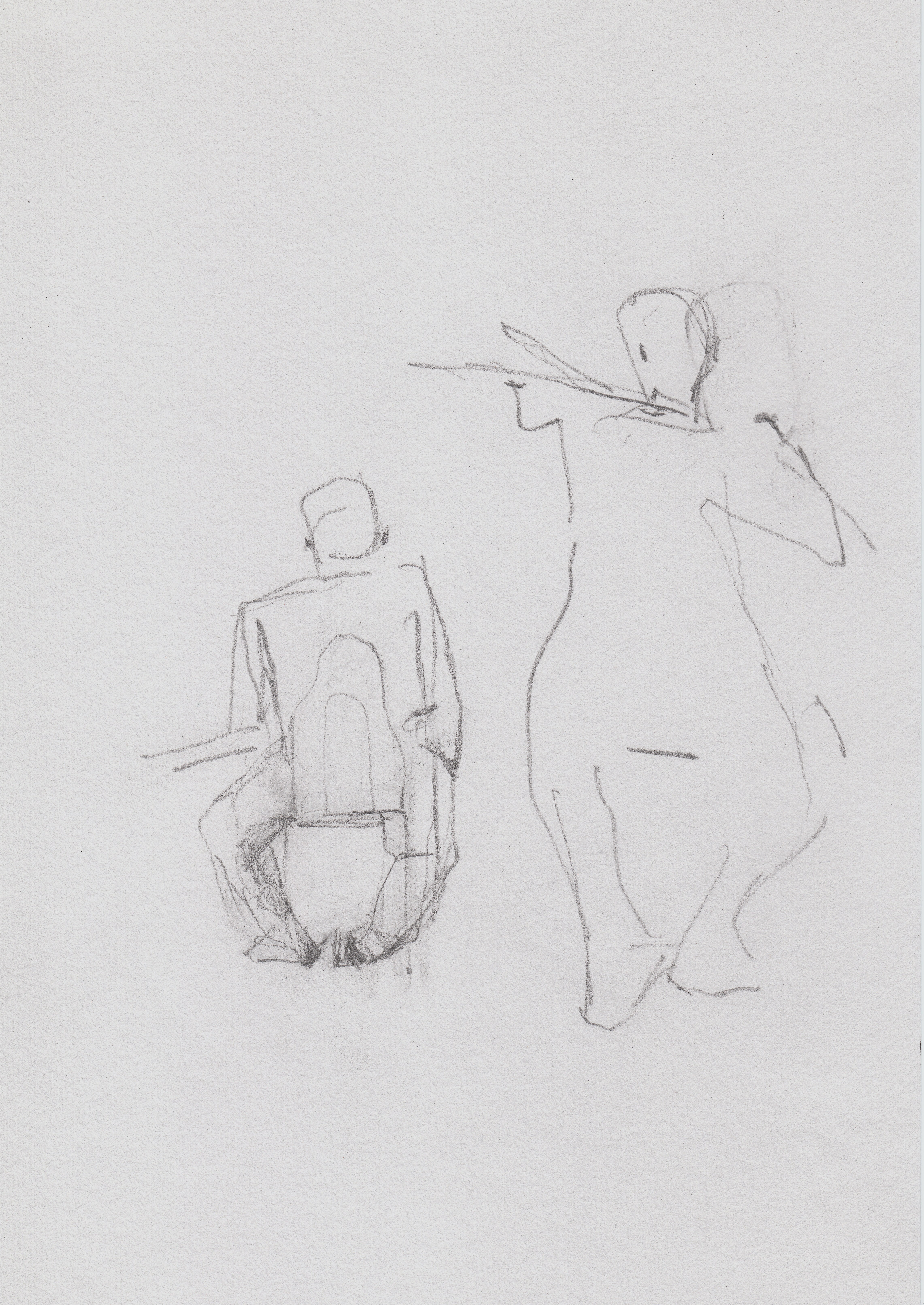
four drawings from an orchestra rehearsal; graphite pencil on paper, c. 21 x 15 cms

Yes, this is very different from drawing (for instance) dancers. While moving art performers interprete a temporal impulse into spatial, thus visible, reality, the orchestra’s performance establishes more of a polarity; the aim of the effort stays the audible field, and yet there is a great deal of ‘bodyness’: gleams of varnish on the violins; the instrumentalist’s physical concentration and coordination of movements in playing; the almost architectural issue of supporting and supported parts when the cello player brings her instrument in a ready-to-start position. And the conductor’s oral instructions helping to bridge the gap… like “trust the fact of getting there softly”… I’ll keep that one.