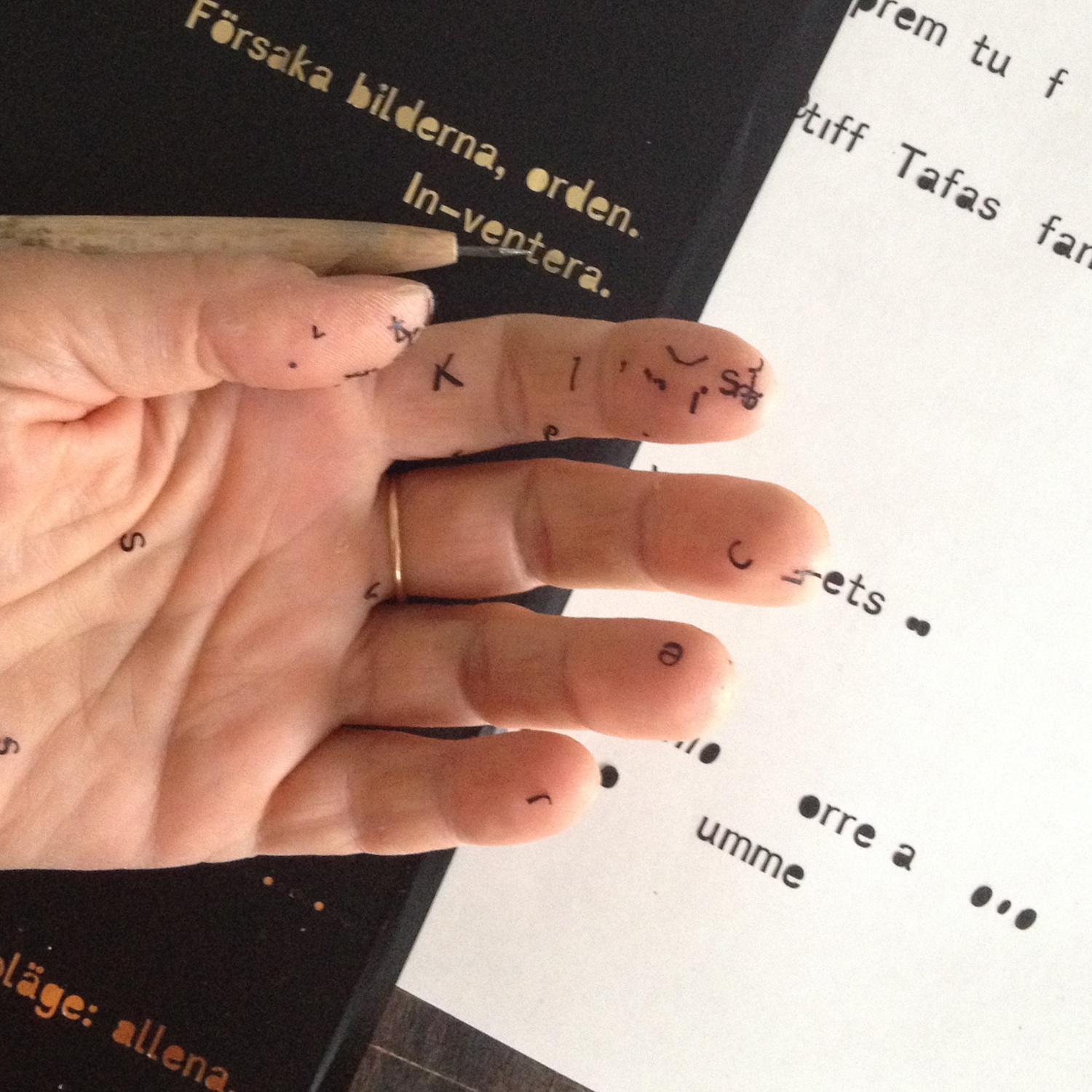
Using a plotter, I had the text cut out on a sheet of sticky plastic in order to etch it on the brass plate. But hey – what came out wasn’t only a text, and a text negative… there were also plenty of free-floating letters, mutinying and mutating all over… Had to take care of those, too.
Author: helenahildur
text font print I
art, recent work Brass plate being etched
Swedish poet Mara Lee held a text seminar earlier this spring at the Royal Institute of Art. I was among the lucky handful to benefit from Mara’s exceptional mentoring skills – we were writing and reading texts of our own as well as others, having really fruitful discussions around them; and I ended up with a short text too – or, maybe, an image made up from words. And so, I decided to take it a bit further into the material, etching it on a brass plate…
Broken stone
art, recent work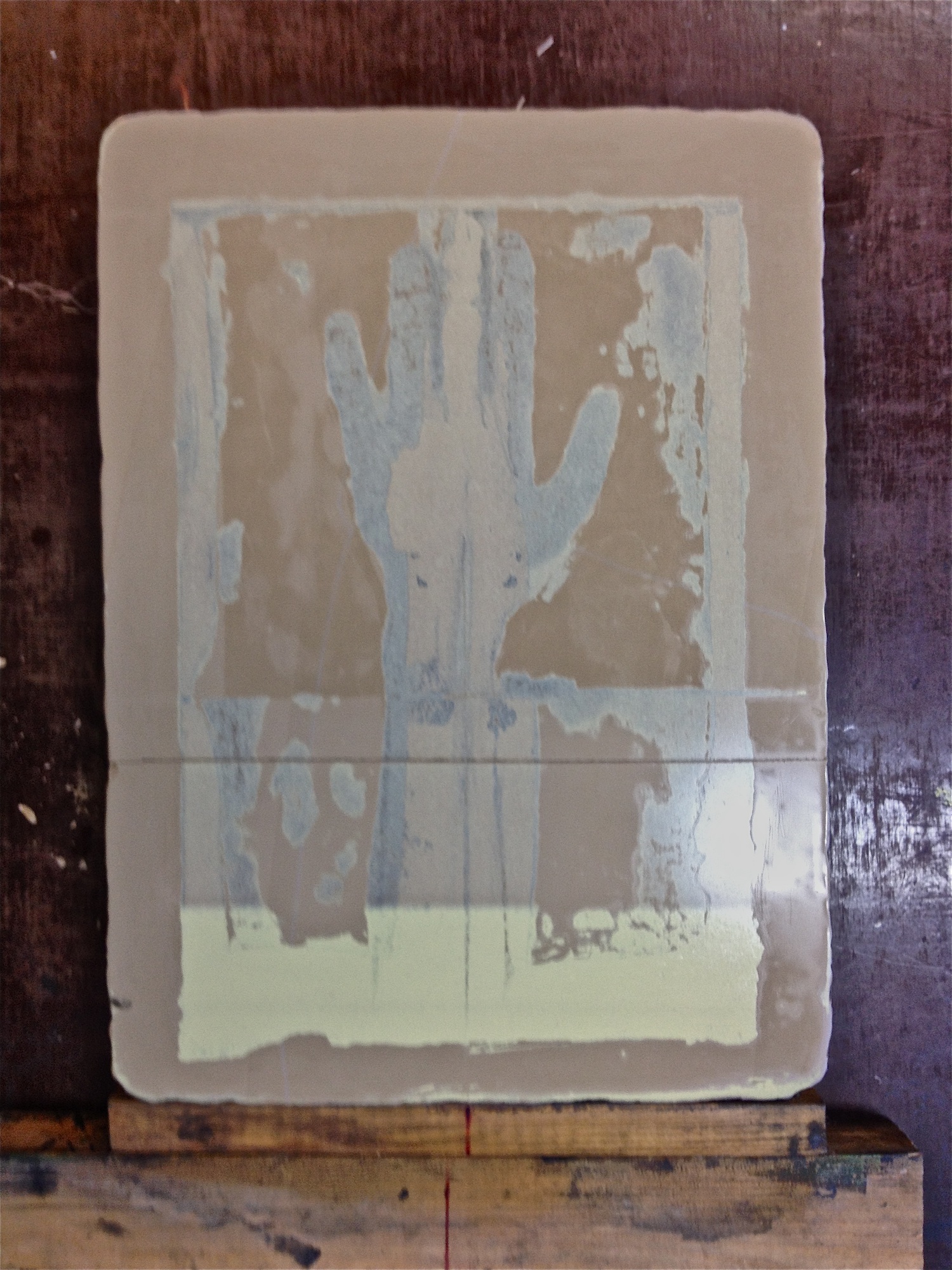 And then – oh, and then my litho stone broke. Passing under the press cylinder, it gave off a tiny sound, and I knew immediately what had happened. Then it came out in two parts. And I felt so bad; because this stone was my friend, and I broke it.
And it took me some time to know what to do next. Not that there aren’t other stones (there’s a whole library of stones in the litho printshop), or other things to do with them (unlimited possibilities). But the impetus got lost somehow. And that can be a drawback, of course. It can also be the cause to re-think and re-settle. So I did.
2015-03-30 Back in the Painting Studio
art, recent work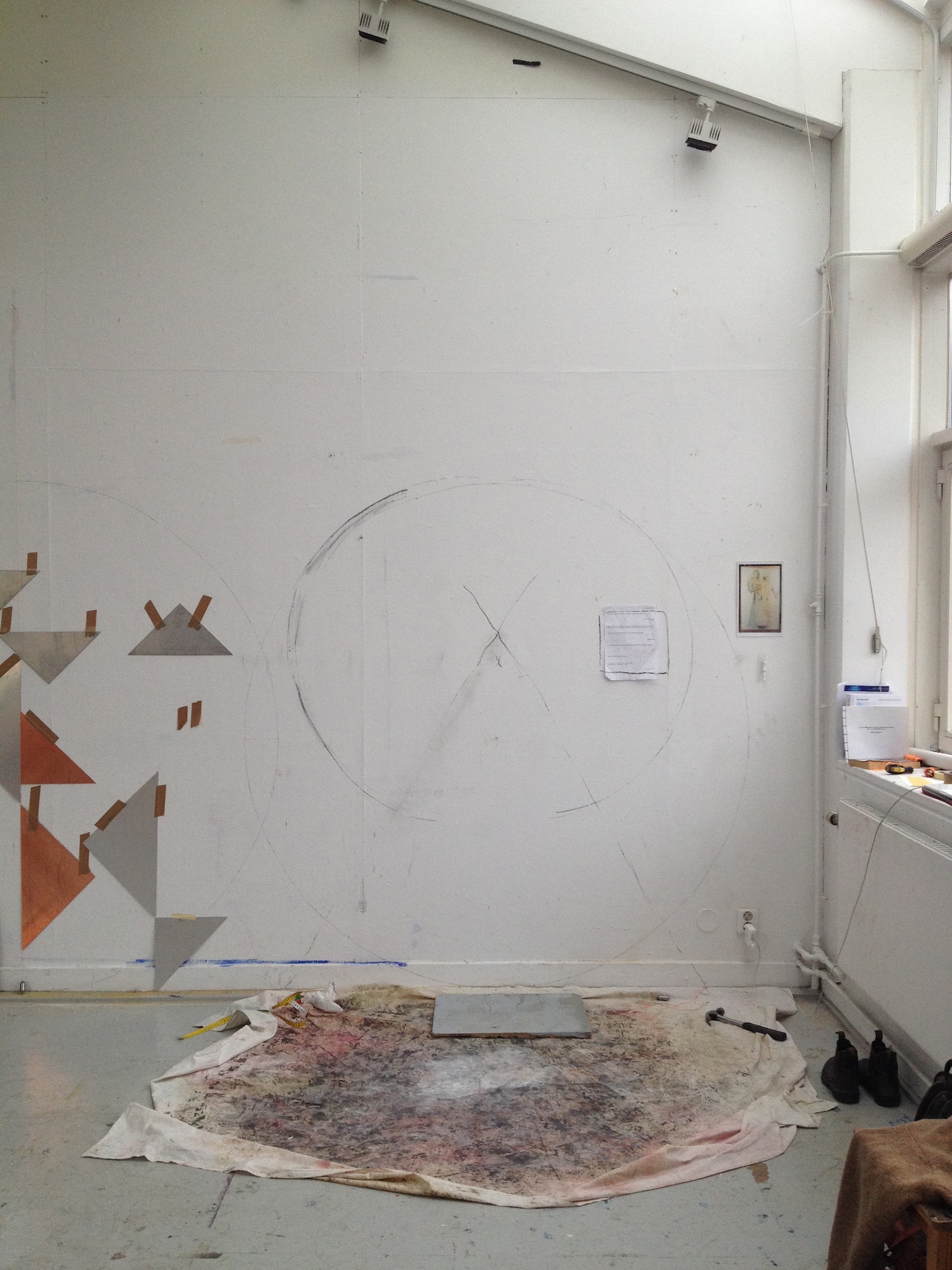
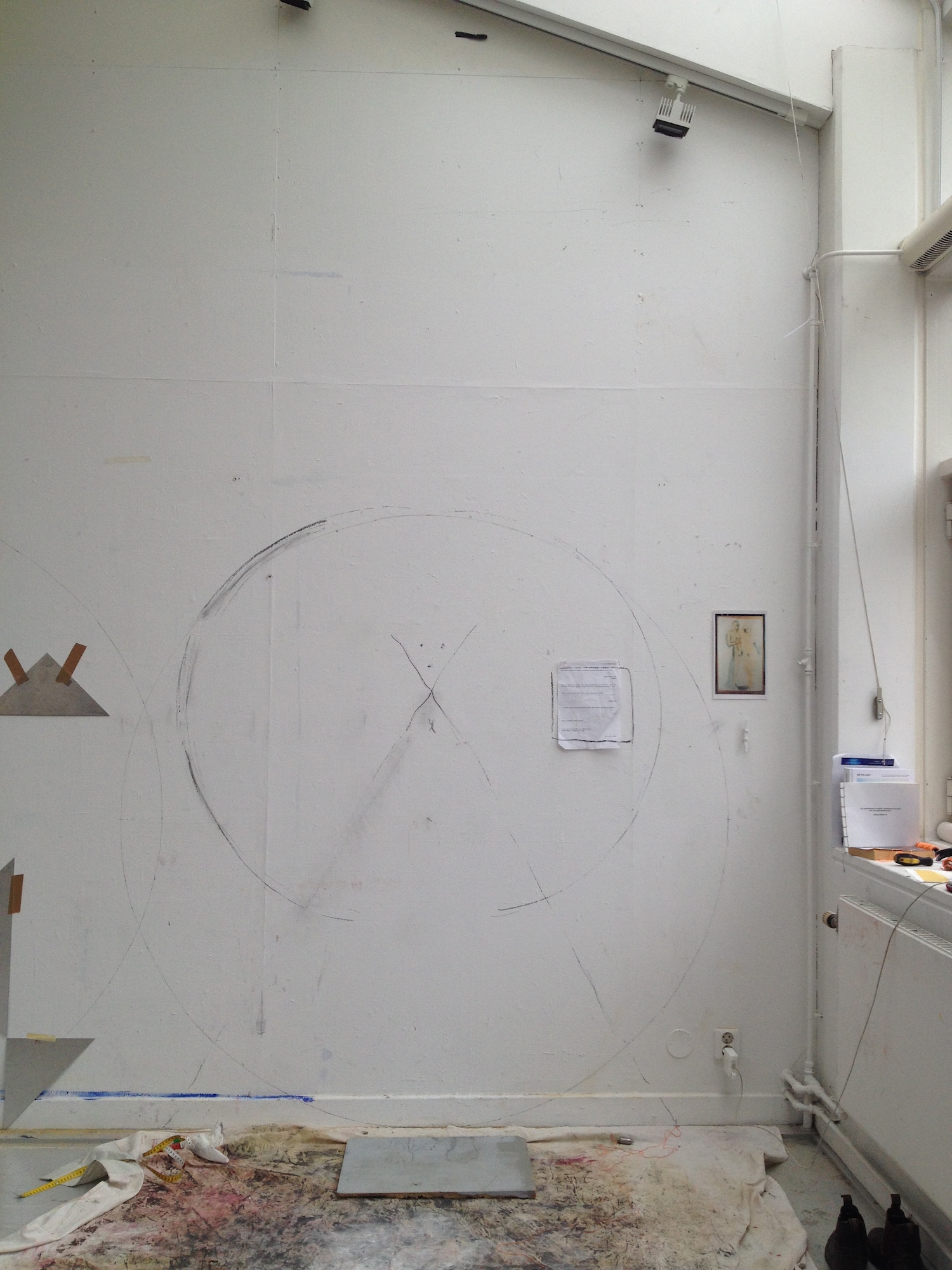
No. No more construction, perfection, restriction.
I stretch out upon the wall, waving my arms, breaking the thin circle. Suddenly, someone is there watching.
Finally, we’ve arrived.
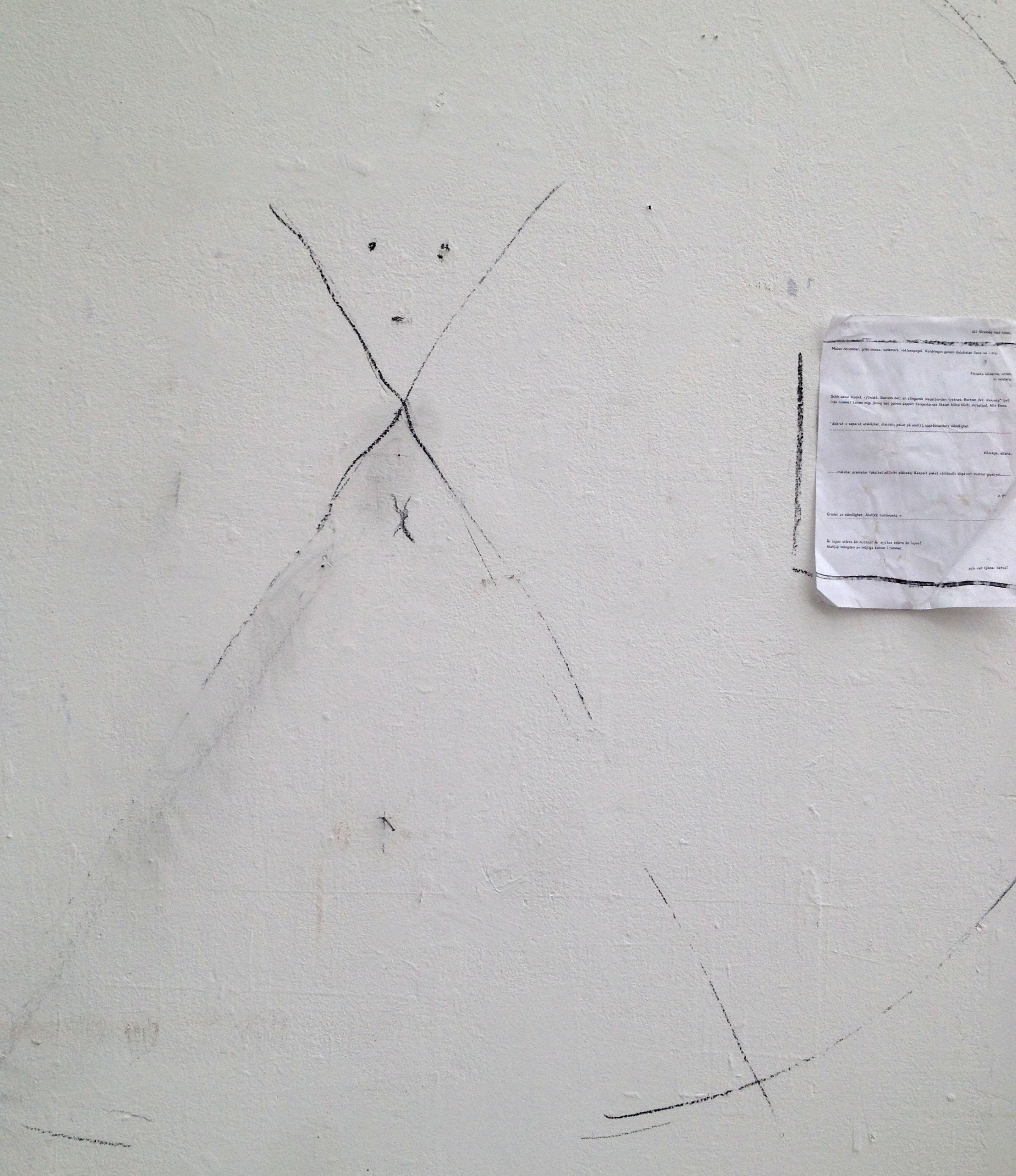
2015-03-27 Back in the Painting Studio
art, recent work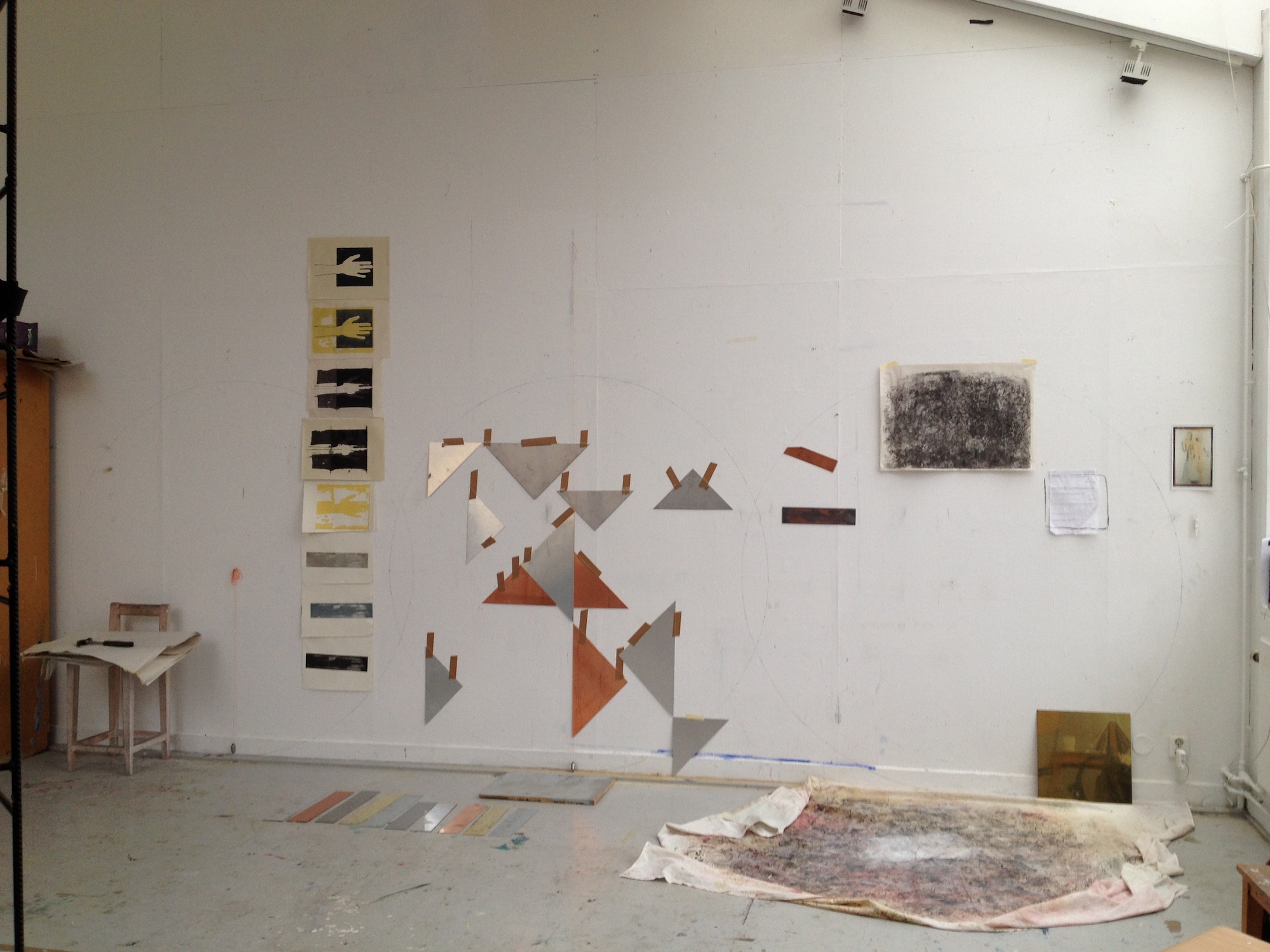 Two days ago, a feedback session ending with a secret waffle party in the smithy… Today, things are jazzing me around: down goes the rag, up come the prints and the plates. It’s fun, but also frustrating; I cannot yet see what’s really going on.
2015-03-24 Back in the Painting Studio
art, recent work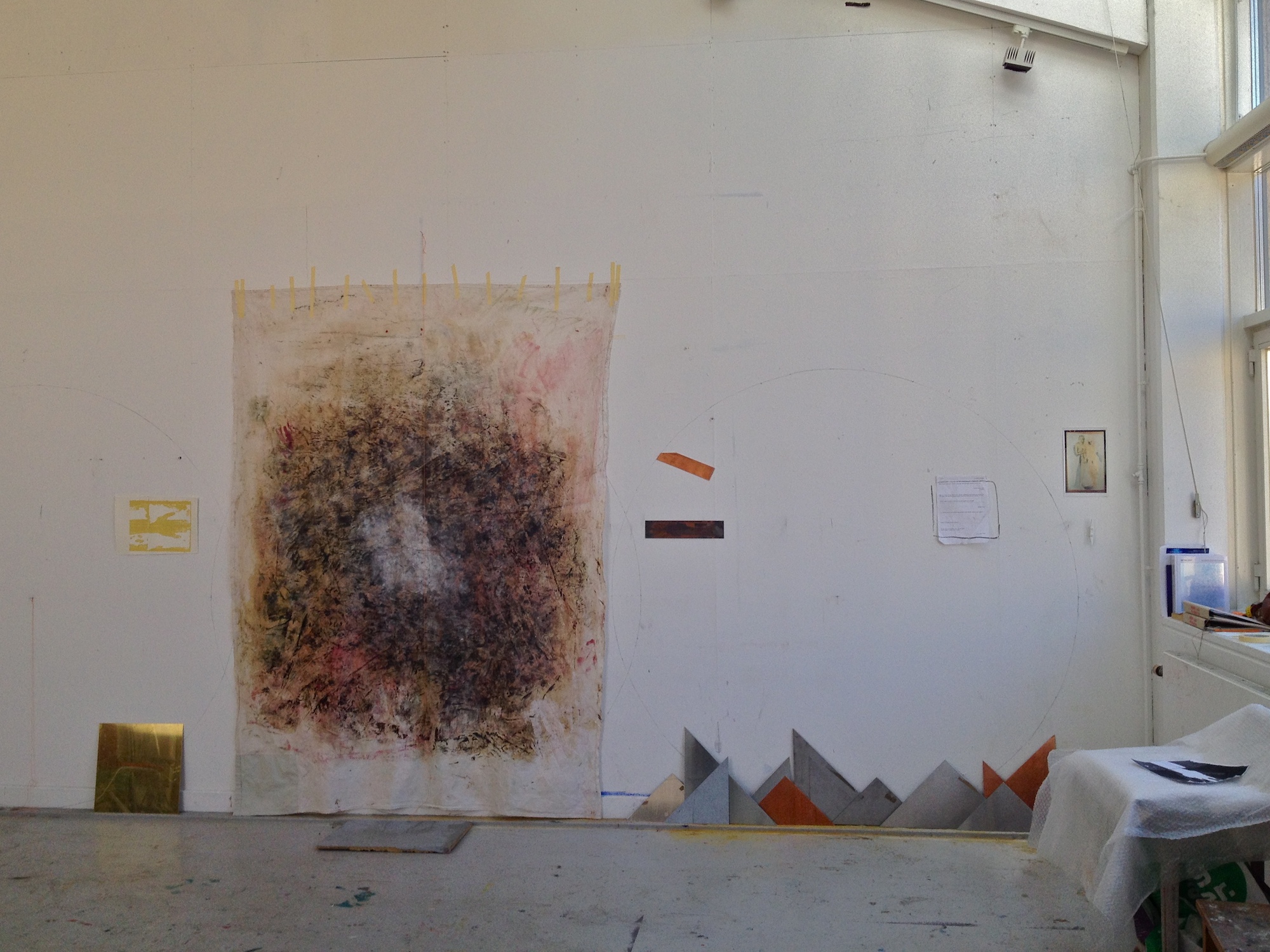
Yes. And next, I add the copper plates used for intaglio print. And a rag I’ve been using to soak up surplus paint in my home studio. The painting is quite big, and so is the rag. 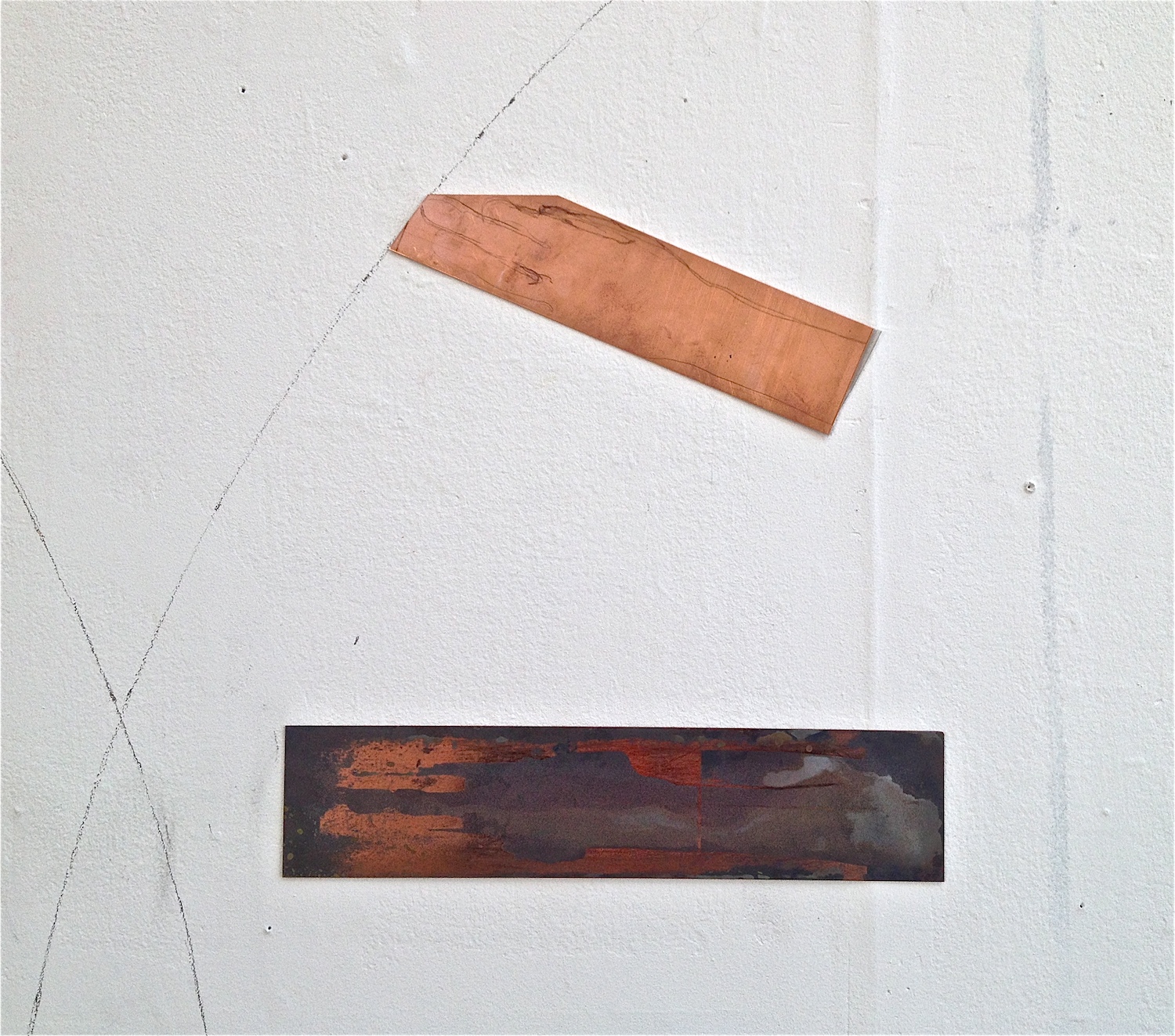
2015-03-23 Back in the Painting Studio
art, recent work
This time, I needn’t draw the grid because I know it anyway. I concentrate on the circle (or close-to-circle, to be exact). One laborative space isn’t enough, I need three; but, in duplicating the circle, I realize the wall isn’t really big enough. Fine, I’ll make the circles overlap then. One for the metals, one for the prints. And the third one for a text, as a beginning.
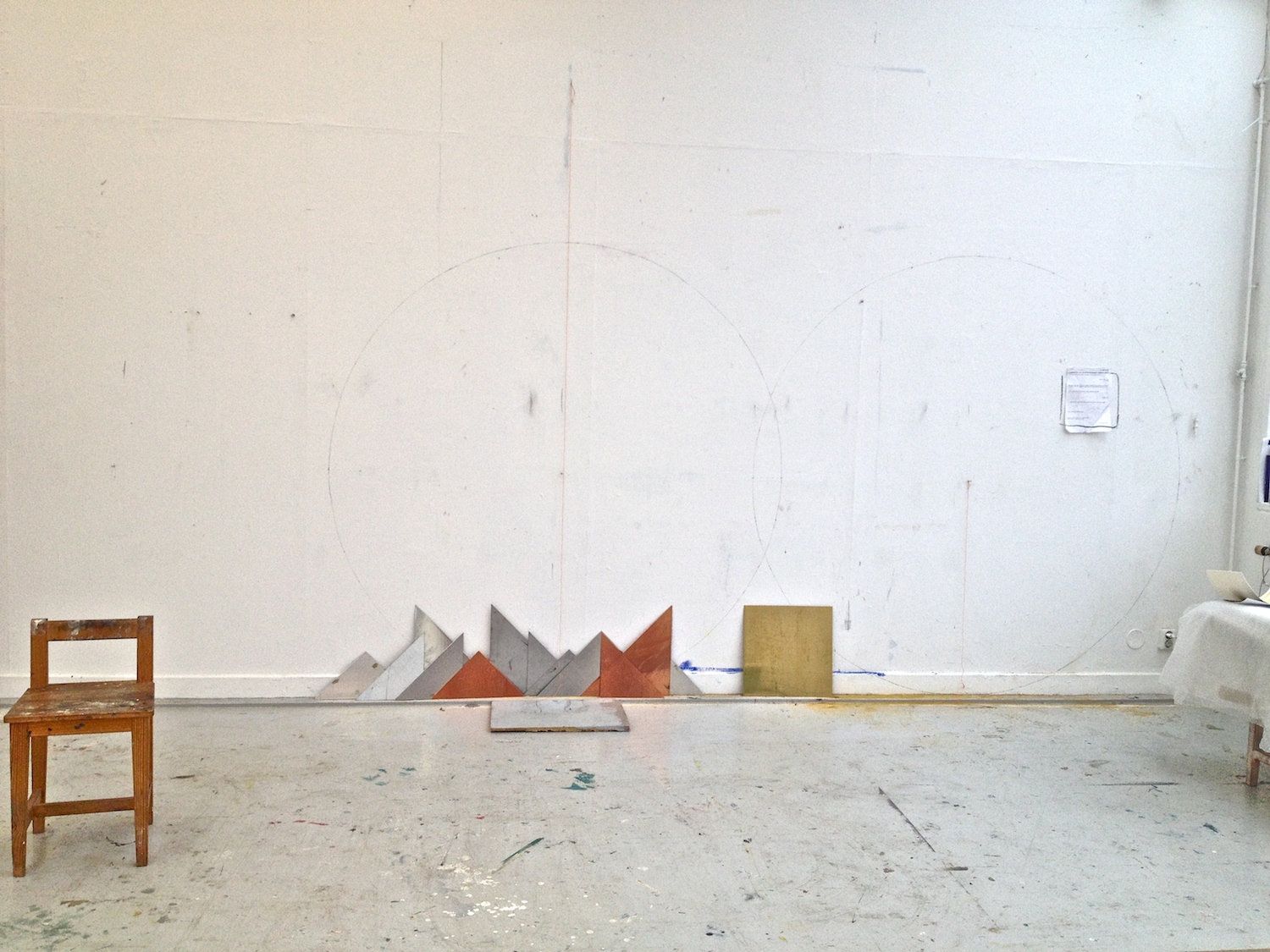
2015-03-20 Back in the Painting Studio
art, recent work
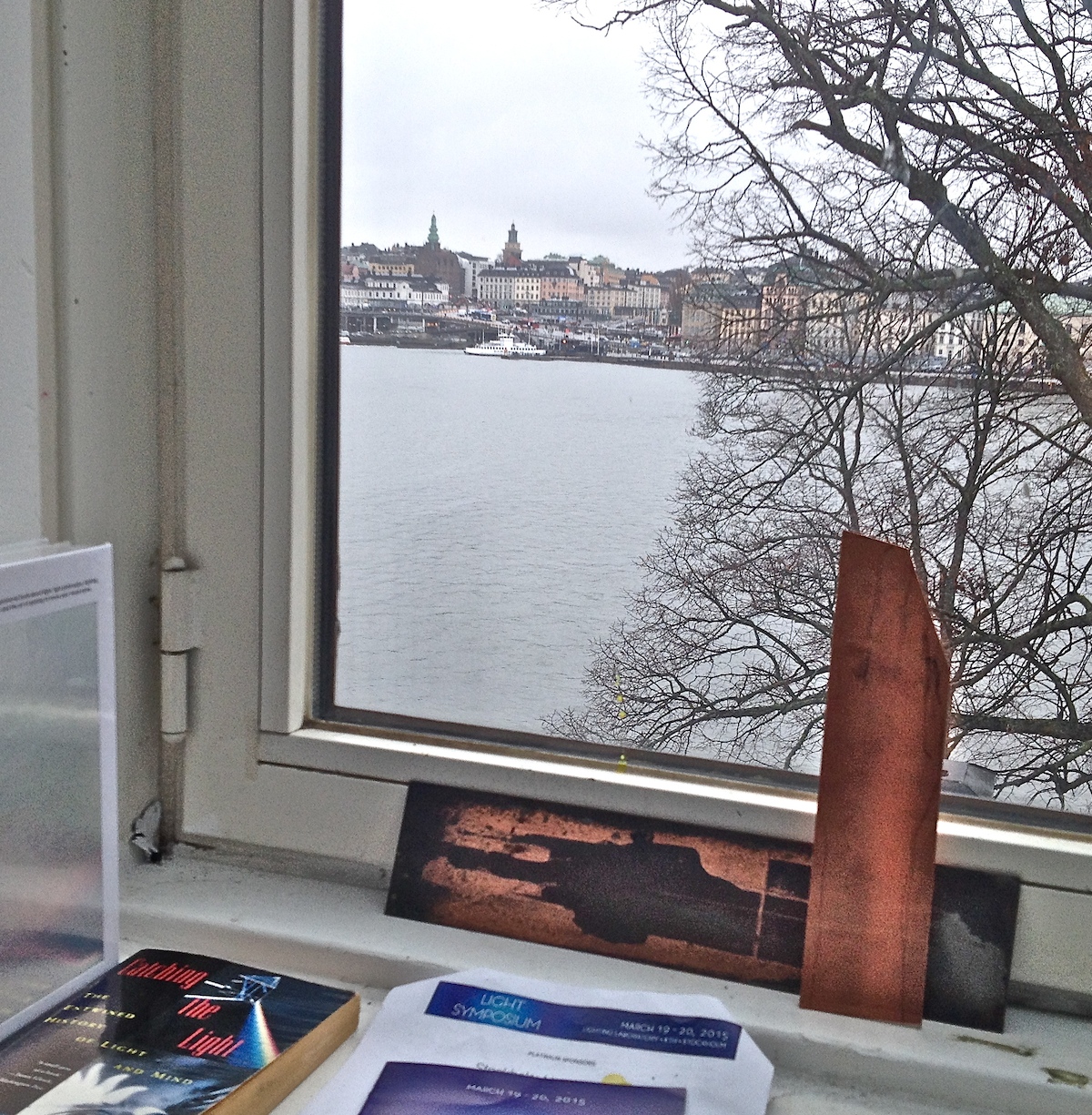
Today is the second day of the Light Symposium, and the day of the spring equinox. And – remarkably – a partial solar eclipse is happening as well, at 11.00 am here in Stockholm. Grey clouds veil the celestial bodies, just enough so that everybody could follow the event with the naked eye. People crowd in the streets as the light dims. A passing shade, the sun disc turned into a crescent slowly rocking from left to right, a distant ship in the immense seas above us… then, it’s over.
A little later, I leave the symposium for the studio; leave lectures for artefacts.
2015-03-19 Back in the Painting Studio
art, recent work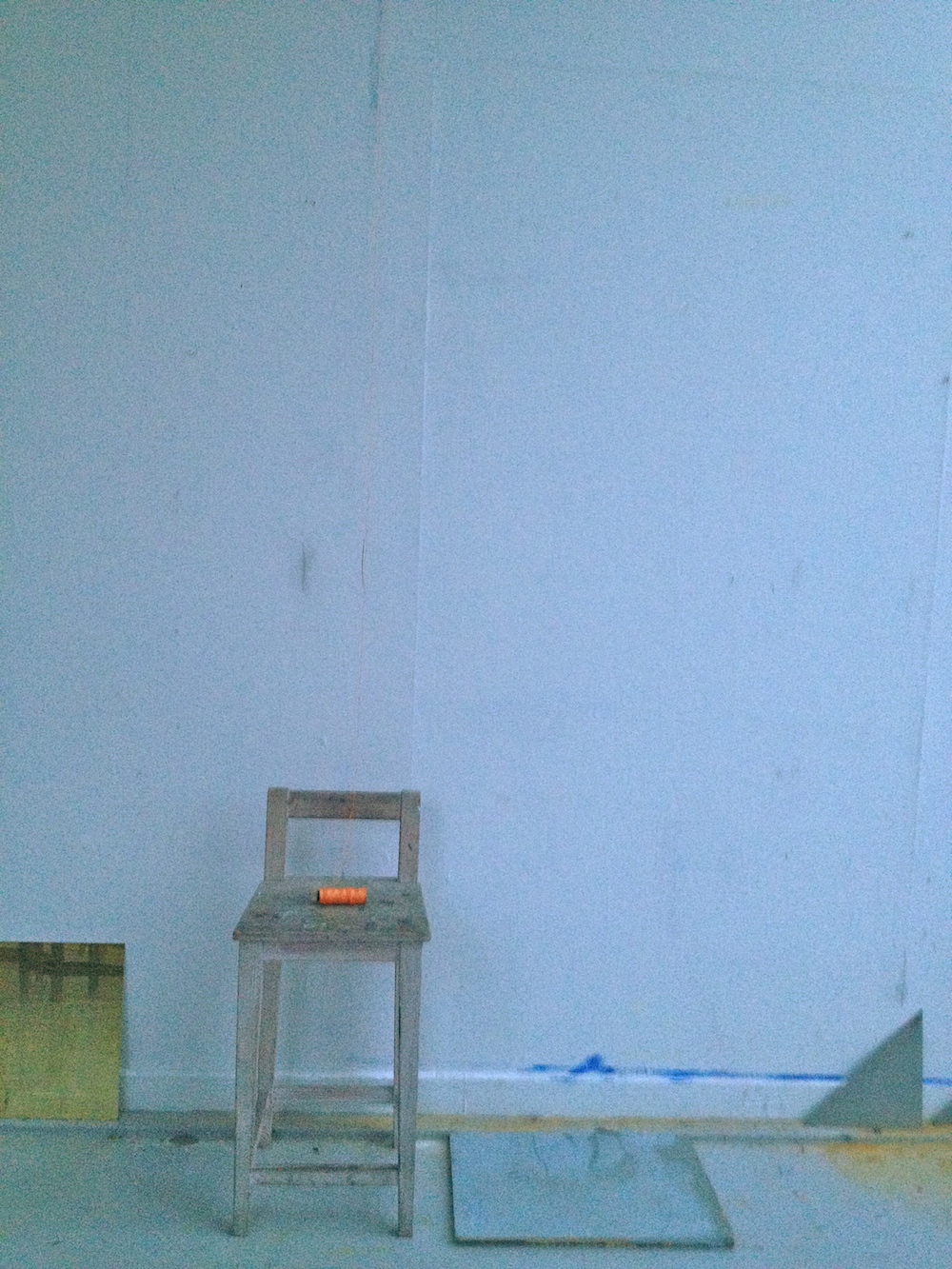
The Lighting Department at the Royal Institute of Technology is hosting an international Light Symposium in Stockholm. In the morning, I attend together with a group of students and teachers from the Royal Institute of Art… and in the afternoon, I hurry back to school for another two weeks in the painting studio. Bringing back the metal plates, adding the litho and intaglio prints I’ve made in the meantime, nailing the plummet to the wall once more.
Mmmm-hmm.
Sketchwork in the Painting studio
art, recent work
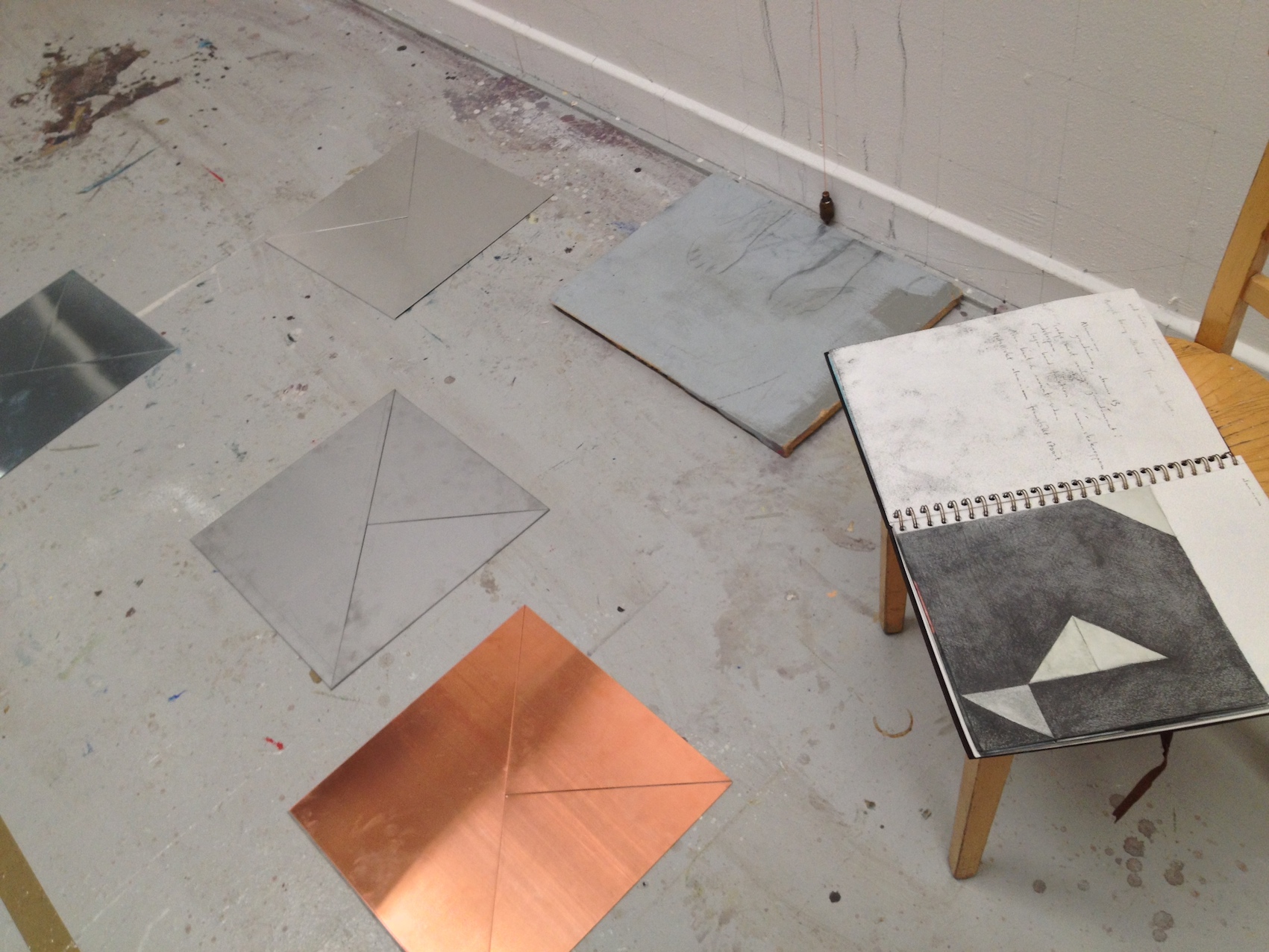
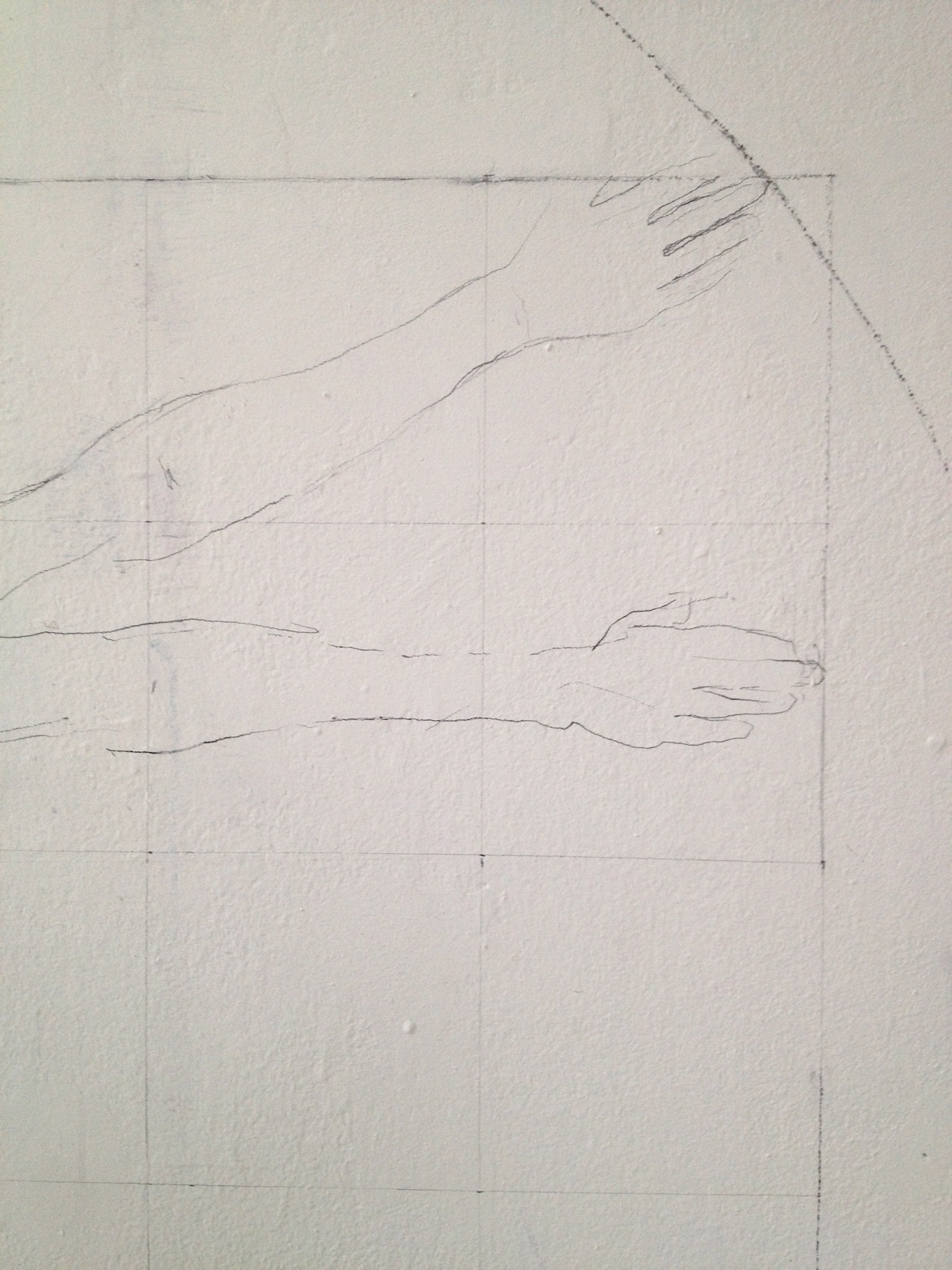
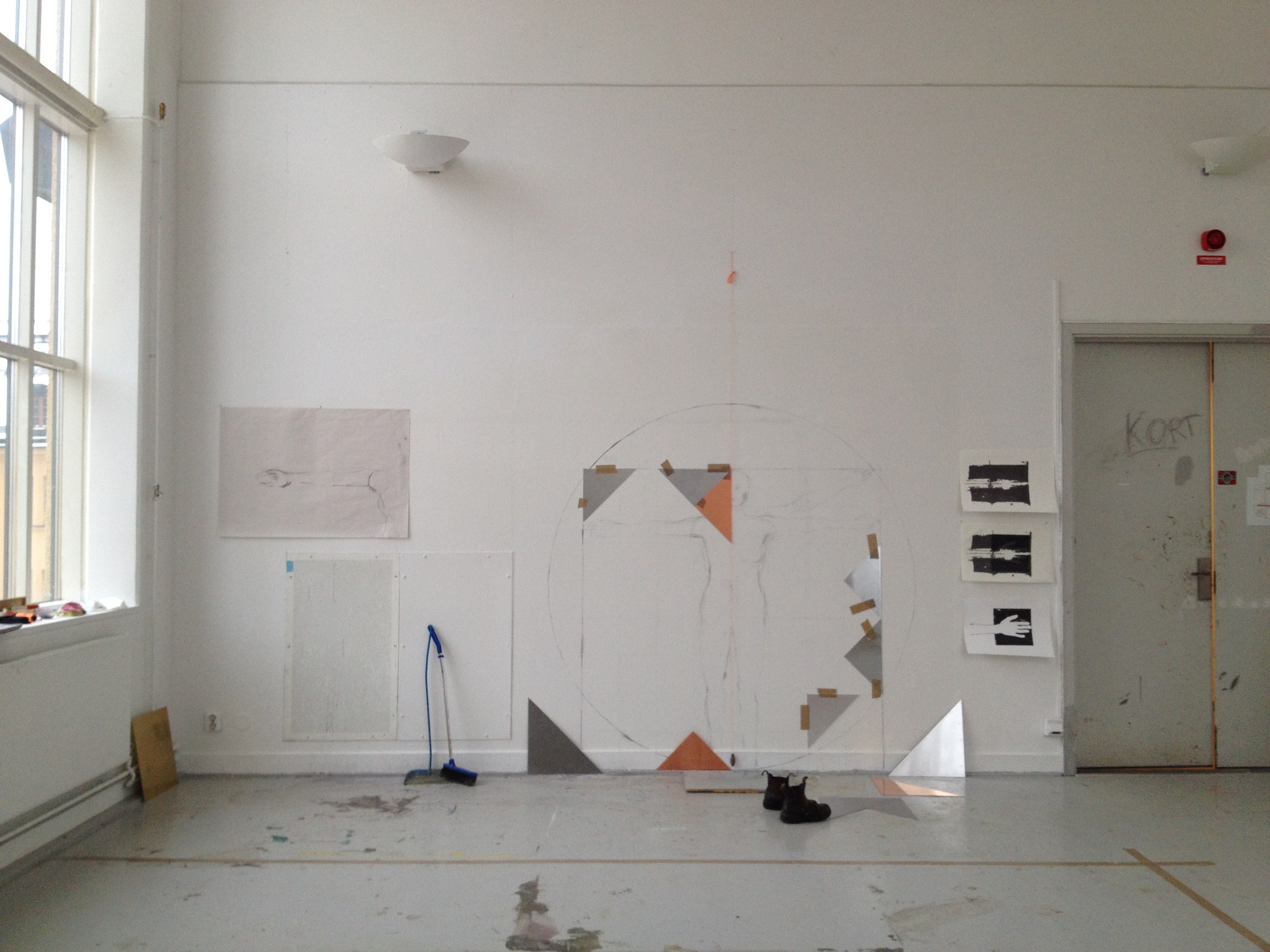
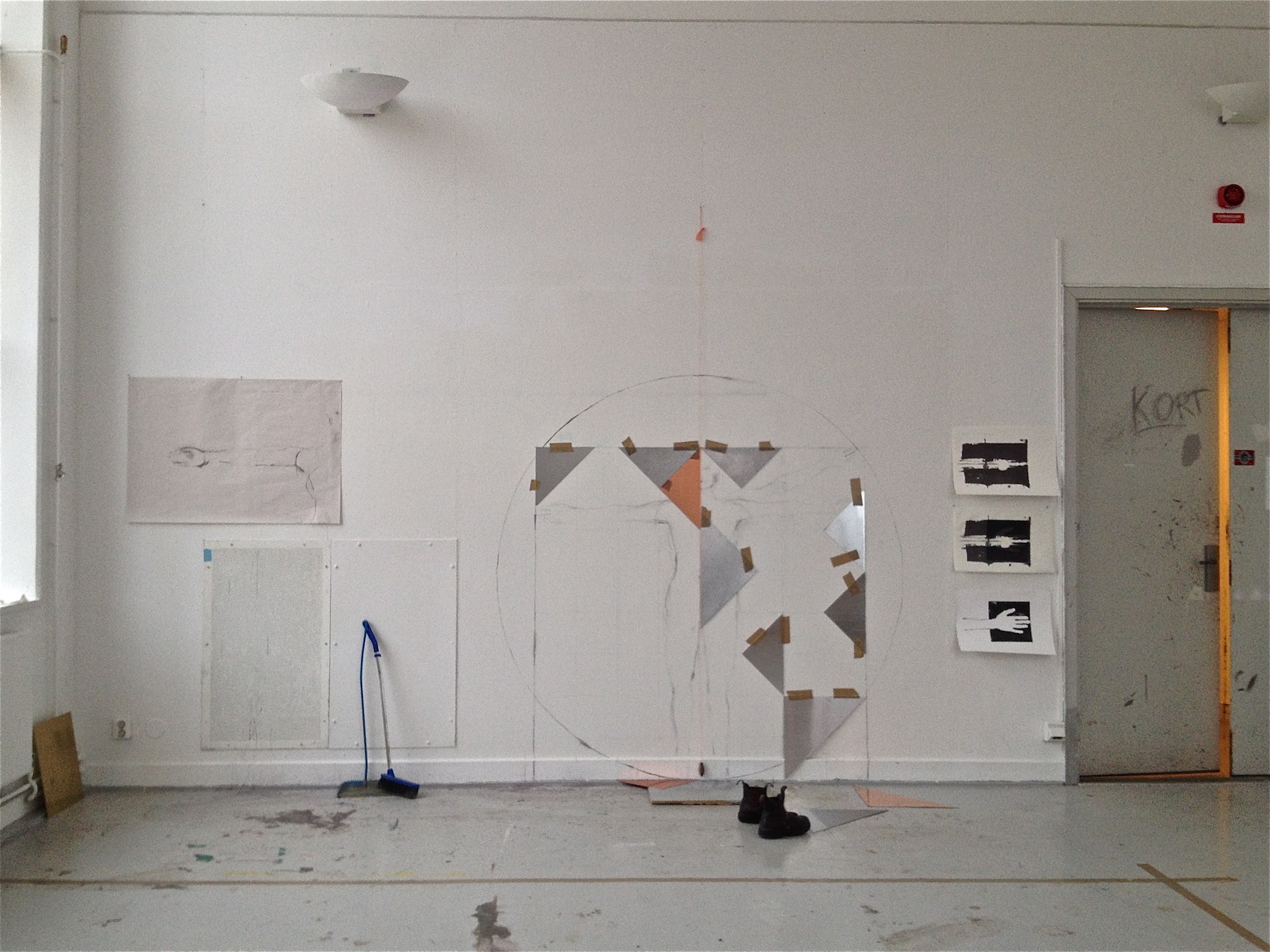
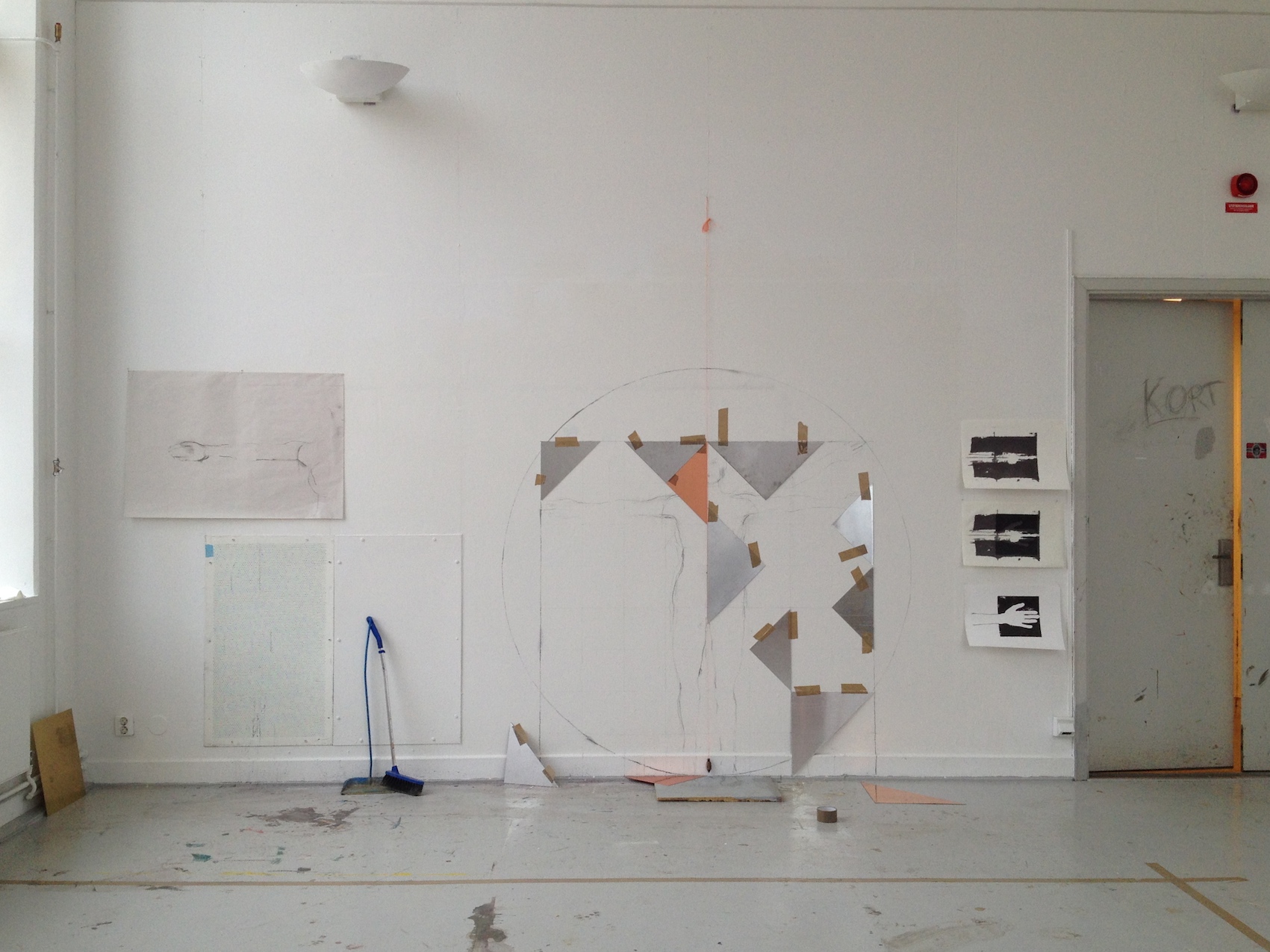
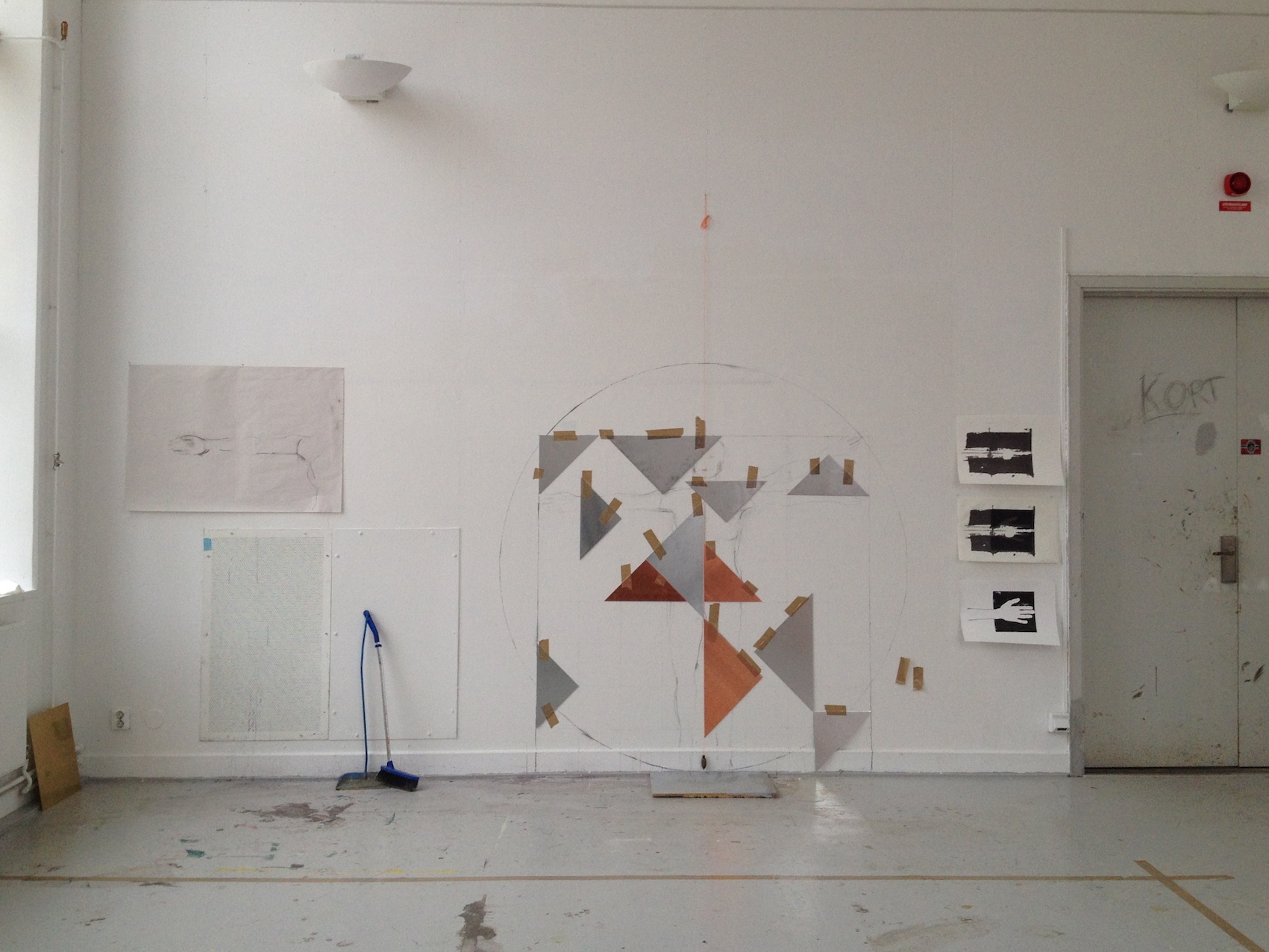
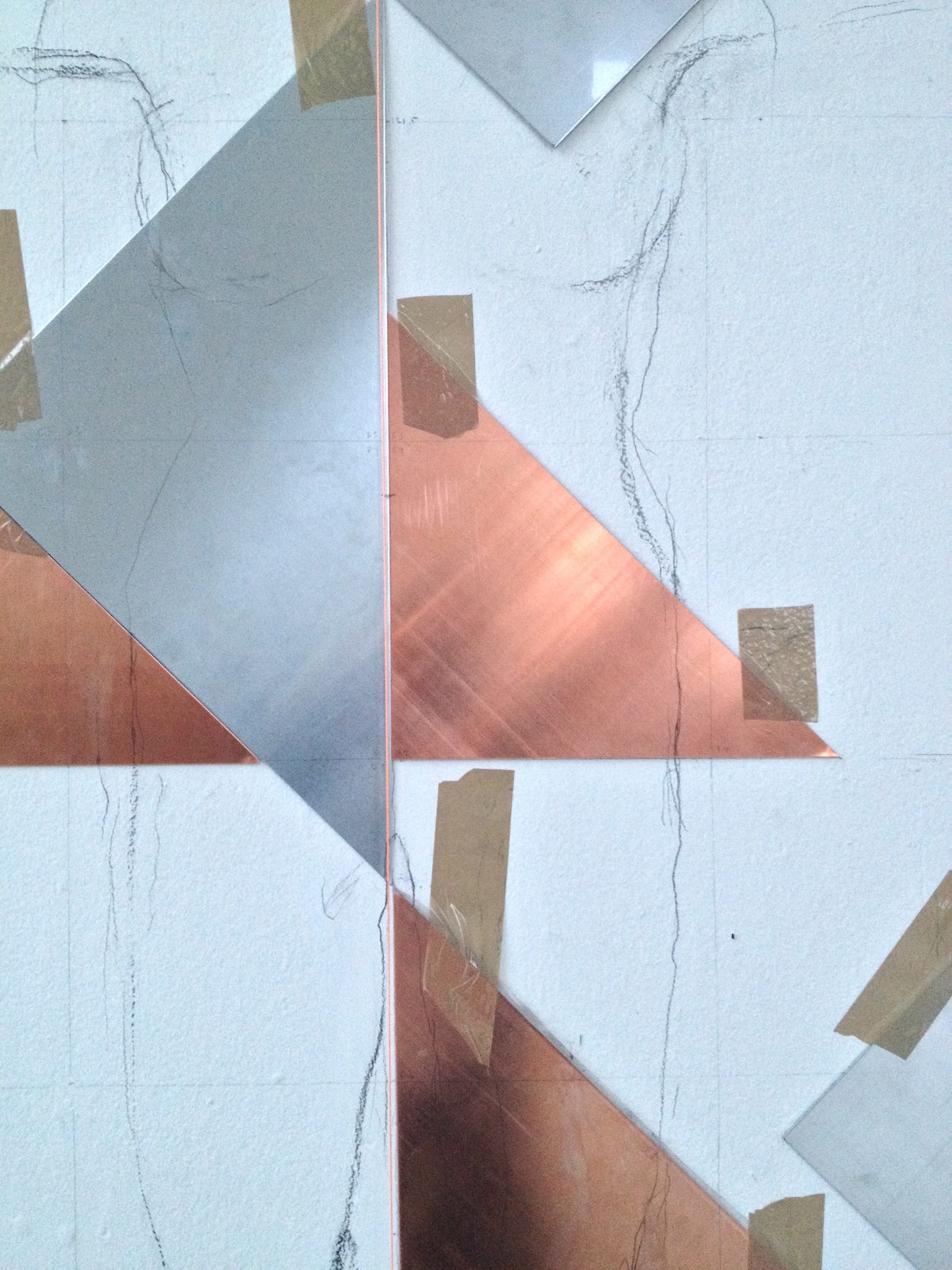
Sketching on white wall; plummet, graphite, charcoal, metal plates.
(17 photos, © HHW.)
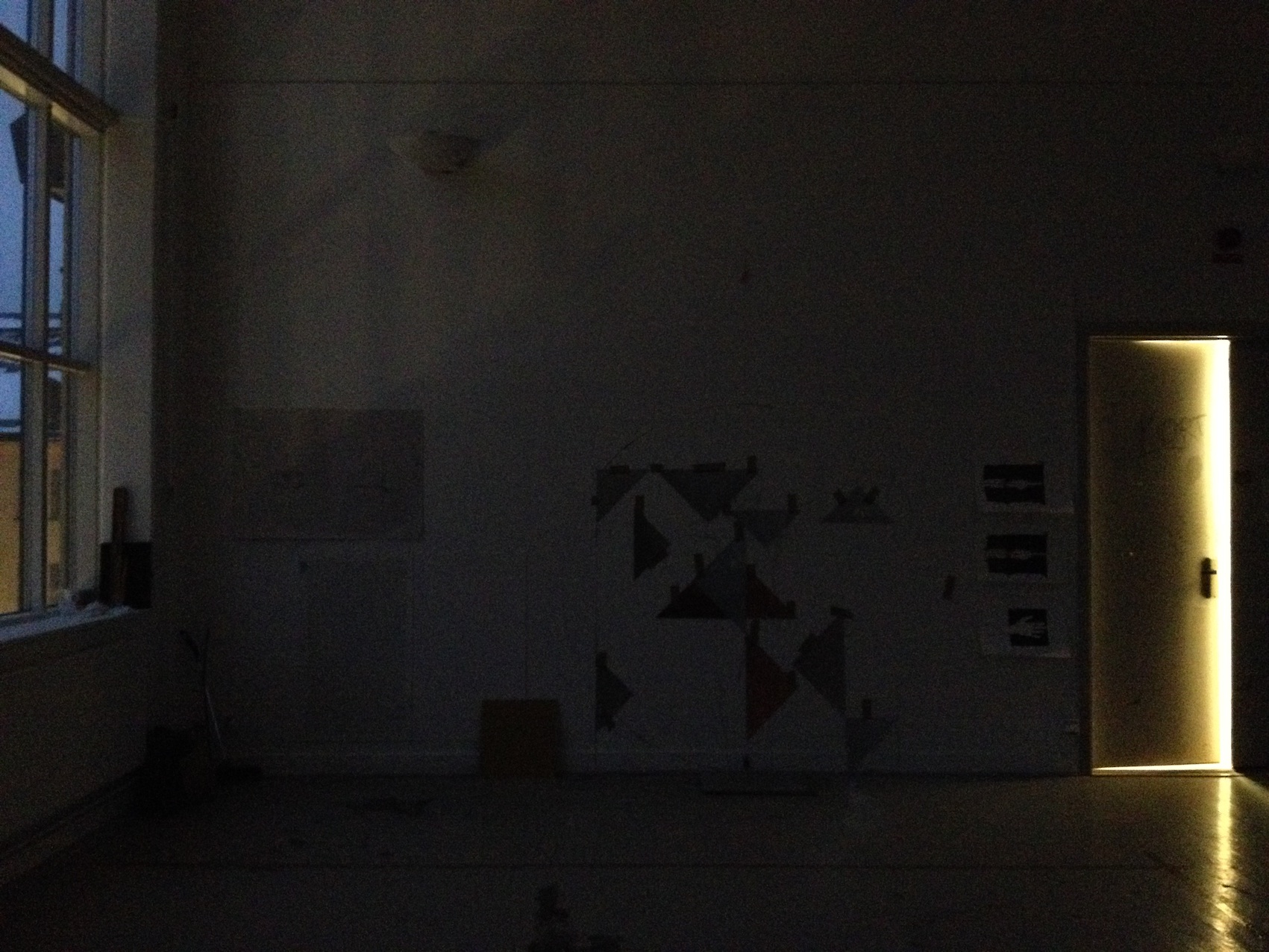
I really like it at the graphic department. People are kind, and work hard. Workshop teachers are skilled, clever and generous. There’s one thing I miss, though: a wall. Fortunately, the Royal Institute of Art also provides us with a painting studio – huge walls, large windows – which can be booked for a shorter or longer period. I’m lucky enough to get access almost instantly, and spend a weekend transferring small-scale sketches into full-size ones.
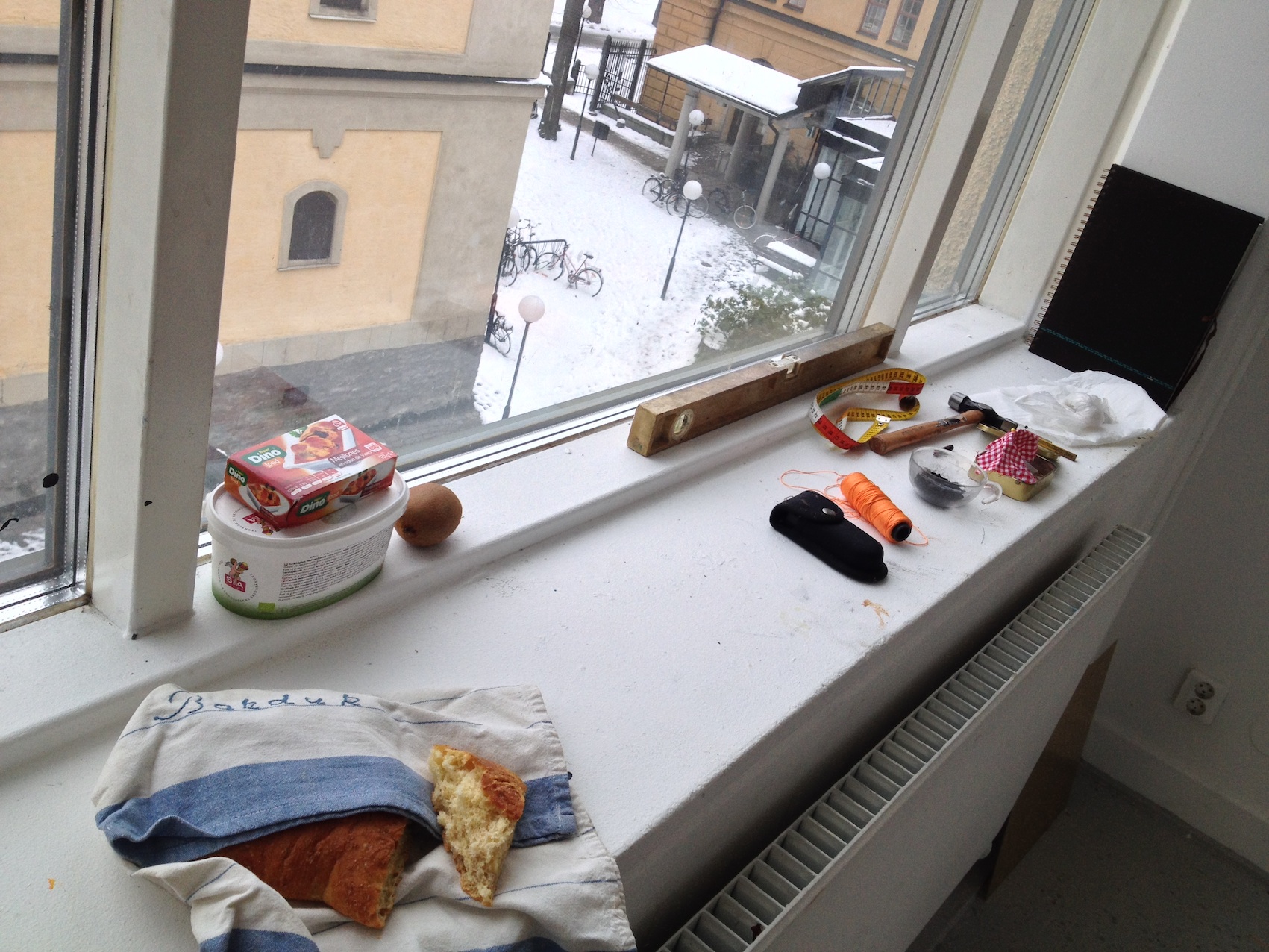
First day, I arrive in the afternoon to unload: sketchbook, metal plates, tools. I notice the wall needs some white paint, I’ll have to bring it tomorrow. Dusk falls.

Next day: make space, whitewash the wall, hang the plummet, draw the outlines. Draw the circle, the grid.
A full day’s work.
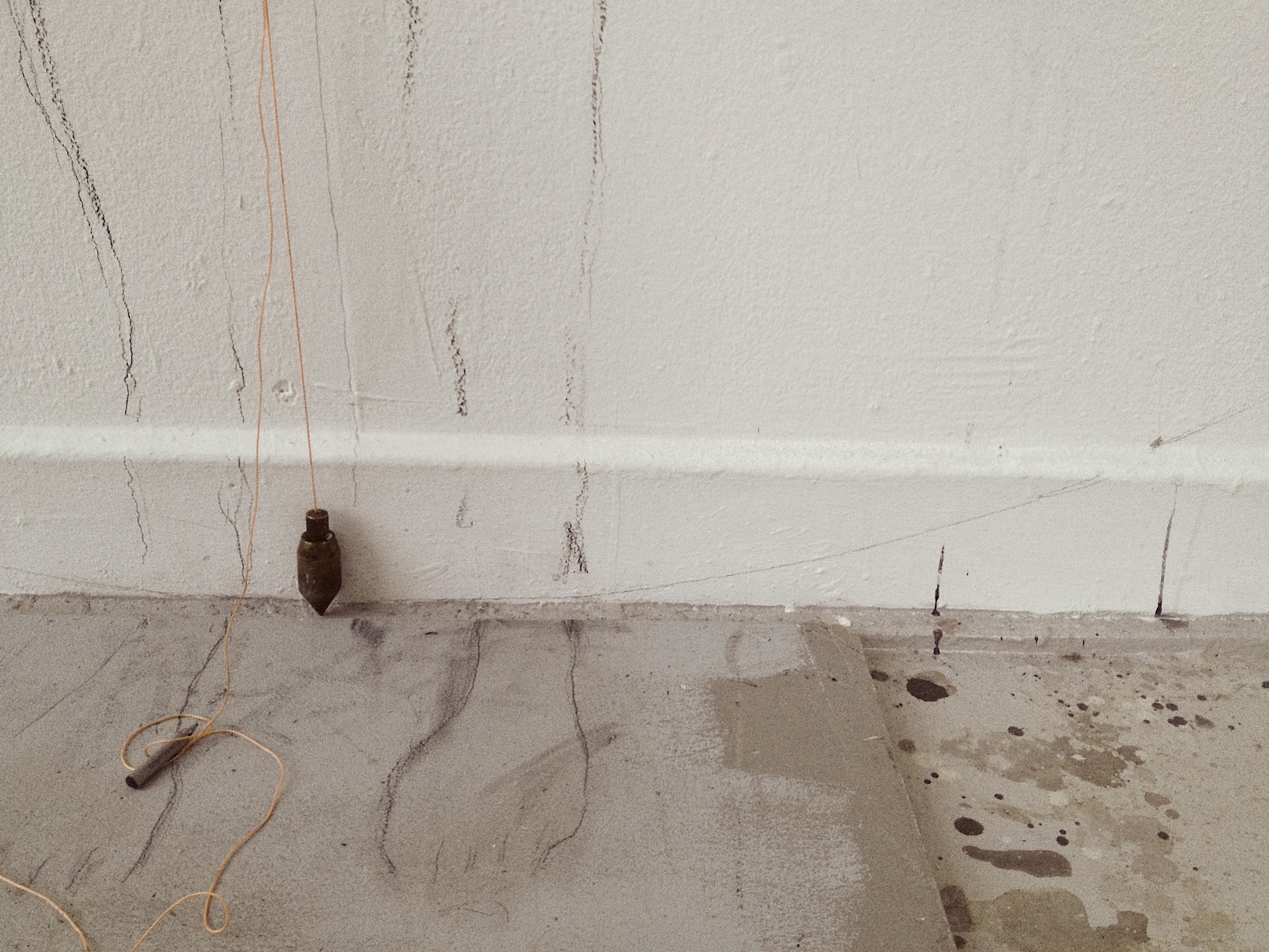
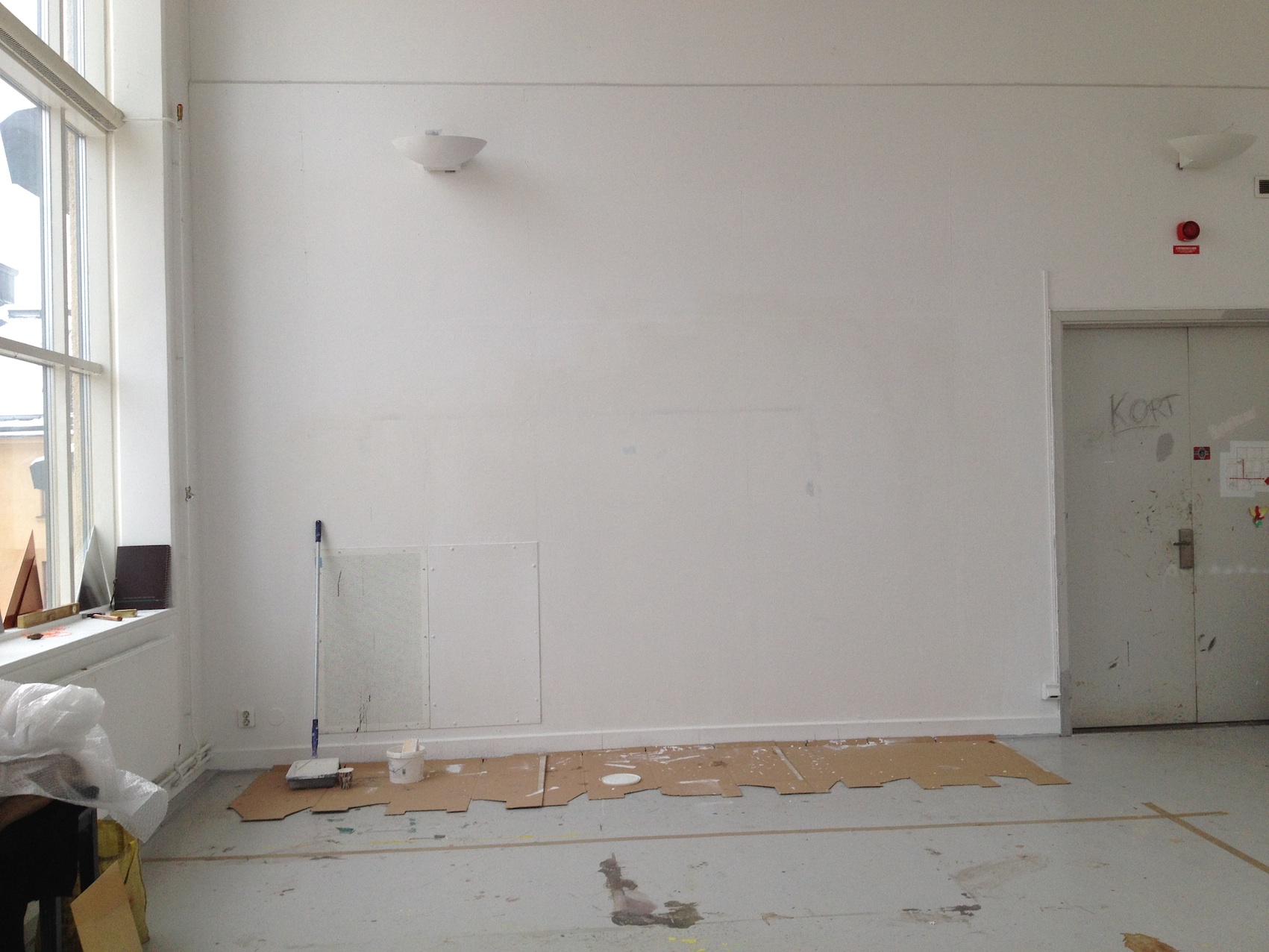
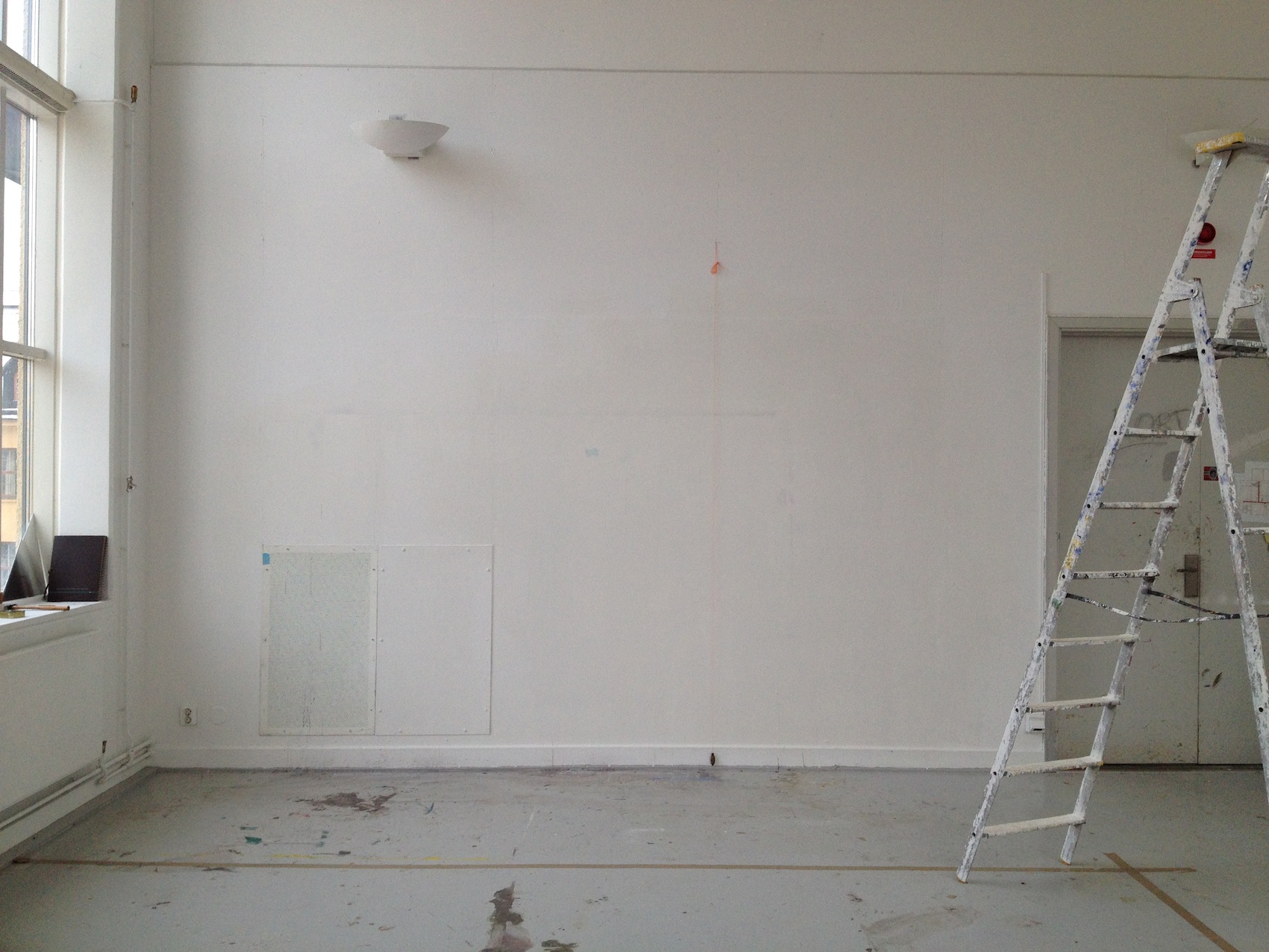
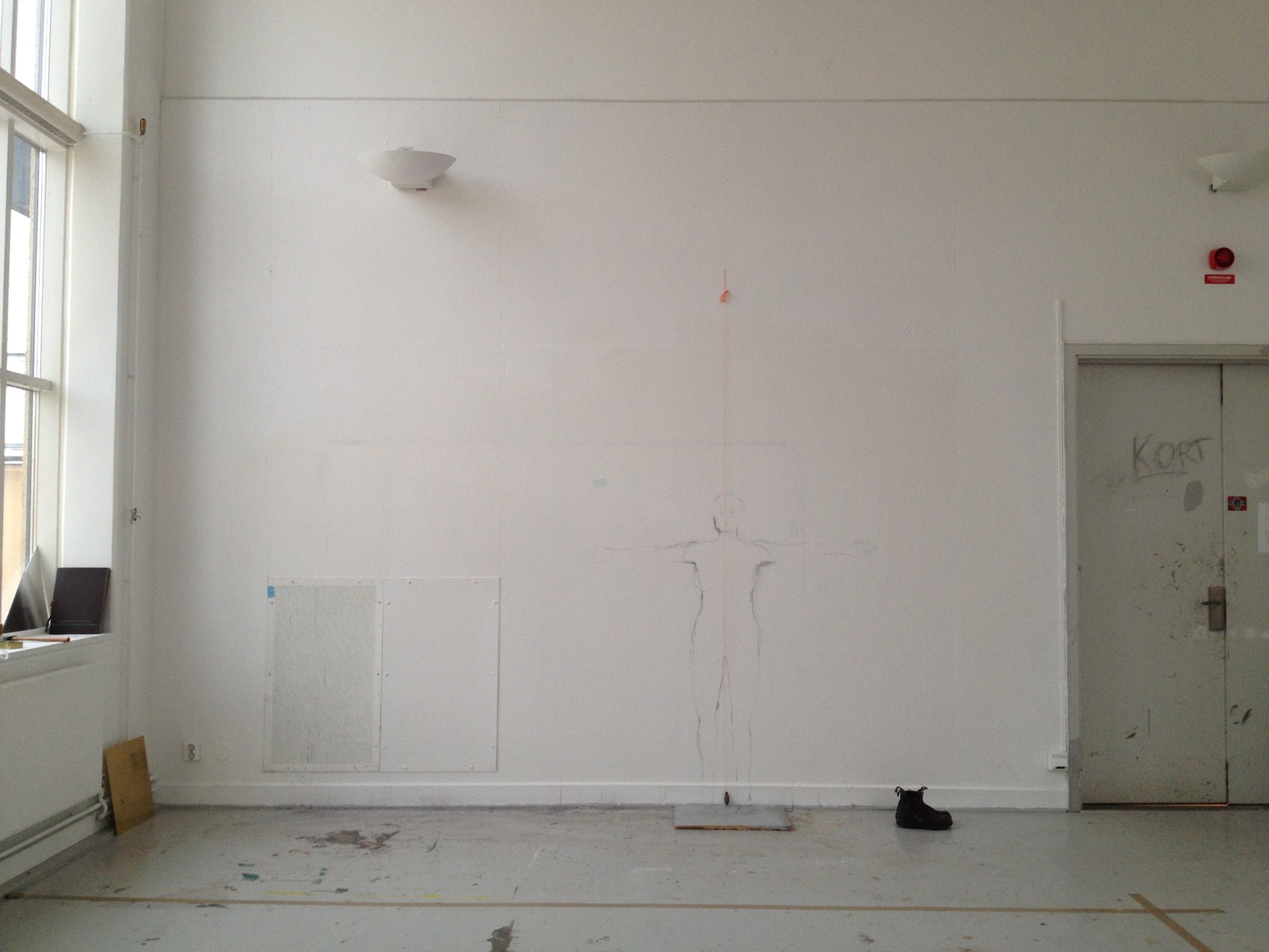
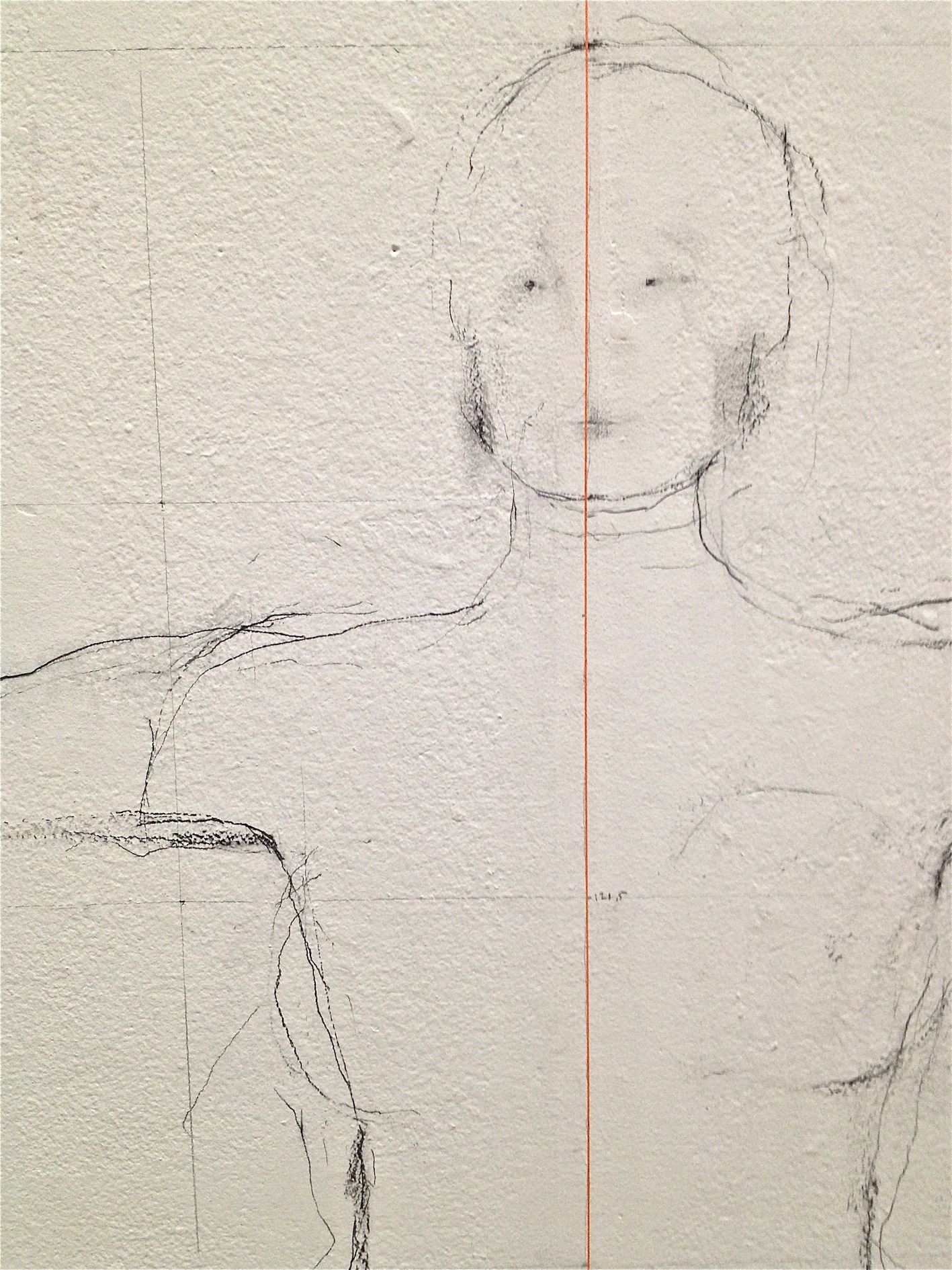
Third day: add the plates. Arrange them according to previous sketches. Move them around until it’s truthful. Then stop.
 Helena Hildur W.