Project work I

art, recent work

The new academic year begins tomorrow, Monday, so this should be the appropriate time to sum up my first semester as a project student at the Royal Institute of Art.

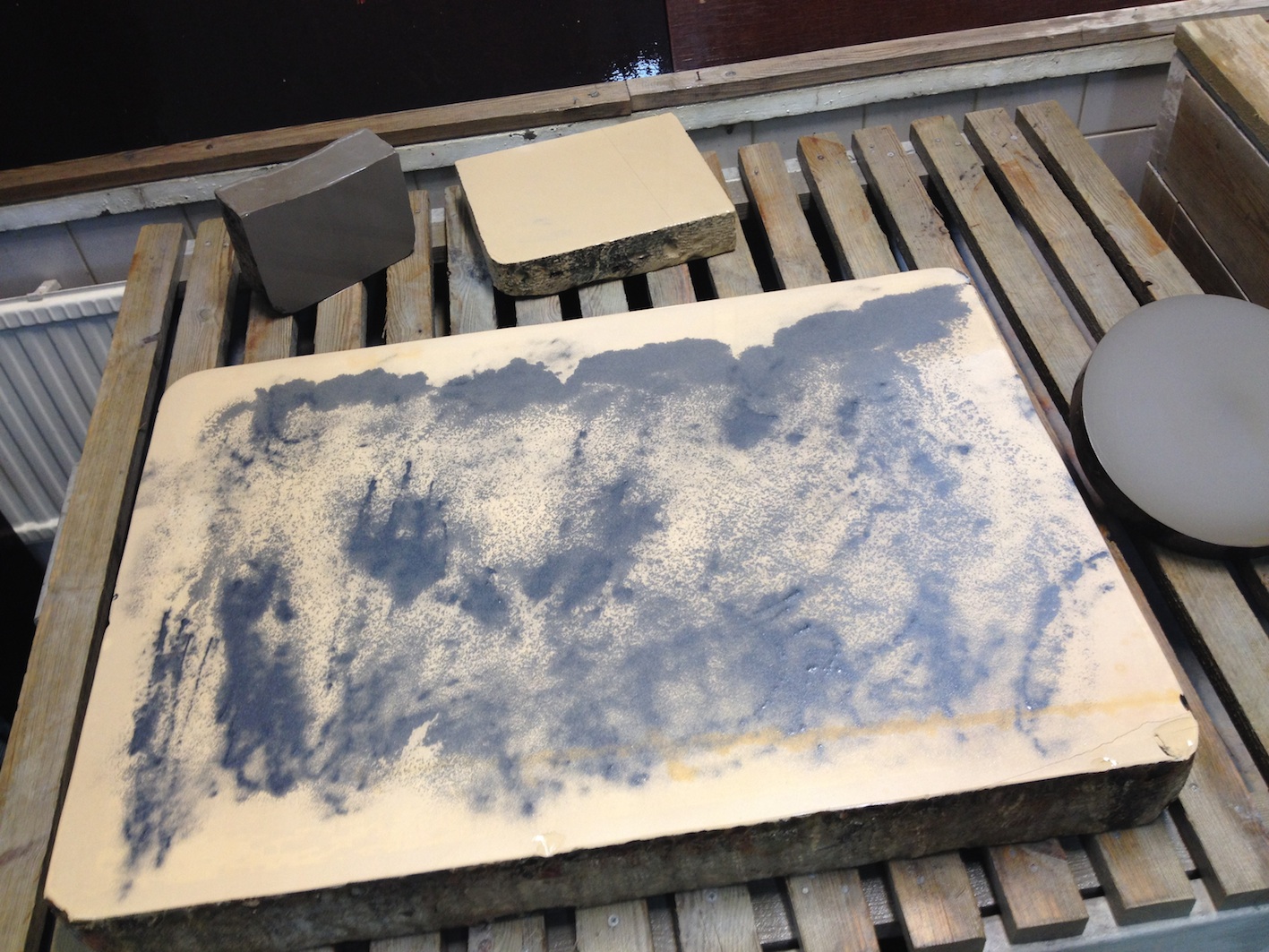
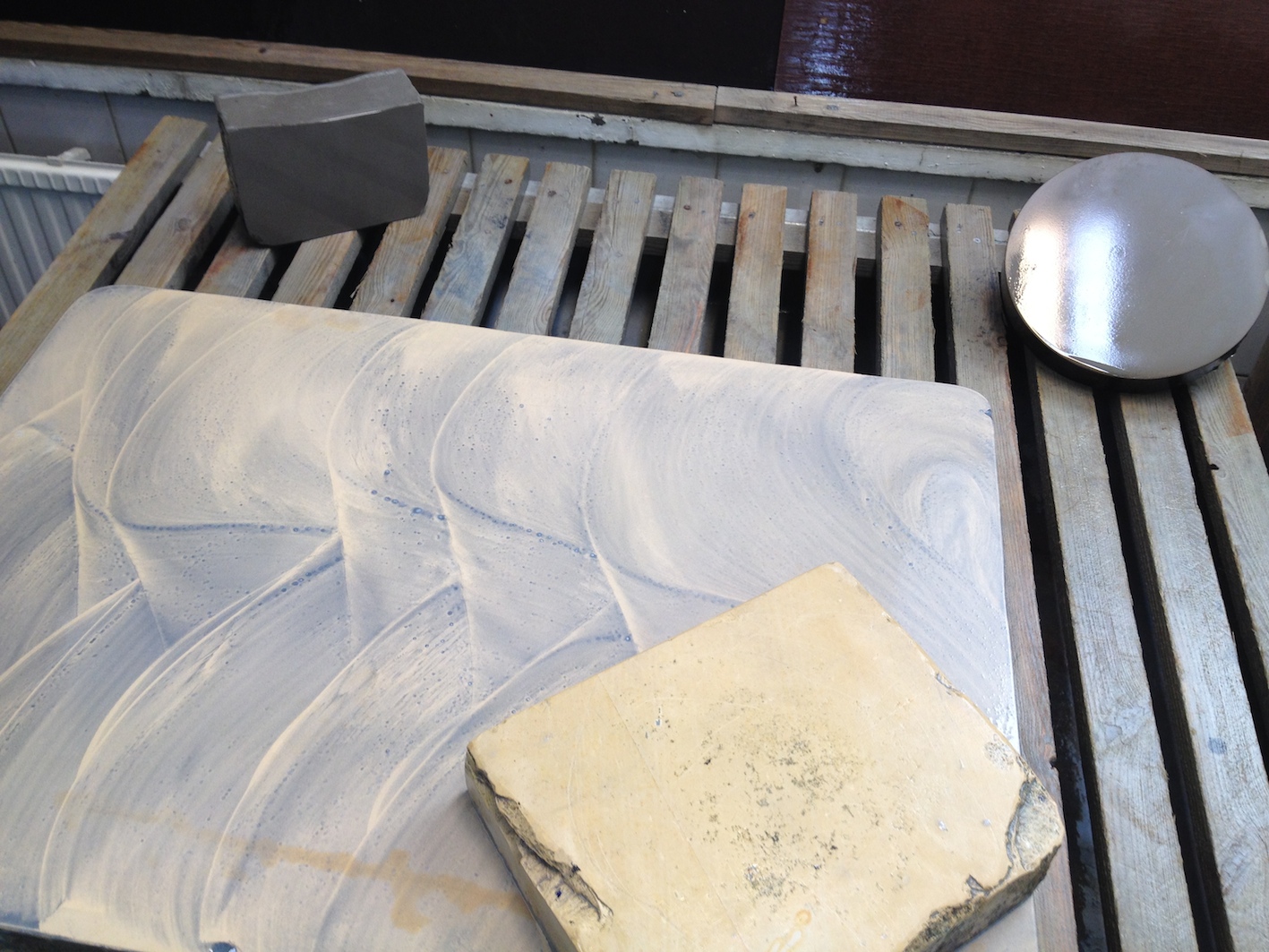
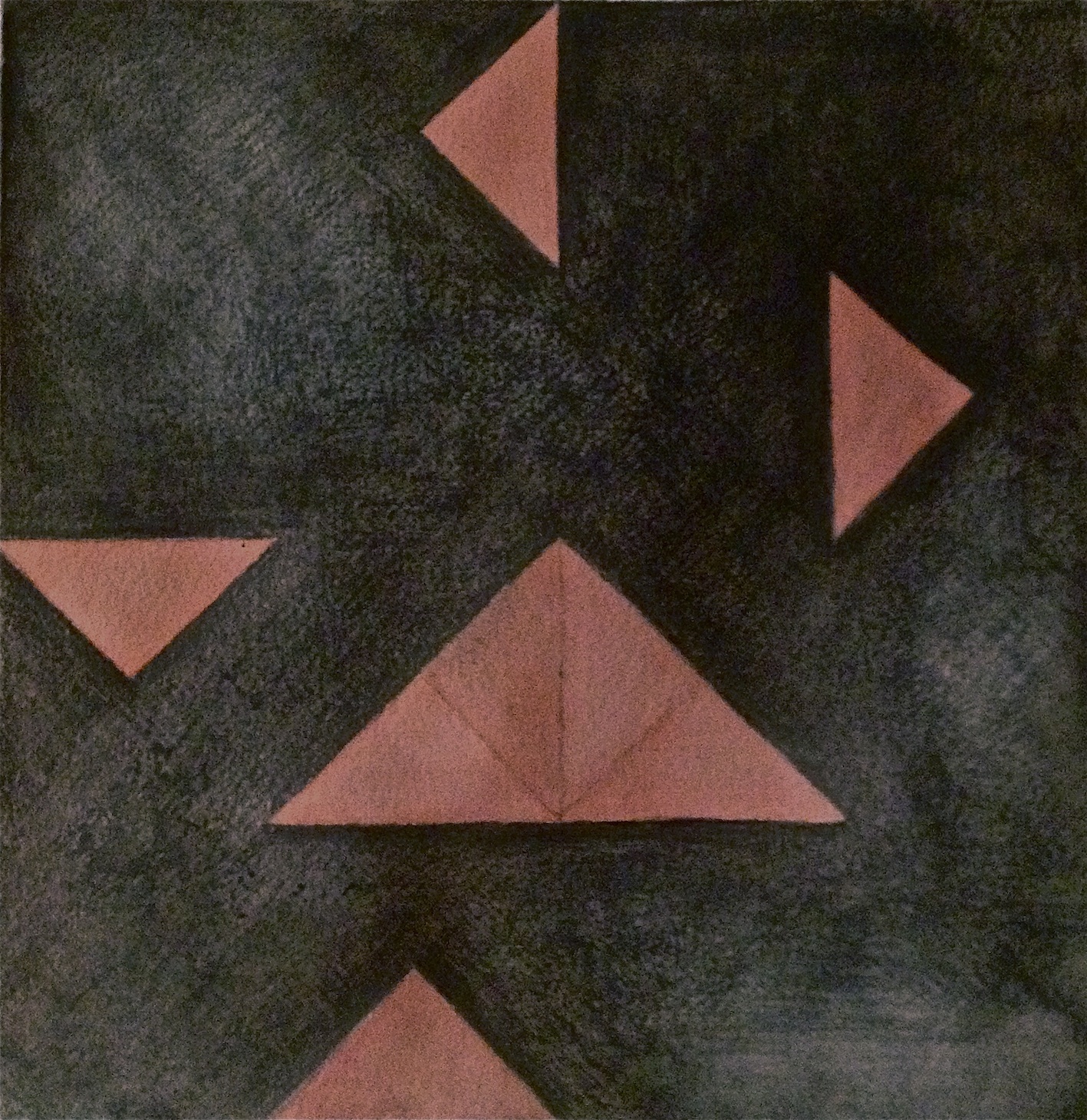
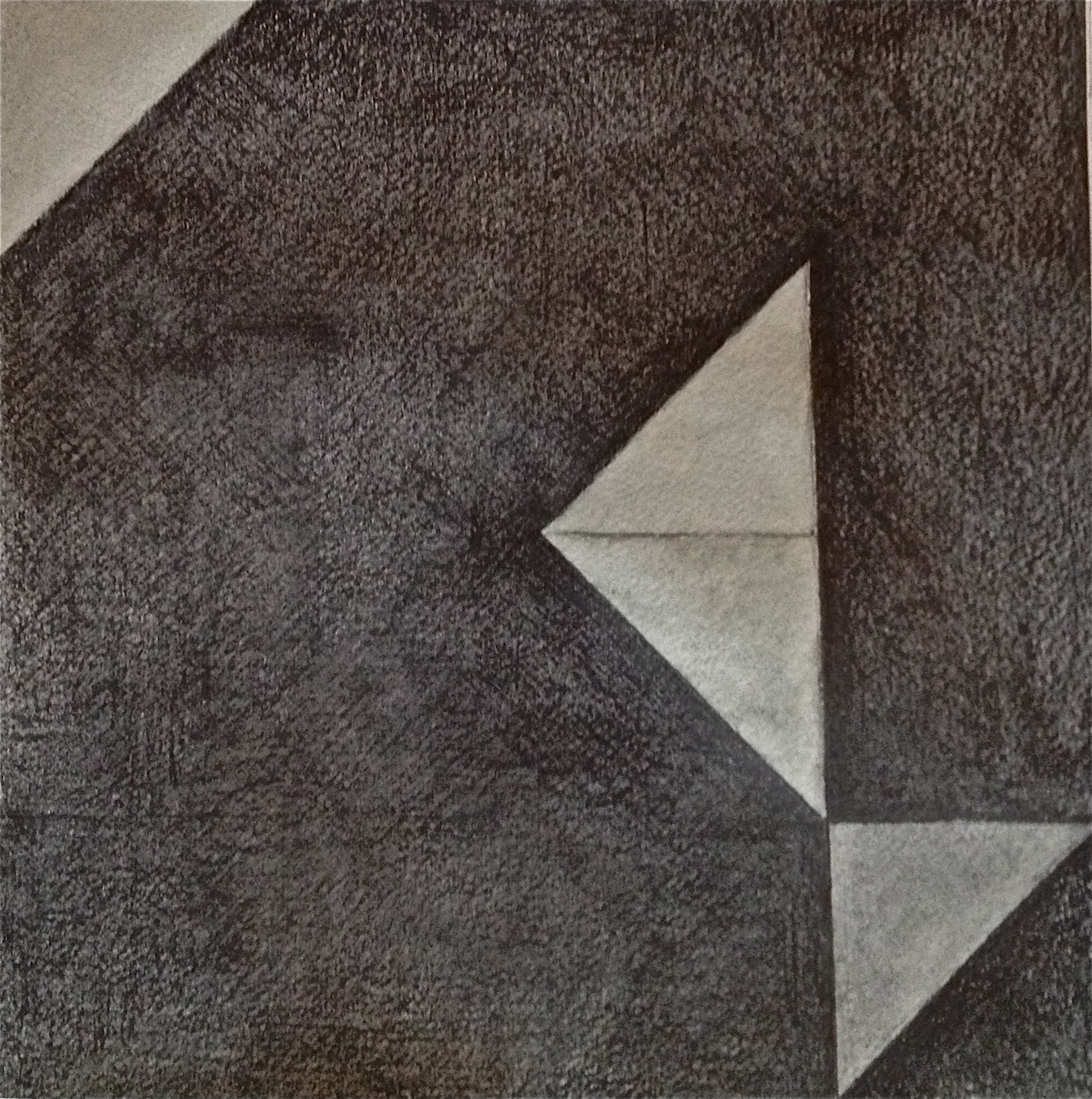
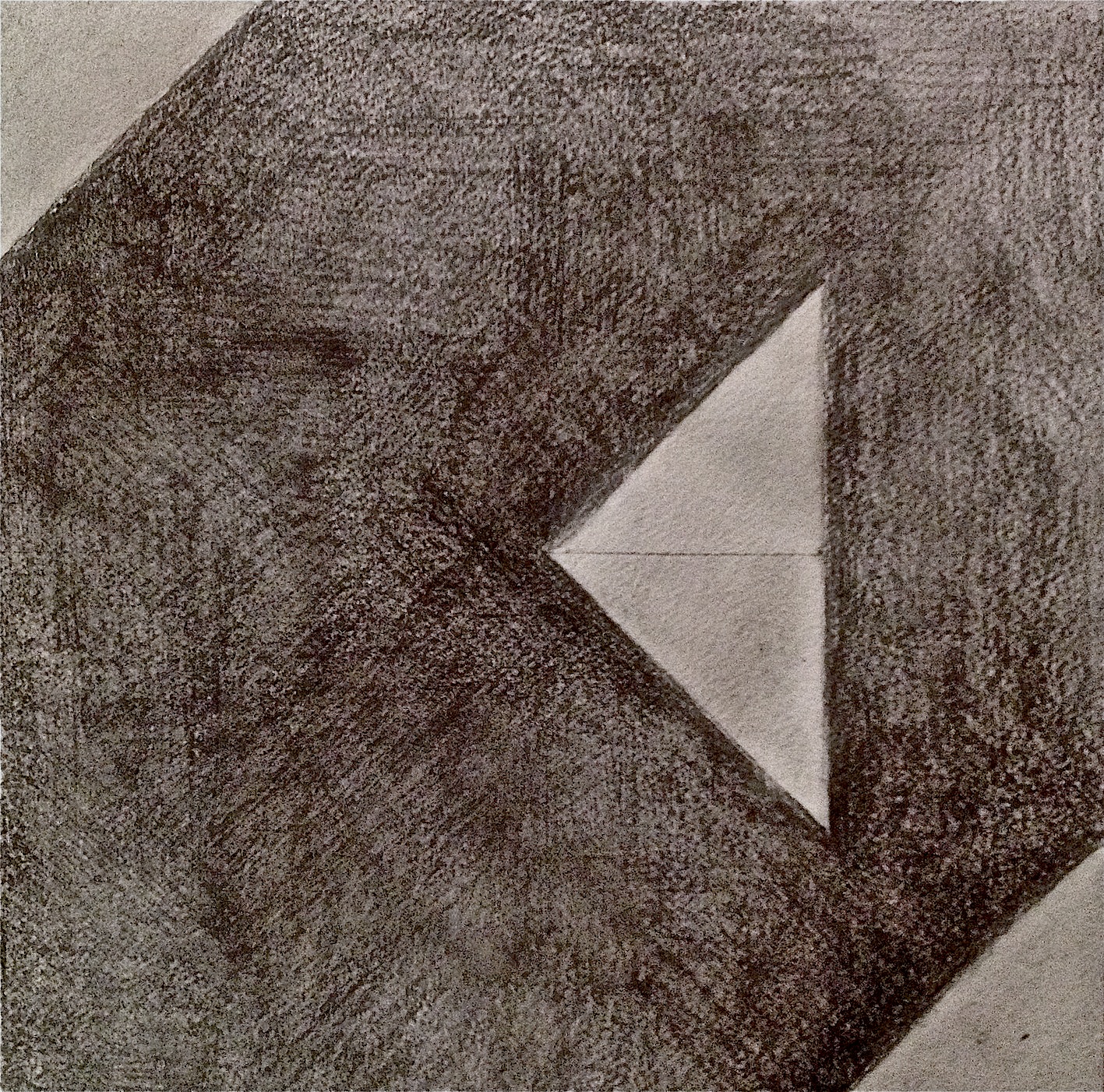
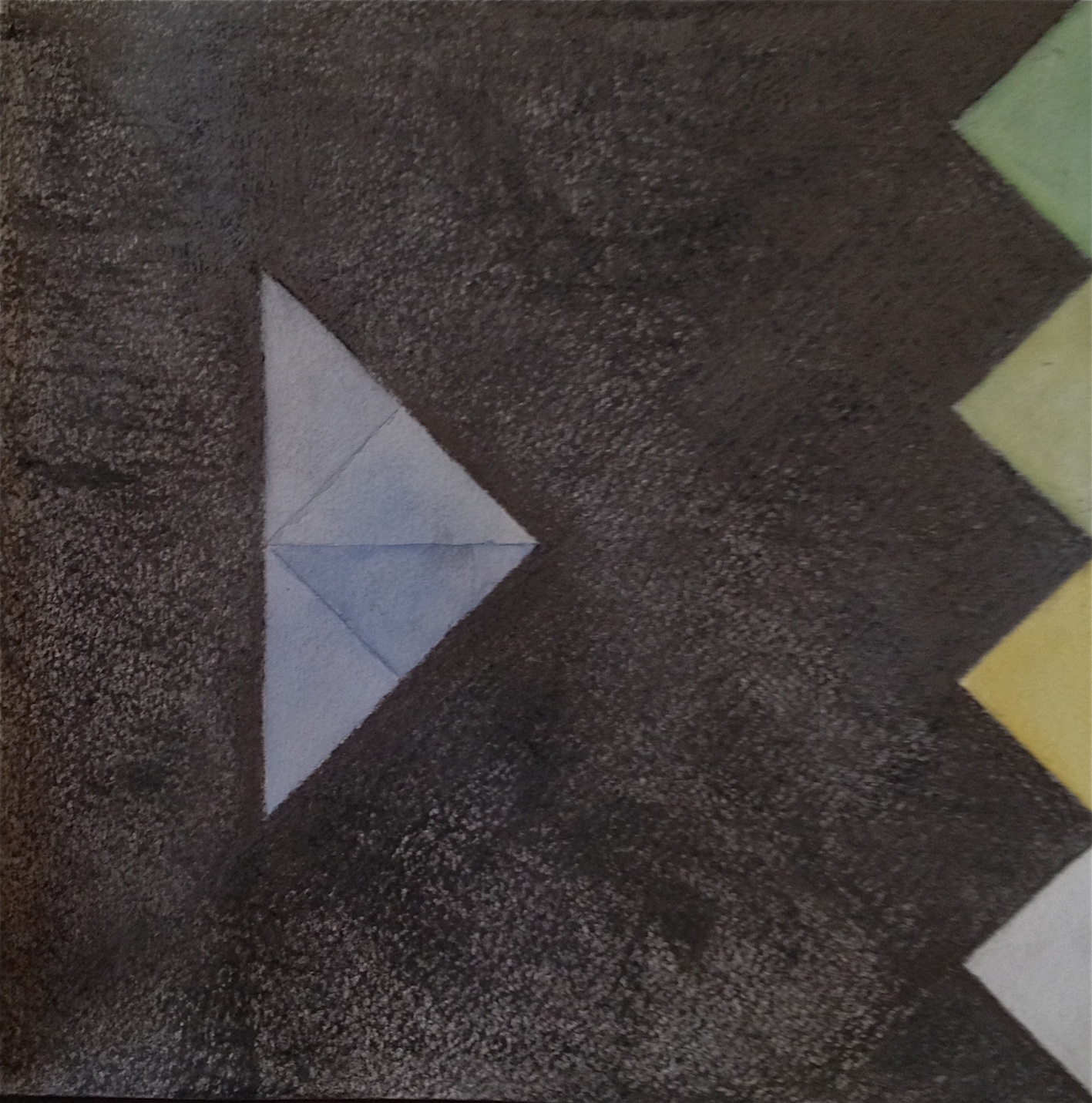
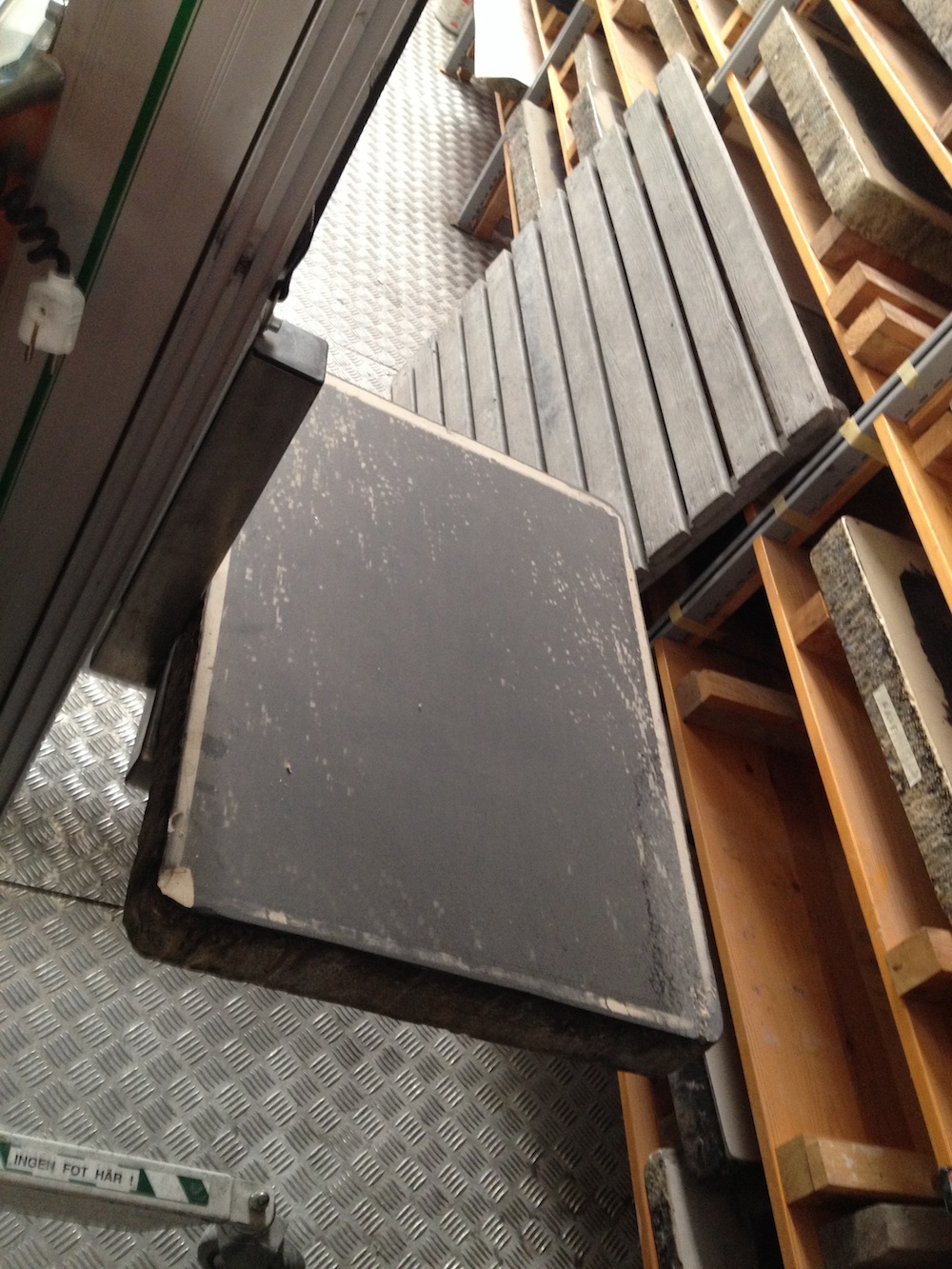
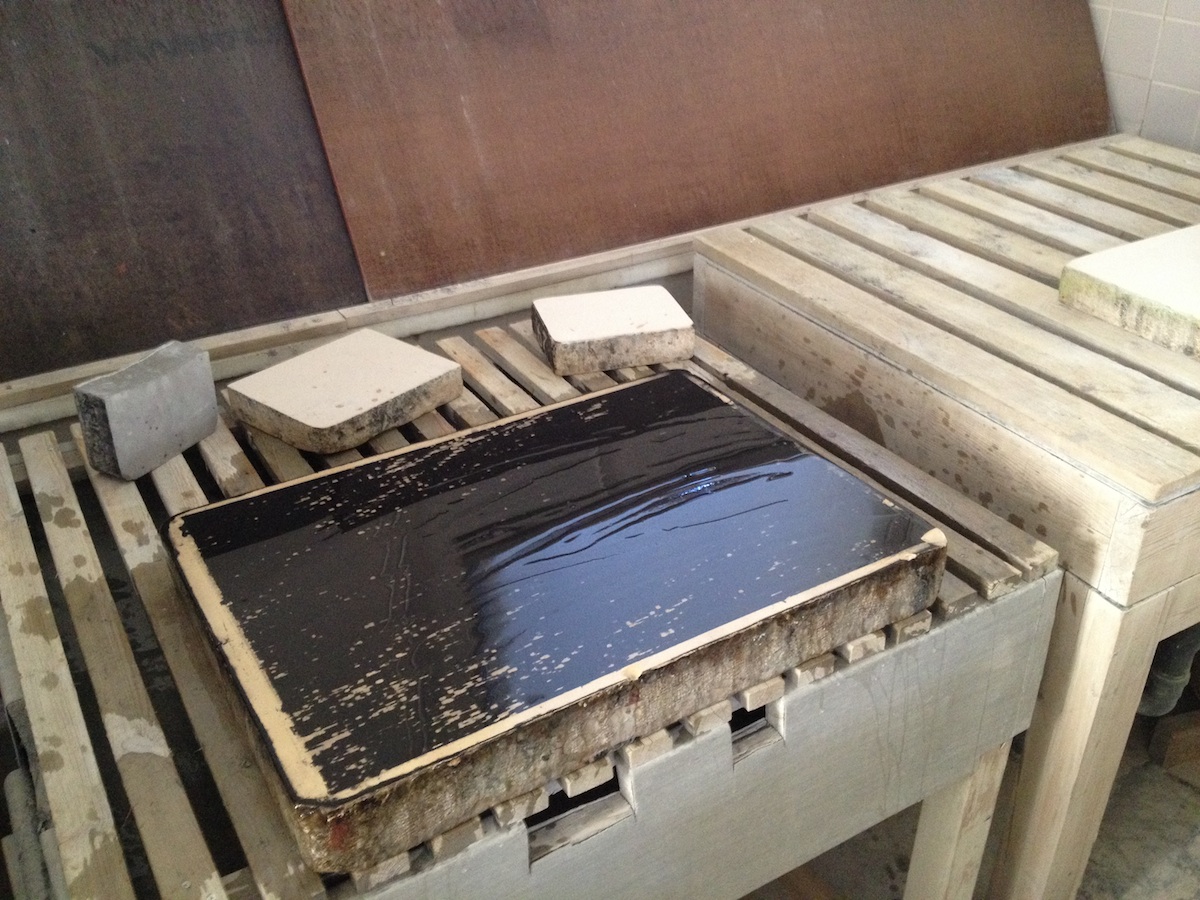
Mostly I’ve been working in the lithography workshop, where Patrick Wagner has an eye and a helping hand for everything and everyone. I’ve printed from two stones alternately; one fairly small, the other one large (and heavy)… The procedure for stone lithography goes something like this: grain the stone repeatedly with sand and water, until it has a clean, smooth surface; draw the image upon it; etch the image into the stone with acid and gum arabicum; roll up with printing ink; print. And then, clean up.
140916 01b 140916 2b
140916 3b 140916 5b
140917 1b

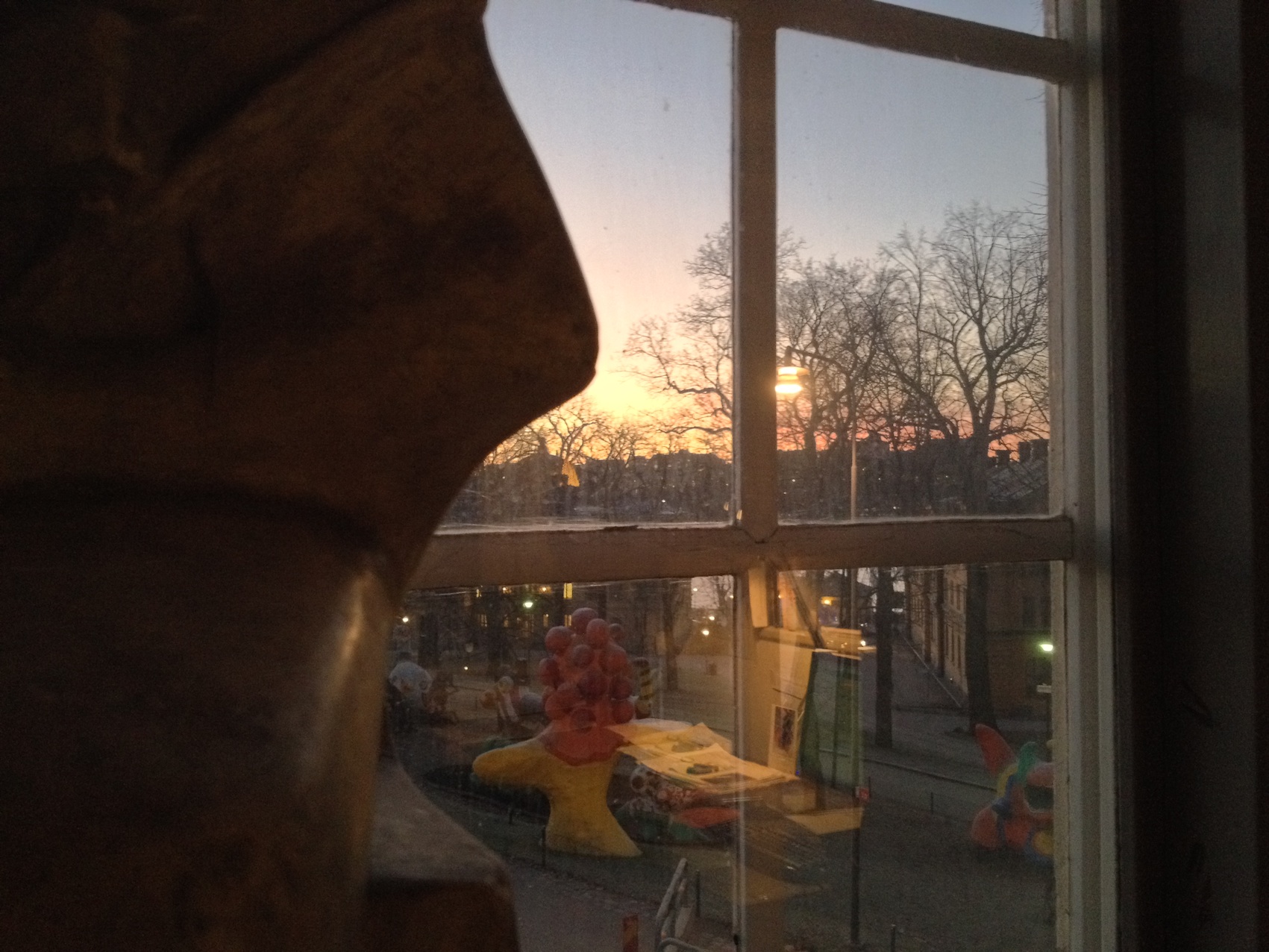
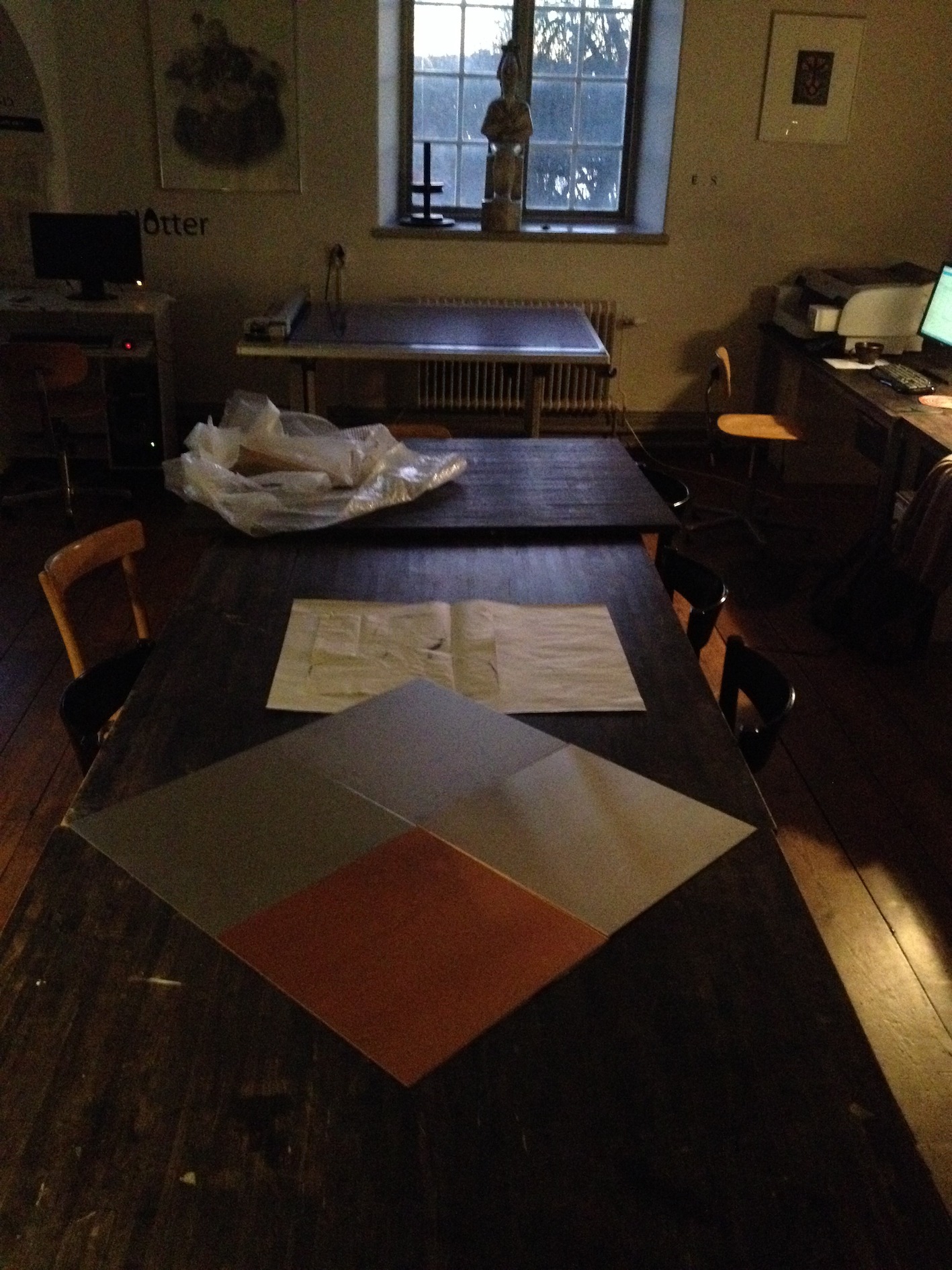
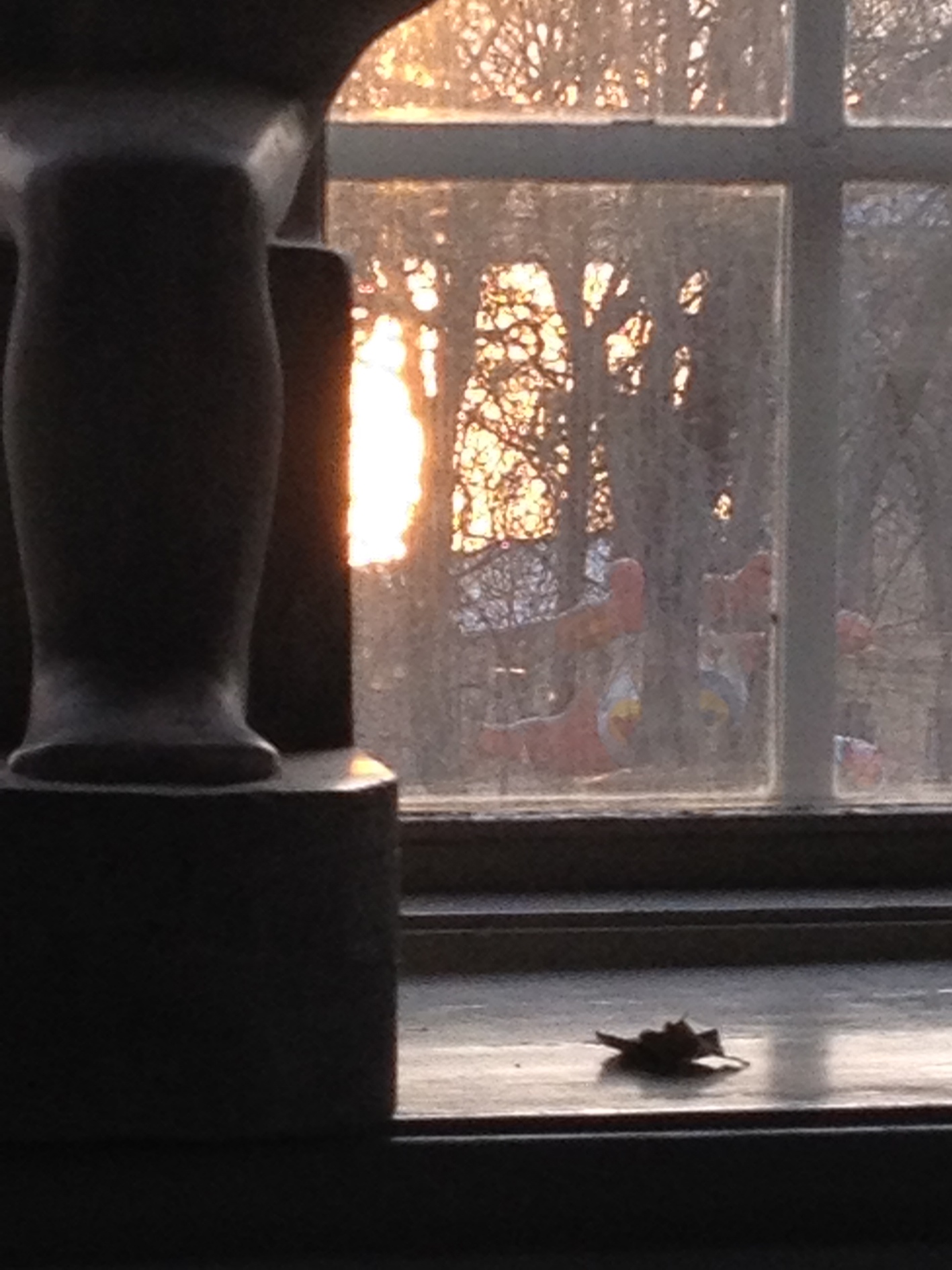
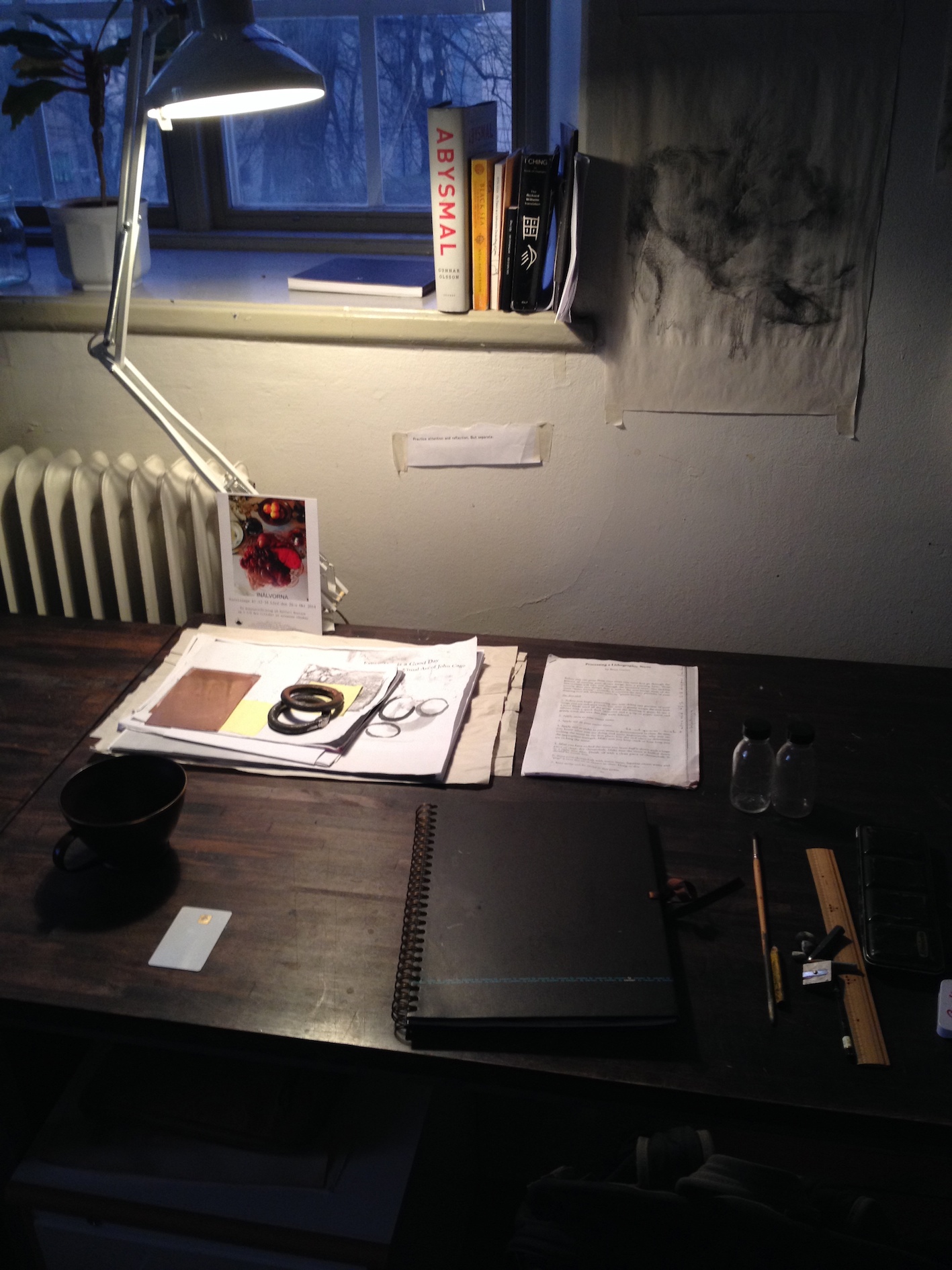
Upstairs from the litho workshop is the common area of the graphic department. Along the wall, tables are lined up in a row – one of those is at my personal disposal. I have chosen this place because usually, it’s just in the thick of things… Now, this early winter morning, the room is still dark and silent. I light the lamp and unpack my things. Dawn is breaking.

150106 02b
150106 08b150106 05b

150106 06b
150106 11b

Getting a better grip of graphic techniques, following lectures and meeting artists, being likewise challenged and encouraged, seeing old things in new ways… I even think I’m beginning to see the outlines of what I’m doing here. Idiosyncratic as it may be, I’m working on a dictionary. An imaginary.
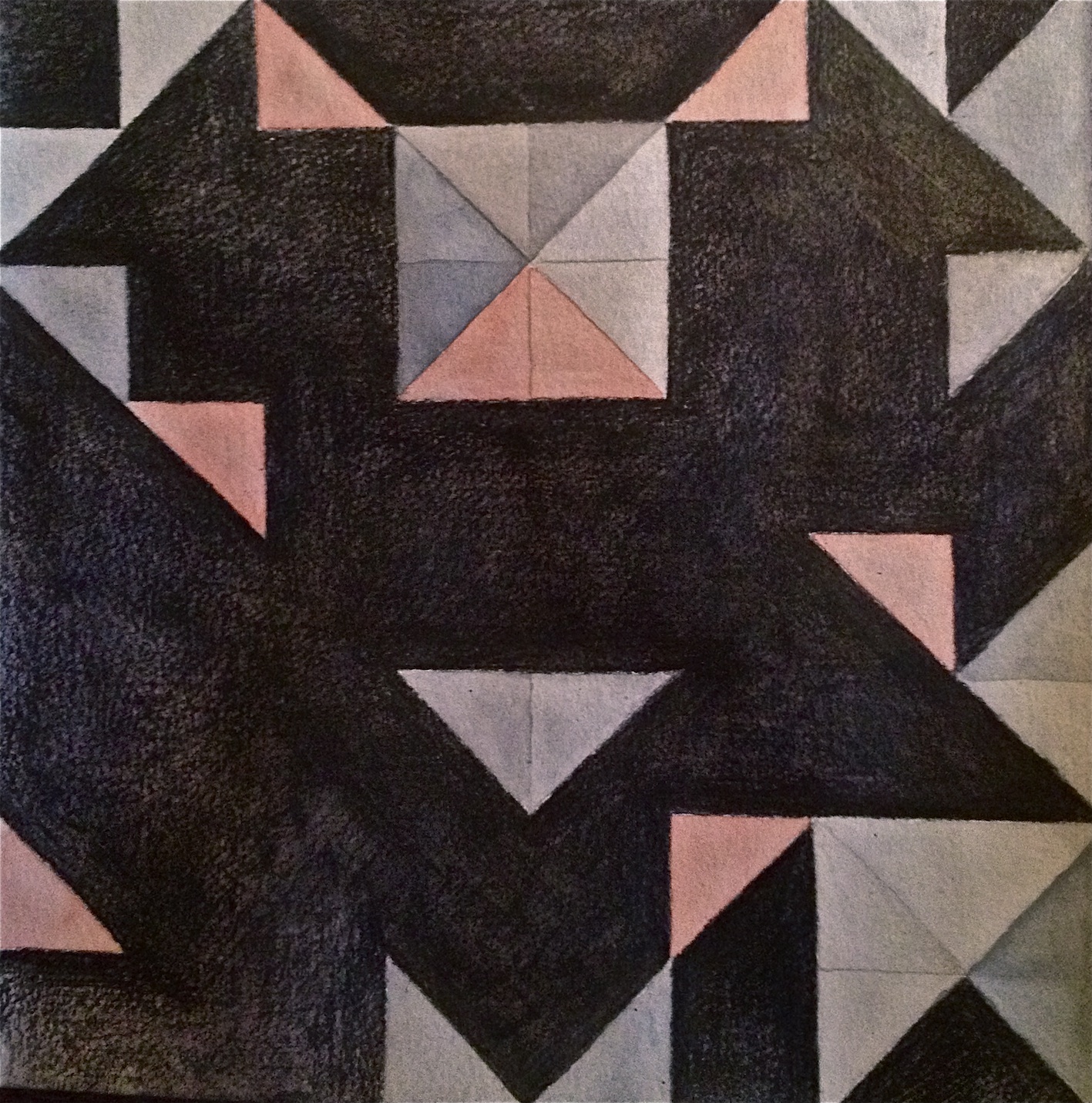
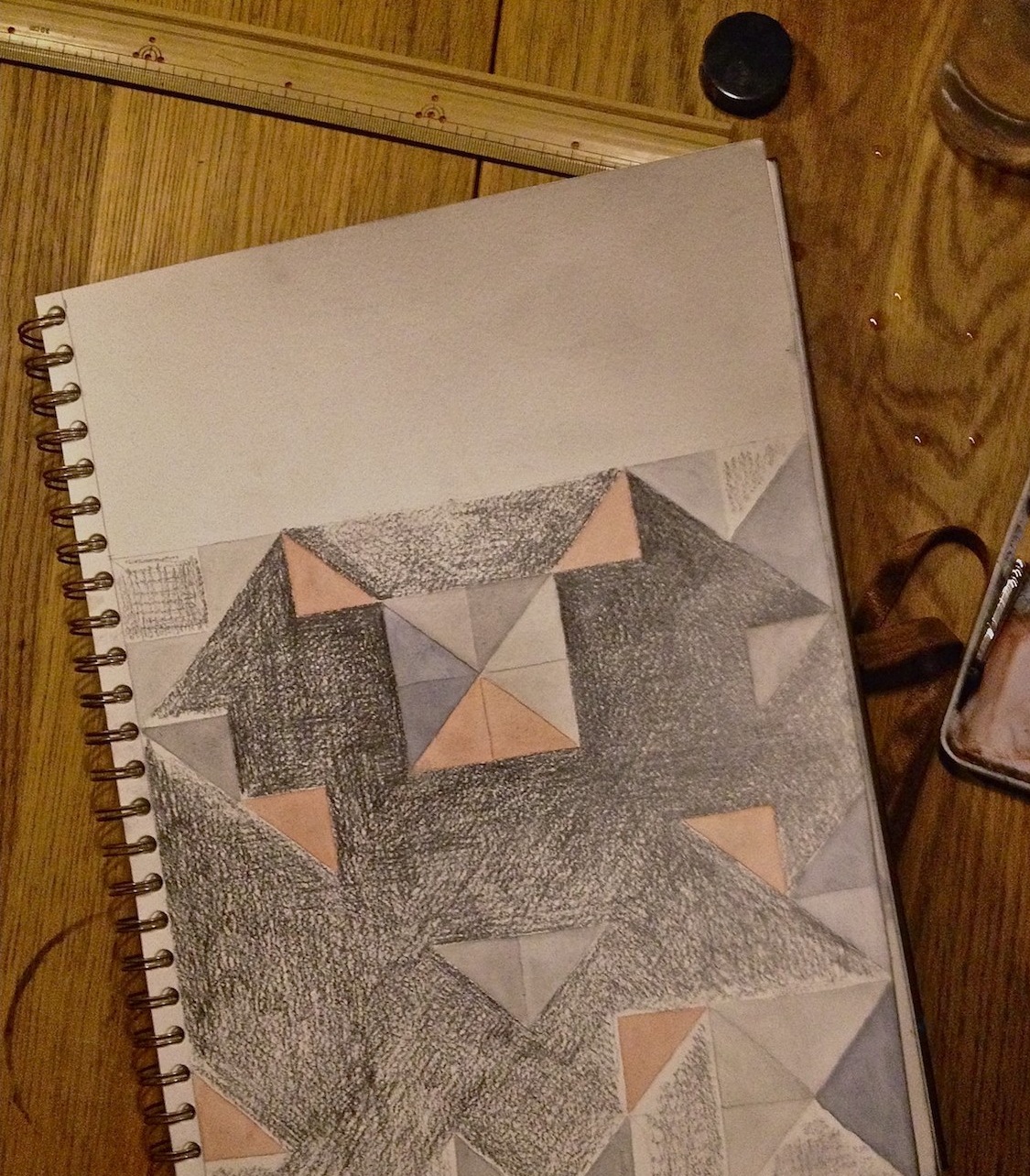
2015-01-02 Metals IX (iron/steel)

recent work

stålIron, with symbol Fe and chemical number 26, is the fourth most abundant element in the earth’s crust, and by mass the most common element on Earth; melting temperature 1538°C and boiling temperature 2862°C. Iron exists in at least four different crystal structures, changing with temperature. At 770°C (the so-called Curie point) it becomes magnetic.
The reddish colour of planet Mars derives from minerals rich in iron oxide, and meteorites found on Earth can contain up to 95% iron – often mixed with nickel. Iron beads found in Egypt have been dated back to at least 3500 BCE; as the material also contains nickel, it bears witness of meteoric origin. Iron production from metallic ore only began some hundred years later. In biology, iron compounds are key components in oxygen transporting (hemoglobin), cellular respiration, oxidation and reduction.
Pure iron is soft, but can be hardened by a smelting process including carbon. The resulting alloy is called steel. Rust is the common name for iron oxide.
Iron oxides (“earth pigments”) are also among the oldest known pigments, in use since prehistoric times. There exist a range of different colours, from yellow (ochres) and red (siennas, Venetian red, caput mortuum) to brown (umbers) and black. A synthetic compound with carbon and nitrogen, known as Prussian blue, yields an intense metallic blue colour.

2014-12-31 Metals VII (copper)

recent work

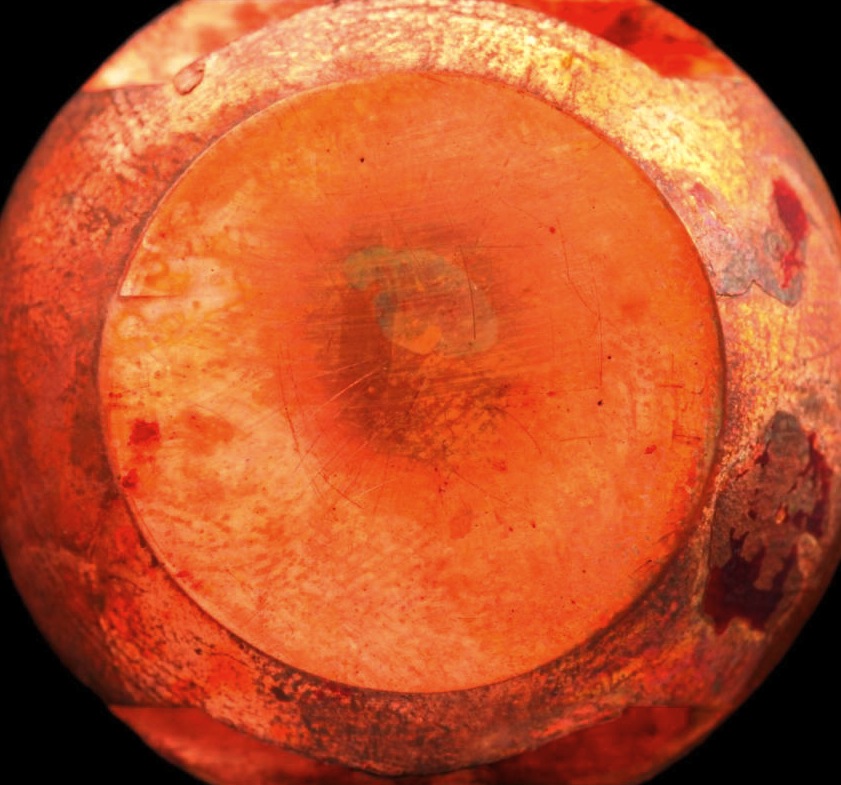
kopparCopper monocrystal; photo © Theodore W. Gray

Copper: a chemical element with symbol Cu and atomic number 29; a soft, ductile and malleable reddish metal; melting point 1085°C, boiling point 2927°C; very high thermal and electrical conductivity. Together with silver and gold, copper belongs to group 11 of the periodic table. Copper and copper alloys (such as bronze and brass) have been known since at least 10 000 years. In Roman times, the most important copper ores were the ones mined in Cyprus; the Latin name cyprium – later cuprum – bears witness to this. In mythology and alchemy, copper is associated with Aphrodite/Venus. As a trace element in humans, copper is mainly found in liver, muscle and bone. Copper salts produce a range of pigments, mainly within the blue-green part of the spectrum. In  nature, copper salt pigments give colour to minerals such as azurite, malachite and turquoise.

2014-12-29 Metals V (aluminium)

recent work

aluminium

Aluminium disc; photo credit Theodore W. Gray.

Aluminium: a chemical element with symbol Al and atomic number 13; a silvery white, soft, ductile and malleable metal; melting point 660°C, boiling point 2470°C; does not easily ignite; nonmagnetic. Aluminium is the third most abundant of all elements in the earth’s crust (after oxygen and silicon). In spite of its common appearance, it does not seem to have any biological function.
Aluminium is, together with copper, one of the chemical constituents of the mineral turquoise. With sulfur and sodium, it produces ultramarin blue and violet pigments found in nature. It is also a constituent in potassium alum, a compound known since around 2000 BC and widely useful for its astringent, blood coagulating, flocculant, fire retarding, preserving and purifying properties. Alum is also efficacious for fixing pigments, textile dyes and making ceramic glazes. The multiple uses of alum is mirrored in antique treatises and alchemical practices. Metallic aluminium wasn’t extracted until the 18th century.
Pure aluminium can be used for metallic paints and pigments, as it keeps its silvery reflectance even in finely powdered form.